
Natalia Lafourcade's New Album 'Cancionera'
Alison Stewart: This is All Of It. I'm Alison Stewart, live from the WNYC studios in SoHo. Thank you for sharing part of your day with us. I'm really grateful that you're here on today's show. Spring marks the start of moving season, and two writers for Wirecutter join us on tips on how to make the process easier.
Plus, Tavern On the Greens' executive chef and co-owner join us to talk about their new cookbook. Plus, author and musicologist Anna Harwell Celenza will be here to talk about her new book on the record, which is about songs that inspired political change.
That's the plan. Let's get this started with more music from Natalia Lafourcade.
[MUSIC - Natalia Lafourcade: Cancionera]
Cancionera, canta, canta libre al viento
Cancionera, canta siempre tu verdad
Sé mujer, la bella musa; sé la estrella de una vida
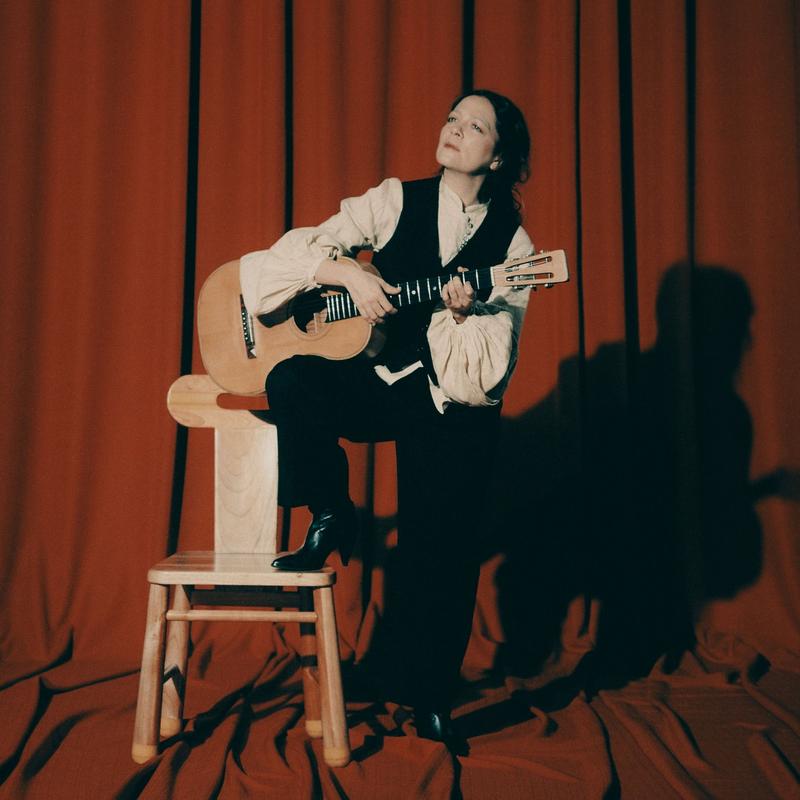
Alison Stewart: That was a title track from revered Latin American musician Natalia Lafourcade's Grammy Award-winning album Cancionera. Released in 2025, it builds upon her reputation for bringing a distinct sensibility to the traditional folk sound from her hometown of Veracruz, Mexico. Her 12th album also reflects a sound returning to what some called the intimacy of her voice and guitar, and she used analog technology from the 1950s.
Natalia Lafourcade is kicking off the North American leg of her tour with two concerts she has at the Brooklyn Academy of Music, that's BAM, on Friday, April 10th, and Saturday, April 11th. She was supposed to perform at BAM back in October, but rescheduled because she was embracing a new stage in her life, motherhood. Here she is today to discuss with me the album and its inspirations. Natalia, welcome back.
Natalia Lafourcade: Thank you so much.
Alison Stewart: You've mentioned the song Cancionera came to you one morning before your 40th birthday.
Natalia Lafourcade: That's right.
Alison Stewart: What were you reflecting on during this time?
Natalia Lafourcade: I think I was reflecting about all the things that would come next. It's a moment you get to a lot of reflections, and that's natural. I was just having this moment of reflection myself and trying to find those important things not to forget and to keep in mind, and then the song came out. This lyric that is mostly about the anima, I think, is the part of the soul, and taking care of the soul and the inner spirit to keep it alive, to keep the authenticity for life, and to keep being true to my real desire in life.
Alison Stewart: Why were you having those reflections?
Natalia Lafourcade: I guess it just happens whenever you are about to start a new decade. I think that's something natural for me. Music has always been something that helps me a lot to express myself. I use the songs and the music as a diary, as a constant, like a way of expression of the life; the experiences that I go through.
That was a question that my father made for me exactly the day of my birthday; he was asking like, "Okay, now how are you going to use the next four years of your life?" I guess it's just a point when you are in the middle of your path, it feels pretty much something like that. You're in the middle of something that has to do with the time in your life.
For me, it was also a moment in my life that was good for cleaning up a little of everything; relationships, literally the house, different things. It came to be a point in my life when I was asking if everything was going to go the same way it was happening, or there will be changes? After, they were changes. Actually, I became a mother, and many things happened that I wasn't expecting. The song it means a lot to me. That song was a very special moment for me. Also, the album became that album that marks that part of my life.
Alison Stewart: You wrote this great essay in the New York Times about the album, and you said, "I found the key to sing my truth without adornment, without masks." How has your relationship to music shifted over the past few years?
Natalia Lafourcade: I think it has become my companion, my master, so many things for me. The music is something really special. See what music does to people, that's very special for me. I have found that in order to really connect, which is one of the things that I love the most, the connection, connection with the instrument, with my voice, with people's hearts. For me, that is really, really important to go deeper and beyond just singing. It's more about really making a connection. I have felt that music always is telling me you need to be true in order to find that way of communication.
In my case, after so many years working with the music and in the music industry, obviously, there's a moment you wonder many things. For me, it was more about going back. I always use this metaphor of going back to the inner garden that's inside our bodies and our universals and self, and taking care of that inner garden. For me, that was the reconnection to my truth.
Alison Stewart: This is a little bit of a harder question. You brought it up. How have the changes in the music industry affected you in any way?
Natalia Lafourcade: I think it affects a lot in the terms that there's so many things that music industry demands nowadays. As an artist, I am supposed to do so many things that is not the music, it's not the part of the creativity that is that inside the room. It's more like outside. You need to accomplish, and you need to give so much. Sometimes, that giving is not precisely something that is your thing. It's more for others or for all the rhythms in the industry that is not really you.
I don't know, it's just something that I have felt. I have been very careful to this matter and to this reality, and trying to take care of what's in my inner world and what's more in there for real, versus losing myself into so many things that are there to be done supposedly, but it's not really me. I don't know, you might get confused. I just try to be very, very careful not to lose careness about what's really important for me as a singer, as a creator, as a woman, as a human being.
Alison Stewart: Your music, let's get back to it. By the way, my guest is Grammy Award-winning singer-songwriter Natalia Lafourcade. She's with me to talk about her latest album ahead of her concerts at the Brooklyn Academy of Music, Friday, April 10th, and Saturday, April 11th. We're going to listen to Mascaritas de Cristal, which I believe translates to crystal masks. Am I right?
Natalia Lafourcade: Yes.
Alison Stewart: All right. What are the masks symbolize in this song?
Natalia Lafourcade: I love this song, and I wrote this song in a moment when it's those very little moments when you aren't expecting that a song will come out. I love that fact about this one because it came out a day, and it felt like there was this me talking to me, like when you feel like you're having a conversation to yourself. Then I noticed that we all have many different versions of our own Persona, and we have those conversations constantly.
That's a very intimate moment. Do we have those conversations at home, or we could be thinking on the street, whatever. There's this constantly conversation to ourselves. That's Mascaritas de Cristal. Mascarita, it means that me, that part of myself, saying, like, I am not interested at this point of your life to see anything else, but you're true, and that's the only care I care about to see from you. Please don't be rushing in order to be someone else in order to-- I don't know how to explain it, but I just want you to be honest and very authentic Persona. That's the version of you that I want to see, but it's actually me talking to me.
In the album, I played a lot to this alter ego that came out, and that has so many aspects about my Persona that probably went hidden in the closet that I was. I'm going to play with these aspects about my way of being, but that maybe didn't show those aspects before, and see what happens. It actually became a really fun game for me to use it as inspiration as an exercise for my music and for the way I was doing things at the studio, and also the lyrics.
Alison Stewart: Well, let's listen to Mascaritas de Cristal from Natalia Lafourcade.
[MUSIC - Natalia Lafourcade:Mascaritas de Cristal]
Ah-ah, ay-ay
Quiero ver tu verdad, mmm
Mascarita de cristal, ah-ah
Quiero ver tu verdad
Si te sientas a mi mesa
No me cuentes de medallas
No me traigas regalitos
Que no sirven para na
No me importan tus castillos
Tu dinero ni tu nombre
Tu prestigio idealizado
Mascaritas de cristal
Te tenías tan escondidas
Bien toditas tus verdades
Alison Stewart: Natalia, you recorded this album at the Sony studios in Mexico City.
Natalia Lafourcade: That's right.
Alison Stewart: Which uses 1950s technology. How did recording the album help you be more creative?
Natalia Lafourcade: I think in this case was a very creative moment for all of us. I was working with this producer, Adán Jodorowsky. We're very, very close friends. All the people that were involved into the album, so talented people, I loved them so much. So many incredible musicians, the arranger, and also the engineers.
The challenge for us was to record the music live, one take. Not having addition of the music. Actually, we mix the album immediately, right away, after we record the music and all Analog. That's something that I really wanted to experience. When you have this kind of challenge, I love it because the level of presence that you have from everybody is very, very high level of presence, and I love that.
There's this adrenalina in the air that is this energy of, "Okay, we have one take," and probably it's going to be four or maybe five takes because of the cinta, the tape, it doesn't last more than that. It's only 20, 25 minutes. I love that because it bring all people together. We were doing the videos at the same time, so we had the cameras and the instruments. It felt really alive.
Alison Stewart: The visuals for this album are interesting. Tell me a little bit about the visuals.
Natalia Lafourcade: I wanted it to feel as this imagination part of the Cancionera. When, as an artist, we are in the studio, I guess it happens for all of us doing this. When you're writing a song, when you're recording a song, your imagination is very on. You're imagining different things. I love this aspect because nobody can see that. You just very into your thing, and I wanted the videos to feel like that universe of Cancionera, happening and alive at the same time as she's recording an album.
She imagines that she's the director of the orchestra, but actually, she's not. She imagines she's watching herself in this place in Veracruz, but she's actually at the studio, she's recording an album. There's different things happening. I wanted to have that game, and not so perfect done. I wanted to show probably the mistakes that will happen, and not taking too much care of everything to look perfect, because that's the normal behavior we will do when we are at the studio. We try to hide those kind of things. For me, this time was very important to show how everything is so delicate and natural.
Alison Stewart: Let's play another song from Cancionera. This is Cocos en la Playa. What's the song about?
Natalia Lafourcade: Cocos en la Playa, it's a song I wrote a long time ago. It's about a vacation, holidays, basically. I'm having fun, being relaxed, and just not being so worried about productivity.
[laughter]
Alison Stewart: Let's listen to Cocos en la Playa.
[MUSIC - Natalia Lafourcade: Cocos en la Playa]
Para brillar como el sol en la playa
Necesito un poquito de calma
Andar ligera sobre la arena
Sin maquillaje y sin equipaje
Dejar a un lado los calendarios
Las aerolíneas, redes sociales
Se terminaron las fotografías
Solo se permiten los "buenos días"
Se terminaron las fotografías
Solo se permite decir"
Venga ya a la vida"
Y ahí
Saludar las sirenas
Y ahí
Platicar con la luna
Y ahí
Ay, ay, ay, ay, ay, ay, ay, ay, ay
Bailar con las palmeras
Alison Stewart: Oh, that puts you in a good mood. My guest, Natalia Lafourcade, we're talking about her latest album, Cancionera, ahead of her concerts at the Brooklyn Academy of Music on Friday, April 10th, and Saturday, April 11th. You've become a mom.
Natalia Lafourcade: Yes.
Alison Stewart: This is exciting. Congratulations, first of all.
Natalia Lafourcade: Thank you so much.
Alison Stewart: What have you learned about yourself in the process of caring for a newborn in the past few months?
Natalia Lafourcade: It's been the best. The best, the best. I don't know how to explain it in words. It's really huge. I wasn't expecting this. I actually thought that being a mama wasn't going to be for me, and then I got the surprise at this moment, exactly the moment in my life when I am saying, "Okay, life is about being through to yourself and keep growing your soul and be honest to you, and--" Those kind of things.
It's been the best time. I am so grateful. I have a great, great, the best boy. Obviously, like every mama, I would say my baby is the best. [laughter] Learning many things. Now, I'm going back to the stage, which I feel like the stage is my second house. Being in a concert, giving music to people, and making those connections that I love. That's one of the most important things in my life.
Now I have a new priority, and I love that. The baby traveling with us for the first time. That part, for me, it's very, very important. To make this connection to both universals, the personal and also the universal, that's my work and my passion. That makes me very, very happy to know that I'm going to be sharing those two sides with my people and my audience.
Alison Stewart: I've been talking to Natalia Lafourcade about her new Grammy-winning album, Cancionera. She's kicking off the North American leg of her tour with two concerts at the Brooklyn Academy of Music, at BAM on Friday, April 10th, and Saturday, April 11th. Thank you for being with us.
Natalia Lafourcade: Thank you so much for this time.
Copyright © 2026 New York Public Radio. All rights reserved. Visit our website terms of use at www.wnyc.org for further information.
New York Public Radio transcripts are created on a rush deadline, often by contractors. This text may not be in its final form and may be updated or revised in the future. Accuracy and availability may vary. The authoritative record of programming is the audio record.