
Music from Behind Bars
Alison Stewart: This is All Of It on WNYC. I'm Alison Stewart. Many songs have been written about prison. In the Jailhouse Now, Folsom Prison Blues, but a new initiative from The Marshall Project seeks to shine a light on the musicians who have been through the prison system, and some who've even made music while behind bars. The newsletter, Redemption Songs: The Music of Mass Incarceration, is written by my next guest, Marshall Project staff writer Maurice Chammah. Each edition explores the story behind a song recorded by an incarcerated person, telling us about the individual artists and about the prison system in America.
The newsletter was inspired by the work of my other guest. I hope I get her name right. BL Shirelle, who co-runs the label FREER Records, releasing music exclusively by prison-impacted musicians. They're both here now to tell us about the missions behind these projects and have a listening party. Welcome to All Of It, both of y'all.
Maurice Chammah: Hey, thanks so much for having me.
BL Shirelle: Hi. Thank you so much for having me. I appreciate it.
Alison Stewart: Of course. Maurice, in the introduction to your newsletter, you explained that you were inspired by BL. What was it about her work that led you to create this newsletter?
Maurice Chammah: About 10 years ago, I was honestly just procrastinating on my work, which is doing journalism about the criminal justice system. As you can imagine, a lot of that work is very bleak and dark, and you need a lot of breaks. I was looking on eBay, and I stumbled on this record that was recorded in a Texas prison in the 1970s. We can talk about that later, but one thing led to another, and I realized that there had been this whole kind of amazing era in the 1960s, '70s, '80s of incarcerated bands. It was not unusual for a band of people in prison to be let out of the prison to perform or for recording engineers to be allowed in.
This created just a curiosity for me about how do people make music from prisons, and in what ways do they write music that is inspired by prison once they're out? Because presumably, there are many, I thought, people who have come out of prison and are writing songs about it. Eventually, I learned about FREER Records, which at the time was called Die Jim Crow Records. It's had a name change. They were just making really, really good music, but in addition to the music, I got on the phone with BL the first time, I don't know, maybe three, four years ago, and I was astonished by the creativity behind this music, in the sense of what it takes to actually negotiate your way into a prison and record music today.
I said that it was not uncommon in the '70s because I think prison officials, the whole conversation around mass incarceration was less heated. There was less of a politicization of crime and a sense that people in prison are somehow evil or monsters, which became the rhetoric in the last 30 years. I knew how hard it must be for BL, and it was fascinating hearing kind of just talk through what FREER Records has to go through to make these albums.
Alison Stewart: BL, what inspired you to create this record label, FREER?
BL Shirelle: Well, I actually didn't create it. A gentleman by the name of Fury Young is the founder. Fury Young is an artist, and he is the co-executive director with me at FREER. He reached out to me in 20-- either late 2014 or early 2015. He was working on this album about mass incarceration through the Black experience. It was called Die Jim Crow, and I was serving my 10th year of incarceration at the time. It was a full spreadsheet about this genreless album conceptual that walks you through all the way from the minstrel era, where the term Jim Crow was coined in a song, all the way up through present day, war on drugs, blah, blah, blah.
It was all laid out like, "Oh, this song is pre-prison and the character goes through this, and the genre is rock or whatever." He saw my work on YouTube, my band. That's what made him reach out to me. I wrote songs for him for his album. He sent those songs to a prison in Ohio. That band put music to my words, that incarcerated band. From there, I had wounded up getting released, and me and him began working together on this album that he wanted to create. Through that, it morphed. That idea morphed into a nonprofit record label, which was Die Jim Crow Records at the time.
I was just their founding board member, deputy director. I was there the whole time. When he actually started, when we became a nonprofit record label, he was like, "I'm thinking about making you co-founder. You were here. I was like, "Bro, it was your idea. It was literally your idea. I'm not the founder, but I'm down--"
Alison Stewart: What do you think is important about the record label? What do you want people to know about the record label?
BL Shirelle: I think that it is important that people just understand. First of all, I think music in America is one of the most easy ways to get to people's hearts. Even in reverse. We can't get rid of horrible people because we love their music half the time. I think music is the easiest way. I also think that it just shows people, just normal people, humans, that's what's behind the wall. I think mass incarceration has been successful because of the censorship and the silencing. When you don't see or hear people, you're not thinking about them in everyday life. That's how that became such a big business.
I think that the label just shows these people in their regular, creative ingenuity. They're really awesome people, and they actually have that normal thread of humanity that we all have, and that's important.
Alison Stewart: Maurice, when did it become clear to you there was an avenue for writing about arts and incarceration together?
Maurice Chammah: I'd been trying to do it for a very long time and had, over the years, found individual, let's say, painters or playwrights or poets, who I had written articles about almost as a palate cleanser from the standard work of The Marshall Project, which is often more investigative and often about bad things, so to speak, going on in prisons, as opposed to these more hopeful stories of art creation. I think what really clicked for me was understanding the historical sweep of what's happening.
At one time, I think I viewed music from prisons in the '70s and '80s, and even earlier than that, the 1950s, as just a curiosity from the past. Like, "Oh, here's a fun, quirky thing. Oh, everybody knows that Johnny Cash maybe played it a prison, and here's just an extension of that." I realized later that when it comes to the criminal justice system today, we're stuck in how to think about how to make it better, by which I mean there are really good ideas floating around for how to make prisons more humane and rehabilitative. We've seen a whole movement of criminal justice reform over the last 10 years. Even President Donald Trump signed the First Step Act about a decade ago.
We have the tools, but we're stuck somehow. We're trapped and continually seeing people who commit crimes as people who are not worth any sort of redemption. It was in music, both the FREER Records releases that BL is behind, but then at a larger scale, in the '70s and '80s, where I saw, "Oh, here's an era where we were willing to see prisons as more porous, to see people who are in prison as people who made mistakes, maybe even did really terrible things, but most of the time are going to come out, and what can we do to help them through whatever issues led them to this law-breaking? What can we do to welcome them back to help their path?"
Today, part of the problem with people leaving prison is that everyone else refuses to give them jobs or rent houses and apartments to them. You hear in this music a sense that these are just human beings who've gone away for a little while to this one environment where they're going to hopefully work through some stuff, and then they're going to come back. That was the model that we, at our most hopeful as a society, have imagined, but we've always fallen short. To me, the music is just an amazing symbol of what it sounds like when we all reach towards a more just, and humane, and redemptive system.
Alison Stewart: I'm speaking to Marshall Project staff writer Maurice Chammah. He's the author of the newsletter Redemption Songs: The Music of Mass Incarceration. We're also joined by BL Shirelle, co-executive director of the FREER Records, a label that releases music by prison-impacted musicians. After the break, we'll hear some music.
[MUSIC]
Alison Stewart: This is All Of It on WNYC. I'm Alison Stewart. My guests are Maurice Chammah. He's the author of the newsletter Redemption Songs: The Music of Mass Incarceration. We're also joined by BL Shirelle, co-executive director of FREER Records, a label that releases music by prison-impacted musicians. As promised, we're going to hear some music. BL, we're going to start out with a FREER Records release by a musician named Zealot. The song is called America the Merciful. Why did you want us to play this track?
BL Shirelle: Well, for one, he was just recently released after serving 18 years. We recorded him and released his band's album, Territorial, in 2021, called Tlaxihuiqui. His voice is phenomenal. His words are so poignant. Y'all will know why as soon as y'all listen to the song. I'm so proud of him.
Alison Stewart: Well, let's hear it.
[MUSIC - Zealot: America the Merciful]
Are my actions unforgetful
All my crimes beyond forgiveness
Have I lost my place with you?
Or the silence all I get
Alison Stewart: That's called America the Merciful by Zealot. Maurice, in the first installment of your newsletter, it's about a group called the-- Is it The Wynne Unit Band?
Maurice Chammah: Yes. The Wynne Unit Band.
Alison Stewart: Okay, who were they?
Maurice Chammah: The Wynne Unit Band were one of many bands that formed in Texas prisons in the '70s and '80s when there was a really robust, rehabilitative music program, basically, in Texas prisons. At that time, there was a rodeo that was held at a Texas prison in Huntsville, and tens of thousands of free world people would descend once a year on this prison. There was something uncomfortable, I think, when you read this history about the kind of gladiatorial coliseum, let's watch incarcerated people get potentially mauled by bulls. The context here is somewhat dark, and you have to take that context in with it, but then also, there were prison bands that were allowed to perform for these massive crowds.
In fact, they would sometimes bring really famous artists to come play at this prison rodeo. Dolly Parton, Willie Nelson, George Strait, even Johnny Cash, well before his more famous prison shows that were recorded years later, all of these artists were performing at this arena in Huntsville, Texas, with effectively prison bands opening for them. Then the men inside would sell vinyl records that they themselves had produced and recorded to people who came to the rodeo. The Texas Department of Corrections, as it was known at the time, was effectively like a miniature record label putting this music out. The music is just very, very good.
I found one of these records on eBay, and then over the course of years, I looked for other records and eventually found a place called the Texas Prison Museum in Huntsville, which let me go into this archive in a back room and digitize this music by plugging a turntable into a computer effectively. The Marshall Project has now put this music online, much of it for the first time.
Alison Stewart: Well, let's hear The Wynne Unit Band with Come Home.
[MUSIC - The Wynne Unit Band: Come Home]
Woke up this morning, and I felt so good
I thought it was a beautiful day
But on the pillow was a note
where my baby used to lay
It said I still love you, baby
Still love you
And you know my love is true
But I'm sick and tired
So sick and tired of all the crazy things you do
And when you need me enough to stop all that childish stuff
I'll come home
I'll come back home
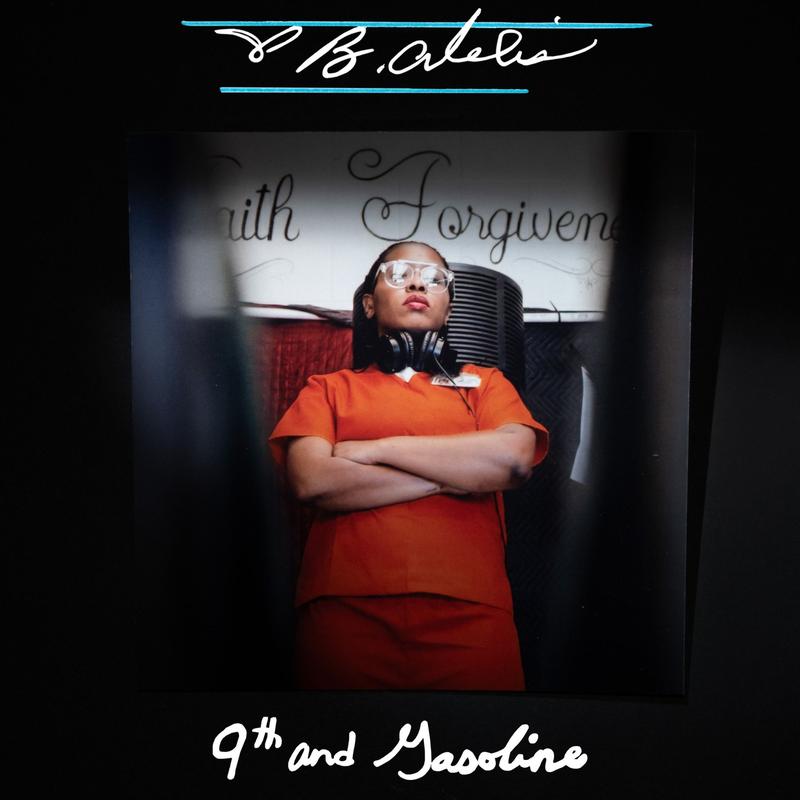
Alison Stewart: That's The Wynne Unit Band. Next up, we have Black Barbie by B. Alexis. BL, could you tell us about Black Barbie?
BL Shirelle: Yes. B. Alexis. She's the first woman to ever release an album from prison in history. Little Kim released hers while she was incarcerated, but it wasn't recorded in prison. B. Alexis is the first. This is a history. It just came out February 27th. Black Barbie is an incredible song off her album. I encourage everyone who really are true, true hip hop fans that like real music to check her out. She's incredible.
Alison Stewart: That's not her real name, though, B. Alexis, right?
BL Shirelle: That's not her real name, though.
Alison Stewart: Why couldn't she use her real name?
BL Shirelle: Great question. She actually faces a lot of heavy censorship in the state that she's from, so much so that we have kept her identity confidential because the state that she's in is not-- they are not open to her being seen or heard eventually, evidently.
Alison Stewart: Maurice, why did you want to include this in your newsletter? B. Alexis' Black Barbie?
Maurice Chammah: I wanted it to be the first issue of the newsletter and really a standard bearer for this larger project because, first of all, the music is extraordinary to my ears. I think it's really just an incredible record. As BL said, it is history-making in that she's the first woman to put out a hip hop record from prison. I also think that the context for not using her real name and trying to protect her from retaliation is a really just good way of encapsulating the struggle that all of this music often is up against. Of course, there have been times like the music from the '70s we just heard, where it was promoted by the prisons, but very often, that is not the case.
There's just all these examples of rappers finding their way to do it over the prison phones or even to use illegal cell phones to put out their creative work. A lot of them face tremendous suffering as a result of it because of the restrictions that still exist in these places. To me, the whole nature of this project is this is people finding the light in these dark environments. The idea that you would hear B. Alexis bear her soul, but that also to protect her, we can't tell you her name. To me, that contrast really just encapsulates the larger problem of mass incarceration and how we try to put up this boundary between us and these people.
Alison Stewart: Let's hear B. Alexis and Black Barbie.
[MUSIC - B. Alexis: Black Barbie]
Black Barbie, I see you in disguise
I see the hurt and pain you try to hide behind your eyes
Black Barbie, blending in among the fake
Acting like everything is all good, but it ain′t
Black Barbie, you at your all-time high
And though your eyes dry, I can tell you wanna cry
Black Barbie, it's okay, baby, let it out
Don′t be ashamed, we all gotta cry sometime
Alison Stewart: BL, if someone wants to ensure that incarcerated people have access to music and art and other resources, where would you point them?
BL Shirelle: Wow. Someone on the outside, a free person?
Alison Stewart: Yes.
BL Shirelle: I would direct them to me. I'm working really hard to be-- FREER Records is when you think of prison music in today's landscape, you think of us. I think we've done a great job of releasing amazing bodies of it. I will point them to me. Aside from that, though, there's tons of great organizations who do do great work with music, with therapy, and healing, and cognitive thinking. There's a lot of organizations that does. You can volunteer. If you wanted to go in yourself in your local county jail or state prison, and you're a musician, you can go in and volunteer yourself and teach people.
I think prison is so interesting because it's the only place you have to be creative and ingenuitive in everything you do. You want to eat good, you got to think out the box. You want to look good, you got to throw some coffee and creamer on your little marks. I mean, it's so incredible, the amount of creativity. A lot of times, people go in thinking, "Oh, I'm about to teach them something." They walk out, in fact, learning that they learned a whole lot from those people.
Alison Stewart: Maurice, if people want to subscribe to your newsletter, where should they go?
Maurice Chammah: They should go to themarshallproject.org. We will have a new issue every week, some of it new releases, like FREER Records, some of it historical. You can sign up and get an email every week with one song from this project.
Alison Stewart: I've been speaking with Marshall Project staff writer Maurice Chammah, the author of the newsletter Redemption Songs: The Music of Mass Incarceration, as well as BL Shirelle, co-executive director of FREER Records. Thank you so much for joining us and sharing this music with us.
BL Shirelle: Thank you so much. Yes, we're FREER Records, and everything. BL Shirelle. Thank y'all for having us. I appreciate it very much.
Maurice Chammah: Yes, thanks so much.
Copyright © 2026 New York Public Radio. All rights reserved. Visit our website terms of use at www.wnyc.org for further information.
New York Public Radio transcripts are created on a rush deadline, often by contractors. This text may not be in its final form and may be updated or revised in the future. Accuracy and availability may vary. The authoritative record of programming is the audio record.