
Michael Winograd Plays TANZ! in CR5
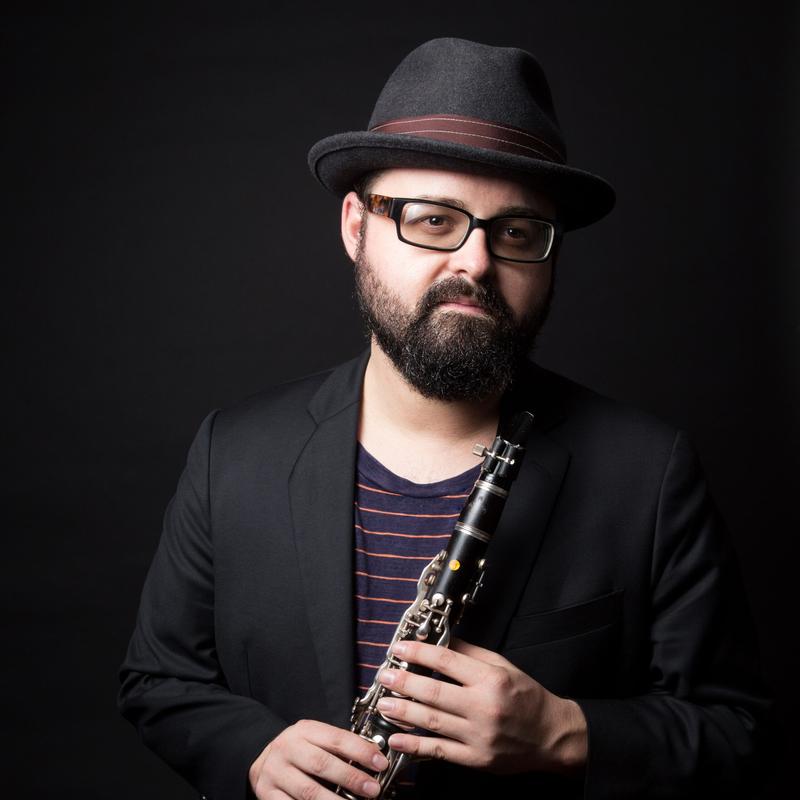
Tiffany Hanssen: This is All Of It on WNYC. I'm Tiffany Hanssen, in for Alison Stewart. In 1956, an album called Tanz!, the Yiddish word for dance, was released by a Ukrainian-born clarinet player with his son-in-law serving as its music director. The album had a relatively small release at the time. The heyday of klezmer music was coming to an end as commercial radio was favoring newer fare. But in the decades that follow, Tanz!'s blend of traditional styles with big band jazz arrangements came to be seen, not just as the end of an era, but as a prescient document of adaptation revival. Those later fans of the album include our next guest, Michael Winograd, the clarinetist and composer who just released Michael Winograd Plays Tanz! Live in New York City. He and his band will be performing tonight at the Center for Jewish Culture. But first, they're here with us. Welcome to All Of It, all of you. Michael, I have a question. Did I say Tanz! right? Am I saying--
Michael Winograd: You did.
Tiffany Hanssen: I did.
Michael Winograd: Pretty good.
Tiffany Hanssen: Pretty good. All right, I'll take pretty good. You know what? I think we should just probably start with some music, and then we'll talk.
Michael Winograd: Sounds good.
Tiffany Hanssen: All right.
Michael Winograd: All right. One, two, one, two.
[MUSIC - Aaron Lebedeff: Rumania]
Tiffany Hanssen: That was Rumania. Did I say that right?
Michael Winograd: Rumania.
Tiffany Hanssen: Rumania, and that voice you just heard is Michael Winograd. His band, here with us. They are performing tonight at the Center for Jewish Culture. I mentioned, Michael, that the album up top here is called Tanz!, which means dance. Why is it important for listeners to know the meaning of that word when they're thinking about. I mean, look, I'm sitting here bouncing up and down in my seat. This is dance music, isn't it?
Michael Winograd: Absolutely, yes. Klezmer music. It's dance music. It's great Yiddish dance music.
Tiffany Hanssen: You know, it immediately made me think about the history of dance music and how so much of our music that comes to us passed down. Let's think about classical music, for example. Like all of those Schubert, the leader were songs. There were dances. What is it about dance that you think is so unique to the human experience that we have to pass it down in our music for generation and generation and generation?
Michael Winograd: It's social culture. This music, klezmer music in social context, was dance music. It wasn't concert music. It wasn't a--
Tiffany Hanssen: Wait, we weren't all sitting around clutching our pearls.
Michael Winograd: Yes, you weren't putting on your best and going out to the concert hall to hear this. This was dance music. Of course, this was a version of the dance music that was made into a programmatic record in the mid-'50s. But traditionally, the music was played for dancing at social events, at weddings, and at coming-of-age ceremonies and things like that. It was what brought communities together, and it's what ultimately was signifiers of community dynamics and defined the social ways of the people that it came from.
Tiffany Hanssen: If people aren't familiar with klezmer music, is dance really the best way you would categorize it, or is there another way you would describe it for somebody who--
Michael Winograd: There are non-dance subgenres within what's called klezmer music. But the dance, the dance music is what really is at its essence. This was music that was made to get people up and moving together.
Tiffany Hanssen: You wrote an article for All About Jazz with the headline "Klezmer, Jewish Jazz?" Not really, but sometimes. All right, explain yourself. [chuckles]
Michael Winograd: Ooh, when did I write that article?
Tiffany Hanssen: Did you write that? I don't know. The Internet told us.
Michael Winograd: Oh, and the Internet never lies.
Tiffany Hanssen: Never lies. Is it Jewish jazz music?
Michael Winograd: The reason why I think that that title came to be is-- The clarinetist, one of the clarinetists that's featured on this album, is a guy named Dave Tarras. He was the king of klezmer. He's a really all-star recording artist. Started his first recordings in the United States around 1926 or 1927. His last recording was in the late '70s. He has a large collection of music available. He was called, he was labeled the Jewish Benny Goodman, which is pretty funny.
Tiffany Hanssen: I mean, it's kind of funny.
Michael Winograd: Considering, and a lot of people would say that klezmer was Jewish jazz. I think it's a way that people maybe described the music. I took that as a way in to write about klezmer for All About Jazz.
Tiffany Hanssen: Talk to us about this album. Why remake this album?
Michael Winograd: I love this album, and this album has been very influential on me. Many people who play klezmer music for the last 30-plus years have been very inspired by this album. To me, the idea that it's not just recreated as an album, it's more recreated as a concert experience. That was the part that was exciting to me because the music in its time was never performed in full. It was never performed from beginning to end or even in these arrangements. This is an opportunity to play this music as it's presented on the album in a concert setting, which I think is pretty exciting.
Tiffany Hanssen: Was it a historic album at the time?
Michael Winograd: At the time, not so much. I think it was pretty epic. I don't say that just because it was on Epic Records, but I think that it was a real landmark. People didn't have the opportunity to hear it so much at the time that it came out because audiences that had or were listening to Jewish music were very assimilated Jews in the United States, and they were listening to The Platters and Rosemary Clooney, and Elvis Presley. At the time, they were not listening to Jewish and Yiddish records as much as they had been in previous decades. When they made the album, people weren't flocking to the record stores to get it. However, I do believe that it was a pretty landmark creation.
Tiffany Hanssen: It just made me think, you mentioned that Jewish people in the United States listening to this. Do you think there is something uniquely American about it at all?
Michael Winograd: Absolutely. I think that this album really is the American klezmer album. The other clarinetist on there, who was the brainchild behind it, is Sam Musiker, who had two lives as a musician. He was both a great klezmer and Jewish musician, and he also was a great jazz player. He was in the Gene Krupa Orchestra, and he recorded with Sarah Vaughan, amongst other people. This was a meeting of worlds and a meeting of sounds and a meeting of musical and cultural experience.
Tiffany Hanssen: There are Musiker brothers that are credited with this album along with-- Is it Dave Tarras?
Michael Winograd: Dave Tarras, and it featured Dave Tarras and Sam Musiker, but his younger brother, Ray Musiker, also played tenor saxophone and clarinet on this record, and he's still around today. I actually got together with him the week before we made this concert recording and interviewed him about the record, and he gave me all sorts of stories and tidbits about it. That was really great.
Tiffany Hanssen: That's cool. Was he like, "Don't screw it up?"
[chuckles]
Michael Winograd: He's a very, very sweet guy. He wouldn't say that to me, but if he thought it, I wouldn't blame him.
Tiffany Hanssen: All right, we got to stop talking and hear some more music, I think. Tell us what we're going to hear here.
Michael Winograd: We're going to hear one of Sam Musiker's compositions. This is Der Neier Doina. It's a really beautiful piece.
Tiffany Hanssen: All right.
Michael Winograd: three and four.
[MUSIC - Sam Musiker: Der Neier Doina]
Tiffany Hanssen: That is Michael Winograd and his band. They are performing tonight. Michael Winograd plays Tanz! live in New York City at the Center for Jewish Culture, and they're with us now. Michael, I feel like you should probably introduce your band now since I keep talking about them all.
Michael Winograd: It'd be great if they could meet each other. I have Ilene Stahl over here on clarinet, and Andrew Gutauskas on the saxophone and bass clarinet. Aani Kisslinger on trumpets. Josh Dolgin on the piano, Will Holshouser on the accordion, Zoe Guigueno on the bass, and of course, from the great state of New Jersey, that's David Licht on the drums.
Tiffany Hanssen: All right, welcome, everyone. Thank you. Michael, tell me about the first time you heard that Tanz! album that we've been talking about.
Michael Winograd: I believe the first time that I heard Tanz! was around 1999 or 2000, and it was before it was reissued. It was reissued around 2000, but right before then, a musician named Jim Guttman, a bass player from Boston, who we actually saw at our show last night, he gave me a copy of it, a digitized copy on CD. My teenage mind was blown. Really, really amazing to hear this kind of playing, this kind of energy, and such a great recording quality. I was shook and taken.
Tiffany Hanssen: So much that you decided to transcribe all of this for all of these instruments and, I mean, because there's not like sheet music flopping around for all of this stuff. This was a big undertaking on your part.
Michael Winograd: It was a snowstorm, and I was stuck inside, and I figured this would be a really good activity to do. That's how it started. I started writing--
Tiffany Hanssen: Sounds like COVID. A lot of stuff like that happened during COVID, too, right? [crosstalk]
Michael Winograd: Only this was before then. Yes, right. I don't have that excuse for this. This was just me needing to do it. I started working on it. It's a really well-recorded album from that era, but still, it took some time to hear some of the inner voices. Then a couple of months later, the transcription project turned into a live concert.
Tiffany Hanssen: Did you have that in mind when you started?
Michael Winograd: I did not, no. I just wanted to learn what was-- I knew that this was very influential on me, and I found myself taking ideas from it over the years, and so I think figured it'd be a good idea to really learn it as best as I could, so I was writing out each of the parts.
Tiffany Hanssen: The album came out in 1956. How was it received at the time?
Michael Winograd: Not many people heard it, so hard to say. I would hope that the people who did hear it really liked it. It was on Epic Records, which was pretty significant for a klezmer record like this. But, really, people didn't hear it until the late 1980s, when a younger generation of musicians discovered the album.
Tiffany Hanssen: What do you credit that with, that reawakening?
Michael Winograd: The klezmer revival. A renewal in interest in music started around the late '70s. Musicians were craving this kind of music and this cultural representation of music. When they found this album, they realized it was like a pinnacle moment in the music.
Tiffany Hanssen: What about the young people of the '80s, do you think brought them back to klezmer music, or was it just time?
Michael Winograd: Time and circumstance. I think that young Jews then were searching for their identity and their connection to their own culture and history. I think that, especially in different music communities, people were interested in hearing sounds that they either were unfamiliar with or that seemed distant to them. I think there was a number of things that came together that sparked the klezmer revival.
Tiffany Hanssen: Are we in another revival, or has it just been happening since the '80s?
Michael Winograd: I don't know. What do you all think? I don't know. I feel like there's been chapters.
David Licht: New revival.
Tiffany Hanssen: Yes.
Michael Winograd: New revival. David Licht over there behind the drum says, "New revival." I don't know. I think there's been chapters of the revival, waves of the revival.
David Licht: Maybe it's a renaissance.
Michael Winograd: Is it? I don't know. We don't have a great answer for you, but we appreciate the question.
Tiffany Hanssen: I'm sensing that. Does 2025, what you're doing here, does it sound significantly different than if I were in some venue hearing this in 1956? Would I recognize it as the same thing?
Michael Winograd: We are aiming for it to sound pretty similar, but we also sound like we sound. A lot of people say one foot in the past, one foot in the present, and I think that really defines this project that we're working on. But I think it sounds pretty similar to how it sounded, I think.
Tiffany Hanssen: Was that the goal? It wasn't like, "I'm going to put my stamp on this?"
Michael Winograd: We were trying to recreate it, not reimagine it. I think we want it to sound true to the original and then also sound like ourselves.
Tiffany Hanssen: It's the fifth night of Hanukkah.
Michael Winograd: Is that true?
Tiffany Hanssen: Is that a true statement? Okay, it is. I have said it, so it is so.
Michael Winograd: It says so on the Internet?
Tiffany Hanssen: It says so. Is this Hanukkah music?
Michael Winograd: Sure, of course it is. What's not Hanukkah music?
Tiffany Hanssen: Right, but you said it's like celebration music. It's my kids are getting married music. It's my birthday music. Is it just that celebratory for any kind of--
Michael Winograd: Many great klezmer musicians who've come before me, many of my contemporaries, and I would assume those who follow me, when playing klezmer concerts at this time of year, often say things when they are selling their merchandise. That sounds like, remember, it makes great Hanukkah gifts. For me, that's a signifier. I think this is Hanukkah music because I listen to this music during Hanukkah and not during Hanukkah, so.
Tiffany Hanssen: There you have it.
Michael Winograd: There you have it.
Tiffany Hanssen: All right. That is Michael Winograd. Just released Michael Winograd Plays Tanz! Live in New York City. He and his band are playing tonight at the Center for New Jewish Culture. What time does that start? One of you guys should know.
Michael Winograd: I think doors are at 7:30. Doors are at 7:30, and the concert's at 8:00.
Tiffany Hanssen: All right, sounds good. Michael, I think we should head out on some music here.
Michael Winograd: You got it.
Tiffany Hanssen: What are we going to hear?
Michael Winograd: Sam's Bulgar, another great composition from Sam Musiker. Should we do it?
Speaker 3: Yes.
Michael Winograd: All right.
Tiffany Hanssen: Thanks, everybody.
Michael Winograd: Thank you. One, two, one, two.