
Mental Health Mondays: Finding the 'Helpers' in Your Community
Title: Mental Health Mondays: Finding the 'Helpers' in Your Community [MUSIC - Hannibal Hayes: All Of It Theme Song]
Alison Stewart: This is All Of It live from the WNYC Studios in SoHo. I'm Alison Stewart. Thank you for sharing part of your day with us. I'm really grateful that you're here. On today's show, the singer Mýa stops by to preview her new album. Full Bio returns with a biography of the Dutch master, Johannes Vermeer, and a new documentary explores public access television in New York City. That's the plan. First, let's get things started with Mental Health Mondays.
[MUSIC - Hannibal Hayes: All Of It Theme Song]
Alison Stewart: May is Mental Health Awareness Month, and this month we're returning to our series we call Mental Health Mondays. We kick it off today with the story of a high-achieving media executive who, on the surface, had it all. Eventually, his chronic stress caught up to him. Underneath his years of success, Benjamin Wagner was living with anxiety and PTSD from childhood trauma that had yet to be really faced or understood. He would often numb the pain with drugs or alcohol. In a documentary, Benjamin returns to his roots, where the trauma began, back to the homes where his parents had loud, sometimes even physical arguments, where his jaw was broken after being jumped as a teenager in a parking lot. Benjamin does so while interviewing his friends and neighbors.
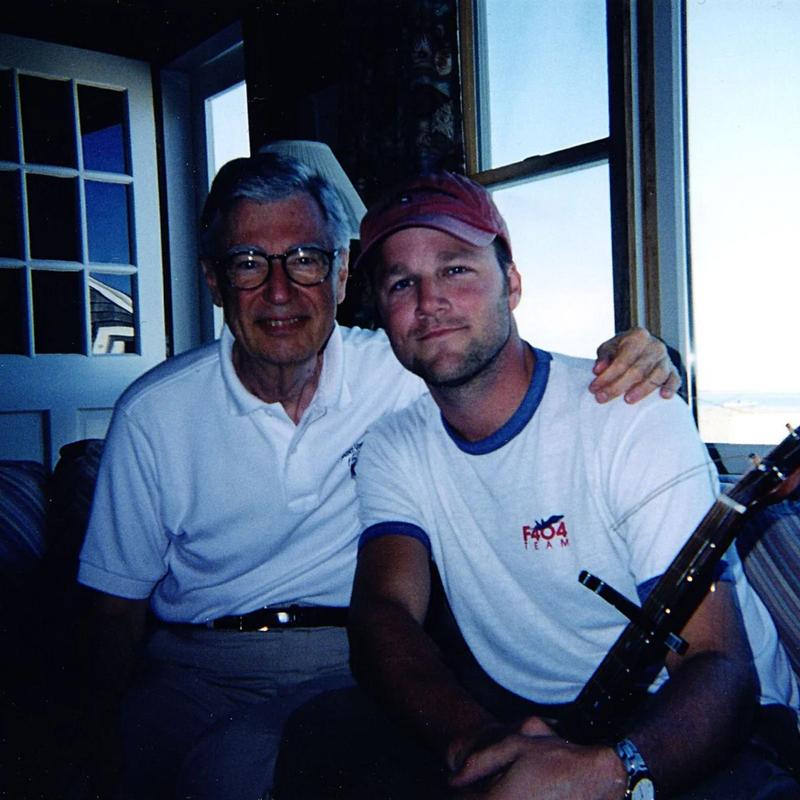
He was reminded to look to the neighbors as his friend Fred Rogers told him to when he was directing the film, Mister Rogers & Me. Some of those folks are experts in mental health and counseling, and those who have dedicated their careers to improving the quality of life in their communities. The documentary is called Friends & Neighbors, it's streaming now on the PBS App and will be on video on demand on May 15th. With me now is Benjamin Wagner. Welcome to All Of It.
Benjamin Wagner: Thank you.
Alison Stewart: Before we get into this journey of the film, what do you remember about the point when you hit rock bottom, when you realized you had to make major changes in your life?
Benjamin Wagner: It was a slow-motion breakdown. There wasn't, thankfully, a moment when there was a car accident. I didn't get incarcerated. What I remember is a gnawing voice in my head that said, "Dude, you got to do something different. The next decade--" I was approaching a milestone birthday, "The next decade can't look like this one." It was loud and clear, and it was strong enough to get me to change my behavior, to think about doing something different.
Alison Stewart: When you think about the pandemic, why do you think that moment in time is when you had to step away, and you had to reassess everything?
Benjamin Wagner: Like so many of us, I was forced to step away. I was traveling globally for the Facebook Journalism Project. I was living in New York City and in Wilmington, Delaware, my wife's hometown, where we had just moved with the kids after 25 years here in New York, kind of a crash pad. It wasn't pretty. I was everywhere and nowhere, and then boom, no travel. I can remember skateboarding in the high school across the street, no air traffic, no one on the highways. Suddenly, you're left with basically your own feelings and your own thoughts. I wasn't sleeping great.
Like a lot of Americans, it was like, "Oh, wow, I can just walk across the street and get a case of beer and start at 5:00 instead of 7:00 or what have you." It just was a little bit of a slippery slope, but it was that silence. I was out of New York. When you live in it, you don't always realize just what a high frequency it vibrates at. You get out, and you go, "Oh, this is different."
Alison Stewart: When you went back, and you talked to people about your memories, and you experienced them again, maybe in a different way, what was challenging for you about reliving these memories?
Benjamin Wagner: Oh, man. In a lot of ways, I had lived and relived them many, many times. The night my jaw was broken is a somatic, visual, very, very strong sense of memory. It colors so much of everything. As I say in the movie, walking home after a rock show, 2:00 AM, it gets your attention. In a lot of ways, what was really different and what was really useful is that I was able to gain other perspectives and other points of view and other voices, and get a sense of what it seemed like from their angle because I had only lived it inside of mine. Those co-signs and that sense from the community that, "Oh, you weren't alone. This was upsetting to us too. We just didn't know what to do with it," somehow made it feel a little more manageable, a little more relatable.
Alison Stewart: When did you decide that you had to go back and relive the past?
Benjamin Wagner: That was almost immediate. Frankly, the diagnosis came in August of 2021. By the spring of 2022, I had figured out, "Oh, this is what's happening to us writ large." This idea that we're all so easily activated, but we don't know why. We don't have language for our emotions. We don't understand that, as Fred Rogers would say, "The child is still in me, but he's not so still." We don't really have permission for any of that. I figured out pretty quickly that I was going to grab a camera. You'll love this. I was talking to my brother. I was like, "I think what I'm going to do is literally drive." It's a journey.
I know I'm making a documentary. How are you going to create a throughline? "I think I'm going to drive back to all the places where things happened, almost as a filmic device." Then, he goes, "You know what you got to do, dude? You got to interview mom and dad." I was like, "Oh, no." Great creative idea, but uncomfortable.
Alison Stewart: That's really hard. I want to talk about the importance of Fred Rogers in your life. First of all, how did you meet Fred Rogers?
Benjamin Wagner: Sure. Mr. Rogers summered in a modest gray shake-shingle house on the edge of Nantucket Island, and my mother rented the cottage next door. Mr. Rogers really was my neighbor. That's the voiceover from the top of the documentary. My mom was renting a cottage. She was a theology student getting her master's. He, of course, was an ordained Presbyterian minister. They bumped into each other on the beach, became fast friends, as was often the case with Fred. Fred was a connector. She said, "You'll never believe who I met. You've got to come meet him," and I raced out.
Alison Stewart: What from your experience with Fred Rogers helped you in this moment?
Benjamin Wagner: Oh, so much, Alison. Above all, I think some of the adages that make their way into the movie which is to look for the helpers. This is an adage of his throughout his career. When you look for the helpers, you know that there's hope, this idea that there's something of yourself that you leave at every meeting with another person, this awareness that we have an impact on each other that's real. Again, as I just said, the idea that "the child is in us still.". Fred gave us permission for that for decades. I don't think most of us really have figured out how to embody that.
We really want our childhood to be over. It has nothing to do with anything. It ends up it has a lot to do with how we're wired and how we show up in all of our relationships, first and foremost with ourselves.
Alison Stewart: My guest is Benjamin Wagner. We're discussing his new film, Friends & Neighbors, where Ben revisits his past to face the events that influenced his experience living with chronic stress and PTSD, and how his friends and neighbors helped along the way. We wanted to get you in on this conversation. How do you handle times when you're feeling high levels of stress or maybe even chronic stress? Who is someone you turn to for support? Maybe a friend, a neighbor, a family member. Give us a call or text us now at 212-433-9692, 212-433-WNYC. Shout out someone in your community or neighborhood who is doing a lot to make life better for others, to make stress a little easier for the rest of us. How do you go about taking stress off for yourself?
Give us a call, 212-433-9692, 212-433-WNYC. You interview your parents, as your brother said. It was difficult because they talk about how they physically fought. First of all, how difficult was it to get them to talk to you on camera?
Benjamin Wagner: Not very, to their credit. I asked my dad first, and I had a hunch he would say yes. My dad's been pretty supportive of our work, both Mister Rogers & Me and this. They both have. This was just the third rail. I think there's a third rail in most of our homes. You can bump up against it, but you definitely don't want to put your hands on it for long. When my dad said yes, my mom said yes shortly thereafter. I sat down with them each separately, though. We cut them into a brief segment at the beginning of the film. It was deeply uncomfortable, as I suspect is evident.
The first third of the film is really me, and the second third is the universal bit, the researchers, the policymakers, films, and people in the community. Really, what I end up talking about is this part because it's, I think, so compelling, and we all can relate to it.
Alison Stewart: Oh, sure. It's so interesting, though. You sat, and you asked your parents very difficult questions.
Benjamin Wagner: Yes, I did. This is 25 years, 30 years of journalism, where I was like, "You can't dodge."
Alison Stewart: I know. You have to.
Benjamin Wagner: You got two hours. You got the cameras rolling. You got two camera and a shooter, so you better ask the hard questions. Not fun, not easy, huge of them, and it helped me to increase the amount of space I could hold for their stuff. Really just super generous of them to think about what good it was not going to just do me, but my kids, my progeny, if you will, their legacy. Also, they, I think, understood that there was an opportunity to do some broader good here. Really props to mom and dad.
Alison Stewart: What realizations did you have about your parents after you sat down and you listened to the interviews again?
Benjamin Wagner: Oh my gosh.
Alison Stewart: Because I know in the moment, you're just taking it in. [laughs] It's after, when you sit down and listen to it.
Benjamin Wagner: In the moment, you're just trying to breathe and stay present and be responsive so you can ask the next question. I've watched it, Alison, many, many, many times since the cut film, the interviews. Above all is that they were young, young people at a time when there were even fewer resources and even less permission to talk about the things that you and I are talking about openly and comfortably right now. These are a couple of kids who went to Catholic school in the mid- and early '50s. There was not a lot of permission. These are young kids who got pregnant out of wedlock at a time when that was just not okay, though happening, not at an insignificant rate.
I gained a lot of space and, frankly, love for how hard it must have been for them. We moved. I was induced, and the next day, my dad split and came to Maryland, where we were moving the family. The family followed three weeks later. As you gather in the movie, we never really stopped moving. There was a lot of tumult. There was a lot of chaos, and I gained a lot of appreciation for how hard that must have been for them.
Alison Stewart: You're a Gen Xer. I'm a Gen Xer. In many ways, it means that we're very independent, but we were also latchkey kids. We were left to our own devices. What are some of the consequences of that freedom for you?
Benjamin Wagner: Oh gosh, and I like that you frame it as freedom because that was the upside, freedom to get in a fair amount of trouble, I will say. The upside was that. I'd say I have a lot of agency, a lot of sense of DIY, "Can do it myself." All the records I ever put out, I put out myself. These movies we made on our own steam, even the idea that you can knock on doors and ask people for help, send emails, and make phone calls, that sense of "I can do it myself." I think what I realized making the movie and all the, frankly, therapy around it, because it was happening in real time around the edges, and a tiny bit of it happens on camera, is just how alone I felt. That's I think the byproduct of the latchkey generation that we don't spend a lot of time talking about.
I'm working on a book that comes out next summer, and I did a deep dive on lots of these topics, including a deep dive on latchkey generation. There were congressional hearings on the topic at the time. I wouldn't have known that then, of course. There was a lot of concern because a lot of kids were spending a lot of time by themselves. I think, above all, is that emotional residue of like, "Where is everybody?" As a kid, you don't have any frame of reference. You begin to think, I think on an unconscious level, "I guess I'm not that important because nobody's here to make dinner," or what have you. Again, to create space for them, they were doing their best. My mom had to work in order for us to be able to stay in that house and eat our meals and what have you. I think overwhelmingly, it was a big question mark of like, "Hey, where'd everyone go?"
Alison Stewart: You went and found a beer at 13.
Benjamin Wagner: How about that?
Alison Stewart: How do you think your use of drugs and alcohol affected the long-term way that you handled stress? Did it just push it down the road? What did it do?
Benjamin Wagner: Totally. I will tell you, Alison, I was always aware of the fact that my coping mechanisms weren't healthy. I don't know that I thought about achievement as a coping mechanism. I don't think I had that frame on it. There was rarely a time where I would have too many beers and think, "Well, that was a great choice." I didn't wake up with hangovers and be like, "A-plus activity, dude. What a great set of choices you made last night on the Lower East Side." As it ends up, I got to give credit where it's due. Dr. Ken Brick says to me, literally after I laid out the story that you see in the movie, he goes, "Well, all those beers seem like a pretty reasonable response to a fair amount of post-traumatic stress. If you're in pain, you're going to reach for pain relief."
I just hadn't thought of it that simply, and now I see it so clearly. It's just a little more insidious than an opioid, a little harder, a little more available at every corner store, certainly notably more socially acceptable. I would argue pretty darn problematic at scale, writ large, and it was just culturally okay. What did we do after a big Video Music Award? I took the whole team out and put the credit card down, and we got as--
Alison Stewart: Messed up?
Benjamin Wagner: Thank you, yes, as loose as we could. You see me struggling there. It just kicks the can down the road. I guess I got that. I just didn't have the courage to really put a foot down or just put a stake down. I think part of that is because it is wildly socially acceptable to get a little buzzed or get stoned or what have you. For me, it just ended up not returning at the same rate that it did when I was 25.
Alison Stewart: We got a text here that says, "Inner child work, it is the way."
Benjamin Wagner: I did a lot of inner child work. In fact, the movie poster, as you may recall, is me at age nine, a photo my dad took with a backwards baseball cap with wings on it, which is perfect for a kid who just kept running. I have a friend, actually, Anne Kubitsky, who's in the film. She does the Look for the Good Project. Anne said to me when she saw the poster, she goes, "Wow, you really stuck up for that little boy."
Alison Stewart: Wow.
Benjamin Wagner: To the degree that I was like, "No, we're going to make a movie about this. We are going to talk about this." That inner child stuff is really, really important. Again, that Gen X thing, Alison, we roll our eyes a little bit. Maybe you don't, but there's a part of our generation like, "Whatever, hippie," and it just ends up, it's all real. It's all valid. It just took me long enough to be like, "I can't worry about whether it's cool or hip. I just got to do the right thing for me, and I think it might help other people."
Alison Stewart: My guest is Benjamin Wagner. We're discussing his new film, Friends & Neighbors. We want to hear from you. How do you handle stress? Who is someone you turn to for support? Shout out to someone in your community who's doing a lot to make life better for others. How do you go about trying to handle the stress of others, or maybe for yourself? Our phone lines are open, 212-433-9692, 212-433-WNYC. We'll have more after a quick break.
[MUSIC - Hannibal Hayes: All Of It Theme Song]
Alison Stewart: You're listening to All Of It on WNYC. I'm Alison Stewart. My guest is Benjamin Wagner. We're discussing his new film, Friends & Neighbors, where Ben revisits his past to face the events that influenced his experience living with chronic stress and PTSD, and how his friends and neighbors helped along the way. We want to hear from you. How do you handle stress? Who is someone you turn to for support? Our number is 212-433-9692, 212-433-WNYC. Our Gen Xers are checking in.
This text says, "After doing EMDR therapy to treat complex PTSD stemming from lots of adverse childhood events, my dear friend Tina was newly retired and was available to me, becoming the only caregiver and the power of attorney for my mother. I'm not sure I would have gotten through the first four years without her support and understanding," signed, a fellow Gen Xer. This one says, "I love this phrase, 'When you are in pain, you look for pain relief.' As a fellow Gen Xer who is basically an orphan in a large family, I sought pain relief."
Benjamin Wagner: We often don't think of it that way. For me, it was Excedrin, which was also a hangover relief. It was really a gift to hear it. I tell you, that was the reframing that opened the door for all of this for me because I had carried a lot of shame. "As long as nobody knows I have three beers every night, religiously, we'll be fine," or more. The fact is, especially in this town, you walk down the street, and every third establishment is a bar or a liquor store. It is really very simple, and when you think of it that way, I think it comes with less shame.
Alison Stewart: You lived in New York for 25 years, and you talked with one expert from New York-Presbyterian about how it can affect your mental state. It's like "the city that never sleeps," I think he uses the line. What did he tell you about why a city like New York can be challenging for the brain and the body?
Benjamin Wagner: Sure. Dr. Zachary Mulvihill, who I interviewed right across the street in the park that my girls learned to swing on the swings and ride scooters. This whole thing has been such a great homecoming. To put it in brief, what Zach is getting at is the idea that we're living creatures, and our imperative really is to live long enough to procreate. If you really boil it down, we think of ourselves as different from everything else, but we're basically living creatures. We need a circadian rhythm. In the city that never sleeps, we're really plugged into fluorescent lighting, and we're not connected to the cycle of things.
Then you add things like stimulants to keep us awake during duress. Then you add things like noise, chaos, screaming, jackhammering, stuff like that. You basically just turn up your nervous system a little bit, and it stays pegged at a slightly higher rate for a long period of time, and your nervous system flips into fight or flight. There's rest, digest, fight, or flight. It's a binary system. What happens in essence is you get stuck in a little bit of fight or flight, and that has an impact on your cognitive capability. It has an impact on your immune system. Your body can't really settle. I carry a lot of chronic pain. You carry a lot of chronic stress, your shoulders, you get all tense, and it has a long-term effect on your organs and so forth. It can lead to all kinds of disease. That is the short version.
That's really the short version of all kinds of distress from adverse childhood experiences onto things like urban stress, the stress of economic precarity, of violence, of career precarity or what's happening with AI. Will I work tomorrow? All the things. Social unrest, wealth inequality, polarization, all of these things just turn the dial up a little bit so that we're all in a bit of fight or flight. Then we look for simple solutions because in fight or flight, it's really just a question of, "How do I survive?" That's when you hear survival mode. Then, in contrast to that, would be, "How do I thrive? How do I find my way to that rest and digest and make space for all these things, first of all myself?" Zach was a gem.
Alison Stewart: Let's talk to Victoria, who's calling in from Montclair. Hi, Victoria. Thank you so much for calling All Of It. You're on the air.
Victoria: Oh, hi. Thank you for taking my call. Here's what I want to add to this incredible, amazing conversation you guys are having. I was diagnosed with chronic PTSD with my first therapist, who was a talk therapist. We spent 12 years together doing some really good work. Then he said, "I think you should move on to EMDR therapy, which is this rapid eye movement, deep therapy that goes into your subconscious and pulls stuff to the surface that you didn't even know was there."
I've been doing EMDR for the past year, and I cannot believe how helpful this therapy has been to me. It's really just reached in and said, "Let's just get this junk out of here so that you can thrive." That has been my experience, and I think that these conversations are really important. We should be talking about this stuff every day.
Alison Stewart: I'm glad that worked out for you. Thank you for calling. This says, "Everything Ben is saying is resonating so strongly. The loneliness of our freedom, pain, the self-soothing of Gen X, all true. I can't wait to see the movie." This says, "Got to do something physical daily, preferably outside, if not possible inside. When you take care of your body, the only one you have, you are less likely to abuse it later in the day with alcohol and/or drugs." What did you find that worked for you?
Benjamin Wagner: I just want to double click into both those points, and it'll get to that answer, which is, I went to therapy in New York City for I don't know 15 years, and it was all talk. It was all cognitive. It was all up here, and it was helpful, but what it wasn't doing is paying attention to the fact that I also had something below my neck. This idea that so much of psychology or our experience in the world is somatic, a word that I didn't know at all, really. I'd heard it, but I didn't think of it. I did the New York City Marathon 10 years in a row. To me, it was just my body's job to carry my brain 26 miles. That's ridiculous. I'm a system. We are bodies.
The caller's point about EMDR, there's so much stuff in the body. EMDR, in brief, there's a number of ways you can do it, but it basically bilaterally stimulates the brain and creates a calm state in which you can then go back into some of these more traumatic experiences and re-experience them in a safe way and with a therapist who can guide you through them to, frankly, a different imagined outcome. In the movie, I animate myself as an adult, in essence, rescuing myself as a boy knocked out on the floor of the parking lot and carry myself to safety.
The idea is that when I revisit those memories now, I have a different picture of it altogether. Then it has less of a likelihood of having an impact on my body, that racing heart, the upset stomach, the tightness I would get in my chest, the shoulders, the tight jaw, not surprisingly, the somatic embodiments. Again, a Gen X guy talking sounded pretty hippie to me a couple of years ago. I will tell you, as your caller did, it is so real. EMDR has been really, really useful to me as well. I've done some other interventions that were even more out there, and every one of them has only proven just how much stuff is locked up inside of us.
Alison Stewart: In the big picture, you live a pretty privileged life.
Benjamin Wagner: Yes, I do.
Alison Stewart: You're a white, straight, cis male, got two kids, and--
Benjamin Wagner: We're in colonial and leafy suburban Wilmington.
Alison Stewart: What parallels do you draw for people who don't share your privilege?
Benjamin Wagner: I will tell you that my privilege is part of the reason why I thought it was important to do this and to be the guy who said this because I didn't see guys who look like me saying this. I saw women saying this. I saw people of color saying this, people who had to say this stuff and be in these places first. I thought to myself, "It's still a patriarchy. Colonialism and empire are still a thing, knock on wood for now." I thought like, "I got to be one of the people who's out in front of that stuff." One of the reasons why I asked my friend Logan Herring to be in the documentary, because if you can't get to the early bits of Maslow's Triangle, if people are worrying about eating, sleeping, education, basic needs, they're certainly not going to have the ability to think about, "Am I well?"
The good news is most of these interventions, to your previous point, just the movement stuff, going outside and getting some sunshine, to Zachary Mulvihill's point and your texter's point, that stuff's free and available to everybody, and it can create a perceivable delta change in your experience of the world and give you a little more space to problem solve some of the vexing problems that we all face. I appreciate you pointing that out. I'm very aware of that.
Alison Stewart: This says, "Living in the city also causes a constant state of FOMO in a toxic mix with YOLO, especially when you're young and chasing your future." What did you learn about what it takes to build a network of people who can support you? It's hard sometimes for people to go to people around them and say, "Look, I need support. I need help." The other person might not know what to do, even.
Benjamin Wagner: I would say overwhelmingly it's a practice, and if I've learned one thing in the last five or six years around all of this stuff, it's all a practice. For so much of my life, I was like, "I'm just going to get great at this thing. It's mastery." It's not mastery. Folks who've done yoga for a minute, they understand it's a practice. For me, coming vulnerable to a male friend or a network of friends is still a practice, and it's a work in progress. I would say particularly where I live now, which I've been there five, six years, but still feels new to me after 25 years in New York. I'm still trying to find those people.
The good news is I got some pals who go way back, some guys who can do this stuff, and I pick them up along the way. I have lots of New York friends, some of whom may be listening, who I can count on. I've always been that connector type, luckily. That's just a little blessing. It's a practice. I feel like we have such high expectations for ourselves, usually. If I can just give myself a little bit of grace to know that I don't have to be perfect at any of it, as long as I'm doing my best and I can own where those gaps are, like where I fall down and say, "Oops, my mistake," that I can just get a little bit of progress every day.
Alison Stewart: What do you want people to understand about the messages that are grounded in Friends & Neighbors when they watch the documentary on PBS Apps or on video on demand?
Benjamin Wagner: Oh, bless you. Above all, I felt really weird and alone. It did not take me very long to lift my head up out of my own pity party and realize that I was not all that weird or all that alone. In fact, the data supports that this is a real thing right now. Men commit suicide at a rate four times that of women, depending on your data. COVID data was higher. Upwards of 40% of the American population reports symptoms of depression or anxiety, and that's the reports bit. If you don't get at the reports bit, it's probably higher. I would argue most of us wrestle with most of this much of the time, that you're not alone bit, that you do have some agency, and that it's not just the brain and your thoughts.
I love this. It's like your thoughts are part of you, but you are the listener. I have some agency over the part of me that's like, "Oh, you didn't do that interview well enough, Benjamin," or, "You didn't get that A-plus on the test," or, "You didn't present well enough," or whatever. I can say, "Okay, thank you, brain. I did my best. I'm going to take a deep breath. I'm going to do as best as I can on the next thing." We're the listeners. We're not alone. We have some agency, and there's lots of little things you can do to chip away and make tomorrow a little sunnier than today. There really are. I know that sounds a little saccharine. I beg your pardon.
Alison Stewart: The name of the film is Friends & Neighbors. You can catch it on the PBS App. It'll be available on video on demand on May 15th, I believe. My guest has been Benjamin Wagner. Thank you for helping us kick off Mental Health Awareness Month.
Benjamin Wagner: My pleasure. Thanks for having me.
Copyright © 2026 New York Public Radio. All rights reserved. Visit our website terms of use at www.wnyc.org for further information.
New York Public Radio transcripts are created on a rush deadline, often by contractors. This text may not be in its final form and may be updated or revised in the future. Accuracy and availability may vary. The authoritative record of programming is the audio record.