
Laughing Toward A More Fulfilling Life
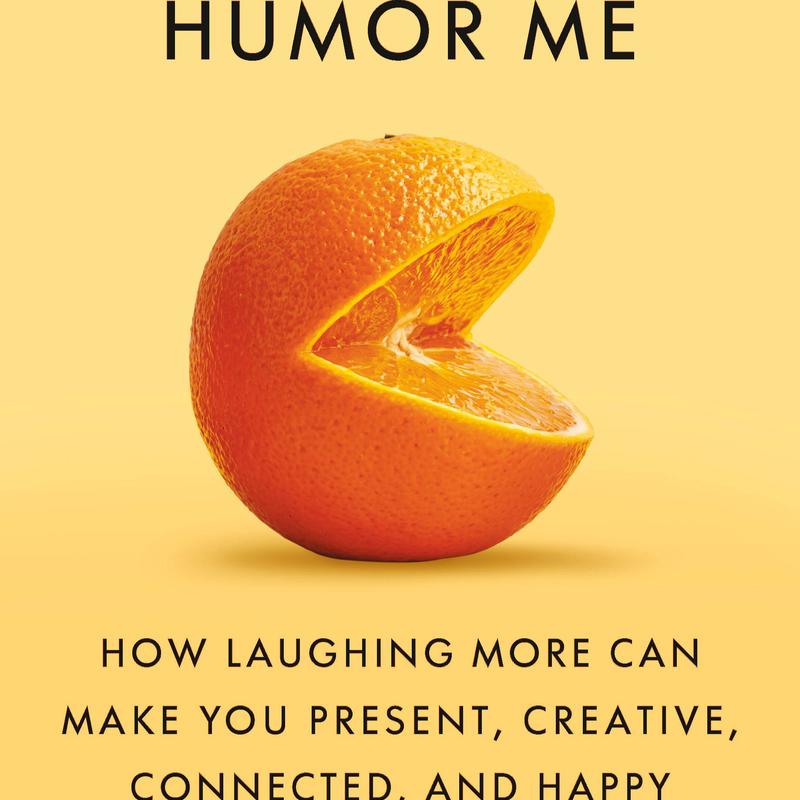
Alison Stewart: This is All Of It. I'm Alison Stewart. Chris Duffy wrote a book about laughing. That's because he works as a comedian and a TV writer. He's also the host of the TED podcast, How to Be a Better Human. Why laughter? What can it do for us in moments of grief or anxiety? How will it help us connect to one another and to ourselves? Chris went on a search to find out why humor, laughter, and hilarity can be so healing. He traveled to scientists' laboratories, talked to Navy seals, and spoke to doctors, all of whom believe that a good laugh will go a long way.
The book is called Humor Me: How Laughing More Can Make You Present, Creative, Connected, and Happy. Publishers Weekly says he compassionately and insightfully unpacks how humor functions in deeper and more unexpected ways. Chris Duffy, welcome to All Of It.
Chris Duffy: Thank you so much for having me. What a pleasure to be here.
Alison Stewart: I should say welcome in person to All Of It.
Chris Duffy: I know.
Alison Stewart: I used to talk to you over the Zoom machine, but now I get to see you in real life.
Chris Duffy: Oh, what a delight. So much better to be in person.
Alison Stewart: So much better. Let me ask you a question. What's the difference between being funny and being someone with a sense of humor?
Chris Duffy: I think one of the biggest things people get wrong about a sense of humor is they think it's like you're the person on stage and everyone's paying attention to you, or you're the person at a party, and you're in a circle, and everyone has rapt attention on you. I actually think the best senses of humor, the kind that I really want to encourage, are the people who laugh the most.
That doesn't mean that you have to be the performer. That doesn't mean you're the one telling the story. It means that you go through your day and you experience laughter, you experience joy and delight, and you're able to laugh at the absurdities of yourself and the weirdness and strange oddities in the world. It can be just as much for introverts as extroverts.
Alison Stewart: Can you learn to be the kind of person who laughs?
Chris Duffy: 100%. I really believe that this is not like something you're born with. Instead, it is a muscle that we can build. Also, it's a practice. Like, the more that you notice things that make you laugh, the more you keep noticing them.
Alison Stewart: Listeners, when was the last time that laughter helped you out of a bad situation? Has laughter helped you out with grief? How so? Do you have a question for Chris about some of the research he did for the book? Lastly, have you heard any good jokes lately? Our number is 212-433-9692, 212-433-WNYC. We are encouraging laughter during this conversation. I do want to say that you very clearly, in the book, you support science, you love penicillin, you write.
Chris Duffy: That's right. Laughter is not the best medicine.
Alison Stewart: All of those things are important. You do believe that humor and laughter can have an impact on health. What led you to that decision?
Chris Duffy: People say laughter is the best medicine. As we've already covered, that's not true. I think we all know that if you went in for surgery and they were like, "Instead of an anesthetic, we're going to tell you a couple of knock-knock jokes." You'd be like, "This is a bad decision."
Alison Stewart: [laughs]
Chris Duffy: I think that what laughter can do is it can reframe our experience of a situation. Like, if you're going through a hard time and then you find a way to laugh about it, it doesn't change the underlying situation, but it can relieve the tension and the pressure. In a lot of medical situations, that's actually quite an important role. Like, it can make us need less pain medication. It can make us able to focus on the positives in our lives. Those are really important medical outcomes that all the doctors and psychologists I talked to said they really want for their patients.
Alison Stewart: Yes. Doctors you talked to in the book talk about how laughing and humor, maybe even a chuckle, can reduce anxiety. What else can it do?
Chris Duffy: It can give us this sense that the way we see things is not the only possible way they can be seen. So much of laughter is revisiting something and saying, "Oh, I never thought of it that way," and then laughing. That's actually quite a big outcome in therapy, in mental health, and in just the way we experience the world, is to think it might be bad now, but that's not the only possible outcome; it could change.
Alison Stewart: When did that happen for you?
Chris Duffy: It's happened a lot. I mean, it happens especially when I'm able to laugh at myself. I can get locked in this idea that I need to be perfect or impressive. Then, when I realized that people actually don't like perfect, impressive people all that much.
Alison Stewart: [laughs]
Chris Duffy: Like, the person who is flawless, you don't want to talk more to. You're intimidated by them. When I remember that, I think it really helps me to say, "Okay, the fact that my voice is a little hoarse or I have a stain on my shirt, people will relate to that. They won't like me less; they'll like me more, and we can laugh about it together."
Alison Stewart: We're talking to Chris Duffy. He's the author of the book Humor Me: How Laughing More Can Make You Present, Creative, Connected, and Happy. There are three pillars to humor: Being present, laughing at yourself, and taking social risks. Is there something you learned on your own? Is this something you learned on your own or something that they taught you in comedy school?
[laughter]
Chris Duffy: When I went to the Clown College, they were like, "This is Clown 101." No, this is something I think I've learned in over a decade of working in comedy professionally and talking to people, and just also being a person who loves a good laugh and noticing what makes people laugh. I've kind of come to the conclusion that the people who I like being around the most, that make me laugh the most, they do these three things. They're really locked in, in the moment, which is a magical part of humor, because so often we're like half there, we're on our phone, or we're thinking about something else. When you're deep belly laughing, tears rolling down your cheeks with someone, you are nowhere else.
Alison Stewart: Yes.
Chris Duffy: That's a really important part. Then, people who are able to laugh at themselves, you connect with them more deeply. The last one is people who take a risk. Sometimes that risk is just talking to you, sharing their actual vulnerability. That, again, helps us to really connect. I've seen it by experience rather than school.
Alison Stewart: It's interesting. Your book is bookended by a kid and a woman who's-- I think she's like 104.
Chris Duffy: That's right. She's 104 now.
Alison Stewart: 104 now. Tell me about the kid and tell me about the 104-year-old.
Chris Duffy: These are the two funniest people that I've ever met in my life. The first is a 10-year-old in Boston who, when I was an elementary school teacher, he was in my fifth-grade class, and he had a column in the school newspaper where he was a food critic who reviewed cafeteria food.
Alison Stewart: [laughs]
Chris Duffy: Reading Gary's reviews of cafeteria pizza, where he'd say something like, "This dish, originally from Italy," introducing a sheet of cafeteria pizza. He made me laugh so much, and he taught me that you can see hilarious new ways of experiencing the very mundane, like a cafeteria pizza.
Then Maureen, who is my 104-year-old friend, who I met at the pool and swims still to this day, is a lap swimmer and wonderful. She is someone who she is constantly making friends, and so much of her life is enriched by the way that she makes people laugh. One time, we were in the pool, and a guy got in who was bald but had a very big beard. She swam up to me and said, "Looks like his hair got a deal on real estate on the chin," and then swam away. I was like, "I want to spend as much time as possible with this woman."
Alison Stewart: Let's talk to James from Teaneck, New Jersey. Hi, James. Thank you so much for talking to All Of It.
James: Hello. How are you?
Alison Stewart: Doing well.
James: Okay. I'm an emergency physician, and I found laughter is a very critical tool sometimes, especially when somebody comes in to see a doctor they do not know, and they're really worried about what's going on. At the end of the discussion, if I know they're going to be okay, I will pause, and I say, "Listen, I don't want to jump to any conclusions before we get all the information in, but I think you're going to live."
Alison Stewart: [laughs]
Chris Duffy: Oh, that's so good.
James: Most people know they're going to live, and it gives us a common sense, "Okay, whatever it is, we're going to be able to get through it." It's a good tool. One of the things I also learned, though, is it's better to laugh at yourself than back in the emergency room laughing with the other doctors or nurses because it sort of makes the patients think you're laughing about them.
Chris Duffy: Those are such important rules for laughter, really.
Alison Stewart: Those are good. This text says, "We have a new grandson and are often recording him. I realized soon after he stopped screaming in month four that I was constantly laughing at him. I love laughing. His entrance into the world has become a welcome part of my life. We all need more laughs." This text says, "I like to be funny. It definitely reduces my stress, but it often draws people to me, and that has been rewarding."
Chris Duffy: There's so much research about how important social connections are for our enjoyment of life, but also for our health. It literally is one of the biggest predictors of how long you live. Having a great sense of humor and encouraging other people by laughing at them when they want you to laugh at them, that makes you magnetic. That makes people want to be around you.
Alison Stewart: You spoke to Greg Bryant, a cognitive research scientist, and he said that finding something funny is a little bit like a puzzle. How so?
Chris Duffy: He studies the evolutionary reason why we humans across all societies have laughter. He has this idea called encryption theory, which is that I present you with a lock, and if you have the key that can open that lock, you laugh. He thinks that this evolved because we needed a way as humans to understand if someone was part of our group or not. That's why across every culture, you can immediately tell with much more certainty than random whether someone is fake laughing or not. That's why they think that is a human trait across all cultures.
Alison Stewart: It's interesting. You got yourself in a little bit of trouble, you're right, when you tried to call your company, Fully Liable LLC.
Chris Duffy: That's right. I reached a point in my--
Alison Stewart: [laughs] A lawyer said, "Don't do that."
Chris Duffy: Yes. A lawyer was like, "I think that that is very funny. Also, if you call your limited liability company Fully Liable, you will ruin your life." It was one of the many jokes that I've not been allowed to make, but I'm glad to be able to share it in the book.
Alison Stewart: That's an example of a comedy puzzle in many ways, right?
Chris Duffy: Totally. That only is funny if you understand that the corporate structure was called a limited liability corporation. It's also an example of a joke that really no one was ever going to see. This is a piece of paperwork that maybe two lawyers and an accountant were going to see. I'm a big believer that that is also a place where if you can just make yourself laugh in all the tiny little ways, your life is filled with these little delights and treasures. My tax documents became funny to me.
Alison Stewart: [laughs] My guest is Chris Duffy. He's the author of the book Humor Me: How Laughing More Can Make You Present, Creative, Connected, and Happy. Calling out to all of our listeners. When was the last time that laughter helped you out? How so? Maybe you have a question for Chris about how he did his research for the book, or maybe you want to tell us a good joke. Our number is 212-433-9692, 212-433-WNYC. Your second pillar in the book is laughing at yourself. What do you mean when you say laughing at yourself?
Chris Duffy: I mean, acknowledging that you are an imperfect, fallible person who makes mistakes and some days is a little bit of a mess or doesn't have it all together. There's a great study that I came across when I was looking at the research on humor that showed that they had people pretend to be job applicants, and then the research participants were rating these job applicants. The people that they rated the highest were the job applicants who came in, who pretended to have just poured a cup of coffee on their shirt, who came in and said, "Oh my gosh, I'm so sorry, I just spilled coffee on my shirt." I love that-
Alison Stewart: That's interesting.
Chris Duffy: -study so much because it subverts the idea that we're supposed to be flawless. Instead, when we're evaluating other people, we actually like people who are qualified but relatable in that they have an obvious imperfection. I'm not saying if you apply for a job, you should pour a cup of coffee on yourself intentionally, but I think being willing to laugh at yourself makes people like you more, and it makes them also think that you're more competent.
Alison Stewart: You have to be careful about laughing at yourself.
Chris Duffy: Sure.
Alison Stewart: It can go a little too far sometimes.
Chris Duffy: Laughter is not always good. Bullies make people laugh all the time. You can bully yourself. If you have something that you're insecure about or that other people have laughed at you about in a mean way, and you kind of try and preempt it by making the joke first, I actually don't think that's a good way to laugh at yourself.
Alison Stewart: Yes. You went to the humor research lab in Colorado.
Chris Duffy: Ah, yes.
Alison Stewart: I'm waiting for the joke there. It's almost a joke when you say it, though.
Chris Duffy: Their acronym is HURL, so that's the joke there.
Alison Stewart: Exactly. HURL. What goes on there? Can you describe it for us?
Chris Duffy: Yes. This is another one of the academic places where they are studying humor, and they came up with this theory of what makes things funny, that's called benign violation theory. The idea is, in order for something to be funny, it has to kind of break a rule or have a violation of some kind, but it can't be a dangerous or offensive violation. It has to be benign. The classic example of this is a tickle. A tickle is an attack that is a benign attack. This is a way that they think about all of the things that are funny because it's not offensive, but it is crossing a little bit of a line. That's a way to balance what is or is not an inappropriate type of comedy, I think.
Alison Stewart: This text says, "When I picked my son up from preschool yesterday, I just got him buckled into his car seat, when he smiled very sweetly at me and then said, 'Mommy, did you know we're made of meat?'"
Chris Duffy: [laughs] That is really good.
Alison Stewart: "It was so unexpected. After a very stressful holiday season, I could barely get the car started. I was laughing so hard."
Chris Duffy: The unexpected nature of things that make us laugh is such a joy because it breaks us out of these scripts. It breaks us out of just our routine. That's what I love about this show, too. You can't possibly predict what people are going to text in or call, and that's what makes it fun and enjoyable. That's also so much of what makes things funny and makes our life worth living is getting off the script and out of autopilot.
Alison Stewart: Well, let me ask you about talking to a Navy SEAL, because they know how everything's going to go all the time. You found a guy who said that humor really helps them through their training, or at least through their missions.
Chris Duffy: Yes. It was really interesting. I talked to Joe Choi, a former Navy SEAL. He was a leader in a SEAL platoon. I think that's the right word. What he told me is that the best leaders, they take what they do very seriously, but they don't take themselves very seriously. He found that if he wanted to inspire confidence, if he wanted to get his troops to really respect him and to trust him, he needed to be willing to laugh at himself.
He told me this wild story of one time. He was trying to climb up a ladder from the ocean onto a helicopter, and he got twisted around and he almost drowned. When he came back up, instead of being angry, he said, "Wow, that did not go well." Everyone laughed.
Alison Stewart: [laughs]
Chris Duffy: Because he acknowledged the reality of it, people trusted him more in the future.
Alison Stewart: Let's talk to Paul Adam in the East Village. Hi, Paul Adam. Thanks for calling All Of It.
Paul Adam: Hi. I'm actually a fellow comedian myself. From one comedian to another, how are you doing? Happy New Year. I have a story, actually. From the earliest days of breaking into comedy, I found out that laughter is the OG medicine. One of the reasons is because our ancient prehistoric ancestors would use it when they were outrunning a predator, and they finally escaped. They developed the tool of breaking out into laughter as just a form of relaxing and stress relief.
Chris Duffy: Wow. One of the oldest jokes, and a joke that even other species like chimpanzees laugh at this is the I'm going to get you. Little kids do that. That actually makes a lot of sense to me.
Alison Stewart: I was going to ask you, do certain animals have a sense of humor?
Chris Duffy: The short answer is we don't know for sure. Its signs point to yes. I was speaking to Dr. Alexandra Horowitz, who at Barnard runs the canine cognition lab. She studies dogs. She said that she can't say for sure it's exactly the same, but that there's play, there's like a version of laugh, and it just seems like humor is something that transcends our species.
Alison Stewart: I'm talking to Chris Duffy. He's the author of Humor Me: How Laughing More Can Make You Present, Creative, Connected, and Happy. We want you to call in and tell us how laughter has helped you. Do you have a question for Chris about some of his research, or just have you heard any good jokes lately? Our number is 212-433-9692, 212-433-WNYC. Number three on your list of pillars of good humor is taking social risks. You tell a great story. There's a TED talk about it. This great story about your year as the CEO of LinkedIn.
Chris Duffy: Yes. If you want to laugh, I think you have to push yourself a little bit to at least try something new, to experiment. For me, as a comedian, I had never really had use for the social network LinkedIn. I never had use for like a professional resume, but I'd always heard people talk about it, so I decided, "Okay, let me see what happens." I went on LinkedIn, and I was immediately amazed that when you go on LinkedIn, you can just say you work at any company. If you say you work at Delta, they don't check with Delta. I was curious to see how far up I could take that. I said, "Well, let me just experiment."
I put down my job as I work as the CEO of LinkedIn. When I put that in, I clicked save just to see if it would allow me to do it. Not only did it allow me to do that, but it sent an email to all of the contacts in my address book saying, "Please congratulate Chris on his new job as CEO of LinkedIn." They got that email from LinkedIn, which is still to this day the best joke I've ever made. I didn't even make it intentionally.
Alison Stewart: How long were you the CEO of LinkedIn?
Chris Duffy: Incredibly, I was a CEO of LinkedIn for a full year. Then, when it started sending an email saying, "Congratulate Chris on his one-year work anniversary of being the CEO of LinkedIn," that's when I got an email from a woman named Faith who worked at LinkedIn's Trust and Security team. She said, "We are temporarily locking your account due to concerns about its accuracy."
I sent her a photo of my license front and back and said, "Here's proof that my name is Chris Duffy." She said, "Oh, the concern is not that your name is not Chris Duffy. The concern is that you are saying that you are the CEO of LinkedIn." I said, "Faith, you are taking quite a disrespectful tone for someone who works for me." Five seconds later, she permanently deleted my account.
Alison Stewart: [laughs] Let's switch gears.
Chris Duffy: [laughs]
Alison Stewart: You volunteered at a soup kitchen. At first, you didn't want humor anywhere around you. It was a very important place. First of all, why was that your reaction, and how did it help you once you realized you could be funny in that situation?
Chris Duffy: Well, I think I had this misconception that a lot of people have, which is that if you're doing serious work or if you're doing something that's important, that you shouldn't be funny about it, that that will cheapen it. I was working at the food pantry. We're dealing with food insecurity. We're dealing with people who are going through a really tough time. I felt like I shouldn't bring the funny part of myself because that's not appropriate. What I quickly found is that the people who came back week after week, the people who really made the food pantry run, were hilarious. They were really funny, and we were constantly laughing.
That wasn't despite the work. That was because that allowed us to have fun, that allowed us to bond, that allowed us to release the tension and not burn out by doing the serious work. That's why I think you find doctors or social workers or people who work in very dangerous and stressful professions are often hilarious because you need that to be able to keep doing it.
Alison Stewart: Let's talk to Michelle from New City. Hi, Michelle. Thanks for calling All Of It.
Michelle: Hi. Yes, I love your story. I use it with my preschool kids to keep their attention. Most recently, I had to say goodbye to my older sister. I flew out to Oregon, and I didn't have much time with her. It was very unexpected, and I thought, "This has to be a happy moment." I would tell her stories about what I remembered about our childhood and all the things. She actually stood in for my mom and came out to New York for my wedding, and just all the wonderful things I could remember. I would say to her and she was signed back because she had an oxygen mask on. I knew sign language. She knows sign language. She just laughed and laughed.
I thought, "If I have to say goodbye to her, it's going to be on a happy note." It was just beautiful. Her four girls were there, and we just kept her-- Finally, she told the doctor, she signed it, that she was ready. If something has to be gold like this, it was just absolutely beautiful.
Alison Stewart: Thank you so much for sharing your story. We really appreciate it. How can humor help with grief?
Chris Duffy: Well, I think that one of the things about that story and about how humor can play a role in grief is that humor is not-- It's like the opposite of toxic positivity, where toxic positivity is you're in a tough situation, and someone goes, "Look at the bright side. There's always a silver lining." Humor is very much like, "No, there doesn't have to be a silver lining. Sometimes it's just bad, but we can laugh about it without denying the reality of it."
I think when you're in a situation with grief, you can really think about, like, this is so sad, and this is not like there's some bright side of the grief, but it's a way to connect with the other people over your memories of the person, over the absurdity of the situation, over how hard it is. I think humor can be a way that we really are present and connected to the other people, which is so much of what we need when we're grieving.
Alison Stewart: The book is called Humor Me. It's by Chris Duffy. Thanks to all of our callers who called in, and thank you, Chris.
Chris Duffy: Thank you. Thanks so much for having me. This was a delight.
Alison Stewart: There's more All Of It on the way. Filmmaker Ondi Timoner's community was devastated by the 2025 Eaton fire. Her new film looks at how they are rebuilding and about the community. She joins us to discuss all the walls came down, along with her neighbor, Heavenly Hughes, who also happens to be an activist. That's coming up next.