
How Samin Nosrat Found Herself Again
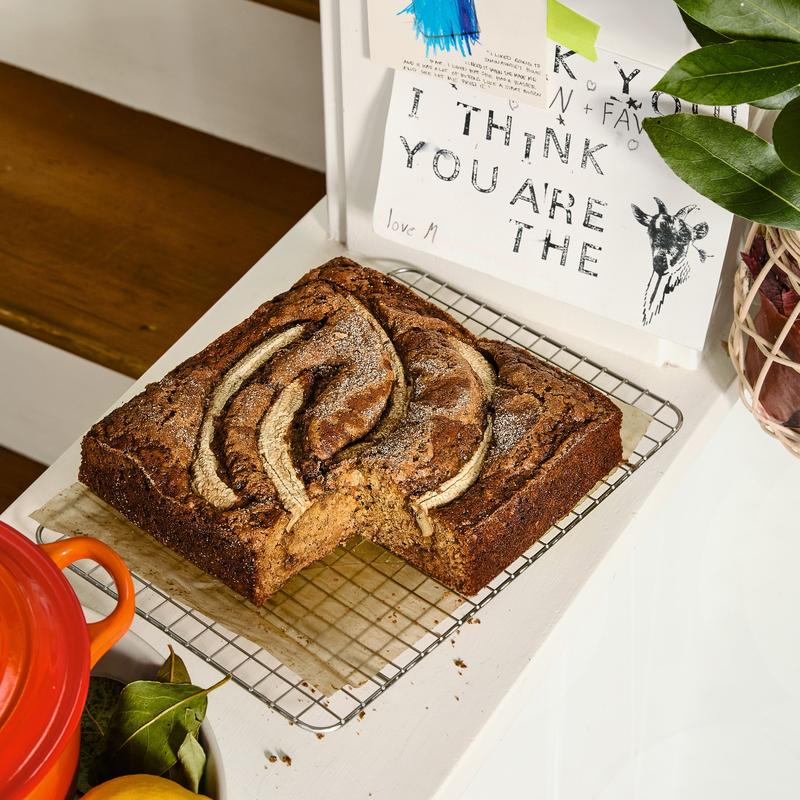
Alison Stewart: You're listening to All Of It on WNYC. I'm Alison Stewart. The James Beard Award-winning cookbook author Samin Nosrat is back with Good Things: Recipes and Rituals to Share with the People You Love. It's her first cookbook in nearly eight years after releasing the modern cooking classic Salt Fat Acid Heat and hosting the Netflix series based on it. Good Things grew out of a when, despite enormous success, Samin was struggling with personal loss and depression that made cooking feel distant.
The book gathers the recipes and rituals and small kitchen practices that helped her reconnect with joy. There are more than 125 dishes, comforting soups, bright dressing, pantry-friendly meals, a whole bunch more, and it's a reflection on what it means to build a good life. Samin Nosrat is sitting right across from me. It's nice to talk to you.
Samin Nosrat: Nice to talk to you. Thank you so much for having me.
Alison Stewart: After the success of your last book, Salt Fat Acid Heat, you describe a point reaching a reflection point when you asked, "What is a good life?" What led to that question?
Samin Nosrat: I think my whole life, I thought the point of my existence was to achieve and to just do the best I could do. I think I had woven a narrative for myself partly by what I'd learned from my family and culture, and probably intrinsically, that if I could just be the best, then I would feel full inside and I wouldn't have this dark core of loneliness and sadness that I could never escape.
Alison Stewart: How did you go about finding the answers to those questions?
Samin Nosrat: Then I achieved the highest possible things in my life in my field. I got this book and show and awards and all the praise and attention, and I still felt so empty inside. I really had to reorient myself. I understood I'd been oriented the wrong direction, let's say.
Alison Stewart: Oh, yes.
Samin Nosrat: I had to find a new orientation. I took a lot of time to figure out, "Well, if achievement and success and stability is not the thing that's going to make me feel this, then what is?" Over time, I realized it was tightening the aperture on my lens in my life from trying to climb the highest mountains, make everyone in the world love me, and be happy, to, "How do I just connect to the people around me? How do I take care of my community? How do I find joy in the tiniest little things in life, in a day?" It was hard. I was very depressed, but little by little, I just basically cataloged the things that made me feel good, and that event, this book.
Alison Stewart: Do you remember one of the first things that made you feel good and you knew you're going the right direction?
Samin Nosrat: This is really funny. It's not totally in the book, but gardening and weeding. I had a real long period at the end of 2019 and into 2020. I was so exhausted from all the touring. I just wanted to stay home and pull weeds. There was this thing that felt literally so rooted and so grounding about that in a way that was so material as opposed to this abstract thing that I had been chasing on tours and events and talking to people. Just having a pile of weeds to look at at the end of the day felt so good.
In the same way, cooking often scratches that same itch. My work often is writing or making these huge projects that take months or years to do, but when you cook something from start to finish, you made something completely in a day, and you enjoy it, or the people around you enjoy it, and there is a gratification, something so deeply human about that.
Alison Stewart: It is a meme to touch grass, but there's more to it that just-
Samin Nosrat: Totally.
Alison Stewart: -touching grass like they say.
Samin Nosrat: It really does make a difference.
Alison Stewart: We're talking to Samin Nosrat. Her new cookbook is called Good Things: Recipes and Rituals to Share with the People You Love. Listeners, we'd love to hear about your rituals that show up in your kitchen. Maybe it's something you've always wanted to make, the way you start a meal, a routine that helps you enjoy cooking a little bit more. How did you find your love of cooking? Give us a call now at 212-433-WNYC, 212-433-9692. You can also text us at that number, 212-433-9692. The book is broken up into Good Things. Why was Good Things a good way to organize a book?
Samin Nosrat: Partly because my mind never wants to follow the trodden path, and with Salt Fat Acid Heat, I felt like I had a new way to organize cooking for people. Honestly, the structure of that book took me the longest. It was the longest and most complicated part to solve for. I just have a resistance in my heart to doing something the way it's already been done. I insisted on figuring out a new way to organize cooking, because I also feel like we rarely decide, "Oh, I want to make a chicken dish," or "I want to make a side dish." You get inspiration for your meal by flipping through a book and seeing what makes sense right now.
I tried to set up the book into pantry dishes for the times that we're just cooking out of pocket or, I don't know, the things you want to bake, yeasted things when you want to work on a project food, things for a gathering, but what was funny was I eventually came up with the title Good Things, which comes from this Raymond Carver quote, which is, "Eating is a small good thing at a time like this." I do feel like I have been through such a hard stretch, and looking around, it's so dark and hard, hard right now.
It's always a time like this. The sentiment is that these little things are something that we always have need for in our lives. The next morning, once I decided on the title, I woke up, and I was like, "Oh, all good things must come to an end. That's my dessert chapter." I used all these good things idioms as the chapter titles, and only when I was done with the book did I realize I had indeed actually just organized my book, just like every other cookbook, with a chicken chapter and a salad chapter and a dessert chapter, but I had to get there my own way.
Alison Stewart: You also write that you're not so sure about recipes, and you felt even conflicted in writing them. What changed your mind?
Samin Nosrat: Honestly, what changed my mind is people and their response to my work. I think I worked so hard and for so long, I wanted to convey this idea of Salt Fat Acid Heat being the grounding philosophy for us in the kitchen to free us from having to adhere only to recipes when we cook, and making us more instinctive and confident cooks. It felt almost hypocritical then to follow that up with another book of recipes, but what's been so fascinating and beautiful for me is to see people's response to my work.
Of course, plenty of people come up to me and they say, "Salt Fat Acid Heat changed my life. It made me a better cook. My husband, my child, they're all better cooks," but just as often, people would say things like, "I love your buttermilk chicken. We make it every Sunday at my house. I always have your lasagna on my birthday." I started to see that people have individual and meaningful relationships to the recipes, too, and ultimately, I'm just trying to make work that inspires and is of service to people. I realized there was a use for this as well.
Alison Stewart: Someone texted us, "My mom was an exceptional cook, mostly Italian food, and I would often sit at the kitchen table and observe. Now she is with me whenever I am in the kitchen."
Samin Nosrat: It's so true, and that's so beautiful. I think it's so meaningful to have that tradition and ancestry passed down through cooking. In the last 100 years in this country, so many people have been divorced from that. I think that has led to a lot of the lack of confidence in the kitchen, and that's definitely what I'm always trying to be the voice of, is, like, "I want to be your auntie in the kitchen."
Alison Stewart: Under the heading Good Things Come in Small Packages, you write about the hard task of letting go of your professional brain when you're cooking at home. What did you have to let go?
Samin Nosrat: So much perfectionism. These impossibly high standards that make sense in a restaurant kitchen, where you're surrounded by other cooks and deliveries from farmers' markets are being made to your doorstep every day. There's a staff of dishwashers to wash all of your dishes. It makes sense for all of that to be fueling these incredibly high standards in restaurant cooking, because people come there and they're paying for that, but at home, nobody has those deliveries to your doorstep. Nobody has a team of dishwashers.
Alison Stewart: No, they don't.
Samin Nosrat: It's just like, "Ultimately, what's the point here?" The point is to take care of ourselves, to create a moment to feed ourselves, and it doesn't have to be this capital P perfect.
Alison Stewart: Let's take a call. Reid is calling in from Brooklyn. Hi, Reid. Thanks for making the time to call All Of It. You're on the air.
Reid: Hey, Alison. Long time, long time. Samin, I just want to say Salt Fat Acid Heat was the book that turned cooking from an onerous chore into this joyous activity. I've always been not as much of a science person, but the way that you managed to weave together the art and science really just exploded my whole world with cooking.
Samin Nosrat: Thank you.
Reid: It's now become the way that I show my love to people. I want to talk about the ritual. When you're doing a big dinner party and there's that five seconds after you've been up and down to the table and the kitchen four times, everyone's glass of wine is filled and everyone's ready to eat, and there's that Norman Rockwell moment where even before anyone's eaten anything, there's this beautiful moment where you look around the table and just see all the people you love. That's what I do it for. That ritual.
Samin Nosrat: Me too.
Reid: Even more than the food or anything else.
Samin Nosrat: Me too.
Reid: Thank you so much. I'm really excited to get this book.
Samin Nosrat: Thank you. Take care. That's so beautiful. I love it. I also think a lot about that moment right before you start eating, when you see the sum of all of your work and energy, but all of these people. It's all about the people, ultimately. It's like what happens at the table rather than what's on the table for me.
Alison Stewart: I'm speaking to Samin Nosrat. We're talking about her new book, Good Things: Recipes and Rituals to Share with the People You Love, which celebrates the small everyday practices that make cooking feel meaningful. We want to hear what rituals show up in your kitchen. Maybe it's something you always make, the you start a meal, or a routine that helps you enjoy cooking a little bit more. How did you find your love of cooking? Give us a call. 212-433-WNYC, 212-433-9692. We're going to talk condiments here. Great topping.
Samin Nosrat: My favorite topic.
Alison Stewart: Little jars of flavor. What are a few of your non-negotiable pantry items right now?
Samin Nosrat: In terms of condiments, I always have yogurt or labneh in the fridge. My family's from Iran. I grew up putting a spoonful of yogurt on everything. In recent years, I've migrated my affection to labneh, which is the drained, thicker yogurt.
Alison Stewart: I love that.
Samin Nosrat: Yes, it's delicious.
Alison Stewart: It's so good.
Samin Nosrat: I always have some form of a crispy chili condiment. I have a recipe in the book for a chili crisp, but I love many of the store-bought ones as well.
Alison Stewart: This is interesting. In your book, you give details on what you like, and it's a small group of things. You have a small group of utensils, and you have pictures of them in the book. It's very simple for those of us who are reading your book. Why did you decide to just, "Look, this is what I do and this is how I do it?"
Samin Nosrat: I feel like so many books have those lists of, "These are the ingredients, these are the things to have." This book really became about as an expression of my everyday cooking, which it has gotten simpler and simpler as I've moved out of restaurant life. In terms of the pictures and the way I wanted to convey it, a lot of that was inspiration from art books and other great cookbooks from the last 30 years, and the way that they're laid out. I wanted to figure out, "How can I get as much information on one page?" That came out in the form of a lot of these visual collages.
Alison Stewart: This text says, "I'm cooking a big batch of Colombian lentils from memory right now while listening to your show, and want to share that my daily treasure cooking ritual is cooking with WNYC as company in my background." That's Kathleen.
Samin Nosrat: That sounds so great.
Alison Stewart: Thanks, Kathleen. What is a non-cooking ritual that you have in your kitchen?
Samin Nosrat: Oh, a non-cooking ritual. Maybe emptying my dishwasher in the morning while my coffee brews. I always put a little bit of fresh cardamom seeds in with the coffee when I grind it, and so it makes this fragrant, lightly spiced coffee that heats up the whole house, and the aroma fills the whole house. Then I start the day with a clean slate by cleaning out the dishwasher.
Alison Stewart: We'll have more with Samin Nosrat after a quick break. We'll talk recipes. Stay with us.
[music]
Alison Stewart: You're listening to All Of It on WNYC. I'm Alison Stewart. My guest in studio is Samin Nosrat. We're talking about her new book, Good Things: Recipes and Rituals to Share with People You Love. You love whipped tahini. There's a recipe in this book on page 63.
Samin Nosrat: I do.
Alison Stewart: You call it tahini fluff.
Samin Nosrat: Yes.
Alison Stewart: How did this come about?
Samin Nosrat: It was totally an accident. I was actually working on, I think, a hummus recipe. I had the tahini in the food processor, and I added a little bit of water and lemon juice and walked away, and it was on. I came back, and it was this incredibly airy and fluffy texture that I hadn't ever witnessed before. I do think some of it is dependent on the brand of tahini, but I realized this could be its own wonderful thing. It didn't have to become a component in something else.
Because it has this almost fluff, marshmallowy, airy texture, instead of being drizzleable, it creates this-- You can smear it or dollop it onto the bottom of a platter before plating a big pile of roasted carrots on top. It's the sauce, but it's also this creamy dipping pillow bed. Also on its own, it makes a wonderful dip for crudites or pita.
Alison Stewart: You have a marinated feta in here, which is fairly simple. It does have a surprise element to it, however.
Samin Nosrat: Yes, which I also give an alternative for.
Alison Stewart: First of all, why is marinating feta such a smart approach for home cooking?
Samin Nosrat: For me, it's a great idea because I love feta cheese. Again, my family's from Iran. I grew up eating feta cheese every morning for breakfast, and I've never shaken the habit of buying a big block of it for myself, but I live by myself, so I don't always make it through the whole block before it starts to turn sour. I realized that if I pre-cut it up and marinated it, it would really extend the life, in addition to adding all this flavor and turn it into something that I could put on the side of a big cheese or crudite platter or incorporate into other ingredients or eat with my morning bread.
The way this recipe in particular came about is I was looking at one of Yotam Ottolenghi's marinated feta recipes, but again, it was peak pandemic. I was looking at what I had around, and because I live in California, I was embarrassed to admit this on the East Coast. We had a kumquat tree in our garden, and so I had kumquats. I used that as my form of citrus, which is a little bit of a specialty thing, but if you don't have kumquats, you can use an orange zest or a lemon zest.
Alison Stewart: Let's talk to Jane, calling in from Manhattan. Hi, Jane. Thanks for making the time to call All Of It.
Jane: My pleasure. Thank you. My culinary background came from my grandmother and my mother, both of whom were fantastic cooks. One of my pleasures of summer, starting when I was about seven, was watching my grandmother gather up the chickens in her barnyard and kill them. That wasn't so pleasant, but kill them, take the feathers off, clean them, and then the next day, after they were dressed, she'd can them. She'd bottle them in these giant bottles, which I learned later you have to be pretty skillful because of the danger of botulism.
She was a fantastic cook. My mother, her daughter will be 100 in about five months. She probably did her last batch of pickles, dill pickles, this past summer, which has always been a family affair. I'm just very lucky to have had farm-to-table living before it was a phrase, a thing.
Samin Nosrat: You really are.
Alison Stewart: That's a great call, Jane. Thank you so much for calling in with your family story. You have a family story in this book, Samin, where it was a birthday party for a kid, and you learned a lesson. Would you share that with us?
Samin Nosrat: Sure thing.
Alison Stewart: It's a really telling lesson.
Samin Nosrat: Yes. I have a group of friends who I have a weekly dinner with, and anytime it's someone's birthday in the group, especially a kid, I always say, "What's your dream birthday menu? I want to make that dream come true." Orion was turning 10, and their dream was to have fish tacos and churros, which is both pretty simple, but also a little tricky because it involves deep frying both courses. Over the course of the week, as the day came nearer, the party grew from 10 people to 20 people, which, for me, as a professional cook, is not that big of a deal.
I did find myself in the kitchen, harried, cooking all this fish and getting sweaty and making a mess. Everybody was outside, and since the party was so big, there weren't enough chairs for everyone to sit down anyway, so I started sending all the food out, and I said, "Hurry up. Just start eating. I don't want the fish to get cold," because no one wants to eat soggy fried fish. They made a plate piled with beans and rice and slaw, and made a big taco and took a bite.
Then their mom came in, and I said, "How is it? How is it? Is Orion happy?" She said, "Yes. They took a big bite, and they loved it so much, and then they looked around and said, 'Where's Samin?'" My heart fell because I have spent my life with this martyr/Tasmanian devil energy in the kitchen when it comes to being in charge and being the host. I have always felt like that's an expression of my generosity because I don't want other people to go to any trouble.
In this moment, I realized Orion had not hired me to cater their birthday party. They just wanted to have fish tacos with me. Like our first caller said that that really special moment was this moment when everyone has their food and the wine just before you dig in, that's one of my favorite moments of our weekly dinners, too, is just this appreciation, just taking a breath and seeing everyone at the table. I realized by staying in the kitchen and offering to do everything and being grumpy about it, that I was actually robbing everybody, including myself, of that.
I've really tried to take a different approach. It's a lifetime of overworking and perfectionism I'm working on. I'm trying to do less. I'm trying to delegate more and participate fully.
Alison Stewart: In your chapter, Good Things to Keep Up Your Sleeve, you mention pantry staples that could be really turned into deeply flavorful dishes. I'm opening my pantry, and I'm seeing things like beans and crispy rice, and maybe tomato soup. How can I go about making that feel sustaining, feeling like I'm giving you a really great meal?
Samin Nosrat: Oh, I honestly feel like all of those things that you mentioned are incredibly comforting and warming foods. I think part of it truly is just changing the perspective and understanding big picture that when we are seeking comfort in the hands of a friend or a loved one at their table, very rarely it's about the specific food. Very rarely, it's about the extravagance of the food. It's so much more about that food as an expression of their own time, their own attention.
Like the philosopher Simone Weil said, attention is the rarest and purest form of generosity, which I think is so beautiful and really has become almost my guiding light. The idea that cooking can be an expression of our time and attention, and in that, such a beautiful form of love. Especially in this moment, in this time, food insecurity is so intense, and so many people are struggling to get food on their table. I don't want to make light of that at all, but I would like to say that things do not have to be the best and the most.
We are often fooled into believing that by food media or just the culture, but truly, what I remember most about so many of my favorite meals is the conversation or the feeling at the table, and very little of the time do I remember the exact menu.
Alison Stewart: That's interesting. Tell me what I can do to make that creamy soup.
Samin Nosrat: Oh, yes, the creamy soup is really simple. I actually just made it the other day for my birthday. It was my birthday wish to have tomato soup and grilled cheese.
Alison Stewart: Oh, happy birthday, by the way?
Samin Nosrat: Oh, thank you. It's just a couple of cans of tomatoes. I feel like the difference between tomato sauce and tomato soup is celery. You start with an onion and celery, and cooking that down in some olive oil. Add a couple of cans of tomatoes. Oh, before you add the tomatoes, actually, I create a little roux base in the onion and celery with a little flour and butter. Add the tomatoes, let it cook probably 25 minutes, and then I just puree it with the immersion blender. If you don't have one of those, you can put it in a food processor or a countertop blender. I like to finish it with a little bit of milk and cream to really give it that elementary school vibe.
Alison Stewart: Love it. I do have to ask you about one thing that I have had the hardest time figuring out.
Samin Nosrat: Yes.
Alison Stewart: Aquafaba.
Samin Nosrat: Tell me more.
Alison Stewart: It literally means bean water, and I was drawn to it long ago, but I can't get the texture I want.
Samin Nosrat: Are you starting with your own pot of beans, or are you using the beans from a can?
Alison Stewart: Beans from a can.
Samin Nosrat: Okay, great. No, that's actually often much easier to get. The way I like to describe it is if you think about what you're using aquafaba for, it's almost as a replacement for egg white. The texture of the aquafaba you're starting with for whatever dressing, because it is very high in protein, so that makes it a great thickener for sauces, is it should almost be the texture of a raw egg white, which is to say slimy and snotty. If it's much runnier than that, which most of the stuff from a can is, the right texture to begin with, but if yours is more watery, then just put it on the stove and reduce it until it thickens a bit, let it cool, and then move forward. Probably, maybe whatever brand you're using is a little waterier.
Alison Stewart: Thank you so much for answering that question.
Samin Nosrat: Sure thing.
Alison Stewart: I saw it in your book, and I was like, "I'm going to ask it."
Samin Nosrat: Yes, great.
Alison Stewart: What would you prioritize when you are sitting down and deciding, "Yes, I'm going to have people over for dinner?" You've given me an inspiration that in the next year I should have a dinner party once a month, but it doesn't have to be fancy.
Samin Nosrat: That's a great idea. It doesn't have to be fancy. To me, the priority is the time spent together. In saying that, I say, maybe you make it a potluck, maybe you make it a super simple meal of beans and rice or soup, and you invite people to bring bread and salad. If you want to do everything yourself, maybe it's things that you can do in advance and serve at room temperature or freeze and then bake off the day of.
I think choosing things that really prioritize the time that you get to spend together again is returning to this idea of our time and our attention being a gift rather than feeling like you have to impress or dazzle or really knock people's socks off with some amazing menu. I think, actually, the simpler the better.
Alison Stewart: This text says, "Samin exudes so much joy. It comes through in the pages of her books, and I joyfully make and serve her recipes. I'm now known for my Christmas focaccia."
Samin Nosrat: Awesome.
Alison Stewart: Which is Samin's recipe, of course. "I decorate them with Christmas trees, stars, et cetera, to make herbs and vegetables out of them. Everyone I gift them to loves them, and they all ask for more because they're delicious and beautiful. I'm spreading joy-
Samin Nosrat: You are.
Alison Stewart: -during the holiday season, thanks to Samin." That is from Susie from Red Bank. What have you been cooking lately that's brought you a lot of joy?
Samin Nosrat: Oh, man. I honestly have been on a book tour for almost two months, so anytime I get to be home, it really does bring me so much pleasure to make the simplest foods. Last week, like I said, I made that tomato soup. Another night, I just wanted something super nourishing and warming, so I made steamed rice. I used my toaster oven to roast some sweet potatoes, and then I boiled some broccoli. Then, because I live true to my word, I have a fridge full of condiments. I finished it with labneh and chili crisp, and green sauce, and it was so nourishing and so simple.
Alison Stewart: The last thing I'm going to ask you about, and it sounds like a public service announcement, is a one-bowl chocolate cake that you can cook in under an hour. We've got one minute. Explain it to me in that minute. Go.
Samin Nosrat: You layer all the ingredients into the bowl, and you basically wet to dry to prevent lumps. You whisk it up. It's really rich with sour cream and cocoa, and warm water helps the cocoa flavor bloom, and then it bakes for about 30 minutes. It's made out of all-pantry items. It's so rich and fudgy. I hope you love it.
Alison Stewart: You've been making it for 20 years?
Samin Nosrat: Yes. It's a variation on a cake I learned to make as a very young cook that was just honestly not that different than the recipe on the side of the Hershey's cocoa box that we've adapted over the years.
Alison Stewart: Have you had to tweak it along the way?
Samin Nosrat: It's not that we've had to, but you learn. You're like, "Oh, I had a really great sour cream chocolate cake. What would happen if I had added sour cream to mine? How can I make it a little richer, a little bit more elegant, a little more sophisticated?" It's just tiny tweaks over the way, but I think if you look carefully, you'll see the roots connect back to that Hershey's recipe on the side of the box.
Alison Stewart: It's in one bowl.
Samin Nosrat: Yes.
Alison Stewart: The name of the book is Good Things: Recipes and Rituals to Share with the People You Love. It is out now. Samin Nosrat has been my guest. Thank you for coming to the studio.
Samin Nosrat: Thank you so much for having me.
Alison Stewart: That is All Of It. I'm Alison Stewart. I appreciate you listening, and I appreciate you. I will meet you back here next time.