
Helen Shaw Takes Over as Chief Theater Critic at 'The New York Times'
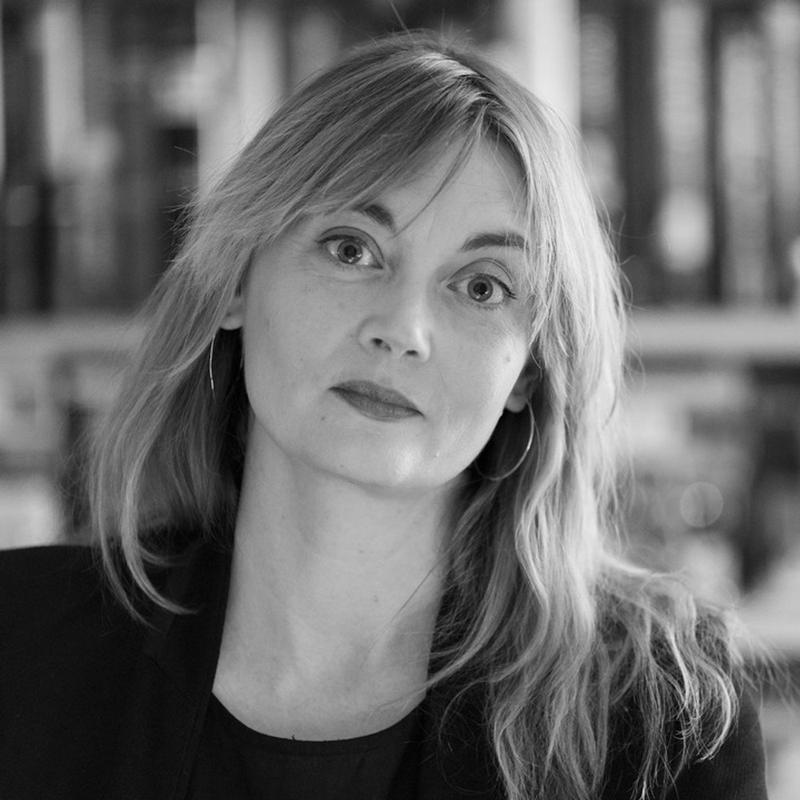
Alison: This is All Of It. I'm Alison Stewart, live from the WNYC studios in SoHo. Thank you for sharing part of your day with us. I'm grateful that you're here. On today's show, singer-songwriter Jason Isbell is at Radio City tonight and tomorrow, but first, he joins me in studio to talk about his latest album, Foxes in the Snow. The cast of the musical, The 25th Annual Putnam County Spelling Bee, will perform live in WNYC Studio 5. They're down the hall warming up right now. Calling all Jersey listeners, we will be taking calls about 50-plus things every Jersey kid should do, from diners to amusement parks. That's the plan, so let's get this started with the new New York Times chief theater critic, Helen Shaw.
[MUSIC - Luscious Jackson: You and Me]
Alison: Helen Shaw has begun her tenure as the new chief theater critic for The New York Times. She replaces Jesse Green, who held the position from 2020 to 2025. Helen's hiring follows an already celebrated career in theater criticism from New York Magazine and as a staff writer at The New Yorker. Helen's new gig at The Times begins at a pivotal moment for Broadway.
As of 2022, only one new musical has turned a profit: The Outsiders. This season so far, only two original musicals have opened, even though a few more are on the way, but it doesn't feel like a sure bet. Maybe some shows that began off-Broadway, like Cats: The Jellicle Ball and Titanique, will have more success. As Helen recently wrote for The New York Times this spring, Broadway theater might have a downtown feel. She joins me now to discuss her new role as the chief theater critic for The Times and to give a preview of some of the spring shows she is most excited to see. First of all, congratulations, Helen.
Helen: Thank you so much.
Alison: What do you see as the role of a chief critic?
Helen: I come to this position having been a critic, as you said, at a couple of other places. There, as here, it's very similar. I think a big part of it is communicating the enthusiasm that those of us who watch a lot of theater have for it. The Times has an incredible reach and the ability of us to communicate that enthusiasm, I think, is concomitantly enormous. Another part of it is obviously the big sorting hat saying, if you're this kind of theater goer, maybe this is the show for you, but maybe not for another person.
You're also trying to choreograph the way that audiences move through the New York theater system. Then also, the other thing that The Times has always been is first draft of history stuff. As a teacher and sometimes researcher, I've leaned so heavily on The Times for records of the theater going back generations. That, I think, is probably the biggest and most exciting burden is the feeling that you are not just writing the report, but you're also writing the record.
Alison: You are joining The Times in an age of social media, Broadway, Reddit, Instagram, what have you, TikTok. How do you see the role of a critic changing given all of the social media?
Helen: The fact that people can now go online and quickly get early responses from early viewers, I have complicated feelings about that, because it does mean that people are reading responses when shows are still pretty plastic, still finding their feet. That worries me a little bit, but it also, again, communicates to all of us that there's a huge audience for that type of responsiveness. The most common type of search is, "Is it good?" Because we have so little time, we have so little money to spend on these shows. If that helps people find their people, I can only be all for it.
It is true that when I came onto The Times, they said, "Look, the world is changing. This is a much more, for instance, video-driven, digitally-driven form than it was even five years ago." I started January 12th. I'm very much starting that process. I have heard the phrase "forward-facing video" a lot, which I'm super interested to involve myself in, but we haven't done it yet.
Alison: You have a background in dramatic academia. You studied set design, you studied dramaturgy while at Harvard. How has your academic experience helped you in your real life as a critic?
Helen: The thing about academia is that you have this kind of approach to whatever you're studying as an incredibly long conversation. SFor instance, when you write a thesis, you're asked, how are you going to add a stone to the pile of human knowledge? How can you move that conversation forward? Criticism, we can sometimes get a little bit locked up in the now, "Oh, there's a show happening right in front of me. The lead was pitchy, I should tell people."
The academic approach to this remembers that you are having conversations with people who might be reading this 100 years from now, and that you are also writing about a form which has taken several thousand years to get where it is, and yet looks incredibly similar to the way it was on the first day in whatever, 446 BC. I think, to me, that's actually what makes me an academic writer, is that I'm dedicated to a long conversation, not a short one.
Alison: My guest is the new chief theater critic for The New York Times, Helen Shaw. We're discussing her approach to her new role: the importance of criticism in 2026. We'll talk about a few spring shows Helen is looking forward to attending. Of course, there's The New York Times, the Critic's Pick designation. You see it on Broadway posters, you see it in marquees, it's a big deal. Sometimes a review can make or break a show. Do you see that as a responsibility?
Helen: I see it as a pretty terrifying responsibility, honestly. I think sometimes we over-index this idea that critics can make or break shows. We have a lot of examples in the very recent past of a New York Times review being either positive in a show collapsing or being negative in a show going on to stupendous financial success. I think, at least on Broadway, I'm not sure that that is as true as it was in maybe the Frank Rich era, for instance.
At the same time, that idea that you're writing the first draft of history, we're also all very, very aware that there's less and less theater criticism. We obviously know what happened at The Washington Post so recently, but that is just part of a long, long litany of people losing theater criticism jobs. I think really, for me, the terror is not so much the Critic's Pick, the terror is this might be the one chance we get to write down what happened, and we have to get it right.
Alison: One of your first Critic's Picks was for King Lear running at La MaMa. Tell us about that production.
Helen: That was a show that I went to on a whim. I have a sort of obsessive compulsive need to see a show every night, and I had a free Saturday night, and I thought that cannot be. I can't develop a social life on this short notice, and so I bought a ticket to this King Lear, and it just blew me away. I have loved King Lear, I've taught King Lear, and I've never seen a King Lear that managed to do the things for me that Lear had done for me on the page, basically.
One of the incredible opportunities that The Times affords that other places I've written maybe haven't been able to respond as quickly is I emailed my editor, and I said, "I've seen something astonishing. Can we crash it in?" Immediately, she and the entire Times system made that possible, for which I'm incredibly grateful.
Alison: I have seen you at odd shows downtown, and I've been like, "Hey, that's Helen Shaw,"-
Helen: [laughs]
Alison: -which I thought was great. I thought you might not write about them, but I thought it was interesting that you were seeing that strange show where the woman dunked herself in a tank.
Helen: First of all, that show, The Woman in the Tank, was pretty good.
Alison: That was great. She was on our show. It was good.
Helen: It was pretty good. I sometimes call that theater stranger weird when I'm trying to describe, for instance, to my spouse why I'm gone, but I also want to push back a little bit on that. I think that that sort of work is actually more reflective of what it is like to live in the world. That piece that you're talking about was about the feeling of both the middle passage and the experience of--
Alison: It was Eisa Davis.
Helen: It was Eisa Davis's let me bring you into what it feels like to live in my body. Watching that body be dunked into a giant tank of water and then try to keep afloat gave us all in the audience a sense of what it was like to be her that some normal conventional theater structure never could have. Is it weird? No, I think it's actually just accurate in a different way.
Alison: I thought it was a little weird, but I like it.
[laughter]
Alison: My guest is Helen Shaw. She's a chief theater critic for The New York Times. We're discussing her approach to her new role and the importance of criticism in 2026. What are you doing during a show? Do you have a notepad out? Are you taking notes? Do you wait to intermission? Do you wait till after the show? How do you do it?
Helen: I believe in taking notes at everything. Partially, it's a kind of Zen practice because it keeps you in the moment. Every now and then, I've lost a notebook, and the people will give it back to me, and they'll be like, "Oh, your secret thoughts are in here." I think, "First of all, good luck." If you open up one of my show notebooks, it just looks like an angry chicken covered in ink has been at play inside it. It's just crazy shapes. It's very, very bad transcription.
Also, what I'm doing is I'm basically writing down everything that's happening. The thing is, theater is evocative. It is incredibly easy to sit in a show, and a father comes on stage, and suddenly you've been thinking about your own father, at which point you move away from the art, and you can't move away from the art if your job is to cover it. Why I'm taking notes constantly is to remind myself all the time, you are here, you are watching this, you are thinking about this, you are not thinking about something else.
Alison: A lot has been said about the Broadway musical being in trouble. So far, this season, only two original new musicals have come to Broadway. One closed quickly, The Queen of Versailles. The other is still running, Two Strangers (Carry a Cake Across New York). What are you concerned about when it comes to Broadway musicals?
Helen: Maybe it's boring to say the pipeline. Over the last five years, we've lost a lot of developmental opportunities for people who write plays and musicals. For instance, Sundance used to have a theater lab. It no longer does. Theater takes a long time to build, so it takes about five years to make a show. When we wind up in a moment, like right now, we look around, and we say, "Where is everything? Where did everything go?" It isn't something that happened yesterday. It's not an election. It's not an economic situation. It's something that happened five years ago. Five years ago, what happened is we lost a lot of development. I think that when that comes back, we will start to make the soil rich again.
Alison: Do you think that these musicals need more time in Boston, on the road, in New Haven?
Helen: Since we're having this private conversation and no one can hear us, I'm hearing amazing things about Chez Joey, which is down in DC. Great things are happening, places that are not New York, and I do think that that's something we have to get more sophisticated about. We have gotten a little bit more sophisticated thinking about the relationship between the West End and Broadway, but Broadway and the rest of the country, that relationship is going back to something that I think we would recognize from like the 1930s, that developmental process. Because those programs have gone away, now we are leaning more and more on the ability of these beautiful regional houses to develop work that the rest of the country wants to see.
Alison: I want to get your opinion about using existing IP for Broadway shows. What are the ingredients you think that make a revival successful? What are the biggest risks in bringing television shows, movies to the theater?
Helen: Ooh. One of the things I think about a lot, this is going to sound like I'm not answering your question, and I think I am answering your question. Something I think a lot about, and everyone has always thought a lot about, is celebrity casting.
Alison: That's next.
Helen: What's the deal? I think that it's the same but different, that we are in a world in which what is real feels less and less like it's under our hand. We look at our phones, and what's inside it is sort of real and sort of not. Things that are very terrifying come very close to us, but at the same time, there's this part of our mind that said, "Did AI build it?" We go to the theater because it is real. It can be embarrassing, it can be awkward, it can make you feel like you're trapped in your seat.
Those are the negatives, but on the bright side, you know that what you're looking at is real. I think that when we ask for there to be, for instance, a celebrity in a show, or we're excited to see someone from Mormon Housewives in Chicago, which, by the way, that casting is doing great numbers for them, it's because we are all desperate to be reminded that the real is the real. When it comes to IP, I actually think maybe that's all part of that same network-
Alison: Oh, interesting.
Helen: -of human need, that our screens have become our lives, and now we want to go back to having that life be in our life in a three-dimensional way.
Alison: We're going to see a lot of people that we recognize from screens. We're going to see Adrien Brody, we're going to see Ayo Edebiri, Jon Bernthal, Taraji P. Henson on Broadway. These are excellent TV and screen actors. You've seen a lot of screen actors on stage as well. What makes a screen actor good at transitioning to live theater?
Helen: The easy answer is, do they know what to do with their hands?
Alison: [laughs]
Helen: The answer is so often, no. It really matters if you're a physical performer. For instance, Ayo is going to be great. Sorry, I know that's crazy to make a prediction, but the reason why is because Ayo has clown training, comes out of SNL, knows what to do with their body, knows how to perform with an entire body. Other people who are stunning faces, who are great faces, let's think about-
Alison: George Clooney, a good example.
Helen: -George Clooney. George Clooney, every time that camera in Good Night, and Good Luck came close to him, you were like, "Oh, there you are, you beauty." Then you would go back to looking at his whole physical body, and it looked like it was screaming at us, "Bring down the curtain. I feel so awkward." That's not necessarily a fault in that person, but it is, I think, the dividing line is, do you know that you're also acting with your shoulders down?
Alison: Do you think that Broadway stars are bankable? Your Audra McDonalds, your Norbert Leo Butz, or are they there just because they are talented?
Helen: [laughs] Oh. Just because they're talented, what a thing to conceive. I taught at NYU undergrad a long time, and I always asked my students what they're seeing and what they like, partially as a vampire to find out what's actually going on in their beautiful, juicy minds. One of them said, oh, that she had seen redacted show. She said, "Okay, so the singing was great, but anyone can do that." I thought, "As a person who sees 250 shows a year, when you are in the presence of Audra McDonald, that's one of those things where you actually feel the molecules in your body realign."
When you were saying, "What is the job of the critic?" I really think there's a way that we can write about that sensation, that we can develop the phenomenological experience of that for the reader, that more people will say, "Yes, I have to go and see her in person. I have to let my body get changed in that way, too."
Alison: We're talking to Helen Shaw. She's the new chief theater critic for The New York Times. Let's talk about what's coming our way: The Rocky Horror Picture Show. It'll run at Studio 54. It stars Rachel Dratch, Amber Gray, Stephanie Hsu, MJ Rodriguez, Luke Evans, so many more. It's directed by Sam Pinkleton, who directed Oh, Mary!. Its preview starts March 26th. What elements do you hope that Sam Pinkleton brings to The Rocky Horror Picture Show?
Helen: Sam is a great example of that thing that I'm talking about, about the whole body. Sam comes from choreography, started as a choreographer. I think maybe I saw Sam's work first in Dancing vs. The Rat Experiment, which was really weird, if you want to capital W weird, but is a person who knows how not only to deal with one body on a stage, but many bodies. Boy, you can go to high culture places, cough, cough, the Met, cough, cough, and you can see how rare it is that people know what to do with a lot of bodies on stage, and there Sam is, he knows how to do it.
The other thing is that it isn't The Rocky Horror Picture Show. That's the movie. It's The Rocky Horror Show. This is back to basics. I didn't see the revival in, is it 2000, I think, with Raúl Esparza, which God, I wish I had. When I was going back and reading reviews of it, the criticisms were things like, this feels like it's trying to recreate the movie experience.
I will tell you, I have been on their Instagram, I have been somewhat stalking the show, and that is not what they're interested in. They are so excited about the juicy experience of being in a theater. You named all these amazing people who are in it. I also want to say, for me, Anania is going to be the swing, who I'm obsessed with. It's like this is the deepest bench on Broadway that I can imagine.
Alison: Dog Day Afternoon, based on the 1975 play with Al Pacino and John Cazale, as bank robbers in Brooklyn. It's going to have Jon Bernthal, and I hope I pronounced his name right, Ebon Moss-Bachrach, who's on the bear, I can see his face. Previews begin March 10th. What do you make of that pairing of two sort of electric actors?
Helen: Not just two electric actors, two electric actors who have written together, who have acted together, both on screen and on stage. They were in a great show called Small Engine Repair back in the day. They have been devotees of each other's stage work and having deep, passionate conversations about stage for as long as they've known each other. We're about to see how explosive that is when they take it to a really big venue. The other thing is, isn't it wonderful that it's all very '70s? The Rocky Horror is 1973, I think, This is '75. There is very much a kind of bring your flares, turn off your AC, get sweaty kind of vibe to the season that I celebrate.
Alison: Taraji P. Henson and Cedric the Entertainer are going to be in Joe Turner's Come and Gone. It's an August Wilson play. Gosh, you have an August Wilson play. What else do you need to make an August Wilson play sing?
Helen: A deep dedication to an ensemble ethic. If you look at the cast for the show, beyond those top two names, I think they're all Broadway debuts. Here we are, we are in an incredible moment for people who are choreographers turned directors.
Alison: That's interesting.
Helen: Debbie Allen is another person who really understands what a symphony of bodies looks and sounds like. Joe Turner's Come and Gone, which is one of my deep, deep favorites, I read it every year with a class that I teach, and that show does not have a star. Instead, it is, you're in a kitchen, and people are coming in and out, and you hear them, as I say, symphonically. The fact that this is going to be a cast of equals, I think, is really thrilling.
I also think, I don't know, it's also a great homage to someone who just died, Freddie King Jr., who discovered Debbie Allen. I was talking about that long conversation, you're now talking about a conversation which is going on more than a century of people talking and thinking about this play.
Alison: I heard someone talking about this on the subway, Hate Radio at St. Ann's Warehouse. It's on through next week. It's a show that uses archival radio material to examine the roots of the Rwandan genocide. What's effective about this show?
Helen: What is not effective about this show? It's beautiful, and I would send anybody to it, but it is really difficult. What is happening here is, in the US, this has not been so much a trend. This is more of a European trend, which is using documents and using archive, using real texts in order to build a theatrical text. They're doing that.
They've made a super episode of this thing, Hate Radio, which was an actual radio station that broadcast "go kill your neighbors in the middle of the Rwandan genocide," and they're performing an episode for you. You're listening to it through these very heavy headphones, and it feels like a hand is kind of clamped on your head, and it is saying, "Remember this. Also, doesn't it sound familiar?" It's very frightening how this 1994 broadcast sounds so similar to things we might hear today. If I could, I also want to shout out a show that is closing today. It's called Kramer/Fauci. It's at the Skirball Center, directed by Daniel Fish, who did the Sexy Oklahoma!, you might remember-
Alison: I do.
Helen: -from a few years ago. This is not sexy, nor is it about Oklahoma, but it is that same kind of document-based theater. It's the recreation of a conversation between Larry Kramer and Anthony Fauci, who was at the opening. I did not see him, but he was really there. What you're listening to is you are listening to a record again of the '90s, interestingly, of what public conversation used to sound like. I will tell you, I ended that evening just absolutely dissolved in tears. It's very beautiful show, and I recommend it.
Alison: Helen Shaw, she's the brand new chief theater critic for The New York Times. We look forward to reading your opinions, your expertise, and I hope you'll come back.
Helen: Thank you. Absolutely.