
Harris Dickinson's Directorial Debut 'Urchin'
( Courtesy of 1-2 Special )
Alison Stewart: This is All Of It. I'm Alison Stewart, live from the WNYC studios in SoHo. Thank you for sharing part of your day with us. I'm really grateful that you're here. On today's show, we'll have music from Rasha Nahas, a Palestinian artist performing at the Habibi Festival this week. She's tuning up in Studio 5. She'll be performing live. We'll also talk about a new Claude Monet exhibit at the Brooklyn Museum with a photo focus on his paintings of Venice. That's our plan. Let's get this started with a film about how tenuous life can be.
[MUSIC]
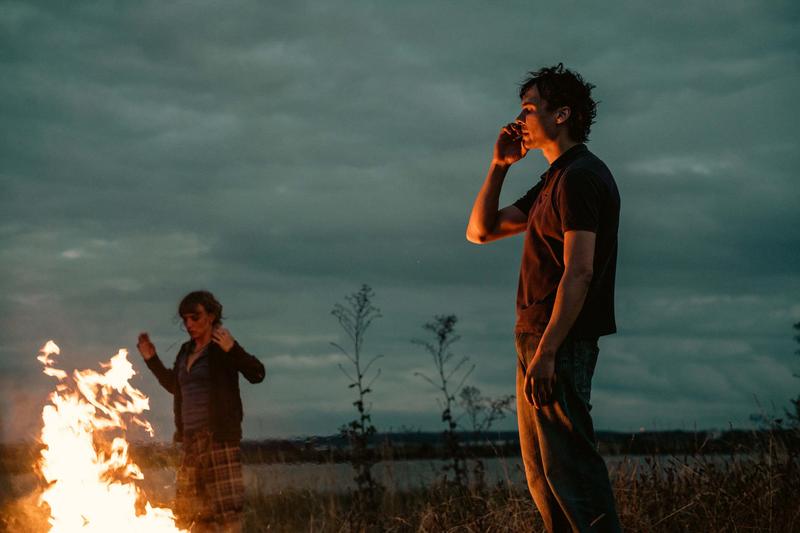
Alison Stewart: The film Urchin, about how hard it is to stay afloat in this world, got this review in The LA Times, "Urchin establishes the filmmaker as one to watch, a storyteller willing to look at a thorny subject and admit that there are no easy answers." The filmmaker is Harris Dickinson, and it features Frank Dillane. Writer and director Dickinson is usually in front of the camera, like in Baby Girl or Triangle of Sadness, but this is his directorial debut. At the center of the story is Mike, played by Dillane.
We meet Mike, and he is sleeping on the streets of London when a nice man helps him out in a difficult situation and offers to help buy him lunch. It looks like things might be getting better for Mike. That is, until Mike robs the man and steals his watch. It's that up and down of Mike's life. Something good comes his way, and then something tough. He lands in prison, but is given a potential fresh start. When he gets out, he gets a job, but he loses it. He gets clean, but the pull of drugs is too much. Urchin has been drawing acclaim for its sensitive yet realistic portrayal of the cyclical nature of homelessness and addiction and the reasons behind it.
It premiered at the Cannes Film Festival earlier this year while Frank Dillane took home an award for his performance. Urchin is in theaters now, and I'm joined by writer and director Harris Dickinson. It's nice to meet you.
Harris Dickinson: It's lovely to meet you. Lovely to be here. Thank you for having us. You introduced it so beautifully. Thank you.
Alison Stewart: On Zoom, I'm joined by actor Frank Dillane. Hi, Frank. How are you?
Frank Dillane: Hi. I'm good. Yes. Thanks for having me on Zoom.
Alison Stewart: Harris, how long did you have the story of Mike in your head?
Harris Dickinson: It's been around six years of developing it. At the moment we started writing it up until now, releasing it, around six years.
Alison Stewart: Was it the original story, the story we see on screen, or how did it develop?
Harris Dickinson: There or thereabouts. It was always about someone falling between the cracks, trying to paint a picture of someone navigating their way through a tricky system and ultimately battling against themselves and tracking in real time as they unravel, in a way. I think we worked closely with various different organizations and advisors and fields in prison reform and probation, and had a lot of people weigh in on it and interrogate the material. It really felt like a big collaboration between lots of different people that had lived experience with it as well.
That was always important for the script and the development to really try and push it into the best place possible. Then, of course, Frank came on board around eight, nine months before we started filming, and we collaborated on the role together and found our way into it together as well, which was nice.
Alison Stewart: Frank, what attracted you to the role of Mike?
Frank Dillane: It's not a character that you see every day in cinema. I think that Mike is a really broad character, as Harris said. The themes that Harris wanted to explore were big, meaty themes, and there was just so much to get my teeth into. It's something that I feel very passionately about.
Alison Stewart: Harris, you mentioned that you were working with different organizations. What was something that you learned or you experienced firsthand that you knew it had to make it into the film?
Harris Dickinson: I think the interesting thing about Mike and the age and the point he's at, in his late 20s, something happens. Particularly in the UK, from 16 to 25, there's different support networks available. You're in a different bracket. As soon as you get past that, it becomes incredibly difficult to support people in the same ways. I think the one thing I really wanted to try and show and reject is the idea that we're blaming anyone. We're not blaming the people that work in those fields.
There's phenomenal work being done by all of those different workers and organizations, but it was trying to present a full picture of someone trying to reassimilate and how difficult that is once you've been either incarcerated or once you've lost your support network, or you've exhausted your options and people have given up on you and you've given up on yourself. It's really a difficult battle. I think we just wanted to try and get that across in the film and provide a bit of insight and empathy towards this.
Alison Stewart: Frank, what did you learn by helping out with some of those different organizations that you wanted to bring to the role of Mike?
Frank Dillane: I think one of the main things I learned was there is no simple solution to complex problems. There's a lot of trauma that informs Mike's decisions. If you find yourself sleeping rough, it's usually because there has been a sequence of tragic circumstances that you find yourself in that position. Also, the circumstances can be quite mundane, as in going through a breakup or losing a job. I think that there are all kinds of people in all kinds of walks of life. There is no generic homeless person. It's all of us. We could all find ourselves in that position, believe it or not.
Alison Stewart: One step away, one bad decision away.
Frank Dillane: Absolutely.
Alison Stewart: It was interesting, and I'm curious what your answer is going to be, Harris. You wanted to portray the folks who are in these communities in a way that was sensitive, but you also didn't want to sanitize it.
Harris Dickinson: No.
Alison Stewart: How did you balance that?
Harris Dickinson: I think it was important also to not victimize Mike too much in a way that allowed the audience to unjudgmentally go on his journey and present him in a way that wasn't overly heroic or, like you say, overly sanitized. It was showing the truth of it, trying to depict it accurately, but allowing humor as well and allowing levity into a story like this, because the Mikes of this world deserve that as well. I've spoken about this countless times. It's like when someone has been to the brink of their own experience, whether that's their own morality or their own behavior, they're often the most exuberant, funny people as we know.
That was really important for us. Frank constantly spoke about dignity and stuck up for Mike in ways that we all should. That was really vital to the formation of him in this film.
Alison Stewart: My guests are writer, director, and actor Harris Dickinson, and actor Frank Dillane. We're talking about their new movie, Urchin, about a young man named Mike who's trying to rebuild his life after experiencing homelessness in London. It's in theaters now. Frank, how do you think-- We're going to talk about Harris like he's not here? How did Harris's background as an actor help him as a director?
Frank Dillane: I think I really appreciated Harris's background as an actor with his directing style. He allowed him to jump into scenes with me, and we could rehearse it a lot. Also, there was just understanding of the things an actor goes through to achieve character. It was just like having this extra support network. As Harris said, we really built Mike together. Harris is an actor's director, which I think is becoming a rarer thing, at least in my experience.
You could come in and just have one line, and Harris would be there with the actor running it until he got it right, and just really holding space for the creative process and for exploration, and also knowing where the switches are in each actor and being able to flick those switches. He certainly pushed me in ways that I've not pushed before. I think that's a testament to his understanding of the craft of acting.
Alison Stewart: All directors have to make decisions. That's a big part of being a director. Decision after decision after decision. What is a decision that was a little bit hard to make, but that worked out for you on this film?
Harris Dickinson: Which jacket Mike wore?
[laughter]
Harris Dickinson: The costume decisions are the hardest because-
Alison Stewart: They're interesting, though.
Harris Dickinson: They're a big commitment, you see.
Alison Stewart: Yes.
Harris Dickinson: You commit to that and then you say, "He's wearing that throughout the whole film," because he's not in, necessarily, the film where he's going to keep changing costume. You commit to that and you say, "We're in now." Is it right? I said that in jest. Really, it's the last-minute changes that you have to really account for and that no one can really warn you about. You're on set and you lose a location. We were doing a lot of unit moves. We were doing a lot of night shoots.
There were times where we were on the go, shooting somewhere, and our locations manager would come and say, "Oh, by the way, we've lost the location for the next scene. What do you want to do?" You have to figure out what the next move is for the night. Are we going to do it on the street corner, or are we going to find a new location? Are we going to fabricate something? Should I just rewrite something? It's those moments that you can't really prepare for that took me.
Alison Stewart: I do want to ask about the clothes, and I want to ask Frank about, there's a scene where you're trying on a sweater, a jumper, and it's a very sweet scene because the woman in the shop, we assume it's a thrift hand shop, is rolling up your sleeves like she's making sure that it fits you right and you're very proud of it. Then she goes and she gets you these loafers and you're really into these loafers. What was going through Frank's mind? Why was that important to him, that his sweater fit well and that his loafers fit well?
Frank Dillane: Mike's mind, I assume you mean, rather than Frank's mind.
Alison Stewart: Sorry. Mike's mind.
Frank Dillane: Although I suppose it was one mind in that moment, I guess. Although we probably shouldn't get too deep into the psychology of character versus actor. I think Harris wanted to-- The story that we wanted to tell in that moment was one of again dignity and feeling good about yourself, feeling proud of yourself, having a bit of money to spend on something you like, which, when you don't have any money and if you haven't had any money for a long time, those things can be robbed of you, the experience of going into a shop and finding a nice jump and really feeling yourself and feeling good and maybe experimenting with a new pair of shoes that you wouldn't usually try and wanting to show yourself off a bit. I think that was the story that Harris was tapping into in that moment, really in his mind.
Harris Dickinson: There's also something quite sweet about the idea that they both believe they're in a slightly more higher class situation. The idea that she's-- In the script, it said, in her mind she's working high-end retail because maybe once upon a time she was, and now she's in a charity shop in East London, and clothes are no more than £4. Still, there's an idealistic element to it where it's like, "Me and you, we're in front of a mirror. We're on Savile Row, fitting a suit."
Alison Stewart: Nice. [crosstalk] cuffs a little bit. [chuckles]
Harris Dickinson: There's something quite sweet about that.
Alison Stewart: At one point, Harris and Frank, you can jump in here, too, we learned that Mike's adopted, and it is left there for the viewer to wonder what happened. When I heard them like, "Wait, who adopted this person? Where are they? Why aren't they here?" In your mind, did you have a backstory for Mike?
Harris Dickinson: Yes. We spoke about it extensively. The sad fact is that there are a large portion of adoptions that break down because it's an incredibly tricky scenario as someone gets older and understands the dynamic of it. It was something I spoke to my dad a lot about. My dad's a social worker, and he works a lot with adoptive parents.
Alison Stewart: Oh, he does, really?
Harris Dickinson: Yes. It was stuff we spoke about. Frank and I spoke about it in a way. Originally, there was more of a relationship with his mum in the script that we ended up having to take out. I hope you don't mind me saying, Frank, but your mum is actually in the film too.
Frank Dillane: Yes.
Harris Dickinson: Frank's real mom plays his mom in the film on the phone, the scene when he has a conversation with her. We spoke about it a lot, didn't we, Frank?
Frank Dillane: Yes, we did.
Harris Dickinson: We developed it between us and then let some of it go as we shot.
Alison Stewart: What does your dad think of the film?
Harris Dickinson: He hasn't seen it yet.
Alison Stewart: Really?
Frank Dillane: Has he not, Harris?
Harris Dickinson: No, he hasn't seen it yet.
Frank Dillane: Why?
Harris Dickinson: He's just not had a chance. He was away when the premiere was in London, and he lives up north, so the local cinema hasn't shown it yet. He's going to head up to Liverpool and watch it, which is in his local picture house.
Alison Stewart: I can't wait to get his review.
Harris Dickinson: Yes. He read the script and stuff, so hopefully he'll be into it. Who knows?
Alison Stewart: We'll talk more about Urchin after a quick break. This is All Of It.
[MUSIC]
Alison Stewart: You're listening to All Of It with WNYC. I'm Alison Stewart. My guests are writer, director, and actor Harris Dickinson and actor Frank Dillane. We're talking about their new movie, Urchin, about a young man named Mike who is trying to rebuild his life after experiencing homelessness in London. It's in theaters now. The film kicks off with a tough moment. Mike attacks this man under the bridge, a really nice man, and steals his wallet. Frank, what's going on with Mike in this moment that he decides to attack and to rob this person?
Frank Dillane: I think desperation has its own language that maybe we're not all tapped into if we're not desperate. I think poverty has its own language. In that moment, Mike is not in his right mind. He is coming off drugs or needing a fix. He's just been robbed himself by his friend. I think that he, in that moment, has worked himself up to a place where he feels like that is his only option, really. Survival.
Alison Stewart: When you think about his hopes and dreams, what are they?
Frank Dillane: Harris and I spoke a lot about this, actually, and Mike talks about it in the film. He has a aspiration to have a limousine chauffeur service. I guess those are his hopes and dreams.
Harris Dickinson: He's remembering the scene.
Alison Stewart: Oh, I remember it. What was your thought behind that? Because at the time I thought, "A what?"
Harris Dickinson: "A what?" She says-
Alison Stewart: "Sir, you can't. You don't have that much together." Talking about a chauffeur service.
Harris Dickinson: That's what I mean. It's slightly sad, isn't it? It's overly ambitious in a way, but is it? Let's not limit. Also, it's sweet in that moment that she says to him, "Oh, you want to drive the cars?" He goes, "No, no, no."
Alison Stewart: "I'm going to manage."
Harris Dickinson: "I'm going to manage. I'm going to oversee." There's definitely some sense of arrested development with Mike, and so many people in that position that potentially aren't in the best place to be able to fulfill their dreams, which is sad too.
Alison Stewart: In the film, Frank, Mike has this one great night. He goes out with his coworkers. They go to karaoke. He doesn't drink. He's doing well. What does this one really great night mean to Mike?
Frank Dillane: I think it really means the world to him. In many ways, I think it's the happiest night of his life. As you say, he's clean. He feels included in a new group of friends. These girls want him around. He's got a job. He's got a secure accommodation at that moment. They go to this karaoke bar. I think he really feels whole again, as the song says.
Alison Stewart: This was shot in 28 days, right, Harris?
Harris Dickinson: Yes.
Alison Stewart: What was challenging about that?
Harris Dickinson: What was challenging? We had 36 locations.
Alison Stewart: Oh, my goodness. That's a lot.
Harris Dickinson: Yes, it was foolish of me, to be honest, but we made it work. We had an amazing crew that really facilitated this in the best way possible for us and worked super hard to roll with the punches. What else was hard? A lot of actors as well. We had a lot of different roles coming in and out of the story, playing small but important parts of Mike's journey. That's hard. The collision of tones and bringing people into the same world.
Alison Stewart: It was exciting about 28 days shooting?
Harris Dickinson: Yes, it was. Especially, it was the summer. It wasn't that hot because it's London, but it was the summer. We had short nights. When we shot night stuff, we had from around 10:00 PM until 4:30 AM because that's when the sun would start to rise. It was a short period of nighttime. It really meant that there was this energy fueling the shoot of, "We've got to get this in the time allocated." It was polarized because there was also times where it was more considered. We were at the hotel, slower pace. We had time. We weren't rushing. It was a perfect combination of tones and feelings, and energies.
Alison Stewart: I wanted to ask you. There's some trippy parts in the film. Cells, looking down a sink, falling into this cave. It could be the mind. Who knows exactly where it is? The rest of the film is so grounded in reality, and you have these little areas of trippiness, I guess, is the way I'm going to put it. Why?
Harris Dickinson: I like to speak about it as if we're departing reality or suspending reality for moments, which is, I think, a natural part of coping mechanisms with all of us, the resistance to absolute reality. That's not whimsical or overly pretentious. That's just the truth. I think we all go to places in our mind in order to escape, particularly when we're dealing with stories around someone who has been through extreme trauma. That does stuff to the brain chemistry, and we cope with it in unique ways.
I just think a story like this deserves that. For me, when I was developing it, I always-- I've always had an interest in that kind of storytelling as well, magical realism, more surreal elements, escapist cinema, fairy tale, fables, folklore. For me, it's just what I'm intrigued by. It felt like, "Why not break the form of a ordinary social realism and go somewhere else with it?"
Alison Stewart: Have you seen Rose Byrne's new movie?
Harris Dickinson: If I Had Legs?
Alison Stewart: Yes.
Harris Dickinson: Not yet. I was just talking about it, though. Yes, I'm excited to see it.
Alison Stewart: There's a whole bunch that's similar about the two films. Check it out.
Harris Dickinson: Okay. I'm excited to see it.
Alison Stewart: Frank, how do you hope audiences will view Mike and people like Mike, and maybe people like Mike they pass on the street?
Frank Dillane: I think that something human beings do, and maybe the most dangerous thing a human being can do, is to imagine that someone who looks different from you or sounds different from you or is from a different place than you is not a human being also. If this film can stand in resistance to that impulse in us and humanize another person who maybe some people don't give the time of day to, they don't even acknowledge, I think that that is a massive achievement for this film.
I suppose that just like a little glimpse into the idea that it's all of us. We are all-- Mike is you, Mike is me. There is no other person. There is no homeless person. There is no refugee. It's you. It's me. It's a human being.
Alison Stewart: When I see people in New York, I'm like, "That's somebody's child at one point."
Frank Dillane: Yes, exactly.
Alison Stewart: Harris, are you going to make another film?
Harris Dickinson: Yes. I hope someone will let me.
[laughter]
Alison Stewart: That sounded like it took a little while.
Harris Dickinson: Yes, it's a huge time commitment, isn't it? I absolutely have something else I want to make next. It's just there's so much of my life and commitment and time and stories and dedication in this film. You have to refill the pot in order to go and do it again.
Alison Stewart: I heard you were playing the piano out in the hallway-
Harris Dickinson: Sorry.
Alison Stewart: -and everybody's like, "Oh, he's playing John Lennon."
Harris Dickinson: Oh, God. I wasn't playing Beatles songs. I was just tinkering away. I hope you didn't hear it live on radio.
Alison Stewart: I didn't hear it live.
Harris Dickinson: It would've been embarrassing, me screaming on the piano.
[laughter]
Alison Stewart: What's your preparation been like for that role, playing John Lennon?
Harris Dickinson: It's just been a lot of music. It's been like a year of music rehearsals, really, just learning to play the instruments. Like school, just going in every day and just getting it done. There's no way around it. That's it.
Alison Stewart: You can go play the piano if you want now.
Harris Dickinson: Yes. Frank's a musician as well.
Alison Stewart: Oh, really?
Harris Dickinson: Frank's cooking up some bangers.
Alison Stewart: Is that true, Frank?
Frank Dillane: Yes. I need to release some stuff. I've got some stuff sitting here waiting to be released.
Harris Dickinson: Sorry, Frank, I outed you, but the world needs to know, man.
Frank Dillane: Yes. We were playing the piano the other day, weren't we, Harris, when we were sitting there-
Harris Dickinson: At the premiere, yes.
Frank Dillane: The premiere, yes.
Harris Dickinson: That was very joyful.
Alison Stewart: I'm glad it was joyful.
Frank Dillane: That was fun, yes.
Alison Stewart: The name of the film is Urchin. I've been speaking with Harris Dickinson and Frank Dillane. Thank you so much for making the time for us today. We appreciate it.
Harris Dickinson: Thank you for having us.
Frank Dillane: Thank you.
Harris Dickinson: Go watch the film.
Frank Dillane: Go watch it.