
Grey Gardens Turns 50
Title: Grey Gardens Turns 50 [music]
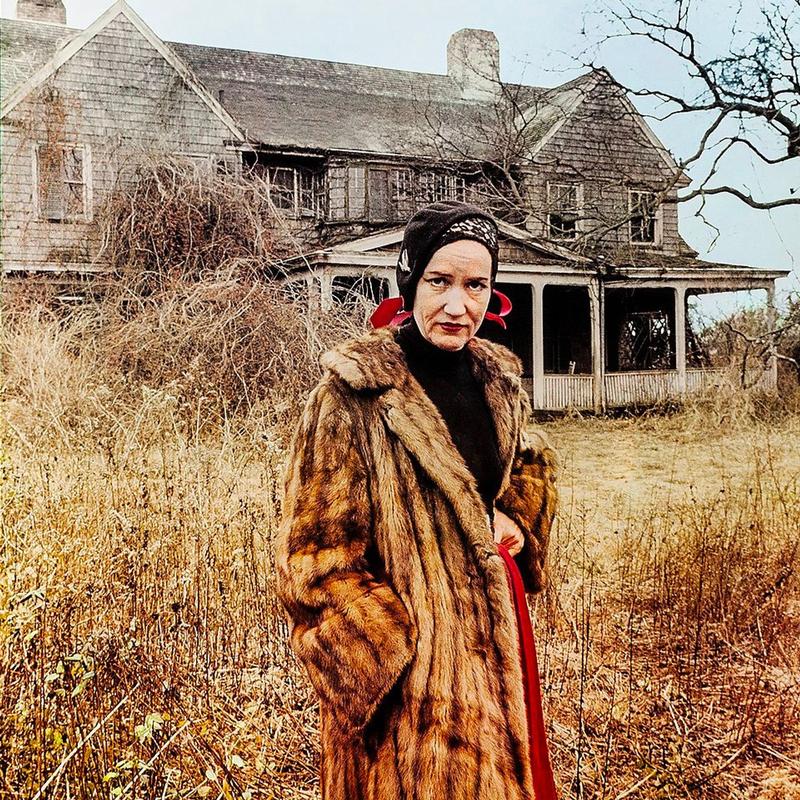
Alison Stewart: You're listening to All Of It on WNYC. I'm Alison Stewart. This year marks the 50th anniversary of Grey Gardens, the Maysles brothers' landmark documentary about Edith Bouvier Beale, known as Big Edie, and her adult daughter, Little Edie. The unforgettable relatives of Jacqueline Kennedy Onassis, who, as high society dropouts, lived together in a crumbling East Hampton estate with a lot of cats. It's a film that reshaped how nonfiction stories could be told. It's been turned into a Broadway play, an Emmy-nominated TV series, and with countless tributes in fashion and pop culture.
To mark the anniversary, the Maysles Documentary Center in Harlem will host three screenings this Sunday at 2:00, 4:30 and 7:30. Each will be introduced by members of the Maysles community, including one of the center's board members who also preserves the Maysles archive, New York based artist Rebekah Maysles, Albert Maysles's daughter, Rebekah Maysles is in studio with us right now. It is nice to see you.
Rebekah Maysles: Oh, it's really nice to be here. Thank you.
Alison Stewart: When Grey Gardens came out in the '70s, it was unlike anything anyone had seen in a long time. What made the film so radical?
Rebekah Maysles: I think that it's really a raw, honest film that gives people space to be themselves. I think that's something that is still rare in films. I think that at the time when Al and David were making it, they were thinking about that and making a portrait of a relationship. For that, it's very raw and difficult and wonderful at the same time.
Alison Stewart: You grew up around Grey Gardens. When did you first understand what Grey Gardens meant to people?
Rebekah Maysles: It's funny, someone asked me a question similar to that, when did I first know about it? It was like work for my father. We didn't have a television, so I'd never really seen it. I think it was later in my life when people would come up to my father and say, "Oh my God, you made Grey Gardens. It changed my life," or "I had someone like that who was in my family." I think there was that part, and then he would get invited to fund different Grey Gardens themed events and stuff.
I understood the broader cultural part of it through different interactions. My dad was also a very open public person. If someone would come up to him on the bus and say something like that to him, he'd have like a really nice conversation. Embarrassingly, as a kid in those type of situations was how I learned about it.
Alison Stewart: "Come on, Dad."
Rebekah Maysles: Yes. There was a point where I realized he's his own person, and I'm my own person. I don't need to be embarrassed about it, but I think in those moments where people would take him aside and say, "This was really important to me."
Alison Stewart: When you watch the film now, what stands out to you that maybe you didn't notice earlier in your life?
Rebekah Maysles: I hadn't watched it in its full as a film for a long time until pretty recently at the Paris when we did a big party at the Paris. I'm working on a film about my father called Handheld, and to watch it, really, to me what struck me is it's about relationships. It's about relationships between Edie and her mother. It's about relationships between Al and David, my father and his brother. That to me really stuck out that it's just about all different relationships and how they work.
Alison Stewart: Listeners, we'd like to get you in on this conversation. Grey Gardens has fascinated people for 50 years. Maybe you saw it when it came out or maybe you've heard stories passed down along the way about the duo. Share your memories. 212-433-WNYC. 212-433-9692. Tell us what the film meant to you. You can also text us at that number. The number is 212-433-9692, 212-433-WNYC. Now, for someone who hasn't seen the film, we have Big Edie and we have Little Edie. How would you describe each of them?
Rebekah Maysles: They are both, as Edie would say, staunch characters. They're bold and very smart. I guess physically in some ways, they're very creative in the way that they dress. Little Edie has these amazing outfits that she's pulled together in a very eccentric way. When I saw this film a few weeks ago, she's having this whole conversation outside, and I was like, "Oh, my God, her headscarf is this amazing towel, and it has a beautiful brooch on it." They're very eccentric in the way that they dress, and then they live in this world of past and present.
They really talk about their lives in all different stages, and they're both very smart. They're very educated. They're talking about current politics and previous. They're just both very interesting, different characters, but you can also really tell that they're mother and daughter.
Alison Stewart: How can you tell they're mother and daughter?
Rebekah Maysles: They fight the way a mother and daughter would fight, and they also love each other the way-- Everyone has different relationships with their parents, but I think they really have this-- In some ways, almost it's like a teenage relationship. I think about with my mother, how there's this moment where there's this push and pull where you want to be close, but you also want your independence. That happens a lot in the film.
Alison Stewart: How did your father first get introduced to them?
Rebekah Maysles: Al and David, they were introduced by-- They were supposed to do a project supported by Jackie Onassis about her life. They started working on that, and it just didn't work. It just didn't work out. In the process, they met the Beales. They met Little Edie and Big Edie. When they met them, they were like, "Well, this is really where the film is. That's how they met them, but it was through another project that didn't end up happening. Then they were like, "Well, can we make a film about you?" and they said, yes.
Alison Stewart: They seemed like natural performers.
Rebekah Maysles: Yes.
Alison Stewart: Were they happy to have the crew around?
Rebekah Maysles: The crew was just two people. I think that that made it really much easier for them. At the Documentary Center, we have two different discussions. One is with Muffie Meyer and Susan Froemke. Muffie was an editor and a co-director, and Susan also an awesome associate producer. We were talking about it, and they were saying, "We never went into the house." They became friends with them after the edit, after the film was in, but they never entered the house. It was really only Al and David that really entered the house.
Alison Stewart: Do you think they were playing for a camera or were they just being themselves?
Rebekah Maysles: I think it's both. When I was watching the film, I was thinking about testifying and what it means to testify. I feel like there's a lot of these moments in the film where they're testifying. There's moments where they're playing to the camera. They're playing to each other. They're flirting with Al. They're flirting with David. It's all playing in lots of different ways.
Alison Stewart: This text we got has a question for you.
Rebekah Maysles: Sure.
Alison Stewart: It says, "What does your guest think of Drew Barrymore's dramatization?"
Rebekah Maysles: I think it's interesting that it becomes a fiction film. I think that in the film, people had ideas of what maybe they thought it would be, but I think all publicity is good publicity, and I think it's interesting when people have interpretations of it. Then I also think it always brings you back to the original. I think that they really tried hard and they did a lot of research, and I think that it was interesting in that way.
Alison Stewart: My guest is Rebekah Maysles, artist and daughter of filmmaker Albert Maysles. We're talking about the 50th anniversary of Grey Gardens, the landmark documentary about Big and Little Edie Bouvier Beale. There are special screenings happening this Sunday at the Maysles's Documentary Center in Harlem. Listeners, what did Grey Gardens mean to you? When did you first see it? What was spectacular about the film that you still, that you still share in your memories? Our number is 212-433-9692, 212-433-WNYC. You can send us a text, or you can call in and talk to us on the air. 212-433-9692, 212-433-WNYC.
The Bouvier women, Big Edie and Little Edie, they were raised with quite a bit of privilege, but they had limited power. Big Edie had to live within the rules of the family. What do their stories reveal about women in that social class during that period?
Rebekah Maysles: I think it was really difficult at that time. I think that the film is, in some ways, after the fact. It's when they reacted to those different things happening in their life, and when Little Edie was really trying to make it in big society, and it worked and didn't work. I think that the film is really almost a reflection of that, and in some ways, them saying, "You know what? We tried it, and I think this works better for us to be together." There are good things and bad things about it, but I think that the film is almost more a reflection of how that worked and how it didn't work.
Alison Stewart: Let's talk to Harold, who's calling in from Midtown. Hi, Harold, thank you so much for making the time to call All Of It.
Harold: Sure. Thanks. Interesting topic. I happen to be around in East Hampton in those years. I'm a native New Yorker. We were very excited. There was buzz all around, mainly because we had heard Lee Radziwill and Peter Beard were doing this project with her aunt. Second thing is, shortly after the film, Small Edie, Young Edie appeared on 13th street at a beloved New York venue called Reno Sweeney's off University Place. She performed, and it was packed and it was mind blowing. Does your guest have any memory of any of those two topics?
Rebekah Maysles: Yes. I don't have memory because I was not even born. I was born right after the film was finished, but yes, the first project that was called Sisters that was going to be done with Peter Beard, and that's the project that didn't end up happening.
Alison Stewart: Didn't work out.
Rebekah Maysles: Didn't work out. Then the Reno Sweeney at the Documentary Center, for quite a few Junes for Gay Pride, we would do a big celebration of Grey Gardens. My memory is pretty bad, but we met one of the photographers who took pictures of Little Edie when she did her cabaret show at Reno Sweeney. He was delightful. I've talked to some people who went to see the show. Did you see the show?
Alison Stewart: I don't think he's still on.
Rebekah Maysles: Oh, okay. Anyway, who went to see the show, and they said she was really in her element.
Alison Stewart: We've got a call from Deanna from Queens. Hi, Deanna, thanks for calling.
Deanna: Hi. I just wanted to call because I used to teach at Maysles's Documentary Center. I think 10 years ago, we used to do the Teen Producers program. We used to teach documentary production to teenagers up in Harlem. I just wanted to highlight some of that work that Maysles's is still doing is just carrying on the power of documentary filmmaker to young, low income kids of color and really changing lives. Even some of our kids' productions made it to Tribeca Film Festival.
I remember one of the kids did a film because he had wanted to talk to his estranged father and had wanted basically to just ask his father, "Why did you leave?" He was able to do that through this film that made it to the Tribeca-- I think it was the youth voices. I forget what it was, but the youth young people's program at Tribeca, and him at the end of the semester just commenting how much it had changed his life and how healing it had been. That was all within Maysles's Documentary Center.
Every time I hear the name Maysles, I get a little warm because it was just fond-- As an arts educator, it was a good experience, and also just the power of filmmaking and of documentary filmmaking that is still going on. I just wanted to highlight that and give y' all props because I know Kazembe, who I used to organize with as a little 20 year old, is the director of Maysles now. I just wanted to highlight that.
Rebekah Maysles: Thank you. You did such a better job than I could ever do of talking about the amazing work of educational programming. Thank you and thanks so much. It's really nice to hear your voice.
Alison Stewart: Your father and your uncle, they really helped pioneer direct cinema. What did that approach mean to them at the time?
Rebekah Maysles: I think at the time it meant to veer away from a more traditional idea of a documentary, which would be narration and a plan. The way that they approached I would guess their subjects would be to let them be who they were and see where it went. Even with Grey Gardens, for example, if you talk to Muffie, when the filming was finished, then is the whole other stage of then figuring out how the story comes together, because it's done in just a not really a linear way. It's just, "Here's the footage. This is what we experienced," and then figure out how to translate that into a story.
Alison Stewart: Let's talk to Kristen from Brooklyn. Hey Kristen, thank you so much for calling All Of It.
Kristen: Hi Alison, thanks for having me on. It's my first time seeing Grey Gardens. Just a couple of months ago, my friends had me over for a screening. It's the 50th anniversary. They're excited. While I thought it was interesting, there are these great one-liners, and I can see why people are drawn to the film. I also thought of it as a little sad. I just thought maybe the viewer was taking on this voyeuristic perspective and watching two women who needed some support. Maybe they were experiencing some mental illness. I just thought that it was both of those things and much more, but those two things came up for me.
Alison Stewart: Thank you so much for calling in. Did the film ever make you feel sad?
Rebekah Maysles: Oh, definitely. I think in some ways that is why it's really maintained its strength over time, is that it has these glorious moments and these really difficult, raw, sad moments. That's, of course, what makes it so human. Yes, there are definitely moments that are very sad. Then also something sad will happen, and then something really funny will happen at the same time.
Alison Stewart: It was also filmed at a time before people thought that way, like, "Oh, this person might need help. Oh, these oddballs out on East Hampton," instead of thinking, "Well, maybe why are they oddballs?" The house itself is a character in the movie. How do you describe the house to people?
Rebekah Maysles: The house is a large, falling-apart mansion. They share the house with multiple cats and raccoons. It's a beautiful old Victorian mansion. There's one moment where the camera pans out and you see their house compared to the other houses on the left and the right, and their house has vines, and it's overgrown. It's a beautiful house that's really falling apart.
Alison Stewart: Did the members of the Bouvier, the Beale family, publicly or privately respond to the film when it first came out?
Rebekah Maysles: That is a really good question. I don't know. I'm not sure. That would be, unfortunately, a question-- Maybe Muffie or Susan would know, but I don't know.
Alison Stewart: They did the editing of the film.
Rebekah Maysles: Yes.
Alison Stewart: Let's talk to John on from Emerson, New Jersey. Hey, John, thanks for calling All Of It.
John: Hi, thanks for having me. I have a question, but first I have to say it's such an iconic film. I can remember seeing it in the '70s with my parents on PBS. That was the type of thing that whenever PBS would rebroadcast it, we'd get locked into watching it again. Later in life, too, when I was married, I'd say to my wife, "You have to watch this," but of course, I have to ask, have you seen the documentary now, Sandy Passages spoof, and what did you think of that?
Alison Stewart: Is that with Fred Armiston?
Rebekah Maysles: Yes. I thought it was funny, but then there's always this moment where things just go a little too crazy. I thought it was funny. They're big fans, so that's nice. I like that there were certain things that they really got spot on, which I thought was great, but then, like any spoof, it goes a little bit--
Alison Stewart: My guest is Rebekah Maysles. We're talking about the 50th anniversary of Grey Gardens. There's going to be screenings this Sunday at the Maysles Documentary Center. You're introducing one of the films.
Rebekah Maysles: Yes. Oh, there's three screenings. The two o'clock screening, afterwards, we're doing Q&A with myself and Jerry Torre, The Marble Faun, who is now a pretty established sculptor. Then, the 4:30 screening, we're doing a post Q&A with Susan Froemke and Muffie Meyer.
Alison Stewart: You ended up working with your dad in 2014 on a film. Will you tell us a little about what it was like to work with your dad?
Rebekah Maysles: Yes, sure. I worked with my dad on and off for the last 20 years, but he had been working on a film called Iris, about Iris Apfel. They had already been working on it for a few years. I helped towards the end of the film doing some shoots and then also helping with the supervising, and the editing, and finishing of the film. It was great. It was really fun to watch the way that he worked. I think one of the things that's really difficult when you're filming people or even interviewing people is to be able to just be quiet and let them speak and let them have the space.
It was pretty amazing to watch him just be quiet and just let things-- It's not an easy skill. Sometimes you watch films and then all of a sudden you hear the camera person can't wait, and so then they have to-- He was very, very patient. I've been thinking about that a lot as thinking about the way that he worked as a cameraman.
Alison Stewart: What drove him to keep making films for that long?
Rebekah Maysles: I think he really enjoyed it. He really liked filming. He liked being behind the camera. He liked meeting new people. He was very, very active. He made two films in the last year of his life, and I think it gave him a lot of pleasure. I think that he could just disappear and just listen to other people. I think that that was really nice for him. He didn't start in film until his 30s. He wasn't a trained filmmaker in that way. I think it satisfied this way of him learning about people and understanding more about people. He really enjoyed his work. He was filming all the time.
Alison Stewart: When you think about the work that he did, from Iris Apfeld to Grey Gardens, to I think there was a Soviet psychiatry documentary.
Rebekah Maysles: In Russia.
Alison Stewart: Yes, in Russia. When you look across that range of subjects, were there threads connecting those films?
Rebekah Maysles: Yes, definitely. I think first of all, most of the well known films are the films that he and his brother made together. I think about that and I think that for them there were lots of threads. When they would see films, they would see people that were important, that represented different parts of their lives. There definitely is a thread. I think they really felt that film had this ability to record people for who they were and to understand people. Maybe to give you an understanding of someone that you might not be able to have a glimpse into people like that. Together, and then because my uncle died in the '80s, later, that idea behind the camera just continued.
Alison Stewart: The Library of Congress selected Grey Gardens for preservation, deeming it "culturally, historically, and aesthetically significant." It was added to the National Film Registry in 2010. What did that recognition mean to you and your family?
Rebekah Maysles: I think it's amazing. I think it's wonderful. If you think of the environment now, anyway, I think it's really amazing. I think it's wonderful to have it a part of the history of American cinema and American history too.
Alison Stewart: Why do you think it's having such a surge in 2025? You had Cole Escola's New York Magazine cover and Julia Fox picking it from the Criterion Channel closet. What is it about 2025?
Rebekah Maysles: I think it's timeless, and people want things that are raw and true and honest and witty and rebellious. I think that never dies. It'll probably pick up in 2025, and it'll pick up in a few years. I think that part of it is timeless.
Alison Stewart: My guest has been Rebekah Maysles, artist and daughter of the filmmaker Albert Maysles. We were talking about the 50th anniversary of Grey Gardens. There will be screenings this Sunday at the Maysles Documentary Center in Harlem. Thank you for coming into the studio.
Rebekah Maysles: Thank you for having me.
Alison Stewart: Up next, I'll speak with the latest Booker Prize winner. He won the prestigious award for his new novel, Flush.
[music]