
Full Bio: The Schuyler Sisters and Revolutionary New York
Alison Stewart: This is All Of It on WNYC. Full Bio is our book series where we spend a few days with the author of a deeply researched biography to get a fuller understanding of the subject. Our first Full Bio of 2026 has to do with America's semi-quincentennial. We'll be taking a look at the country's 250th anniversary from the point of view of three women, the Schuyler Sisters. We will be discussing the book Pride and Pleasure: The Schuyler Sisters in an Age of Revolution by author Amanda Vaill.
The book is about 600 pages that alternates back and forth between the developments of the American Revolution and the family dynamics of three extraordinary women and their family. The three sisters, Angelica, Eliza, and Peggy, were made famous by the musical Hamilton. Take a listen.
[MUSIC - Cast of Hamilton: The Schuyler Sisters]
Alison Stewart: The song was just an introduction to a family that helped make this country a father who was a general in the Continental Army and New York's first senator, who taught his pretty girls to read, write, and think for themselves. The Schuylers had 15 children. Eight of them survived into adulthood. Today, we'll learn a little bit about the history of the family and the short life of Peggy Schuyler. Here's Amanda Vaill, the author of Pride and Pleasure.
[music]
Alison Stewart: Let's start with Philip Schuyler. He was a wealthy man. Where was the wealth from?
Amanda Vaill: The Schuylers were entrepreneurial people. Wealth came from just about everything. Mercantile, natural resources, trading, farming, fishing, all this kind of stuff. The Schuylers had land that they acquired in upstate New York. They began as traders, and over time, they bought more land, they farmed it, they sent their produce to market, they cut down trees and sent them to New York to be turned into lumber. They had flax mills, they had fisheries. All of Philip Schuyler's wealth, essentially, came from the land, one way or another. He either traded it or he sold it.
Alison Stewart: Schuyler was named one of four major generals in the Continental Army during the American Revolution. What would you say was his biggest success in the American Revolution, and what was his toughest failure?
Amanda Vaill: Well, his greatest success was probably the thing that he didn't get credit for, which was the Battle of Saratoga. He had been relieved of his command before the battle by Horatio Gates, who was deeply jealous of him and wanted to be what he had been promised by John Adams he would be, which was a little king in the north, and he wasn't because Philip Schuyler was in the way as the commander of the Northern department.
Schuyler had put into place all these plans for meeting the British as they marched south into America into the colonies, in the hopes that they would drive a wedge between New England and the middle Atlantic colonies, and by cutting the head off, essentially, deprive the whole of life. If it had not been for Schuyler's strategizing and his putting all of these pieces into place, the Battle of Saratoga would probably not have been won. Burgoyne would have beaten the Americans and then gone on to victory, and that would have been the end of the war.
Schuyler's greatest defeat, if you don't count his being supplanted by Horatio Gates, was probably the thing that brought him to court-martial, which was the loss of Fort Ticonderoga to the British, which happened largely because the Continentals, the Americans, were outgunned. Literally, there were guns; the British brought guns and placed them on mountains around Fort Ticonderoga and fired on the garrison, and therefore took over.
Schuyler had actually been complaining that the position was not defensible. He had tried very hard to get the Continental Army and the Continental Congress, which was the boss of everybody-- It was the commander in chief, essentially, more than Washington. He'd been trying to get them to pay attention to this, but they didn't want to. When he lost the fort, he was later subjected to a court-martial for having done so. He would emerge victorious, which at least salvaged his reputation, but he was very bruised by the experience.
Alison Stewart: Schuyler was married to Catherine Van Rensselaer. Am I saying her name correctly?
Amanda Vaill: Yes.
Alison Stewart: They were parents to 15 children, 8 who survived into adulthood. Were they people who were active in their children's lives?
Amanda Vaill: They were very active in their children's lives. Philip Schuyler was a really hands-on parent and brought all kinds of wonderful things into the kids' lives. His first three daughters were the three eldest children, so in fact, they were the ones that were the first beneficiaries of his parental oversight. He loved them. He sent them to school, where they learned a great deal more than many young women of their generation did. They not only learn to read and write—many young women did not even do that—they learned to write very fine handwriting, which was considered a refinement in those days. They learned languages, they learned music. They learned all the accomplishments of a lady, like embroidery, singing, dancing, and so forth.
Schuyler also had wonderful things like a telescope and a magic lantern that he had brought back from England. He let the children have access to all those things, to his books in his very, very formidable library. They were really exposed to a great deal more than a lot of young women of their time would have been, and the boys, too. The girls, in addition, at least Eliza was taken with him on one of his missions to go and deal with the Native American tribes who lived in the area around Albany. Little Eliza was taken to a conclave of the Onondagas and learned how to speak their language, and was given an honorary membership. She was accepted into the tribe. She remembered this years and years later as an old lady. She told the story to a little girl about how she had done this and how they had named her. They gave her a name that meant 'one of us' in their language, which she was always very proud of. Schuyler, he opened many horizons to these girls.
Alison Stewart: The family often resided at The Pastures. Where was this land? Can you describe it for us?
Amanda Vaill: Well, The Pastures was called that because it had been pastures beforehand. It was a very grand house built in the English style on land just south of the city wall of Albany. Philip Schuyler had acquired this land and built what was to be a great mansion to show off his social prominence and his wealth in Albany, where he then lived. The Schuylers also had a house in Saratoga that was their getaway place. It was where the farming, forestry, and fishing parts of the Schuyler enterprise took place. It provided them with some closeness to that. It was also their country getaway. They came to New York all the time, as well, on the Hudson River Sloop, which was the East Hampton jitney that went back and forth all the time.
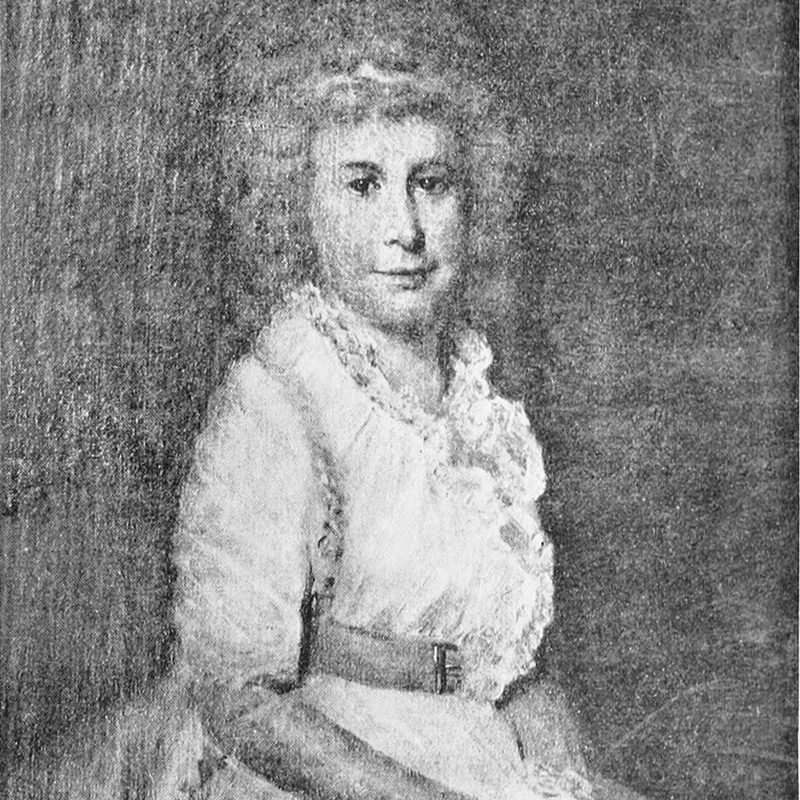
Alison Stewart: My guest is Amanda Vaill. She's the author of Pride and Pleasure: The Schuyler Sisters in an Age of Revolution. It's our choice for Full Bio. We're gonna concentrate on the three oldest: Angelica, Eliza, and Peggy. We'll mention the others as well, but I'd like to start with Peggy because she only lived to be 42 years old. She was born Margarita Schuyler on September 18th, 1758. What adjectives would you use to describe Peggy?
Amanda Vaill: Ultimately, I guess I would say she was traditional, which is kind of an odd thing to say, given that her two older sisters were somewhat revolutionary. Peggy, while very beautiful, while very learned, while very charming, did exactly what her mother and father—but more particularly her mother—always wanted her daughters to do. She married a really wealthy boy of Dutch extraction. Catherine Van Rensselaer, this was her dream. Peggy married the somewhat younger than she—six years younger than she—Stephen Van Rensselaer, who was the patroon of vast estates, vaster than the Schuylers. It was like—I don't know—some randomly rich person marrying the Vanderbilts. That's really, really a lot of money.
Alison Stewart: It's interesting, though, she was 25 when they eloped, right?
Amanda Vaill: Yes.
Alison Stewart: The age difference between the two of them, was that an important issue at the time?
Amanda Vaill: Well, in fact, it was considered slightly scandalous that she had bagged this slightly younger young man. Indeed, one of his college mates wrote a real tut-tutty letter about it to another of their classmates. The fact is, he had been a friend of her younger brother Johnny, and they had run around together. They'd lived kind of the way children do in those big families; they all played together. Then they got to be adolescents, and they probably played at other things together. It was quite customary.
This happened to Alexander Hamilton as well in the family of Governor Livingston of New Jersey, where an older young woman, daughter of Governor Livingston, in this case Peggy and Stephen Van Rensselaer, the older young woman sort of practiced flirting with the younger guy. Then, in the case of Peggy and Stephen Van Rensselaer, it went a little further and then a little further than that. They had what was, by all accounts, a really blissful, happy marriage, which was really saddened only by the fact that she was an invalid for much of it and lost several children to childhood disease, miscarriage, or whatever. That was a tragic thing. Then, she died at a young age.
Alison Stewart: There is a story about Peggy, and I want to see how much is true and how much is apocryphal, or if it's a mix of the two. She was a bit of a hero in the family. During the Revolution, the family's house was raided, and her quick thinking saved the lives of a child in danger. Would you share that story with us, and how much of it is true?
Amanda Vaill: Well, the story is, and of course, like many of these stories, it may be partially, maybe fully mythologized. A group of British loyalists and possibly some Native Americans, all of them disguised in varying feathers and buckskins and God knows what, attacked Philip Schuyler's house with the intent of kidnapping Schuyler and raiding the house of whatever valuables they could get. This was in 1781, in this summer.
Peggy had the brilliant, apparently, thought to run downstairs during this raid. The family had all run up to the bedrooms, but they had left behind the youngest Schuyler child, who had just been born months before, little Catherina, Kitty, or Caty Schuyler, who was a babe in a cradle. The family had been sitting down after the heat of the day, in the cool of the day. They were sitting down there in the salon in front of the open doorway, and this raid occurred. All the family rushed upstairs, and they left the baby. Peggy, discovering that this had happened, raced downstairs, down the stairs, into the front hall, where all of a sudden there was all this fighting. The guards that the general had set around his property were contending with the raiders. There were shots being fired and people screaming. It was starting to be dark, and nobody had any lights. There was confusion everywhere.
She grabbed the baby out of the cradle and ran with her upstairs. According to legend, one of the raiders hurled a tomahawk at her, and it nicked one of the balusters on the stairway. The baluster still has a notch in it, which is considered to be circumstantial proof that this happened. Of course, the notch could have happened from somebody kicking it with their hobnail boot. Who knows what? It makes a wonderful story. Peggy was a pretty spunky girl. The raid itself is documented. It happened, and Schuyler himself wrote about it in a letter to Governor Clinton. It's all very well documented. It's not unlikely that this happened.
Alison Stewart: That was Amanda Vaill, the author of Pride and Pleasure: The Schuyler Sisters in an Age of Revolution. After the break, we'll learn about the two other Schuyler Sisters and the family's involvement with [unintelligible 00:17:06].
[music]
Alison Stewart: The Schuyler had two other daughters. They were much younger, Cornelia and Caty. Cornelia, another eloper, her father, did not like that marriage. Caty was the baby of the family, as we just heard. What did it mean to be the baby of this extraordinary family?
Amanda Vaill: First of all, what it means is that your eldest sisters are old enough to be your mother. That's a start. Already, you have an interesting relationship with people who are meant to be your siblings, but they really are people old enough to be your parent. I think it must have been odd to be that person. She also had, growing up, I think, the formidable reputations of certainly her two eldest sisters, one of whom married a war profiteer and had a glittering life in Europe after the Revolution was over. The other of whom is married to the Treasury Secretary of the United States, and is in amongst all of the doings of the young republic. She is in the room where it happens, literally. There you are, you're a little girl, and you're growing older, and these women have shown you what's possible. I think you maybe have a sense that you need to measure up to this.
At any rate, young Kitty or Caty developed a reputation as a fearsome flirt, marriage-mad girl. The most egregious example of her marriage-mad behavior or her flirtatious and outrageous behavior occurred when she went to Washington's funeral in 1799 in Philadelphia. Her sister Angelica was there with Alexander Hamilton. Eliza Hamilton had stayed home in New York City; she had just had a baby, and she wasn't traveling, so Angelica had gone to accompany her brother-in-law.
Gossip, already, was putting the two of them together with many, many question marks garlanding the two of them. It could not have helped matters when young Kitty found one of Angelica's shoe rosettes had come off on the floor. She put it into Hamilton's lapel and said, "There, brother, I've made you a knight." Angelica said to her, "Well, what kind of knight could you possibly be?" Because we don't have knights of the Garter in America. Little Kitty, apparently, audaciously replied, "No, but he could be a Knight of the Bedchamber if you would let him."
Alison Stewart: Oh, oh, little sister had something to say. [laughs]
Amanda Vaill: I'm not sure what she was watching, but she was watching.
Alison Stewart: There were three boys who survived: John, Philip, and Rensselaer. Of the three, who would prove to be the most successful at the time?
Amanda Vaill: Well, really, of the three boys, Philip was the one who was successful. John was kind of a ne'er-do-well, who was more concerned with fashionable clothing and got mixed up in a scandal where it was a real me-too moment. He assaulted or was overly familiar with—depending on who you spoke to—a young woman on the street in Albany. It was in a public street, so not too much could have happened. He ended up getting hauled in front of a magistrate for this. His father just was really in despair over Johnny, as he was called in the family. He really thought he was kind of a simpleton, and kept hoping that marriage or giving him property to manage was going to make him grow up and turn out better, but it never did. Johnny then ended up dying of one of those dreadful, malignant fevers that people used to get and die of overnight, practically.
He was the oldest son. Philip Schuyler was devastated because he loved all of his children, even when he was exasperated by them. Philip, named after his father, after first disappointing his father by marrying a young woman whom Philip Schuyler disapproved of and thought was stupid and not very interesting, fortunately for the family, she then died, and young Philip married a very, very glamorous, wealthy, well-connected, and actually proto feminist young woman from Massachusetts, Marianne Schuyler. He became a one-term representative to the United States Congress, where he voted against admitting Kansas as a slave state to the Union because by that time, this man, he'd had enslaved servants in his house as a young man, but he had turned over time, and by the time of the Missouri Compromise, he was anti slavery and voted for it. Voted with his principles.
Alison Stewart: Yes. I did want to bring up that issue about enslaved people. There were many children, multiple homes. What was the Schuyler's involvement with enslavement?
Amanda Vaill: Like virtually everyone of their time, not even just of their social class, they had enslaved people working on their estate. Because they had a large estate, they had more enslaved people than, say, a small farmer in Massachusetts. It's pretty shocking for us, I think now, to realize, because for centuries, I think we've told ourselves, "Well, New England was different. Nobody had slaves." Well, they did. In small New England homesteads, there were enslaved people working in many cases, alongside their enslavers, which is a fascinating thing. You don't think about that either. There would be the lady of the house doing the laundry on laundry day with the women who were her enslaved servants. It's just odd to see that that was happening, but it was.
Over time, when you think, I'm starting this book in the 1750s, and I go through until the 1850s, Philip Schuyler died in 1804. Easily, there were, I think, 14 enslaved people working in his house in Albany. This is not including whoever was on the estate in Saratoga. By the time he died, his executors manumitted every single person who was enslaved and working in his household, with the exception of two people who were, I believe, too old to have been manumitted. It was not considered proper, safe, kind, legitimate, barely legal to manumit people when they were past the age of being able to fend for themselves. You were basically obligated to support them until the end of their life. Everyone else, they were freed.
What you're seeing is you're seeing people get to this completely different frame of mind. They start thinking, "Well, of course, everybody's always done this. This is the way we do it." Then you get to, "No, we don't do this anymore." Eliza Morton Quincy, who was a woman who was actually the sister-in-law of the Schuyler Sisters, her brother had married Cornelia, the second youngest daughter, wrote a memoir in which she said that she had been brought up in New Jersey with enslaved people working on her family's estate, and that none of them thought about it until she said, "Someone explained that this was wrong." She said, "Our minds had not been turned to reason on the subject," but then they were. You realize people needed to be told and taught and to learn, and many of them did. I want to give them credit for it, and to the people that it didn't happen to, I want to blame them for behaving the way they did.
Alison Stewart: That was Amanda Vaill, the author of Pride and Pleasure: The Schuyler Sisters in an Age of Revolution. Tomorrow, the Life and Times of Angelica Schuyler.