
Former US Poet Laureate Joy Harjo Explores Jazz and Poetry in 'Insomnia and Seven Steps to Grace'
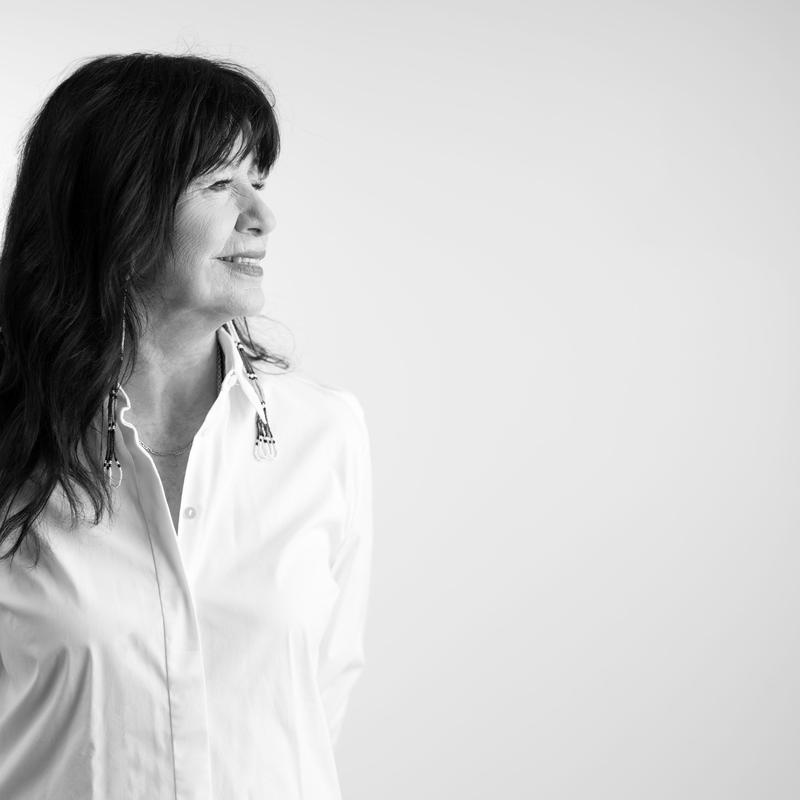
Alison Stewart: You're listening to All Of It from WNYC. Let's get into Poetry Month with a twist. Former US Poet Laureate Joy Harjo has inspired us to connect with nature and embrace the full spectrum of our humanity. Today she is releasing a new album, it's titled Insomnia and Seven Steps to Grace. Produced by Grammy winning composer and musician Esperanza Spalding, the album straddles the worlds of jazz and poetry. It also draws on the genres that have been important throughout Joy's life, such as prog rock, grunge, and the traditional music of Southwest native communities. Composed of 13 poems, the album moves from funk driven tracks like Rabbit Is up to Tricks to the sounds of native flutes and marching band chants in I Pray for My Enemies. Let's listen to part of the title track.
[music]
Her mother is a prophet disguised as a student looking for a job.
She stands at the door of Dream with an empty bowl in her hands.
Alison Stewart: Insomnia and the Seven Steps to Grace, is out today. Joy Harjo is the author of 11 books of poetry, including the highly acclaimed Weaving Sundown in a Scarlet Light: Fifty Poems for Fifty Years. Today she is here for our listening party, and to discuss the new album. Hi, Joy.
Joy Harjo: Hi. I'm so happy to be here. Thank you for this.
Alison Stewart: I'm interested. How did the idea first take shape? This is your Smithsonian Folkways debut.
Joy Harjo: Yes. Well, I'm always working on something. This album came about because of all the different layers of shift and change that we're going through as people of Earth, as people of this country, as people in our communities. The tunes were picked and created to be useful during these times.
Alison Stewart: The release is titled Insomnia and Seven Steps to Grace. Where did the inspiration come from?
Joy Harjo: That wasn't on the song list. [chuckles]
Alison Stewart: Oh. [laughs]
Joy Harjo: That wasn't on the song list, and I was flipping through a book that I published in 1994 for something, and I came upon this poem. I totally rewrote it. This album, I worked very differently from the way I usually work for albums. Esperanza and I had worked on ideas, but we went into the Church Studio with Matthew Stevens, Justin Tyson, and she said, "Do you mind if we go this way?" In the sense that we just began working on everything together. Insomnia and Seven Steps to Grace came out of that. It was like we started playing and listening, and I rewrote the poem to fit into a song kind of structure.
Alison Stewart: Let's listen to one of the songs from the album. This track is titled I Pray for My Enemies. Before we hear it, what would you like listeners to pay attention to with this track I pray for my Enemies?
Joy Harjo: As I was thinking about this, the song that kept going through over and over is like, [singing] "The ants go marching one by one-
Alison Stewart: [laughs]
Joy Harjo: -the ants go marching two by two, hurrah, hurrah." I looked it up, and it was sung during the Civil War by both sides, and I was thinking, we're kind of in a civil war right now. We've been in a civil war that's taking place on social media this time, and so that became an inspiration for what happens in the song.
Alison Stewart: Let's listen to Joy Harjo, I Pray For My Enemies.
[music]
[instruments playing]
The ants are marching two by two, hurrah, hurrah.
The ants are marching are two by two, hurrah, hurrah.
The ants are marching two by two,
The little one stops to suck his thumb
And they all go marching down,
To the ground, to get out, of the rain.
The ants are marching two by two, hurrah, hurrah.
The ants are marching are two by two, hurrah, hurrah.
The ants are marching two by two,
The little one stops to suck his thumb
And they all go marching down,
To the ground, to get out, of the rain.
[flute playing]
This morning, I pray for my enemies and whom do I call my enemy?
An enemy must be worthy of engagement,
I turn in the direction of the sun and keep walking,
It's the heart that asks the question not my furious mind
The heart is the smaller cousin of the sun.
It sees and knows everything.
It hears the gnashing even as it hears the blessing.
Alison Stewart: We're talking to Joy Harjo. She's here for a listening party for her debut Smithsonian Folkways album, Insomnia and Seven Steps to Grace. Okay, Esperanza Spalding. Let's talk about it. She's an amazing performer, a bassist. She produced the album. How did you first meet her?
Joy Harjo: We were both Ford Fellows, and that's how we met. I approached her about a different project, a musical that I'm working on, and we were immediate friends. We've worked with each other on different things, and we have kind of a, I guess, creative network that goes back and forth between us. She is amazing. I've always admired her and I admire her even more after working this closely with her.
Alison Stewart: Why did you feel like she would be a good collaborator for you?
Joy Harjo: I like the way we work together. Like, when we get together, we just play and we can go out there and come back. It's the kind of feel thing. Of course, she's so knowledgeable, and I was always told to play with people better than me. [chuckles] There's that connection, and given this, I think she was the perfect person to produce.
Alison Stewart: Where do you feel her presence on the album?
Joy Harjo: What I've admired about other projects she's done, and this one, is that she thinks in multilayers of sonic qualities. Sometimes it's subtle, and that's what I appreciate about this is, if I'm working on something on my own, I'm like in the baseline or I'm very rhythm-oriented, and they're all kind of separate and then I can pull them together. I sense that she works on all of those levels all at once.
Alison Stewart: When you think about it, Joy, in making this album, what's a decision that you made at first that maybe you weren't quite sure about that turned out to be the right move?
Joy Harjo: Oh, that's a good question, and something that might take me the rest of the interview to think about.
[laughter]
Joy Harjo: I don't know, it was like doing a mock-cheek version of a song that's very well known by the band, the-- Oh, what is it called? I'm flanking. Anyway, Pierre Faye and Jennifer Kreisberg in that group, and I was wondering about that. Then I pulled in a flute and it's different, it's its own thing. I wondered. I thought about taking it off and so on, but the one song that I'm really thrilled about, too, is my mother's song, My Guy, and my sister had given me her lyrics. She passed some time ago, but when I was very young, we used to have country swing musicians at our house, and she was writing songs and sending them to publishing houses in Hollywood. My Guy was the song that she wrote first on DIME Store stationery envelope, and then wrote it on her typewriter. Then I had Esperanza sing it. It's one of my favorites.
Alison Stewart: We're talking to Poet Joy Harjo. She's here for a listening party for her debut Smithsonian Folkways album Insomnia and Seven Steps to Grace, it comes out today. This sounds sort of a, which came first, the chicken or the egg? Which came first, the music or the poems? [chuckles]
Joy Harjo: It depends. Sometimes it's the music, and sometimes it's the poetry, and sometimes the poetry becomes song lyrics, and there are some song lyrics that never become poetry.
Alison Stewart: How has your understanding of your voice evolved during this process of making this record?
Joy Harjo: I grew up doing poetry first, but I loved singing when I was younger, and played clarinet for a year or two, and the band director in junior high said, "See, girls can't play sax." I kind of walked away from all of it. The saxophone brought me back to my voice. What I've come to understand is that my speaking voice, the singing voice, my saxophone voice, the flute voice, it's all the same voice.
Alison Stewart: Let's take a listen to another song from the album. Song, I should say. It's a track titled Perhaps the World Ends Here. What's special about this song?
Joy Harjo: Well, there's no music with it. It's just the voice and we thought it would be good to put it right in the middle, as I think Esperanza said, like a palate clean--
Alison Stewart: Palate cleanser.
Joy Harjo: Yes, something like that.
Alison Stewart: Let's listen.
[music]
The world begins at a kitchen table.
No matter what, we must eat to live.
The gifts of earth are brought and prepared, set on the table.
So it has been since creation, and it will go on.
We chase chickens or dogs away from it.
Babies teethe at the corners.
They scrape their knees under it.
It is here that children are given instructions on what it means to be human.
We make men at it, we make women.
At this table we gossip, we call enemies and the ghosts of lovers.
Our dreams drink coffee with us as they put their arms around our children.
They laugh with us at our poor falling-down selves, and as we put ourselves back together once again at the kitchen table.
This table has been a house in the rain, an umbrella in the sun.
Wars have begun and ended at this table.
It is a place to hide in the shadow of terror.
A place to celebrate the terrible victory.
We have given birth on this table, and have prepared our parents for burial here.
At this table we sing with joy, with sorrow.
We pray of suffering and remorse. We give thanks.
Perhaps the world will end at the kitchen table, while we are laughing and crying, eating of the last sweet bite.
Alison Stewart: That was Poet Joy Harjo. That is from her album Insomnia and Seven Steps to Grace. Joy, you served three consecutive terms as Poet Laureate of the United States from 2019 to 2022. What an incredible time to be a poet. How much we all needed poetry during that time. What was it like for you to engage with poetry when a lot of us were isolated indoors due to COVID.
Joy Harjo: Well, it's times like that that people turn to poetry, so there was an unprecedented traffic to the poetry sites because of what was going on with COVID, politics, environmental challenges, and so on. It was almost like a perfect storm. I've always understood that poetry is always there at crossroads and points of transformation. During that time, my time as poet laureate, I really got to experience it and know it in a different way.
Alison Stewart: Did you experience it differently during that time?
Joy Harjo: I don't know. I'd have to think about that because for me, it's always been like going to Transformer Station [chuckles] for opening. I guess for me, I see poetry as a way to-- it shifts and opens perception and experience in a way that, maybe a song. The roots of poetry go to songs and music and in a way that almost nothing else can.
Alison Stewart: At a recent event at Stanford University's campus, you mentioned how gatherings are important, and how they can't be replaced by technology. What value do you see in being together in the same room to witness someone read or discuss their poem?
Joy Harjo: Because there's a kind of nourishment. It's like a physical and spiritual and artistic nourishment that can happen in a place where we're all together physically. Now, of course, I think of, like an album or a book can also make an event circle that can also have a similar effect. When you're live, other things happen. That's what I love about live music and performing live and improv, is that it, improv, live, is that it shifts, and it's not only a single person in the page, it's several people. It's the story of the place. It's the time, it's the weather, it's all of it converges.
Alison Stewart: It's been four years since your last term as poet laureate, and a lot has happened in the last four years. What conversations are happening now about the arts that we weren't having then?
Joy Harjo: Oh, well, AI, [chuckles] yes. I think that's the biggest one. I listened to a little bit of the previous show about lying. The question, too, about what is art? Who is an artist? What is lying? All of that has become a central question, I think.
Alison Stewart: We're talking to Joy Harjo, the name of her new album is Insomnia and Seven Steps to Grace. I want to get to one more track. This is titled I Am a Prayer. Let's listen.
[music]
I am a prayer of white birds who cannot fly to the storm of fear.
I am a prayer.
I am a prayer of fire who arrived to care for humans, then was misused to destroy.
I am a prayer of wind, whose breathing carries seeds, pollen, and songs to feed the generations.
I am a prayer.
I am a prayer of moon who wears the night as a shawl--
Alison Stewart: I love how that is performed. I love the musicality behind that. What instruments are on that track?
Joy Harjo: Well, there is Matt Stevens on guitar, Justin Tyson, drums, Esperanza, bass, Ganavya singing, and then I'm playing soprano sax.
Alison Stewart: That is you on the sax? I thought so. [chuckles]
Joy Harjo: Yes, it is. [chuckles] Yes, and Ganavya, it's beautiful. Esperanza just sent her the poem, and we hadn't even got down to the stuff on the album, and she said she just had her sing it, and I thought, "Oh, man, we got to put that on the album." That came together really beautifully.
Alison Stewart: What do you find yourself writing about lately?
Joy Harjo: That's a big question. I have something due, and I'm not there yet.
Alison Stewart: Oh.
[laughter]
Joy Harjo: I have something due, so I'm writing about everything around it. I guess what I'm going back to is how we know what we know, and even about plants. I was talking with Esperanza this morning, as this is the release date, and I said, "I just found this thing-- I'm really interested in the frequency of, like, our medicine plants and what the tones are." Then she told me about an experiment she did, a science experiment in high school where she borrowed a friend's father's lie detector and attached it to plants to hear, to see what the response. It's interesting.
Alison Stewart: Oh, that's really interesting.
Joy Harjo: That's what we're thinking and talking about, is about those, and the tonal qualities, the tones, and actually the songs of plants and so on. The stuff of life.
Alison Stewart: As someone is sitting down to listen to your album, how should they listen to it? Should they put headphones on? Should they listen to it while they are doing work, while they're being creative? How would you like someone to listen to your album?
Joy Harjo: I don't know. I'm open to all of those, and the order is in a very specific order for a reason.
Alison Stewart: Okay, so listen to--
Joy Harjo: Yes. Listen to it first in order.
Alison Stewart: Ooh. Tell us why you picked the order.
Joy Harjo: Insomnia and Seven Steps to Grace kind of opens it up. It's kind of mysterious, and people have reported getting into altered states listening to it. Rabbit Is Up to Tricks, shifts it. Pray for My Enemies. You know there's division and how do we come together, and we're all going through fear, and Without is thinking about other realms, what happens when we go mock-cheek. It's just a beautiful tune kind of pulling it together. Instinct came together suddenly, and My Guy is real swingy jazz, old style.
Alison Stewart: So much to listen to. The album is called Insomnia and Seven Steps to Grace, it is by Joy Harjo. Joy, thanks for joining us.
Joy Harjo: Well, thank you so much. Thank you for the listening party. I appreciate it.
Copyright © 2026 New York Public Radio. All rights reserved. Visit our website terms of use at www.wnyc.org for further information.
New York Public Radio transcripts are created on a rush deadline, often by contractors. This text may not be in its final form and may be updated or revised in the future. Accuracy and availability may vary. The authoritative record of programming is the audio record.