Exploring the Complexities of Familial Estrangement
Tiffany Hansen: This is All Of It. I'm Tiffany Hansen in for Alison Stewart. Just a quick reminder for you here that our April Get Lit event is tonight at the New York Public Library. Alison will be there. She'll be joined by Get Lit author for April, Cynthia D'Aprix Sweeney. They're going to talk about her latest novel, Lake Effect. There's going to be some live music as well from the band Ida. That all happens tonight at six o' clock at the Stavros Niarchos Foundation Library. Seats are first come, first serve. You can get more information or you can tune into the live stream by going to wnyc.org/getlit, so you can get your Allison fix in today if you would like. Right now, however, we're turning to a conversation about family estrangement, something that affects a lot of people, still isn't talked about openly. There's an assumption that if you're on the outs with a parent or a sibling or you're in some sort of temporary in-between state, that the relationship is broken, that it needs to be repaired, that reconciliation is the only happy ending.
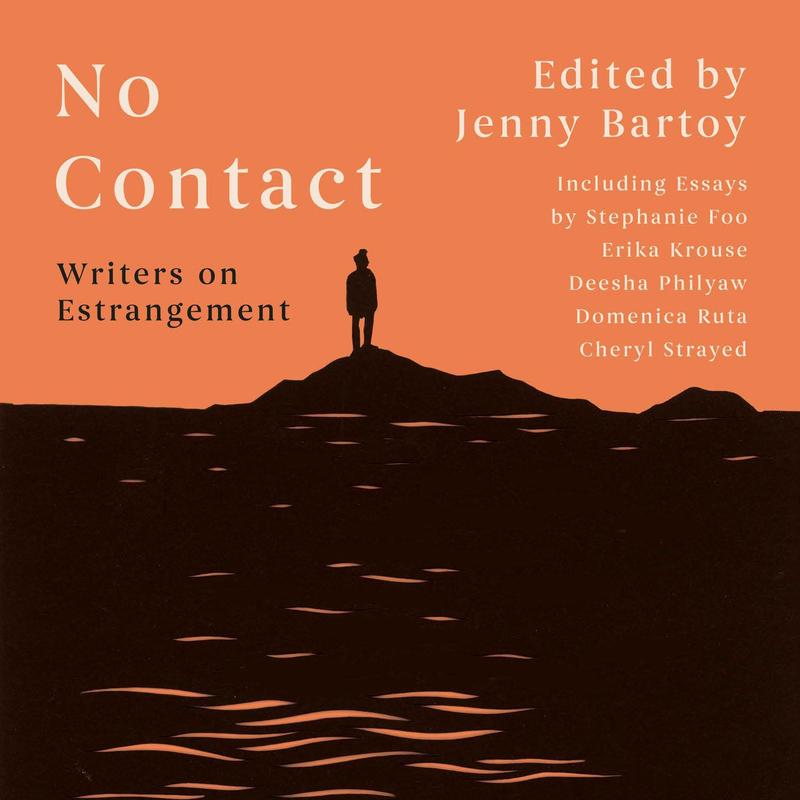
For a lot of people, estrangement isn't a pause before mending fences, it's an end. It can be painful. It can be full of grief. It can also bring people a lot of relief. The experience is more common than you might realize. One study from Cornell found that roughly 27% of American adults are estranged from at least one relative. There's a new book called No Contact: Writers on Estrangement that features essays on family estrangement. We're joined now in studio by Jenny Bartoy, who's the editor of No Contact. We also have Hannah Bae, who has an essay featured in the book. Hannah, Jenny, welcome to WNYC.
Hannah Bae: Thank you so much, Tiffany.
Tiffany Hansen: Yes, thanks for being here. Okay, Jenny, you write about the estrangement from your father, and you write about what you were going through and you did a lot of reflection on that experience. Just tell us about it.
Jenny Bartoy: I cut contact with my father about 20 years ago, which was a very painful decision, but also one that brought me a lot of relief and safety. What helped my healing the most in the years afterwards was connecting with others who were estranged, which is how this anthology came to be, just an attempt to bring together a collection of voices.
Tiffany Hansen: Why? I understand why it was important for you personally. Why is it important, capital I, for us to have this?
Jenny Bartoy: I think the discourse on estrangement is very black and white, and in the mainstream media and Hollywood, almost always pushing reconciliation as the inevitable or desired endpoint, as you mentioned in your intro. I think we need more nuance and compassion. It's a complex and very diverse experience. I hope this book brings more experiences to the forefront and better understanding of what it might look like for a lot of people.
Tiffany Hansen: Hannah, you have your own experience, but I'm curious, just broadly speaking, what do you think it is? You mentioned a little bit of this too, Jenny, but what is it that people often really misunderstand about family estrangement?
Hannah Bae: I think on the end of myself and Jenny, as the child who is estranged from a parent, I think there's a lot of shame around feeling a bad child, a bad daughter. One of the things that I have been able to reflect on a lot in my personal life and through my writing is that this actually allows me to be a better person in my day to day life. I'm able to move in the world with more compassion, more kindness because I'm not distracted and stressed out by having to deal with parents who have actively harmed me.
Tiffany Hansen: Jenny, have you heard from people who've read the book or who have submitted essays to you and said, "This is extremely validating for me"?
Jenny Bartoy: Definitely the response so far-- The book comes out tomorrow, but it's been in progress for three years. The response has been phenomenal. I think people who are estranged are hungry for this sharing of stories, for this validation, for feeling less alone. Estrangement is an isolating and alienating experience for so many of us. I think putting these stories out there is, I guess, yes, validating and powerful.
Tiffany Hansen: All right, well, to that end, let's ask our listeners to join the conversation. Are you estranged from a family member? Do you have a story or maybe some advice you'd like to share? Have you found peace in going no contact? Has it been painful? Probably, maybe both. If so, how do you navigate that? Call us, text us, 212-433-9692, 212-433-9692. Hannah, let's talk about your essay. I mentioned it. You write about a very tumultuous relationship with your parents. Just tell us about your experience.
Hannah Bae: Yes, one of the things that I write about quite a lot in that essay is about being the child of a parent with mental illness. In this case, my mother. She was diagnosed with paranoid schizophrenia when I was a young adult, and that, unfortunately, meant that I was not safe around my mother. There was physical abuse from both of my parents growing up, and physical abuse certainly from my mother as she became progressively more ill.
I didn't know how to protect myself for many years. Finally, through the essay, I detail a series of events where my mother is reporting me as a missing American overseas while I'm living in Korea, showing up to work. One of my bosses actually pulled me aside. He heard me really upset at work one day and said, "What can we do to protect you, to make you feel safe?" He was almost-- [crosstalk]
Tiffany Hansen: That must have been an amazing experience.
Hannah Bae: Yes. To feel permission from somebody that I knew and trusted to show me compassion and really make me feel like it was okay to do this. Then I had other friends who also guided me through this process.
Tiffany Hansen: First of all, sorry that happened to you.
Hannah Bae: Thank you.
Tiffany Hansen: Second of all, and I think I know the answer to this, but no regrets, right?
Hannah Bae: No, I don't regret it. There are definitely moments when I grieve the loss of my parents.
Tiffany Hansen: Which is different.
Hannah Bae: Yes, it is very different, but I do feel like I am able to live a much more peaceful, safe life without contact with my parents.
Tiffany Hansen: Jenny, it's clear from the book that there isn't one reason. It's not a whole collection of people who've experienced mental illness in their family or whatever. Right? There as many people as there are, there are probably reasons why estrangement is necessary or important. Talk about some of them.
Jenny Bartoy: Definitely. Estrangement happens for myriad reasons. Some of them are abuse, family dysfunction and toxicity. Mental illness is one. Addiction is another that pops up quite a lot. Abandonment. Then there's things like divorce, adoption, incarceration, things that we don't necessarily think about as estrangement, but do cause distance and sometimes irreparable between family members.
Tiffany Hansen: Jenny and Hannah, we're getting some calls here, so let's bring some folks into the conversation. We have Marcia on the Upper West Side. Hi, Marcia.
Marcia: Hi. I can't believe on the first one. It never happens. Anyway, just today I was walking. I didn't realize we were going to be doing this show, and I was walking down the street, just really sad because I saw someone who looked like my sister. Through the years, she's cut me off. Then, because I'm like a dog with a bone, I have to fix things, and sometimes it doesn't work, and it just devastates me.
We both had-- I'm five years older. She had some traumatic stuff happen in our lives with our father and our brother, but she thinks I'm all messed up because of it. I'm not. I'm able to function fine. The last time she cut me off about a year ago now. She told me never to reach her again, and I keep saying, "I love you. Let's try to work things out." It's hard for me to accept that it's just never going to happen. [unintelligible 00:09:04] kids, luckily. The first time she cut me off was, I went through cancer, and she said, "Talk to people who can be there for you. I am not one of them. Prayerfully yours."
Tiffany Hansen: Oh, Marcia, we hear the emotion in your voice. Thank you so much for calling. Hannah, just any reaction to that?
Hannah Bae: Yes, absolutely. Marcia, I want you to know that you're so not alone. I've experienced different versions of this with my own siblings. I hope that your sister knows that your door is open, that your phone is there, that she can reach out if and when she ever feels like she can, but I hope that you're doing everything that you can to take care of yourself. It sounds like you're doing really well in your own life, and you've healed from cancer and from this estrangement, and so I hope that you can just keep taking good care of yourself.
Tiffany Hansen: Let's bring Ginny in Roseland into the conversation. Hi, Ginny.
Ginny: Hi. Good afternoon. I was calling in because I haven't spoke to my mother since the beginning of 2025. I'm 41 years old. We've had a really bad, traumatic relationship. She was an immigrant. She came here in her 20s. I think she probably had a lot of trauma herself, and she wasn't the best parent. What I realized from going no contact and being estranged from her for the past year and a half or so is that I have been able to be a better mother myself.
No longer having that toxicity and that much anger and hate in my life has helped me be a better mom to my own kids and always helps me put things into perspective when I parent with my own kids. I don't want to be in that position where in the future my kids ever go no contact with me. How am I handling this situation right now? In a weird way, I think going no contact with my own mother stopped that trauma cycle, and I think it's helped me start afresh as a parent.
Tiffany Hansen: Ginny, thanks so much for the call. Jenny, I see you nodding your head. Thoughts?
Jenny Bartoy: Hi, Ginny. Thanks for sharing that. Yes, this resonates so much for me. I hear you on wanting to break cycles and do better for our children. I relate to that. I'm a mother of three, and I think setting boundaries and finding safety and authenticity through my estrangement has allowed me to just be more thoughtful about what sorts of relationship I want to build with my children, and I think many of us who are estranged and also parents relate to that very much.
Tiffany Hansen: We're talking with Jenny Bartoy, who's the editor of a book called No Contact: Writers on Estrangement. We also have Hannah Bae in studio with us who has an essay featured in the book. We'd love your stories as well. Have you become estranged from a family member? Stories, some advice maybe you'd like to share, you can call us, you can text us, 212-433-9692, and let's talk with Seth in New Jersey. Hi, Seth.
Seth: Hi. Thanks for taking my call. I just want to take an opportunity to say thank you for normalizing this conversation. I think it's very important. I'm a single father of a neurodivergent seven-year-old, and I kind of just really realized my relationship with my father wasn't serving me anymore, just generational struggle having to do with poverty and addiction and the modality that comes with that behavior.
I took a year or so break from interaction with my father, who was very damaged from his youth and from military service. I realized that I just really needed to set an example and hold strong to holding those boundaries for my son because he is so susceptible to what he sees and hears. I tried to revisit the relationship about a month ago, just letting the kids play in the yard together. It took about three hours until my father started with his old behaviors and trying to overstep boundaries, so we're back on taking a break. I don't know how long it's going to be, but for the sake of my son, I just felt like it was better to break those ties.
Tiffany Hansen: Seth, thanks so much for the call. We appreciate it. Jenny, I have a couple of questions there, and one is which, how much do you hear about, "I'm doing this so that I can set an example for my Kids or set an example for other people in my life who may have difficult relationships"? One. Then also, how many people live in that limbo period, where we're on, we're off? We heard that earlier, too, from a caller, that, "We tried and then we failed and we tried and we failed." That in itself has shame and judgment associated with it. Yes, both those.
Jenny Bartoy: Okay. First question. I think estrangement usually stems from long-standing issues. I don't think necessarily people are doing it to set a good example. It's primarily to save yourself, or out of self-preservation, wanting to seek peace, live an authentic version of your life, those sorts of things. I think the example comes from being that sort of person who sets healthy boundaries and wants to leave a peaceful, authentic life. I think it's more a result of the experience. I think if you're a parent, there's probably more thoughtfulness that goes into it, as Seth's story exemplifies. The second question--
Hannah Bae: Jenny writes in the anthology's introduction that estrangement is quite common. A Cornell University study led by family sociologist Carl Pillemer found that at least 20% of American adults are estranged from a family member. It's really widely seen in our culture.
Tiffany Hansen: Yes. Right? Also, that second question that I had asked you about, Jenny, was that limbo period.
Jenny Bartoy: Yes. I think for all of us who are estranged, some of us, the decision is very clear. What really surprised me in editing the anthology is how many stories have that limbo and intermittent feeling, which speaks to the hope that we all have. No one wants to be estranged from their family. It's devastating. Very often it's for the best, and you can accept that while also feeling safe, sadness, grief, shame. That can exist together with relief, peace, safety, joy, but yes, a lot of intermittence, I think the limbo. If a parent is on their deathbed or a family member is very sick, there's often a desire to reconnect and try something at that point. That is also very common.
Tiffany Hansen: We have a texter here who says, "Thank you for this excellent segment. I made the choice to go no contact with my mother after decades of efforts to shift her abusive behavior. It was draining, terrifying, heartbreaking to navigate the constant dysfunction. Ending contact was the absolute last desperate resort after it became clear that she was getting much worse with age. It was quite literally a matter of surviving or allowing her to engulf and destroy me totally." Before we take a break here, let's talk with Sarah in Hudson County, New Jersey. Hi, Sarah.
Sarah: Hi. I've been estranged from my brother for almost four years now. It's been a thing that's been going on and off most of my life. He's almost a decade older than me, and we grew up in an abusive home. Our mother passed away almost 30 years ago, and so I was quite young. He has since moved away, first to California, then to Hawaii. He has his own family.
I did have a good relationship with him when he was in California, but then when he moved to Hawaii, it was just like, I don't know, I always felt like he wanted me to either financially or emotionally give more than what I could possibly give. And I just feel guilty about it. I don't know if this guilt is valid or not because, I don't know, I never felt like I did anything wrong to him, or I just don't know why he's like the way he is.
Tiffany Hansen: Sarah, thank you. Again, I hear the pain in your voice and I'm so sorry, but I'm also grateful you called in. Hannah, I see you shaking your head.
Hannah Bae: Yes, definitely. I can relate to those financial pressures, too. The essay that I wrote in the book is called the Cost of a Mother, and it's about financial abuse on my parents part as well. I felt like if I continued to allow myself to be abused financially, to have my livelihood, my future threatened by a family member's instability, it would create profound consequences for the rest of my life. I hope that you're doing everything that you can and to allow yourself to have a life of peace and safety most of all. I really understand that feeling of wishing that you could do more, but knowing that you can't.
Tiffany Hansen: That is Hannah Bae. She has an essay in a new book called No Contact: Writers on Estrangement. We're talking with Hannah and Jenny Bartoy, who's the editor of No Contact. We'll get back to the conversation here in just a moment. This is All Of It. I'm Tiffany Hansen in for Alison Stewart. Stay with us.
This is All Of It on WNYC. I'm Tiffany Hansen in for Alison Stewart. Alison prepping for her Get Lit event this evening. Right now we're talking about a book called No Contact: Writers on Estrangement. In studio with us is Jenny Bartoy, the editor of No Contact. We also have Hannah Bae with us, who has an essay featured in the book. Ladies, we have a lot of calls, but one thing I wanted to touch on with you, Hannah, before we dive back in here, is this feeling that I hear from a lot of our callers about judgment. So just say something about that.
Hannah Bae: Yes. I really felt like for so many years there was something wrong with me, and that's why I was struggling so much in this relationship with my parents, but the more that I learned to take care of myself through therapy, through self-care, through having conversations openly with friends, with honesty, I realized that I hadn't done anything wrong as a child, and that having a parent cross a boundary that goes beyond what is acceptable, that that is actively to the detriment of a child. It's okay to step back from that and to create boundaries and to take care of myself first, because not doing that would mean that I would be suffering even further.
Tiffany Hansen: Let's talk with Dominique in Brooklyn. Hi, Dominique. Welcome to the program.
Dominique: Hi. Thank you so much for taking my call. My mom is 86, and she's not officially, but [unintelligible 00:20:48] my therapists had borderline personality disorder. I did decide to become estranged from her back in October and November for about 40 days after reading Eamon Dolan's wonderful book on estrangement. I just want to put forth the idea that he writes in the book that there's different levels of estrangement.
I was still keeping track of her, and in November, I found out she was being scammed really hard and lost $10,000, whatever. I'm the only child. My father passed away a long time ago, so it's really just me who can help her. I jumped back into her life. Long story short, I got her into a hospital using an involuntary assessment in the state of New Hampshire, and the police brought her and the whole thing.
Anyway, she's been in the hospital for three months, and I realized, through the help of my therapist, who's always said, "You can always step away. You can always step away," once they're in the care of a hospital or an institution, you never ever have to be in a room alone with your parent again, and you're safe. As far as emotional protection, abuse, all of that kind of stuff. Now I'm able to go through the whole guardianship process and the hearing that's upcoming and all of that with being held by the hand of my lawyer, of my therapist, all of this stuff, because it really is just me. The estate people are at the house right now photographing all my mom's stuff.
There are ways to step back and to protect yourself if you're in a position where you really can't step away completely, which is sometimes the case, especially if you're an only child or if you're the only one left or maybe for cultural reasons.
Tiffany Hansen: Right. Dominique, thank you so much for the call. We really appreciate it. Jenny, my question is, when we hear from our callers about their experiences, families are messy. None of this is easy, from what I'm hearing. Just talk a little bit about living in the mess. What do you hear from your writers in the book about living in that mess?
Jenny Bartoy: I think, as you said, families are messy. I think all families are messy. What I hear from my writers, specifically in the book, is when the messy becomes unsustainable. For certain families, there is a point where the messy isn't safe anymore, or there's an incompatibility. Family members just cannot mesh anymore for various reasons, as we talked about earlier, abuse, addiction, mental illness, or a variety of other things. Yes, if you can make the mess work for you, that is very lucky.
We have a text here that says, "We found ourselves estranged from my husband's siblings after and because of events related to his parents, elder care, passing, and estate. He walked away from a vehemently toxic environment after multiple attempts to rectify and resolve the issues. Now my kids are moving apart over politics, and I fear we set an example for them. This is tearing me apart as a parent."
We hear that phrase, and I'm sorry, texter, that that is happening, and I'm sorry that you're feeling that way. Also, we hear this a lot, about this notion of tearing apart. What I wonder is, is there, Hannah, maybe a different way to think about that? It is a tearing apart, and maybe it's just about how you deal with it.
Hannah Bae: Yes. I think the first word that pops into mind when I hear about this person's story is compassion. I have a lot of compassion for this listener. I have compassion for their children. I feel like everyone is trying, hopefully, to do the best they can to take care of themself and hopefully be a better person in the world. Yes, it is really difficult. Jenny writes in the introduction about how estrangement is growing around political lines.
Tiffany Hansen: Yes. I do want to get to that. Actually, we have a texter here, too, Jenny, that says, "Very difficult managing relationships with family and friends who are holding on to extreme political views, beliefs short of severing ties, periods of estrangement are necessary." There's a lot that we're getting and that you've heard about these sort of politically motivated estrangements, right?
Jenny Bartoy: Definitely. I think the study we quoted earlier was 27% of adults are estranged from at least one family member, but there was a survey done more recently that says possibly up to 48% due to growing rifts due to political reasons. I think that has to do with-- it comes down to values. If you feel like your values and your sense of humanity and civil rights differ from your family, and your sense of morality, I think, it can be really hard to reconcile that with having a loving and authentic relationship with that family member.
Tiffany Hansen: Let's bring in Jim in Brick Township. Hi, Jim.
Jim: Hi. Yes, no, I had said to the screener, I'm surprised that politics had not come up as a precipitating factor. It is something that I was more willing to meet halfway with different relatives, but I felt a condescending attitude, as if I had TDS, was sort of the buzzword. I frankly think it is very divisive. I'm glad you're just touching on it now because it is-- Aside from having family differences in the past, politically has just really galvanized it for me. I don't miss it. I don't really care to go to family gatherings. Yes, it comes down to the values, as has just been said.
Tiffany Hansen: Yes, thanks, Jim. We appreciate the call. Hannah, I wonder if you can talk about the piece you have found and how-- we are imagining you now with little butterflies flying around your head, but I can imagine that the peace comes and goes.
Hannah Bae: Yes, it does. One of the things that I have found is that I can't control the behavior of any of my family members. All I can control is the way that I feel about it. By being able to speak openly with people like my therapist, like my friends, I'm able to feel heard and seen and cared for, and I'm able to have compassion for my family members. I write in the essay about having this distance from my mother and then being able to appreciate all of the beautiful things that she added to my life in addition to all of the grief. I feel like I wouldn't be able to get that fuller picture without being removed from the chaos that came with everyday engagement with her in my life.
Tiffany Hansen: I'm going to prep you, Jenny, because I want us to get to this Mary Oliver poem. If you can find that in your book. I want to bring that up because I think we've heard from a lot of folks for whom this will resonate. If you can read a couple lines there for us.
Jenny Bartoy: This is the dedication in the book and it's a poem called the Uses of Sorrow by Mary Oliver. "In my sleep, I dreamed this poem. Someone I loved once gave me a box full of darkness. It took me years to understand that this too was a gift."
Tiffany Hansen: A: Hannah, how does that sit with you?
Hannah Bae: It's such a beautiful poem. I feel like the words of Mary Oliver are such a comfort to so many people in so many scenarios.
Tiffany Hansen: Always. Yes.
Hannah Bae: I love that line, this too is a gift, because I really do feel like giving myself permission to step away from really difficult, damaging family dynamics has allowed me to be kinder in the world. It has allowed me to express myself more in the world, and to be able to listen to people's stories, where in the past, they maybe would not have been able to share with me about their stories of estrangement. I think that once we are more open about these experiences that we go through, we realize that there are more commonalities and links to others in our lives who are going through similar things.
Tiffany Hansen: I know this is a big question we're going to end on here, Jenny, but what do you hope that people who are struggling to reach some level of estrangement will take from the book?
Jenny Bartoy: I hope they'll find connection with the stories in the book and feel like they're in community with people who have gone through similar experiences. I think the hardest part of having these complicated, difficult relationships with family and get to the point of seeking estrangement can be so lonely. I hope the book provides compassion, nuance, and connection.
Tiffany Hansen: The book is No Contact: Writers on Estrangement. It features essays on family estrangement. We've been joined by Jenny Bartoy, who's the editor of No Contact, and we've also been talking with Hannah Bae, who has an essay featured in the book. Jenny, Hannah, thanks so much for your time. We appreciate it.
Hannah Bae: Thank you, Tiffany.
Jenny Bartoy: Thank you so much for having us.
Copyright © 2026 New York Public Radio. All rights reserved. Visit our website terms of use at www.wnyc.org for further information.
New York Public Radio transcripts are created on a rush deadline, often by contractors. This text may not be in its final form and may be updated or revised in the future. Accuracy and availability may vary. The authoritative record of programming is the audio record.