
Eva Victor's 'Sorry, Baby' Wins Independent Spirit's 'Best Screenplay'
Alison Stewart: This is All Of It on WNYC. I'm Alison Stewart. Happy Monday, everyone. Every year, the Independent Spirit Awards celebrate the world of indie filmmaking. There's less red tape from the Hollywood studio system, and there are also lower budgets in the indie world, which means filmmakers have more leeway to be innovative and risky with their storytelling approaches, and it shows. Over the years, Independent Spirit winners have gone on to broad success and sometimes cult status, including Mystic Pizza, Pulp Fiction, Heathers, Dirty Dancing, and The Blair Witch Project. This year's awards were announced yesterday, but we've been having conversations with many of the nominees over the past few months, so we wanted to share some of those today. Later on, we'll talk about Peter Hujar's Day with director Ira Sachs. The film recreates an archival interview between two friends, a photographer and a journalist, that provides a snapshot of what it meant to be an artist.
We'll also talk about the thriller Lurker, which explores a parasocial relationship between a singer and his obsessive fan. We'll hear about Twinless, which follows two young men who find friendship after their twins have died. Eephus tells the story of a small town baseball league preparing to play one last game on their home field before it is demolished and replaced with a school building.
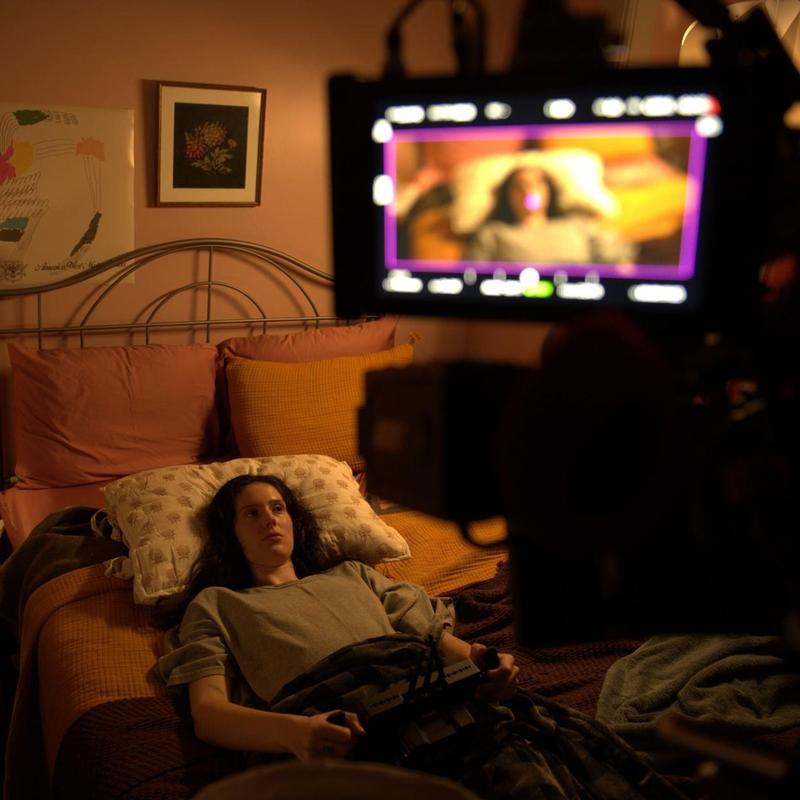
That is all on the way, but first, let's get things started with Eva Victor. The film Sorry, Baby was nominated for Best Feature, Best Director, and Best Screenplay. It's the brainchild of Eva Victor, who wrote, directed, and plays the lead role, Agnes. In the film, we can tell that something has happened to her. We don't actually see what happened, but we see and hear Agnes recalling it in step-by-step detail that she was sexually assaulted by her grad school professor.
We also see how it affects her life. Not so much upending it, but causing her to get stuck in the same town, working at the same school, living in the same house, not moving forward in life. At one point, she says she can't even imagine herself old. Eva Victor is a writer and comedian who has gained a devoted following on social media sites like Instagram. That's where filmmaker Barry Jenkins found Eva and eventually reached out to offering to produce their first film, so let's hear them talk about it.
Before we do, this conversation will cover the topic of sexual assault. If you need help or someone to talk to, the national Sexual Assault hotline number is 800-656-HOPE. That's 800-656-4637. When Eva Victor joined us to talk about Sorry, Baby. I started by asking when they wrote the film.
Eva Victor: I wrote this film in 2021. I sequestered myself in a little cabin in Maine. I knew I wanted to write something about trying to heal from a really bad thing. I wanted to decenter violence and speak to the thing that keep you going, like a good friend, a good sandwich, a sweet cat. It was a real time of just sitting down, locking in, and writing privately.
Alison Stewart: The cat, the sandwich, and the good friend all feature in the film. What was special about Maine?
Eva Victor: The thing about the East Coast that I think is so special is it can skew romantic and cozy and old like a little nest, and it can also skew horrific. Being able to play along that spectrum of tone was really meaningful to me. It feels ancient, but also there's secrets. I really enjoyed being able to play with that in the film and have a cottage feel like the cottage in the holiday in moments in that film, and then also have it feel like a house of horrors in moments when the character is feeling scared, or when the character is feeling safe. It felt like the right setting for a film that deals with many, many feelings.
Alison Stewart: When you were writing this film, when did you realize, "Yes, Agnes, it's me. I'm the actor?"
Eva Victor: [laughs] When you write it, you never think it's going to get made. It's very interesting because as people talk to me about the film, they're like, "Agnes is so awkward." I'm like, "I didn't know that. That wasn't totally something I understood, but thank you for letting me know." I think I wrote it with my voice in mind, but that was always on the table. I was always saying, "I want to play this role. This means a lot to me."
It took me a little longer to figure out, "I am wanting to direct this. I just have to prepare to do this because I've never done it before." That was a little bit more of a challenge to wrap my head around, but then once I realized I desperately wanted to direct it, I felt I just had to learn how to do that. I quickly wanted to do it.
Alison Stewart: Were you frightened to do it?
Eva Victor: Of course. I'm frightened of many, many things. Yes, I was scared. I think the main thing I was worried about is the story means so much to me, and I didn't want to sacrifice anything. I didn't want something to be forgotten because I was taking on too much. That led me to prepare a great, great deal for two years to, to be ready to do both things. I had a huge, amazing team of brilliant people supporting me and doing it, and understanding that the task was big. People were very game to help me when I couldn't see or couldn't be somewhere. It took a big group to make it work.
Alison Stewart: What's an example of, of being prepared that you knew you had to be prepared?
Eva Victor: I storyboarded the whole film, every image, and I shadowed a good friend, Jane Schoenbrun, who, while they were shooting their film, I saw the TV glow. That was a huge help in learning how set runs. They are an incredibly confident filmmaker and a visionary. It was really nice to just ingest some of the ripple effects of what it looks like when someone's doing what they're meant to do in that way. Me and my DP prepared the film and shot listed for basically years beforehand. I had amazing producers who were very interested in helping me get ready to direct the film as I wanted to. I was very lucky with that.
Alison Stewart: I'm speaking to Eva Victor, director, writer, and star of the film. Sorry, baby. The cast is great. Chemistry is really important in this film. You have Lucas Hedges, who's a sweet guy who has a crush on Agnes, and Naomi Ackie, who's your best friend, capital best. How do those actors come aboard?
Eva Victor: Naomi Ackie is, I think, the best actor we have. We met, and I felt immediately like I was in love with her, and I wanted her to like me. I just thought she was so warm and so smart and just so special. Then we read together, and there was this magical thing that happened where it just felt like these people locked into place. I always said Agnes to me is the moon, and Lydie is the sun, so we were looking for the sun.
She is just the warmest, kindest, most patient, beautiful, most vulnerable actor ever, and it luckily just felt like fireworks immediately, and that never felt hard. It was very easy with her. I feel so lucky because it takes a very particular person to trust a first-time filmmaker, because they have no proof this person can do it. It takes a very special actor and a very brave actor to jump in and give themself to a first-time filmmaker. Lucas, he's a legend, and I wrote him a very long letter.
Alison Stewart: Because he hasn't been in a lot of things recently, and I thought that was-
Eva Victor: He's very picky.
Alison Stewart: -interesting.
Eva Victor: He has impeccable taste, and I feel so lucky that he said yes and he understood it. The role fit him like a glove. It was such a joy. I got to work with him for five days. It wasn't enough. It was so joyful.
Alison Stewart: The film shows what her life is like during this three-year period, and it's at different points in her life. It's not linear. Why did you choose that format?
Eva Victor: I wanted the film to start with this explosion of friendship, and I wanted to let the audience in on that intimate, romantic joy that two friends have together. I think in talking about this kind of trauma, we as people tend to flatten people who've been through this kind of experience, I think, without meaning to. We paint people as tragic figures when we know that this is what's happened to them, because I think we're afraid that if they're a whole person, that means it could happen to us or someone we love.
I wanted to give Agnes and Lydie this fighting chance at being whole people that you fall in love with. The film is meant to have a bit of joy in it and to have humor in it, which, for me, feels like a bit of a rebellion against the heaviness of the subject. Starting off with these two people, and hopefully you feel so connected to them, and you feel like they're wrapping you in a big hug. So that when we get into the harder stuff, we see them as these complicated, big people.
That meant a lot to me to start there. There are all these little ghosts that you see in the first chapter that maybe don't make sense. Upon first viewing, we see pages on a window, we see boots by a door, we see a cat, and we see a sandwich that we don't know where it came from. Hopefully, the audience feels along enough and that they're patient enough to make it to the answers to those ghosts. You get the answers as you watch the film, which felt true to me in terms of how the world works. We never really know what feels heavy to someone and what doesn't, like why do boots feel heavy to this person? We find out later.
I wanted each chapter to function in a subjective way for how Agnes is feeling. Time works in that chapter. There's a jury scene that feels like it's two hours long, because I think Agnes feels very stuck in that moment. Then there's another chapter where many, many things happen, and she gets a promotion. People go through huge life transitions in this one chapter, and I hope that it feels like time is moving in a way that Agnes has experienced time, and the film is reflecting that back to us.
Alison Stewart: Let's listen to a clip from Sorry, Baby. This features Agnes and Lucas Hedges as her neighbor, Gavin. This is the first time they meet. She's at his house. She's looking for lighter fluid. You'll understand later. You'll understand. Let's listen.
Agnes: You're my neighbor, right?
Gavin: Yes, I live here.
Agnes: What's your name?
Gavin: Oh, Gavin.
Agnes: Gavin. Nice to meet you.
Gavin: You too.
Agnes: I'm Agnes.
Gavin: Lamb of God.
Agnes: What?
Gavin: That's nothing. It's all good. What are you up to this fine evening?
Agnes: Oh, I was wondering, do you have stuff that makes a fire?
Gavin: Oh, matches?
Agnes: No, a liquid. Is that a thing?
Gavin: Oh, yes. Lighter fluid.
Agnes: Yes. Do you have that?
Gavin: Yes. Why do you need it?
Agnes: My friends and I we're going to make hot dogs.
Gavin: Oh, hot dog sounds good.
Agnes: I'm sorry. We only bought two hot dogs.
Gavin: Oh, no, that's no problem. I have dinner plans with my mom. That's not true. I'm sorry. I just wanted to close myself off from the possibility of being rejected.
Agnes: That's no problem. There's so much going on.
Gavin: I'll get the lighter fluid.
Alison Stewart: There's so much going on in that film and that scene.
Eva Victor: I can't believe we listened to it. I've never just listened to it without-- It's very interesting. It's like a play.
Alison Stewart: What did you think when you heard it?
Eva Victor: It's interesting. The clean dialogue, it's interesting. Thank you for sharing it.
Alison Stewart: When we look for films, when we look for movie clips, we have to find those times when you can really understand what's happening without a visual.
Eva Victor: Yes, of course. You guys do it all. Good work.
Alison Stewart: Thank you. What did you want us to understand about the tone of the film from that passage?
Eva Victor: The Lucas and the Agnes and Gavin, that little relationship functions to me as a bit of a rom-com amidst the drama. I think the film is meant to be quite loving, and it's meant to be funny. I think we are talking a lot about the heaviness of the film. I spent a lot of time trying to consider how my audience would feel watching the film and make specific choices to try to prevent their body from feeling shocked and scared.
I made the film for a version of myself that I think desperately needed a film that talked about these big feelings, but didn't show me something that was so devastating that it sent my body into shock and made me shut down. There are many moments in the film that are meant to keep you there and keep you present and keep you feeling safe so that you can enjoy it and hear the film for what it is. I like that I got to give the main character this neighbor who's very loving and very much like a little puppy dog who is obsessed and also can't always read the room, but is purely kind. It's nice to hear a little bit of that today.
Alison Stewart: We'll have more in a minute with Eva Victor, whose film Sorry, Baby earned four nominations at this year's Independent Spirit Awards, including Best Feature, Best Director, and Best Screenplay. Stick around for more after the break. This is All Of It. Welcome back to All Of It. I'm Alison Stewart. We've been talking about the film Sorry, Baby from writer, director, and star Eva Victor. The film follows a woman named Agnes who is struggling with feeling stuck in the wake of a traumatic sexual assault by a grad school professor.
Listener, this conversation covers the topic of sexual assault. If you need help or someone to talk to, the National Sexual Assault Hotline number is 800-656-HOPE, 800-656-4637. Sorry, Baby is nominated at this year's Independent Spirit Awards, including for Best Feature, Best Director, and Best Screenplay. Let's get back into this conversation. I asked Eva Victor to explain a particular writing choice. Why does Agnes refer to the assault she survived as "the bad thing"?
Eva Victor: It's interesting because honestly, I've talked to some male reporters about this, and some people's take about it is that they think Agnes isn't ready to use the real words for it and that that's a sign of denial. I feel the exact opposite about it. I feel like Lydie and Agnes have very thoughtfully created their own language around it that keeps them feeling safe while talking about it. I think that talking about it and saying "the bad thing" is a way to protect each other through conversations about it. It's the language that makes them feel like it's their own special little thing.
The only person in the film that betrays that language, the film establishes, is this cruel doctor who uses words that feel very sharp. For me, it's another way that they're creating a bubble of safety for each other. I think the words we have language is quite limiting. I'm very clinical in a lot of ways, and I wanted the two best friends to find their way through it in a way that they're talking about Agnes's experience of "the bad thing" it's not this desensitized clinical term. It's their experience of what happened, and it's very particular and personal.
Alison Stewart: It's interesting. Naomi's character is like, "Have a seat, doctor."
Eva Victor: I know. She's amazing.
Alison Stewart: Such a good scene.
Eva Victor: It was areally fun scene to shoot. Despite it being quite heavy, it was very fun. We had a laughing attack during it, which was inappropriate, but it's the way through.
Alison Stewart: Something that I appreciated as a viewer was that we don't necessarily see the assault. We see the house from afar, going through all of the different times of day. You go in, and you come out much later. We see the light get dark. It was very affecting.
Eva Victor: Thank you.
Alison Stewart: Why did you choose to go that route? There are many different ways you could have shown that assault. Why did you go that route?
Eva Victor: I knew coming into the film that I was never going to show that. Part of the reason I wrote the film was to say, "Can we not see that and maintain dramatic tension and feel everything we need to feel without it being super triggering?" I also couldn't make sense of the idea that, if there's a camera in that house, whose eyes are those? Are we watching from some objective perspective? That didn't make sense to me. Then the idea of doing something from a POV just was never something I wanted to do because it's too intense and too painful. It wasn't what my heart wanted.
The reason I chose to shoot it that way is because I do think in our world, we very rarely get to be behind the closed door. We hear what people have to say about what they experienced, and that's what we get. It really meant a lot to me that the film believes Agnes' words without having to see it. I wanted to make a film that believes in her experience of that time. It felt cruel to be ahead of Agnes at any point. I wanted us to be emotionally with her and not ahead of her.
I wanted her to be able to share what happened to her when she feels safe, which is with Lydie in this bathtub, but not before that. We shouldn't know something she doesn't know. The ethos of the film exists in that image. Me and my DP, Mia Cioffi Henry we spent a lot of time figuring out her travel back to her house and how to keep her face concealed, and to just have this big moment of vulnerability when we finally see her face, and that is when she feels safe. We were trying to take care of her through that time.
Alison Stewart: What do you think happens to Agnes?
Eva Victor: In the future?
Alison Stewart: In the film. Is she stuck? Does she not want to remember? Does she only want to remember sometimes? Is she cut off from feeling what happens to her?
Eva Victor: I think she's moving at a pace that is glacial, and that's all she can do. I think the idea that she survives in a daily way is quite heroic for me. It was a real choice and joy to be able to give Lydie this explosion of experience in these five years. She goes from not knowing she's queer to bursting to New York and being who she is. Then she gets to have this manifestation of this love in this physical way. She has so much happen, and that, to me, was exciting to give her that love story. Then also side by side with Agnes, it highlights Agnes is seriously trying to get through today.
The image of the film I always had before we made it was Agnes as this person who's staring out of a window, looking outside. Two things are true at once, which is that she desperately wants to leave and be a part of the world, but she desperately wants to stay inside and not engage because it's too much out there. I think many things are happening at once, but she does get up, and she does do her things, and she has moments of real joy and relief amongst the hard moments. That is, I guess, what it is to be here. I'm trying to figure it out still.
Alison Stewart: I have to ask about this woman, Natasha, in the film.
Eva Victor: Yes, sure. Let's go.
Alison Stewart: Natasha is a grad school cohort who is so wildly jealous of Agnes and of everything. She's just jealous, period. That is how you would describe her. How does Natasha's jealousy help us understand Agnes a little better?
Eva Victor: I do believe Natasha is a mirror, as are many people in the film. I think we all are her. I think we all have her in us, and she happens to be Agnes's Natasha. We all are Natasha, I think. Hopefully, what happens in the film is that you see this person and you're like, "Man, she is not functioning in the way that she needs to function. She is distancing people." Natasha, I mean. She is totally jealous and acting totally bizarre.
Then we get this moment later on in the film, where hopefully a bit of complexity opens itself up to us, and we understand a bit how she got to be so weird because she's been having to function and had her own experience with this professor that we get a little moment of insight into. I hope that it feels like we've been judging someone for how they're acting, and really, they are going through something as well, just alongside Agnes, and Agnes is who we are looking at.
If we moved the world, Natasha would be the hero. That always meant a lot to me. Kelly McCormack took that role and just flew with it. Her outfits are all Kelly and Emily, the costume designer. I think that I wrote the role in inspiration. There's a character in Three Sisters named Natasha. Chekhov's Three Sisters that I love. Such a deliciously devastating character. Then also in Singin' in the Rain, the character of Lina Lamont was also a model.
Alison Stewart: She's my favorite.
Eva Victor: She's the best character we have.
Alison Stewart: I can't stand him. She's the best. Can't stand him.
Eva Victor: Can't stand him. She's just so perfect. There's that scene where she goes into RF's office and Singin'' in the Rain, she's like, "It says it right there," in the newspaper. She's so happy, and seeing her smile.
Alison Stewart: "He got more money than Calvin Coolidge put together." [unintelligible 00:26:16]
Eva Victor: No, she's perfect. There's this moment where Kelly, who plays Natasha, comes into the office, and we finally see her smile, and there's this intensity to seeing this character smile for the first time. Lina does that, too. I'm glad you know Lina. It's very. It's a very special role.
Alison Stewart: Before I let you go, this is a nice segue into the music from the film. The music is being released on vinyl.
Eva Victor: Yes. It's so exciting. Leah's score is, in my opinion, transcendent, and it completely made the film whole in a way that I could have only dreamed of. Yes, it's coming out on vinyl, and there's notes from me and Leah in it, and they put a bunch of their temp tracks in it, so you get a sense of how I want to say the sausage got made, but that doesn't seem like a thing I want to say, but I'm saying it. There's also a very psychotic voice note that I took when I was driving on a highway, trying to explain something, so you get a lot of insight into it. It's printed on the New England Blue sky vinyl, so I'm feeling very excited.
Alison Stewart: People can get that soon?
Eva Victor: Yes. I don't know when, but seriously, they're going to get mad at me for not knowing, but soon, I swear.
Alison Stewart: That was Eva Victor talking about their film Sorry, Baby. That vinyl pressing of the score is available now from the A24 shop. The film is nominated for Best Feature, Best Director, Best Screenplay, and Best Supporting Performance for Naomi Ackie. Coming up, we'll talk about Peter Hujar's Day with director Ira Sachs. The film was nominated in five categories at this year's Independent Spirit Awards. Hear about it next. This is All Of It.