
DOC NYC: 'Mistress Dispeller'
Alison Stewart: This is All Of It on WNYC. I'm Alison Stewart. Happy Friday, everybody. I hope you have a restful and restorative weekend planned. If you're looking for some suggestions for things to do or listen to, go back to some of the conversations that we had on the show this week. We spoke with actor Renate Reinsve about her role in the great new film Sentimental Value. It's in theaters now. Now, we also spoke to Cat Greenleaf about her podcast Soberness. That one, in particular, struck a chord with you. Our phone lines were full throughout, so thanks to everybody who shared their stories.
Yesterday, we spoke to the stars of two plays, Kara Young and Nicholas Braun, who are starring in Gruesome Playground Injuries, and Keanu Reeves and Alex Winter, who are in Waiting for Godot. Plus, if you saw the review in the Times today for the Wilfredo Lam exhibit at MoMA, you'll see it was a rave, by the way. Yesterday, we spoke to the curators. Definitely give it a listen and check out the exhibit. You can listen to All Of It wherever you get your podcasts or by going to our show page on the WNYC website, WNYC.org. Now, let's get this hour started with DOC NYC.
[music]
Alison Stewart: For the rest of November, we will be spotlighting some of the great documentaries featured in the annual documentary film festival DOC NYC. Today's selection is Mistress Dispeller. What is a mistress dispeller, you might ask? It's a person whose job is to stop affairs through covert operations. The mistress dispeller befriends the adulterers and convinces them to see the light.
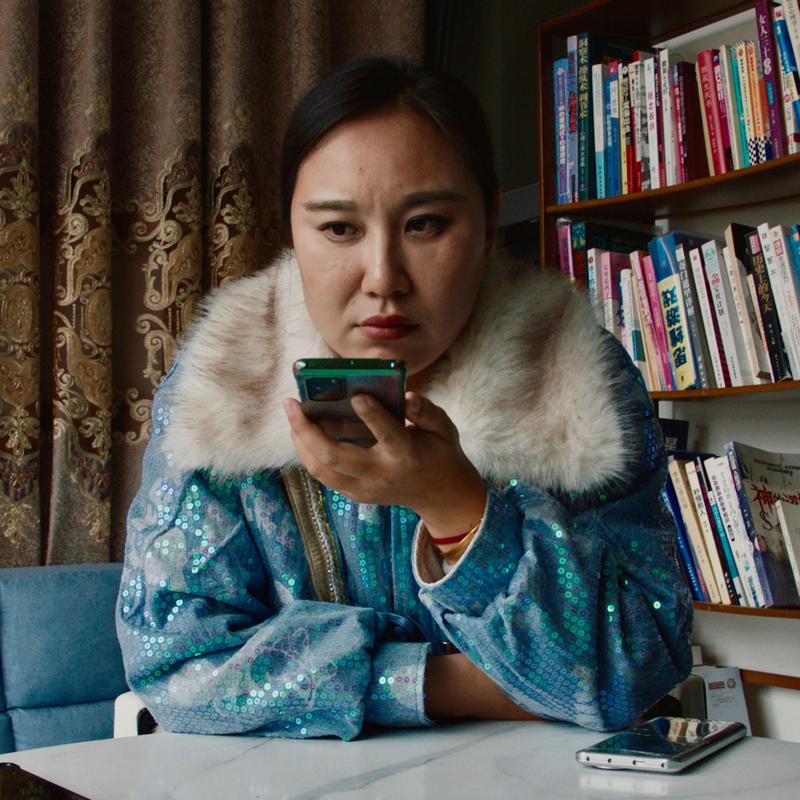
It's a whole industry that has popped up in China in the last few years. Director Elizabeth Lo found one such mistress dispeller, who was willing to let herself be filmed with clients. It almost seems like a scripted relationship drama, but it is all real. Mistress Dispeller is screening now at the IFC Center as part of DOC NYC, and I'm joined now by Elizabeth Lo. Nice to meet you.
Elizabeth Lo: Hi. Thank you so much for having me.
Alison Stewart: How did you first hear about this industry?
Elizabeth Lo: I wanted to make my second film set in China. I grew up in Hong Kong, and I wanted it to be a love story. I thought it would be really interesting to look at the structure of love and family from the marginalized gaze of a mistress who's just outside of that. As I was researching mistresses in China, I came across the mistress dispelling phenomenon.
At first, I thought this could only be a fiction film, because who would reveal their lives in this way? It was when I worked with my Chinese producer, Maggie Li, to locate dozens of real mistress dispellers. We met them on day one of a scouting trip with Teacher Wang. She was the only mistress dispeller who was working, who was able to let us into the lives of her clients who were willing to be on camera, including all three parties of the same love triangle.
Once I saw that she had this incredible ability and relationship with her clients, enough that they trusted her to be on camera, I knew that we had a film. Because even in that one afternoon that I spent with her on another case that's not in the film that you see, I was so moved unexpectedly by each of their perspectives, including the cheating husbands and the mistress who is fracturing this family. I thought it would be really meaningful to make a film that expanded your compassion to corners that you might not expect.
Alison Stewart: I want to back up a little bit and look at the big picture. Why has it become so popular recently? Has something shifted in the culture in China?
Elizabeth Lo: This industry and service has only cropped up in the last 10 years.
Alison Stewart: 10 years.
Elizabeth Lo: Some people have theorized that, since the Cultural Revolution in communist times, as China's wealth has skyrocketed over the last 50 years, as people are rising up into the middle class and the upper middle classes, as wealth has accumulated, men have also accumulated wealth, enough to be able to sustain having multiple women in their lives. That is part of a trend.
Then because of that rise in infidelity since the communist era, there is now a demand by wives to reassert fidelity in their households, but through indirect means by hiring a mistress dispeller, who infiltrates her home under a false identity and influences her partner and their spouse to end the affair seemingly of their own accord, as a way to avoid direct confrontation within the family so that everyone is able to save face and preserve their dignity, even at the end of the crisis as it's resolved.
Alison Stewart: While you were making this film, what did you want to investigate about love and about marriage?
Elizabeth Lo: Going into this, I didn't have preconceived notions. At first, I thought this would be a portrait of how women navigate modern society today. I was really inspired by rewatching Zhang Yimou's seminal film Raise the Red Lantern, which is about a young woman who marries into a wealthy patriarch's home as the fourth wife in 1920s China. She's forced to compete with the three other wives for his affection to survive. I thought I wanted to transpose the spirit of that fiction film onto modern-day China and see if I could find the equivalent there.
It was really meeting Teacher Wang and having her dissolve my judgments about all three parties, including the men. It's what really opened my eyes to what the possibilities of this film could be, because it could be through her work disentangling this love triangle, an examination of what each person is going through within a marriage, and to have curiosity for what a man is going through as he's at this fork in the road, where he's choosing between duty for his family and his love for his family, versus his desires and maybe his sense of happiness.
The mistresses, too. Why has she chosen to be in a situation that is not necessarily beneficial to her where she's in the shadows, and a wife who chooses to stay despite being betrayed in such a massive way? I really went into this with a sense of empathy for all three already and over the course of making this film and witnessing Teacher Wang, who's the mistress dispeller, her work with people and her clients. I've just come to be really humbled by people's openness to revealing themselves in this way, but also their bravery in meeting the crisis within their families in a way that is unconventional but is striving for connection at the end of the day, even as there's, as you'll see in the film, so much disconnection and so much miscommunication.
Alison Stewart: My guest is director Elizabeth Lo. We're talking about her new documentary, Mistress Dispeller. It follows a woman in China who is hired to stop marital affairs. It's screening now at the IFC Center as part of DOC NYC. It took you a while to find a mistress dispeller who would allow you to follow her. How did you find Teacher Wang, and how long did it take you to find her?
Elizabeth Lo: Yes. [laughs] Finding her was fast. My producer, Maggie, scoured Chinese social media and the news for real mistress dispellers. If you go online in China looking for this service that's literally called mistress dispelling, hundreds of companies will pop up. Many of those companies will use tactics like intimidation, blackmail, seduction as their way to resolve this kind of crisis.
Teacher Wang was the only one who approached this issue with a more soft-power approach, where she's using therapeutic techniques, where she's befriending you instead of punishing you. She's really trying to meet each of the clients, including the mistress, at their level to understand what they need in life, what they're going through. That's how she really gets so close to them.
Because of the nature of her methodology in approaching families in crisis, that is also what allowed us to gain access to them with our cameras. It took us three years, though, of following Teacher Wang and trying to get access out of hundreds of cases that she had every year. We would get access to film one or two. Over three years, we filmed with around six cases. It was only at the tail end of those three years, the last four months, we were able to get access to film a case from beginning to end.
That's the couple that is in the movie, and that they reconsented to being a part of the project even after they realized Teacher Wang's real identity in their lives as a mistress dispeller, which they were not aware of at the beginning of filming of the case, because deception is so inherent to her process. That was something that my producer, Emma Miller, and I--
Alison Stewart: It's going to be a little hard as a documentary filmmaker, right?
Elizabeth Lo: Yes, yes, yes, like how do you handle this from an ethical perspective? Transparency and our responsibility to our participants is so key. What my producer, Emma Miller, and I did is that we knew that, of course, the husband and the mistress couldn't have known what the mistress dispeller's real role was in their lives, what she had been hired to do by the wife.
They were approached to be a part of a documentary that was more broadly about modern love and relationships in China, in which they were perhaps a small role in an ensemble, which was true at the time because we had filmed with so many other cases. We had also filmed across different love industries in China because we didn't know whether we could get the access that we did.
We filmed with divorce lawyers, matchmakers, speed-dating events, dating camps, even BDSM, role-play communities to diversify our plan in case we couldn't get the access that we did. By the end of those four months of filming with them, which is the typical amount of time it takes for Teacher Wang to dispel "a mistress" within a case, at the end, once they were aware of what she had really done in their lives, we then actually traveled back to China with a cut of the film to show each of them separately and get their blessing for the film.
At that point, they could either reconsent to being a part of the project or they could opt to drop out. We could afford to allow them to drop out because we had this contingency built into our production, in which we had so many backup plans, where we could pivot to a more diffuse portrait of love in China. Thankfully, as you'll see in the film, they're such generous, unselfconscious people and gracious people that they allowed us to include them in the film.
Alison Stewart: Why do you think they said yes after watching it again?
Elizabeth Lo: That is always unknowable, I think. They're real motivations. What I think is that my editor, Charlotte Munch Bengtsen, and I, when we took that footage where they sometimes over-revealed themselves, and the way we filmed it, is once we figured out where the conversations were taking place, we would hit record. The whole crew would leave the room so that they could feel as unself-conscious as possible because we didn't know how the scenes would unfold. We didn't want our crew there to making them feel even more--
Alison Stewart: "Can I see? Can I see? Can I watch it?"
[crosstalk]
Elizabeth Lo: Exactly, exactly. They're not in the room. While they're obviously very conscious of being filmed, they're also forgetting in some ways. When they would over-reveal themselves in the edit, Charlotte and I, my editor, really took it upon ourselves to protect them, to protect their dignity, to protect their reputations within the film to viewers who are going to consume these images.
I think on some level, after watching the film, they could sense that care around how they're portrayed because the impetus for me making the film was really so that you could find empathy and some kind of sympathy with each of the figures with each side of this love triangle. I think in seeing that, they could sense the respect that we had for them and how much protection we had built into the way we told their story, affording them each a platform to speak about how they were feeling and protecting them.
Alison Stewart: The film isn't judgmental at all. Did you ever have to fight that feeling?
Elizabeth Lo: No, no, I think it's just when you witness people-- Well, with this case that is in the film, no, because I think they were all really decent people.
Alison Stewart: Decent people, yes.
Elizabeth Lo: Which is why they could carry a film. There were other cases that we filmed where people behaved, especially the men, in ways that felt so alienated and inexplicable that there was no way that I wanted to build a film around them, even if they lent to more juicy and salacious material because they were willing to make moves on their mistresses in front of my camera while I'm there. That was not our goal. Our goal was to tell a different kind of story.
Alison Stewart: I'm speaking with director Elizabeth Lo. We're talking about her new documentary, Mistress Dispeller. It's a part of DOC NYC showing now at the IFC Center. The woman who hired the mistress dispeller. First of all, why did she hire her? Was she aware that her husband was having an affair? What was going on in her life?
Elizabeth Lo: That's a great question. She had found a text message pop up on her husband's phone with a very intimate message from a young woman. That's what alerted to her that her husband was having an affair. She tells her younger brother about this. She doesn't know who to confide in but him. As it turns out, her younger brother was someone that, over those three years we had actually filmed with two years ago, he himself was a male mistress. There's no word for a male mistress or mister. He himself was being dispelled by Teacher Wang from another marriage.
He had a good experience being filmed by us. He also understood, by the end of that process, how effective Wang was at her job because he himself was dispelled and willingly. When his older sister came to him two years later and said, "My husband is cheating on me. What do I do? I want to save my family," he tells her, "I have the perfect solution for you. Participate in this film. The film crew are lovely, but more importantly, Teacher Wang, this mistress dispeller, is a magician who will make your problem go away."
We had that pre-existing vouch of approval from a trusted relative through the younger brother that we happened to have filmed with two years prior. That's why she trusted us and also Wang to help solve her family's crisis in this indirect way, because she didn't want to confront her husband directly. She didn't know what to do because she felt that by naming it out loud to him and while also wanting to stay that it would somehow explicitly condone his behavior.
Alison Stewart: In some way, though, I think watching the film, she did know something was wrong because she took such efforts to try to make herself more attractive.
Elizabeth Lo: Yes, yes.
Alison Stewart: It was interesting. I think I saw this in an interview. She's getting her hair cut again, and she starts to cry.
Elizabeth Lo: Yes, that's the first shot of the film. That was the first day we ever filmed with her.
Alison Stewart: Really?
Elizabeth Lo: Yes, and I think it's because she was reflecting about the circumstances by which a film crew had entered her life, which is that she's been betrayed by the love of hers.
Alison Stewart: Yes, and she's getting her hair cut, and she's doing exercise, and she's putting on makeup because this is lurking in the back of her mind. Her husband is not with her.
Elizabeth Lo: Yes, yes, she knows. She knows. You'll see in the film, and this is one of the critiques of the mistress dispelling industry, perhaps, this method is that it's women who are mostly taking up all that emotional labor, in addition to trying to maintain and fight against aging, to sustain interest from your partner. On top of all of that, she's also the one who has to repress her emotions, bite her tongue to save her family, so that he doesn't feel threatened and is driven away.
Alison Stewart: For Teacher Wang, she has to take on another persona in front of the husband. It's amazing how quickly he admits to her that he is involved in an extramarital affair. Why do you think he was so willing to tell her, or did he just want to tell someone?
Elizabeth Lo: No, so that's a very astute observation, and that is my theory, too. In a lot of the cases that we witnessed and filmed, other cases, we also saw how quickly these men open up to Teacher Wang because she enters in a very soft, gentle way. She's not accusing them of having an affair. She lays a little trap by telling a little lie that he believes. That leaves an opening for him to talk about this person that he actually feels very strongly about.
I think when someone is having an affair and they're potentially in love, but they can't share that with anybody in their lives, when this woman enters, who is positioning herself as both an insider to your community, but an unknown outsider. She's completely neutralized and is completely non-judgmental, and is simply there to help you through what you're confused about in your family. He very willingly unloads on her.
I think that's just because there's no one else in his life to do that with. I have a theory that the men obviously who participate or willing to be in this film on some level, they're not so ashamed of the fact that they're having an affair. Also, if they're in love, they want to talk about who they're in love with. That's my theory for why the men that we filmed with so quickly open up to Teacher Wang.
Alison Stewart: It's interesting because I know, to make the film, there was a concern that China might come off looking bad as part of the film. They're less concerned with what the film was about. Did you have to sign a contract?
Elizabeth Lo: Yes, yes, so it was very surprising to us that the participants of our film were less concerned about having cheated or being cheated on. They were actually more concerned with whether participating in the film would break any kind of national security laws. We actually signed contracts with them with language that was that broad, that we will not portray China in a negative light.
I was perfectly comfortable signing that, even though, of course, it's a risky thing to do as a filmmaker, because I grew up in Hong Kong. I knew that whatever film I was going to make in China, set in China, that would be consumed internationally with the rising anti-China sentiment that's in the West, that it would not contribute to perpetuating stereotypes or further alienating international audiences from regular Chinese people.
I felt like a love story in which people are trying their best and where they're going through heartache and betrayal and longing, emotions that are universal and timeless that that would be able to achieve this intention that the film would hopefully be a bridge between audiences everywhere around the world with just middle-aged, middle-class couple in China who are just trying to live their lives and live through love and also pain. Also, of course, as a documentarian, I did not want to endanger my participants and also my crew. One of the conditions which they agreed to be a part of the film that we agreed to is that the film would never be publicly released in China. That's partly why they also felt more comfortable in exposing so much about their lives.
Alison Stewart: The mistress in this case, have you heard from her? Do you know how she is?
Elizabeth Lo: We keep in touch with them through Teacher Wang. As far as we know, Mr. and Mrs. Lee are still married. Fei Fei, the mistress, is living her life as she was, but without Mr. Lee.
Alison Stewart: Without Mr. Lee. How did working on this project change your thoughts about marriage and relationships?
Elizabeth Lo: [laughs] This question is always so hard to answer because over the three years of making this film, I think my view of love had changed a lot. I think for someone like my producer, Maggie, who witnessed-- There's no rhyme or reason or pattern to why men are cheating. It's made her a little bit cynical about love. For me, I think what I see in our participants in their struggle and all the love stories that we filmed over those years is that I think at the heart of it, people have a great desire for connection and love.
It's just there's larger societal forces that get in the way and pressures that get in the way of people connecting in a genuine way. I think it takes work, a lot of work. That's what Wang also imbues to her clients. It takes work to work through that. Also, building your own sense of self-worth and knowing your real priorities in life, whether if your family is really important to you, then don't step out.
If you really care about being a part of a complete love, then don't engage in an extramarital affair if you're a mistress. Lessons like that, I think, building your own sense of what you deserve, and that's what she does for all our clients, has been something that has informed my own approach to love after making this film and witnessing all the work and wisdom that she imparts to her clients from behind the camera.
Alison Stewart: The name of the documentary is Mistress Dispeller. Its director is Elizabeth Lo. You can see it now as part of DOC NYC at the IFC Center. Thank you for coming in.
Elizabeth Lo: Thank you so much for having me.