
Do You Shun Popular Pop Culture?
Alison Stewart: This is All of It on WNYC. I'm Alison Stewart. Coming up, Julie Mehretu will be here. The artist will join us to talk about her new exhibition at the Marian Goodman Gallery. Readers for this month's Get Lit with All of It book club pick, we are reading ake Effect by Cynthia D'Aprix Sweeney. The story follows a woman named Nina who is living in Rochester when we first meet her in 1977. She's feeling stuck and bored in her marriage, and after a friend gives her a copy of The Joy of Sex, Nina begins to experience awakening and starts an affair with her neighbor. Years later, Nina must reflect back on the repercussions of her actions as she prepares for a family wedding.
I'll be in conversation with Cynthia and you on Monday, April 27th, at 6:00 PM. To find out how to get the book and to snag your free tickets to the event, head to wnyc.org/getlit. Again, that's wnyc.org/getlit, and happy reading. Now, let's get this hour started.
[music]
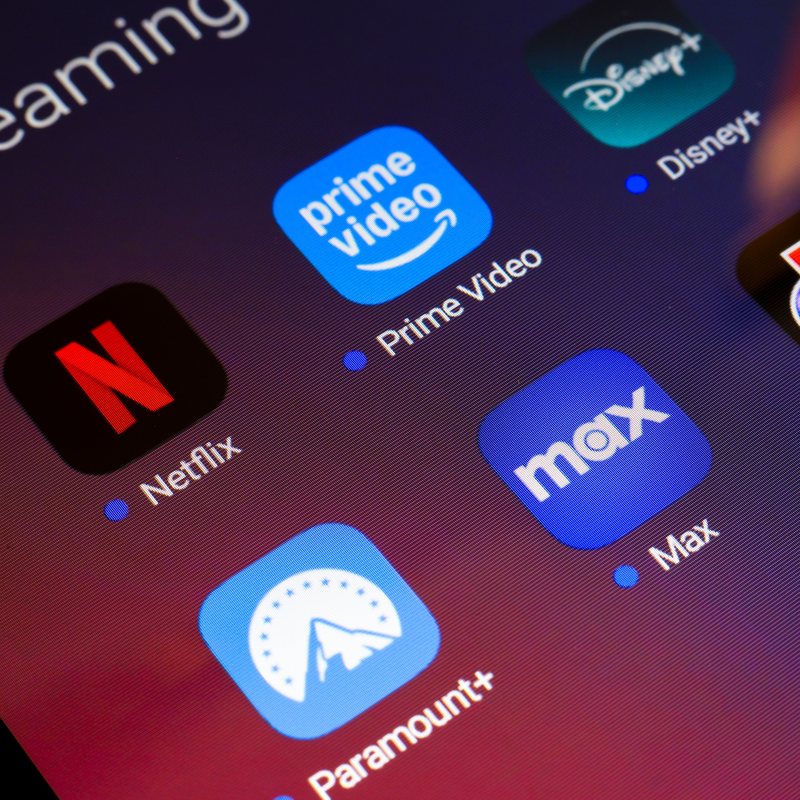
You turn to our show for culture about theater, books, TV, movies, and conversations. What if you woke up one morning and thought, "You know what? I don't want to hear about something that's popular"? You just don't. Well, Anna Holmes is an Atlantic contributing writer, and she noticed that she tends to avoid watching hot new TV shows or movies just because everyone else seems to be watching it. She suffers from what she calls LOMO, love of missing out. As Anna writes, "The Pitt, Severance, Sinners, you name it. For some reason, the more hype something gets, the more likely I am to resist it." It turns out there's a psychology behind why some people lean out from certain pop culture. You can learn more about that in Anna's recent Atlantic article, The People who Shun Super-Popular Pop Culture. Anna, welcome back to All of It.
Anna Holmes: Hi. Thanks. Nice to be here.
Alison Stewart: This all started with The Pitt and a conversation you had with an Atlantic editor. How'd that conversation start?
Anna Holmes: From what I remember, I was complaining that the guy that I'm dating is always talking about The Pitt, and then I can't have a conversation with him about it. Rather, he's complaining that I can't have a conversation with him about it. He is not the only one who has told me that The Pitt is an amazing show. I believe him. It's not that I think that the show is bad, it's just that the sheer amount of people who are recommending it to me and the amount of conversation I'm seeing about it in the culture kind of turned me off.
I was having this discussion with the Atlantic editor, and she confessed, if you want to put it that way, that she also hasn't watched The Pitt for similar reasons, that she feels like there's this inherent pressure to watch something that everyone else is talking about, and then she's resistant to doing so. She and I resemble each other in that sense.
Alison Stewart: Why has popularity historically been a turnoff for you when deciding what culture to consume?
Anna Holmes: Well, the thing is, I think it's gotten worse as I've gotten older. When I was in my 20s, my first job out of college was as an assistant at Entertainment Weekly magazine. It was our job to keep up on popular culture and to express enthusiasm, and that's how we came up with story ideas. That's how we connected with our coworkers. It was a very heady, exciting place to work, and we felt like we were at the forefront of popular culture.
Something happened, though. Something happened as I got older, maybe in my 40s, where I felt that I-- it's hard to say because I wasn't always conscious of it, but I just noticed that I was resistant to various movies and TV. I think part of it has to do with the sheer volume of film and television that's out there because of streaming. As the years went on, I started to feel overwhelmed by television and film options.
That said, in the piece I mentioned that even something as old as The Wire, which is a great show, I was resistant to watching for a good four years after it began. It was only four or five years after it premiered that I started watching it. It's just this kind of curmudgeonliness that evolved as I got older, and I'm sure I'm not the only one.
Alison Stewart: Well, listeners, are you someone like Anna who finds themselves shunning popular culture? Why do you think that is? Call or text us now at 212-433-9692. 212-433-WNYC. What is it that you haven't watched? Were you always this way, or did it come later in life? What popular movie show, album, or trend that you refused to get into? Now's your chance to get it off your chest. Our phone number is 212-433-9692. 212-433-WNYC.
Oh, we've got text already. This says, "I never saw Indiana Jones and don't intend to. I might see The Matrix, but don't think I'll like it. Finally, I just read Eat, Pray, Love and surprisingly liked it. I couldn't read it when it was so popular." This next text says, "I've never seen the movie Titanic and won't ever, just because, well, just because. Also, I never had White Castle. Don't think I'm missing much." That's very funny.
The Pitt, I'm going to go back to The Pitt for a minute. It's a critical success. The same with Sinners. You didn't see Sinners, and they really--
Anna Holmes: I did.
Alison Stewart: You did see Sinners.
Anna Holmes: Sorry to interrupt you. I finally did see it. Yes, after the piece came out, and we can discuss that when you're done.
Alison Stewart: All right, we'll do that. With The Pitt, they became hits in spite of themselves. They were not manufactured to be big hit shows. Why has that show, The Pitt, not pulled you in, given its critical success?
Anna Holmes: I think it's probably a little bit of avoidance of hospital shows, which I don't have a problem with in theory, but the stress of them. I love a good procedural, but I find hospital shows to be more stressful to watch than, let's say, crime solving shows. I also am a little bit squeamish about blood and gore. Perhaps the blood and gore aspect of The Pitt is minor. I don't know.
Alison Stewart: No, it's major. It's major. [laughs]
Anna Holmes: Oh, it's major. Okay. [laughs] That might be part of what's making me resist. The other thing I was going to say that I just remembered is that once social media became widely used and I started interacting with social media, namely Twitter, and this would have been in about 2010, I started to really see the ubiquity of certain conversations. On the one hand, that was exciting to see how things were talked about and evolved and backlash, et cetera, et cetera. It also felt a little bit performative.
I wonder whether part of my rejection of some popular culture products isn't a rejection of a kind of performativity around or identity marking around what you watch and what you don't watch and what you think is cool and what you don't think is cool. The famous line about, "I wouldn't want to be a member of a club that would have me," does apply to me somewhat, and it applies to me going back to my childhood. I think that there's a seed that was planted long before I started rejecting The Pitt.
Alison Stewart: Well, let's talk about Sinners. It broke the Oscar nomination record, and you didn't watch it until recently. All right. What made you decide, "Now is the time. I will watch Sinners"?
Anna Holmes: Well, the Oscars were coming up at that point. It was maybe a couple days before the Oscars happened. I really felt like I should watch one of the most lauded movies. I had already seen One Battle After Another, which it was at least being-- the tension was between which of the two movies is going to win, take home most of the awards. I felt like I needed to educate myself with Sinners.
It was funny because I watched it alone. Sometimes when given the chance to do something alone, I read instead of watch TV or movies. I really liked the movie. I thought it was really evocative and moody and beautifully shot. The one thing I'll say, though, is that there's a scene in there, a very famous scene that was being talked about quite a bit that I didn't like. It's possible that within the context of the film Sinners, that I was still rejecting something about it. [laughs] It's the scene where you see kind of--
Alison Stewart: Oh, I know what scene you're talking about.
Anna Holmes: Yes, you do? Yes, you know, the evolution of the diaspora of the Black and the African dance and how it morphed into the blues. Anyway, everyone knows who's seen the film and knows which scene I'm talking about. I was kind of like, "Eh, it's okay."
[laughter]
Alison Stewart: Let's take some calls. Let's talk to Matthew in Harlem. Hi, Matthew. Thank you for taking the time to call All of It.
Matthew: Hi there. What I avoided seeing for years and years was Sleep no More. Then I didn't see it until it came back after COVID. I wound up going over a dozen times before it closed.
Alison Stewart: You went a dozen times? Wow. What made you not want to go see it the first time?
Matthew: The hype was just too extreme, and the types of people who were going, and it was just I couldn't. The hype was just too much.
Alison Stewart: Thanks for calling, Matthew. Let's talk to Mike, who's calling in from Astoria. Hey, Mike, thanks for calling All of It. You're on the air.
Mike: Hi. I think we have to distinguish between good pop culture and bad pop culture. Just saying you're against pop culture really makes no sense. There's a famous essay, Midcult versus Masscult, in which this distinction is talked about. Stints to The Pitt is understandable if you're not into a soap opera format, but resistance to Sinners or Weapons really doesn't make any sense because these are actually innovative pop culture. I don't get it. Just because everybody is talking about it, that would make you not see it. I think we have to discern between bad pop culture and good pop culture.
Alison Stewart: Thank you so much for your call. Let's talk to Simone on line 4. She's calling in from Long Island. Hi, thanks for calling in.
Simone: Hi, is this me?
Alison Stewart: Yes, you're on the air.
Simone: Can you hear me? Sorry, I just changed AirPods. My story is this. I watch what my husband chooses on TV because we've been married six years. I grew up watching sitcoms, and when I got to college, I didn't have a TV and I never looked back. I didn't mention my first husband. We were married 28 years, and he didn't have a TV either. We raised the kids without a TV until pop culture just inundated us in about 20 years ago and we got a big screen TV for them.
I still didn't watch TV on my own until my second marriage. Now I watch what my husband chooses unless it's too violent. Interestingly, your interviewer asked me what I watch and I said it was current, but I actually we're streaming BritBox. We're watching MI5 which is ended 15 years ago. We do watch current things as well. I just don't choose them. I just didn't want a TV all those years.
Alison Stewart: Thanks for calling in and sharing that part of your life. We're discussing an article from the Atlantic about called People who Shun Super-Popular Pop Culture. My guest is Atlantic contributing writer Anna Holmes. We're also hearing for you, are you often shuns pop culture? Why do you think that is? What popular movie, show, album, or trend that you never engaged with? Our number is 212-433-9692. 212-433-WNYC. I think it was our first caller, I think it was Matthew who just said, "I can't stand the hype of it." You called this tendency the hype aversion. Will you explain a little more about that?
Anna Holmes: Yes, it's just a term that I made up. It's not something that I think-- I certainly didn't encounter any of the scientific literature, but it is what it sounds like, which is an avoidance of pop culture products. In my case, of pop culture products that seemingly everyone insists I would like. I tried to make clear in the piece that it's not that I think I'm above it all or too cool, because I don't think of myself as being cool at all. I just find myself to be weirdly resistant.
Then going beyond that, there's a concept called psych reactance. I had spoken to a social psychologist in Germany who told me he relates to my orientation towards popular culture himself. He described psychological reactance as being a defensive response that occurs when someone thinks their freedom of choice is being constrained. He said that, for a long time, he refused the Harry Potter novels. By the way, I still haven't read them personally, because of their popularity, and that he only kind of dug into them once his young daughter expressed interest in them. Same thing with Taylor Swift. He rejected Taylor Swift until his daughter and her love of Taylor Swift's music began to wear on him. Then he realized he kind of liked it.
Alison Stewart: Oh, we got a text here. Says, "I have never seen or read Harry Potter. I might be the last person on earth not to, so I'm holding out." This says, "Cats, never saw it, cannot stand the song Memory, and now being pressured to see Jellicle Ball, I might see it." This says, "Yes. As a former senior music executive, I could never and still can't listen to music once it became popular. I'm always surprised when I like any popular music, even though I spent years working with big pop stars like OutKast, TLC, Usher, Ciara, and others. LOL. It even took a minute for me to listen to a whole Beyonce album."
Anna Holmes: [chuckles] I still reject Beyonce, which I'm going to get in trouble for saying, but I think probably because she's so popular, especially around the Lemonade era. I was kind of, "Eh." [laughs]
Alison Stewart: The name is Anna Holmes. Do not at me. Anna Holmes from The Atlantic. We're going to talk more about her piece, The People who Shun Super-Popular Pop Culture, after the break. This is All of It.
[music]
You are listening to All of It on WNYC. I'm Alison Stewart. My guest is Atlantic contributing writer Anna Holmes. She wrote a piece for The Atlantic called The People who Shun Super-Popular Pop Culture, and Anna is one of them. This sounds very much like the Seinfeld episode in which Elaine won't see the English patient simply because everybody is raving about it. I confess, I've never seen Seinfeld really, maybe half an episode. It wasn't interesting to me, which makes me come to the question of, what eventually contributes to you deciding that you're going to check something out after it's been super popular?
Anna Holmes: Time passing. I used the example of The Wire, waiting about four years, basically when the hype died down, and understanding intellectually that it was good. I don't mistrust the people who are suggesting TV or movies to me. It's just that I feel that I need some time to come around to it on my own. This was also the case with Breaking Bad. I waited about three years to start watching Breaking Bad. Again, would have conceded within three episodes that it was great. I just needed my time to kind of mull it over in my own head as to when I was going to start.
Okay, that's another thing I want to mention is that a lot of this is about binging and my fear of binging. I'm afraid of binging TV, and I have a tendency to do so. The idea that I would get into a show was also creating a risk that I might binge it. Then I'd find myself up till awake until 3 or 4 in the morning, unable to stop pressing play as each episode ended. That's what happened with, for example, the show Lost. I would binge it. It was not good for my sleep. It was not good for my productivity the next day. There's a certain self-awareness about it. I do have a funny story for you about The Pitt, if you want to hear it.
Alison Stewart: Sure.
Anna Holmes: I haven't seen it yet. I had a friend visiting me in Los Angeles, and one of her good friends is an executive producer of The Pitt. When I dropped my friend off at the executive producer's house, the executive producer came out to say hello to me. I don't know her that well. I said, "Congratulations on the show. It's really, really, really good." I was fibbing that I'd seen it and it kind of just fell out of my mouth. I didn't consciously think I was going to say that to her, but I felt guilty about it.
The next time I saw her, I confessed that I had lied. I said, "I just want you to know I am genuinely giving you congratulations on the success of the show, but I haven't actually watched it yet," and I thought she was going to find this amusing and funny, that I had just kind of lied, that it had fallen out of my mouth, but she did not.
Alison Stewart: She did not.
Anna Holmes: She did not find it funny for whatever reason. I mean, I might be projecting that she didn't find it funny, but she didn't really laugh. When faced with someone who was integral to the creation of a successful show that I haven't watched, I pretended that I had. I pretended that I was part of the crowd.
Alison Stewart: Wow. I have to process that a little bit.
Anna Holmes: I know. It's a lot.
Alison Stewart: It's a lot. Let's talk to Rosie in Hoboken. Hey, Rosie, thanks for holding. You're on the air.
Rosie: Hey, Alison. Love the show. Thank you for everything you do. I haven't seen any of the shows that you guys are mentioning. Breaking Bad, The Wire. I've never listened to Taylor Swift. I think I do come from a place of elitism. I'm like, "I'm better than that." The reality is I finally watched Heated Rivalry, and I became absolutely obsessed with it, and I just wanted to advocate for trying something new. You never know. I'm part of a fandom now. I'm going to a dance party on Friday, tomorrow, for Heated Rivalry. It's just like it's so nice to just kind of nerd out and accept that some stuff is fun to just love and have that online community and fandom. I don't know. Watch Heated Rivalry. It's great.
Alison Stewart: Rosie, thanks for calling. Let's talk to Gail from Warren, New Jersey. Hi, Gail. Thanks for taking the time to call All of It. You're on the air.
Gail: Hey.
Alison Stewart: Hey. Are you there?
Gail: Yes, I'm there. Can you hear me?
Alison Stewart: Yes. You're great.
Gail: Oh, good. I love movies, I love TV, but I have never seen the movie Titanic. I never will see the movie Titanic, and I kind of consider it a red badge of courage for never having seen it.
Alison Stewart: Do you know what happens at the end? I'm kidding. [laughs]
Gail: Well, that seems to me the only good part.
Alison Stewart: Oh. [laughs] Thanks, Gail. Let's talk to Barbara from Manhattan. Hey, Barbara, thanks for calling All of It.
Barbara: Thank you, Alison, for taking my call. Love your show. I feel like listening to Anna is listening to myself talk. I mean, using words like curmudgeon. I feel that way sometimes, and for me, it crosses everything that I choose, from what I wear to what I watch. I watched Sex and the City, I think, 10 years after it came on, or Sopranos, I just watched for the first time last year. I think that there's a certain defiance that I've always had, and it almost feels like going with the crowd and the popular vote almost feels like a threat to my individualism.
Alison Stewart: That's an interesting point. Anna, what do you make of what Barbara has to say?
Anna Holmes: I think Barbara is exactly right. One of the individuals that I spoke to for my piece was talking about a resistance to immersion in a crowd as being an expression of individualism, which might be even more pronounced within the United States, which really, at least historically, Americans really prize individualism.
In a society that's a little more communally minded, let's say Japan has that reputation, I wonder whether there's the same sort of rejection of what's popular. Again, I don't know. I'm just theorizing that maybe there is. I haven't studied the Japanese culture, but I think that there's something about being in an in group that feels threatening, certainly to me, and once the moment passes is when I will start interacting with a lot of this culture, whether it's The Wire, Breaking Bad.
Someone called in and mentioned they hadn't watched Sex and the City until 10 years later. It took me about two years to start it. I still haven't seen Caddyshack, which dates me a little bit in terms of my age, or Animal House. There's a bunch of movies from the '80s that I've never seen, and then I won't. It is a little bit of a badge of honor in some ways, especially with regards to, let's say-- well, for me, the Harry Potter books. [laughs]
Alison Stewart: This says, "I have a friend who rejects Trader Joe's for all the same reasons and is super happy. She's never been inside." I think we have time for one more call. Let's talk to Mindy on the Upper West Side. Hi, Mindy. Thanks for calling All of It.
Mindy: Hi. I am so glad that you're talking about this because I always feel like the odd woman out. Everybody's raving about a particular series, and I just refuse to watch it or I resist for a long time. The Godfather, not a series, but it was too violent for me. I watched half of the first movie, and that was it. Never saw the other ones. The Sopranos, same thing. You sort of get the formula of it. I watch television at night, and these things, the violent ones, give me nightmares.
I loved The Sopranos, but again, I watched the first three seasons. Mad Men just didn't interest me. I grew up in the '60s and '70s, and what did I need to watch a fake version of that four? Then The Americans. The Americans kind of like cracked the code because everybody was talking about it and I thought, "I do not want to watch this thing. I'm not going to watch this thing." I resisted for a long time.Then I became hooked on it. I watched all six seasons in about two and a half months. I was totally binging on it. They're breaking corpses, bones, and stuffing them into suitcases. It's like, "Why am I watching this?" I felt that I couldn't stop. I think it was the acting, they were just magnetic, but I felt like it had co-opted my body like a body snatcher and corrupted my soul and my brain.
Alison Stewart: It's kind of what Anna was talking about a little earlier. You're not sure that you can get away from it once it grabs hold of you. Anna, where do you get your pop culture? What do you decide to watch? Who do you trust?
Anna Holmes: My friends, mostly because despite the fact that I have this kind of obstinate orientation towards popular culture, my friends, many of them work in television or work in film or are also writers or writers about pop culture. They still suggest things to me, and I appreciate that they keep trying. They think that they can finally crack me at some point. Sometimes they do.
For example, Heated Rivalry. I had a number of people tell me to watch it, really being aggressive about telling me to watch it, because it's a subject, sex and romance, that I really like. I will say though, that I watched it and I did not like it. I was expecting to really like it, and I was very disappointed. I felt that the acting was bad and the writing was bad. I know that I'm going to probably get yelled at for saying that because it really is beloved by a lot of people. That's an example of something where something was recommended to me as being very good, and my worst suspicions about it came true.
Alison Stewart: You write about LOMO, the love of missing out. What is it that you like about LOMO?
Anna Holmes: [laughs] What do I like about LOMO? I guess it just suggests that I have a need for uniqueness. Maybe I'm kidding myself because as I mentioned in the piece, there are lots of ways in which I can form or lots of things that I like that everybody else likes, whether it's a type of a brand of shoe or tote bag or restaurant or Trader Joe's, for example, which I just went to yesterday.
I was speaking to a Wharton School of Business professor who talked about the magnet model of social influence. He was making a distinction between what he called bandwagon effects, which he describes as kind of conformity, and snob effects, which is an avoidance when something is too popular or a need for uniqueness.
On the spectrum of bandwagon effects and snob effects, I think I lean more towards snob effects, but I kind of conveniently don't think of myself as a snob. The idea of being conforming to something is a real concern of mine and I think a lot of other people. There's something a little bit fun in water cooler conversation in saying, "Well, I've never seen Titanic," or, "I haven't read Harry Potter," or, "I don't like Trader Joe's."
Alison Stewart: Anna Holmes is an Atlantic contributing writer. Her piece is called The People who Shun Super-Popular Pop Culture. Anna, thanks for joining us.
Anna Holmes: Thank you so much.
Copyright © 2026 New York Public Radio. All rights reserved. Visit our website terms of use at www.wnyc.org for further information.
New York Public Radio transcripts are created on a rush deadline, often by contractors. This text may not be in its final form and may be updated or revised in the future. Accuracy and availability may vary. The authoritative record of programming is the audio record.