Diving Into the Modern Dictionary with Stefan Fatsis
Alison Stewart: This is All Of It. I'm Alison Stewart live from the WNYC studios in SoHo. Thank you for sharing part of your day with us. I'm really grateful that you're here. On today's show, we have two documentaries to discuss. Maura Smith joins us to talk about her documentary titled Steve Schapiro Being Everywhere. From Doc NYC, we'll speak with Elizabeth Lo, the director of the documentary Mistress Dispeller. Musician Sean Mason has a new album out and he is here to play some live music in WNYC's Studio 5. That's the plan. Let's get this started with Stefan Fatsis, the author of the new book Unabridged.
[music]
According to Merriam-Webster, a dictionary is a reference source, source in print or electronic form, containing words usually alphabetically arranged, along with information about their forms, pronunciations, functions, etymologies, meanings, and syntactic and idiomatic uses. But what happens when language starts shifting faster than the source is defining it? Journalist and author Stefan Fatsis wanted to find out. His new book is called Unabridged: The Thrill of (and Threat To) the Modern Dictionary. It makes sense because Stefan's previous book was Word Freak, which was about competitive Scrabble. He spent three years inside Merriam-Webster, sitting with the lexicographers who debate new words and philosophize over definitions. More recently, they figure out how to keep up with the Internet and artificial intelligence.
All of this word work traces back to Noah Webster Jr. A man who was absolutely convinced the United States needed its own English, not the British version. His 1828 dictionary, titled An American Dictionary of the English Language, became the backbone of every American dictionary that followed, including, you guessed it, Merriam-Webster's. Unabridged is a deeply reported look at this meticulous world. The book is out now and Stefan is here with me in studio. It is nice to talk to you again.
Stefan Fatsis: Good to see you, Alison.
Alison Stewart: You spent all this time in Springfield, Massachusetts, at Merriam-Webster's headquarters. They even gave you a desk,-
Stefan Fatsis: They did,-
Alison Stewart: -which is big.
Stefan Fatsis: -and a key.
Alison Stewart: And a key. What was your pitch to them to convince them to give you just this full access?
Stefan Fatsis: I think there was interest on their part in having a journalist show what happens, how the sausage is made in language. I had written a long piece for Slate magazine about Merriam's attempt to revise its 1961 unabridged dictionary, this massive 2,700 page definitive work that hadn't been touched since 1961, and they were doing this project online. I wrote about that and then made this pitch to let me inside, but to let me inside as a lexicographer-in-training, to really understand from the experts how this happens.
Alison Stewart: What was it like inside?
Stefan Fatsis: It was super fun. It was very quiet is what it's like inside. It's really a library atmosphere. Since that 1961 book, there was the editor of that book, a guy named Philip Gove, instituted a sort of de facto no talking policy on the editorial floor. There were no--
Alison Stewart: That was so funny. In a place about words, no talking.
Stefan Fatsis: Yes. No talking or writing. We're creating definitions. For decades, when telephones on desks were a thing in offices, there were no telephones at Merriam-Webster. There was a little telephone booth on the main editorial floor, and if you wanted to make an outside call, you had to go into it and log your call.
Alison Stewart: What did being surrounded by all of those citations teach you about how American English actually evolves?
Stefan Fatsis: You mentioned citations. Citations are these little slips of paper on which editors through the 20th century and earlier compiled examples of the usage of specific words. Those would go into this file called the consolidated files. Then when it was time to define a word, editors would pull out a little stack of cites, they're called, and compose a definition based on that. There are 16 million slips of these paper on Merriam's editorial floor in these shoulder high metal filing cabinets. It's overwhelming and it's awesome in the literal sense of that word. You open any drawer and you are witnessing the evolution of American language, but also American history. It's a chronicle of the 20th century until Merriam started doing everything digitally. But the 19th century, you want to know about it? It's in those filing cabinets.
Alison Stewart: They haven't been digitized?
Stefan Fatsis: No. One of my fears, and I brought this up with the publisher of Merriam-Webster, was that at some point, every media company, and Merriam-Webster is really just a media company, is going to face this issue of what do you do with the paper, and Merriam has accumulated tons of paper. Not just these citation slips. It seemed to me like digitizing these 16 million slips was a no brainer, but it's costly. I tried to connect Mariam with someone from Google who was willing to do it, but it just has never gotten off the ground. Like a lot of paper lovers and sort of historical preservationists, I worry that something's gonna happen to this and this archive of the American language could be lost.
Alison Stewart: Fire, flood, anything could take them.
Stefan Fatsis: Well, interesting you should say that, Allison. There are no sprinklers in the ceiling at Merriam-Webster because the fear is that water would do more damage to the citation files than fire would to the metal filing cabinets, which was supposed to be fireproof.
Alison Stewart: I am talking to Stefan Fatsis. We're talking about his new book, Unabridged: The Thrill of (and Threat To) the Modern Dictionary. Do you have a question for Stefan? Give us a call, 212-433-WNYC, 212-433-9692, or tell us how you use a dictionary. Do you own one? Are they important to you? Our number is 212-433-9692, 212-433-WNYC. You can call in. You can join us on the air or you can text to that number as well. Let's go back to Noah Webster Jr.
Stefan Fatsis: The man.
Alison Stewart: When you look at the historical record, how would you describe him?
Stefan Fatsis: One of the most influential figures in early America. He was a sort of revolutionary. A little young to be part of the revolution, but he was involved in the political life of the early country. He was an educator. He was a newspaper publisher. He was a lay scientist or researcher. He was a politician. He helped start Amherst College. He was this Renaissance person. He was a controversial figure. He ran a newspaper in New York for many years. Newspapers were very political in the late 18th century. He had lots of enemies. People frequently derided him. But at the same time, he had this vision about what America should be, that it needed its own national identity. At the core of national identity for the young country was having a national language apart from what the British had imported to what the British had exported to our shores.
Noah attacked that from his from a very young age, his 20s. He wrote these tracts about how language should change, how it should be Americanized. That included not just getting rid of O-U-R spellings, and R-E at the end of center or theater, and getting the K off of music and other words, which really did simplify the language and Americanizing it in its own way. He was also an advocate for phonetic spelling. Noah wanted to change the spelling of soup to S-O-O-P, and opaque to O-P-A-K-E, and dozens of other things. Tongue, T-U-N-G, which made sense. Some of those he he put in his very first dictionary in 1806. Took a lot out of them for the 1828 dictionary after he got backlash, but some of them do live on. He did change language in that way as well
Alison Stewart: He said he was struck by the voice of God, and he turned to his Calvinist faith. How did his religious awakening influence the way he defined words?
Stefan Fatsis: It had two effects. One was that he paused compiling, working on what would be the 1828 dictionary for about a decade, because he went down this 10 year rabbit hole to try to prove this flawed and wrong theory that all language was devoted from one language in the Bible. But his religious beliefs influenced almost every page of his 1828 dictionary. What you will see are definitions that reflect that, that have religious overtones. The examples he often cites were biblical and ignoring contemporary writing. It didn't overwhelm the dictionary. It wasn't a critical component of the dictionary. But that 1828 book is still used by Christian fundamentalists today as a preferred book, in some cases. It is promoted and it is sold by by some Christian groups.
Alison Stewart: His major dictionary came out when he was about 70 years old. First of all, it was two volumes.
Stefan Fatsis: Right.
Alison Stewart: How was it received when it was published?
Stefan Fatsis: Much better than the 1806 dictionary. It was much bigger, it was much more authoritative, it had much more contemporary language. Noah was adamant about pulling from culture. Words that came from or were derived from Native American life, plants and animals that were only found on the continent. Aspects of Commercial Life, savings bank. A lot of political words, Noah, that were created by Americans, he included. Noah establishes this precedent that language should be inclusive and it should describe the way people use it, which was a principle that was followed for generations of Merriam-Webster publishers up until today. It was hailed as an American masterwork, and Noah got the recognition late in his life that he felt he was denied for his other pursuits earlier in his life.
Alison Stewart: Are you ready for some calls?
Stefan Fatsis: Let's do it.
Alison Stewart: Let's talk to Eddie, who is calling in from Manhattan. Hi Eddie. Thank you so much for calling All Of It.
Eddie: Hi
Alison Stewart: Hi.
Eddie: Sure. Okay. Here it goes. About 50 years ago, I did seven years in prison. In order to pass the time, besides exercise, I wanted to read. But every other word in the book was unknown to me. I had a friend bring in a dictionary, Merriam-Webster Dictionary, and that book has changed my life.
Stefan Fatsis: Wow.
Eddie: Without an understanding of language and of words, I would never have gotten this far in life. I wound up opening up a legitimate construction company. I made millions of dollars. I also opened up a sanctuary that rescued animals, cats, dogs and pigs. Without that, without the tool of language, I would never have gotten anywhere.
Stefan Fatsis: Oh my God, I'm shaking here.
Eddie: I owe my life to that dictionary and I still have it. It should be museum piece under glass.
Stefan Fatsis: Oh my God, I am moved by that, Ed. That's an incredible story. In many ways, that's exactly what the publishers of American dictionaries intended. Merriam-Webster marketed its books for generations as these tools for improving yourself and living a better, more complete life. Giving yourself a chance to advance in society and overcome whatever circumstances that existed. Whether that was a story like Ed's or whether you are an immigrant. My little dictionary story is that my father was an immigrant from Greece after World War II, and I have this lovely leather bound Merriam-Webster dictionary inscribed by him in 1949.
Alison Stewart: This is directly related to my next text. It says, "Stefan, what was your favorite word to learn when you went into the dictionary building? Whether from reading or talking to someone?"
Stefan Fatsis: Ooh, that's a great question. I think that it's less about learning words. It was more about how can I find words that need to be included in the dictionary? Because part of what I did was define words. I drafted about 90 definitions for Merriam-Webster during my time there and about, and 14 of them have been included, added to the online dictionary, including some politically important words at the time and still, microaggression, safe space, alt right.
I wanted to work on these hot button words that were important that needed to be in the book. And at the same time I was also defining fun things like sheeple, and dogpile, and headbutt, words from my background as a sports writer that I felt needed to also be included in the book. It was less about like learning crazy words than it was about being focused on doing the work and understanding what it takes to do that work. It was really hard work, I discovered.
Alison Stewart: Let's talk to Mary Ellen in Clearwater, Florida. Hi, Mary Ellen. Thank you for making the time to call All Of It.
Mary Ellen: Thank you, and thank you for your show. I love your show, and Brian Lehrer. Longtime New Yorker. I live in Florida now, but in April 1975, my family was living in Chatham County, North Carolina. I had won the spelling bee for my middle school. I was representing the school at the Chatham County level spelling bee, the winner of whom would go on to represent the county in the state spelling bee, and I came in second. My reward, my gift as the second place winner, I'm reading it right now with the inscription, was a Merriam-Webster Dictionary. A Webster's New Collegiate Dictionary. Talk about rubbing salt into the wound, anyway, but I just love that. I was looking to see what year it was, and it was published from-- It was a 1973 edition of the Webster's New Collegiate Dictionary. Anyway, that's my spelling bee story.
Stefan Fatsis: The spelling bee has always been a Merriam-Webster. They use Merriam-Webster's Unabridged Dictionary. The big fat book. When you're watching the spelling bee finals on TV, that's the source for the words in the dictionary. That's a wonderful story, too. The Collegiate Dictionary was a bestseller, New York Times bestseller for months and months and months, years in the 1980s and '90s. It was a foundational book, and its decline, the 11th edition published in 2003, up until this month was the last print version of that book.
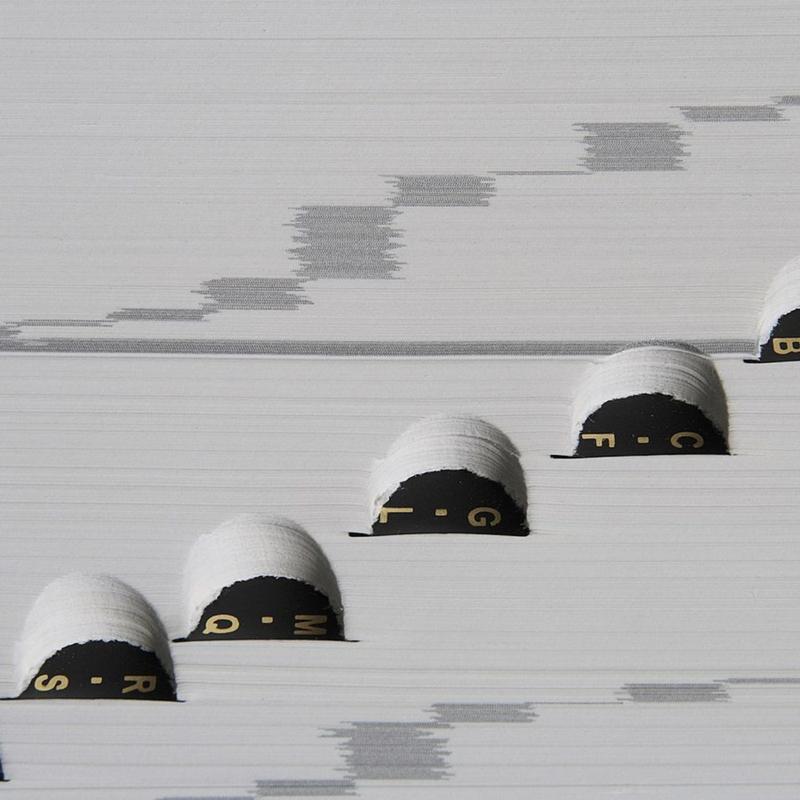
Merriam-Webster rolled out a print dictionary that publishes actually next week. Not because we need a print dictionary, but because it is, in a way, become this throwback item. It's like vinyl records. It has an appeal to people who still love the idea of paging through this book of knowledge and letting your brain wander from one word to the other and having this serendipity of finding one word when you're looking up another.
Alison Stewart: We're talking to journalist and author Stefan Fatsis to discuss his book, Unabridged: The Thrill of (and Threat To) the Modern Dictionary. When we come back, we'll talk pronouns, we'll talk slurs, and we'll talk ChatGPT.
[music]
Alison Stewart: You're listening to All Of It on WNYC. I'm Alison Stewart. My guest in studio is Stefan Fatsis. We're discussing his new book, Unabridged: The Thrill of (and Threat To) the Modern Dictionary. If you'd like to weigh in or you have a question for Stefan, give us a call. 212-433-WNYC, 212-433-9692. Or tell us how you use dictionaries. Do you own one? Are they important to you? 212-433-9692. Let's talk to Rob from my hometown of Glenridge, New Jersey. Hi, Rob.
Rob: Hey, how are you doing? I was wondering, do dictionary makers have enough swing to enforce AI engines to properly attribute them, or also when students ask them for a definition, to give the full version and not dilute any of the immense amount of scholarship that goes into their definitions?
Stefan Fatsis: As of now, and that's a great question, no. I'll give you one example. I have a chapter in Unabridged about artificial intelligence. One of the things I did is I took some of the words that I defined And I asked ChatGPT to write definitions in the style of Merriam-Webster. One of the words I gave it was microaggression. I parroted back the definition pretty much verbatim. AI seems to have crawled Merriam's data and this is the source of a lawsuit already. Merriam's parent company, Encyclopedia Britannica, has filed lawsuits against some of the purveyors of these large language models in an attempt to rein back because the dictionary companies, like other media companies, are in this face this dilemma.
On the one hand, they want to use AI. If you go to Merriam-Webster's website, there is an AI assistant that you can use for dictionary-related information. At the same time, they don't want ChatGPT and other bots stealing their proprietary work. I would advise people to scroll down below the AI-generated definition and scroll down even below the licensed definition that Google sometimes throws up at the top of their search page, which might be 50, or 70, or 100 years old, and go down to the actual dictionary company, whether it's Merriam-Webster or a British dictionary like the OED or Collins. This is the threat part to dictionaries. They need people going to the website and clicking on their definitions to generate traffic and be able to charge advertisers for revenue. It's a competitive media business.
Alison Stewart: As you mentioned, the new dictionary is set to be released on the 18th of this month. And if you go to Merriam-Webster's social media page, there's this amazing ad targeting AI. Let's listen. [unintelligible 00:18:51]
Merriam-Webster Ad: It is the dawn of the AI era, and we are proud to introduce our latest large language model. This LLM has over 217,000 rigorously defined parameters. It never hallucinates, it does not require a data center, and uses no electricity. It's a powerful tool that will change how you communicate forever. There's artificial intelligence and there's actual intelligence.
Alison Stewart: It's a big picture of a dictionary
Stefan Fatsis: Spinning, spinning dictionary. The ad itself, the visual is great because they really did a wonderful job of making it look like a modern Silicon Valley promo ad with this hard tag at the end. It is an effective piece of marketing because the book has it all. What the book doesn't have is the ease, and the book doesn't have the ability to incorporate audio, video and have this complete website. It's harder to use, let's be honest. In some ways, the internet is a much better delivery system for a dictionary. But when you market the dictionary as this counterweight against the onslaught of AI, which a lot of people are offended by and troubled by, and at the same time you promote the dictionary as this- as I was saying, this throwback product, that's a pretty effective way of hammering home the point that this book still matters.
Alison Stewart: Let's talk to Daniel, who is calling in from Manhattan. Hi, Daniel. Thank you for making the time to call All Of It.
Daniel: Hi, yes. I'm a collector of antique dictionaries. I've got about a dozen, mainly the large format one. Next to me right now in my room is the Webster New International Dictionary from 1961. My favorite of all is the Collegiate Webster from 1934. That in the beginning of it, even has many words that they were using in Scotland at the time, but it is wonderful. I love reading archaic words that they don't use, and even using them on people sometimes when they give you crazy looks.
But my one beef I do have, and I know my college professor was the same way, is how quickly today we want to include slang words into our dictionary. In the past, it was always things that had to be used for quite some time, and we'll just say it was accepted by society that it was using, not ones that would come and go. I know my professor in college, it used to just drive him crazy and he would predict words that would disappear, and he was pretty accurate. This was a long time ago, but he's pretty accurate.
Alison Stewart: Thank you so much for calling. Let's talk to Jim from Ocean County, New Jersey. Hi, Jim. Thanks for calling, All Of It. Hey, Jim, are you there? We're going to talk to Jim. We'll talk to Anna from Westchester. Hi, Anna. Can't get Anna. Anna's there. There you are.
Anna: Just wanted to give a shout out to Webster's Second Unabridged, which I have open at all times in my house and consult very regularly.
Stefan Fatsis: You're one of those people, huh?
Anna: Yes, afraid so. It's got great etymologies in particular.
Alison Stewart: It's interesting. Do you--
Stefan Fatsis: Yes. Two things. One, I'll go with Anna's comment because there are people that still cling to this 1934 dictionary as a real standard of American usage. The 1961 dictionary that followed it was perceived as this very permissive document. It was descriptivist. It seemed to sanction, at least that's the way people interpreted it, usage that was substandard or non-standard. A lot of that was overblown, but the reaction to this 1961 book which I get into in some detail in Unabdriged, was remarkable. The dictionary became the focal point of this culture war. It went viral, these complaints about this book as being permissive. It prompted other publishers to create new dictionaries, like the American Heritage Dictionary, that were a direct reaction to the 1961 book.
As to the slang question, that's a really interesting observation. I will say this, places like Merriam-Webster don't tend to admit new slang until it has been firmly established. But what companies do need to do like Merriam, is find a way for people to have access to definitions that they are curious about. Merriam has created a slang portal on its website, a way station for words. They can put them in there and then when they maybe graduate to accepted full usage over a longer period of time, they can get in the main database.
Alison Stewart: You tackle a lot of tough topics, and we've been talking about the 1934 edition, the 1961 edition. We have to talk about slurs. Slurs in the book, the N word, another deeply offensive slur targeting indigenous women. There are these folders there with information at Merriam, and they're inside these cabinets. It's gonna be hard to get into. But how did it show you how Merriam handled words that carrie real harm, and they have history?
Stefan Fatsis: They handle them in what they like to believe is an academic way. There's no denying that slurs are a part of culture. A deeply offensive part of culture, but a part of culture. People go to the dictionary to get answers. They want authority. They want to understand what things mean. The N word is one of the most looked up words in the dictionary online. Merriam has ways of tracking this, obviously. I was interested in how the dictionary documented the evolution of the use of words of slurs and also how culture changed its views. Tou find that with, in my research, with terms like the N word, tthe former nickname of the Washington football team, you go through those citation files and you see on these little slips of paper the way that editors try to grapple with how to label words and how to define them.
Alison Stewart: Because the N word didn't necessarily have like a pejorative next to it.
Stefan Fatsis: It did not at the very beginning. Sometimes it was written as derogatory. There were other labels. Tou can see from dictionary to dictionary, I was able to see how the editor came to terms with what to do about this word. You got to remember that editors at a place like Merriam-Webster for most of the 20th century were white men with PhDs often. I really found it fascinating to see how the way that these explosive terms were handled, and some of these changes to try to make them more reflective of how the word is used didn't happen until the last 10 years.
Alison Stewart: Let's talk to Riley on line six. Hi Riley, thanks for calling All Of It.
Riley: Hi. I'll just get right into my issue and that is that the dictionary does change definitions, because when misuse is done so often they just give up. My specific example is moot, where I'm hearing people use mute instead of moot and hone in on something. Hone means sharpened.
Stefan Fatsis: Right. Not home in.
Riley: What they're trying to say is home in. That makes me-- Because now when I look it up, I see that they're also accepting hone in. Which means I don't win an argument. Exactly.
[laughter]
Alison Stewart: Thank you for your call.
Stefan Fatsis: I'm so sorry for you losing those arguments. The way dictionaries try to handle terms and words like the ones you cited and others, like literally to mean figuratively or the use of irregardless, is to recognize how they are actually used by humans. Dictionaries are descriptive. They attempt to catalog the way that people use language and reflect it. If usage changes over the decades, the dictionary's obligation is to reflect that. Merriam tends to handle this by writing notes that explain that, people think that irregardless is a non-standard word. In fact, there's been debate about this for more than a century, and here's some background about how that's happened.
Alison Stewart: That one hurts, though. Let's talk Barbara in Forest Hills. Hi, Barbara. Thanks for calling All Of It.
Barbara: Hi, great segment. I just wanted to say that in 1992 I was given as a birthday present by my then boyfriend, who's long gone, the Random House Dictionary- sorry, it's not Merriam-Webster- of the English language. It's only 2,400 pages long plus, and the inscription was, "Say the word and you'll be free. Say the word and be like me. Say the word I'm thinking of, and you know the word is-
Stefan Fatsis: Love.
Barbara: "-See page 1139," and it's love.
Stefan Fatsis: Oh, sweet. Oh my God. I love that. Dictionaries have this power over us. I still have my battered, taped up Webster's New World Dictionary that my mom gave to me on my 11th birthday. This was in, I'm gonna give my age away here, in 1974. I've carried this around with me my entire life. I used it high school, college, into my career as a journalist. It means a lot to me to have this. It means a lot to me to have that dictionary that my father bought.
Alison Stewart: I wanted to ask you as a journalist, because you write that your journalist side and your inner lexicographer side-- Can you say it for me?
Stefan Fatsis: Lexicographer.
Alison Stewart: Thank you. They were battling.
Stefan Fatsis: Yes.
Alison Stewart: Why was that? What was going on?
Stefan Fatsis: Well, the journalist wants to tell a story, and really use wonderful- the best example you can find. The most colorful, full bodied thing that will grab the reader. The lexicographer's job is to write something that is almost invisible that you look at and you don't wonder who wrote it. You don't think about the content. All you're focused on is, is the meaning precise and are the examples benign? You don't want to offend. I used an example sentence to define in my definition of the word sheeple. That was a review of an Apple iPhone case that implied that Apple users were sheeple, and it went viral.
My editor said, he made a mistake, I shouldn't have allowed that to go through. We're trying to not offend anyone politically, culturally, economically. The goal of the dictionary is to-- You want to pick up this book or open this website and not think who did this, but just that it exists. It's almost like this magical product that was given to us to help explain language, and society, and culture, when in fact it is the work of the assiduous work of expert linguists and lexicographers. Hard, hard work.
Alison Stewart: The name of the book is Unabridged: The Thrill of (and Threat To) the Modern Dictionary. My guest has been author Stefan Fatsis. Thank you for coming to the studio.
Stefan Fatsis: Thank you, Alison. It's been a pleasure.