
Delroy Lindo and Miles Caton on Fighting Vampires in 'Sinners'
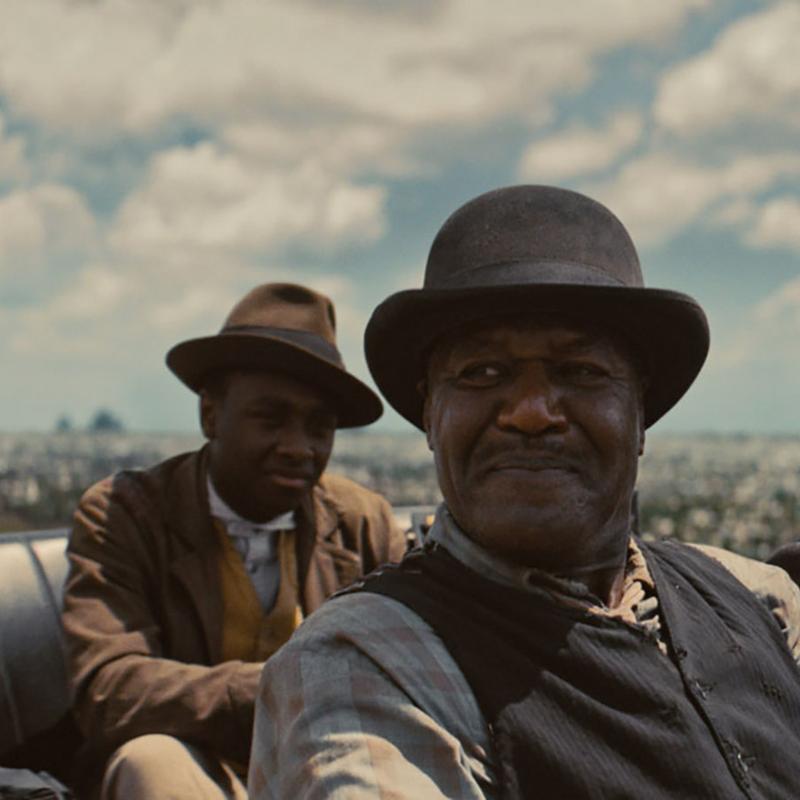
Alison Stewart: This is All Of It. I'm Alison Stewart. We're devoting the rest of our show to the movie Sinners. The movie is a wonder because it grossed nearly $368 million worldwide, and it touched on issues like ownership, Jim Crow music, and vampires. The story is set in Clarksdale, Mississippi. A juke joint is about to open, and all heaven and hell break loose. Coming up later this hour, we'll speak with Saul Williams. He portrayed the preacher Jedidiah, and he's also a Grammy-nominated recording artist. First, let's get this hour started with two of the film's other actors, Miles Caton and Delroy Lindo.
[music]
Alison Stewart: One of the defining relationships of the hit movie Sinners is between the characters Delta Slim and Sammie, past and future, unk and son, redeemed and tempted. They are played by a star's stage and screen, Delroy Lindo, and newcomer with so much talent, Miles Caton. The character of Delta Slim has seen a lot. On the surface, he's a local, he likes a drink or two. He plays a mean harmonica, but he has greater wisdom than a passerby might realize.
Sammie loves to play the guitar, but as the preacher's boy, the blues and the temptation that comes with it, it's not allowed. That is, until his cousins show up from Chicago and they plan to open a juke joint. At first, Delta Slim dismisses Sammie. He's a kid who doesn't know nothing about the blues. As the film progresses and the characters reckon with faith, desire, and the devil, Delta Slim and Sammie realize their connection is deeper than they thought. Not only was Sinners a box office hits, it's an award show presence. Sinners is streaming now. I'm excited to have both Delroy Lindo in studio. It's nice to meet you.
Delroy Lindo: Thank you.
Alison Stewart: And Miles Caton, who is fresh off his critics choice win for best young actor or actress. Congratulations to you.
Miles Caton: Thank you.
Alison Stewart: What did you think when you first, first read Ryan Coogler's script, Delroy?
Delroy Lindo: I recognized that it was brilliant inasmuch as it was a much larger story, a much larger narrative, and that Ryan was using the horror of the vampire genre to tell a much, much, much larger story. I connected with that almost immediately.
Alison Stewart: When you first heard that Ryan Coogler was going to do this film, you had an audition tape, and we heard that it was a dark audition tape.
[laughter]
Alison Stewart: First off, tell me about this audition tape.
Miles Caton: It was, I want to say, one of three audition tapes that I had sent in. This one in particular was just a video of me singing a song and playing guitar. I was normally coming from the music side when I would do videos. When I do covers or stuff like that, I normally go for a more ambient type of vibey lighting. I had never done a self-tape audition before, so I didn't know the parameters or the guidelines. I just did me, and I just sent in the vibey kind of. I don't think it was that [unintelligible 00:03:30]
[laughter]
Miles Caton: They saw something, but that was what it was.
Alison Stewart: Do you remember what you played?
Miles Caton: I played Bring It On Home to Me by Sam Cooke.
Alison Stewart: Oh, I want [unintelligible 00:03:43] listen to that. That's all right. Delroy, I've heard you talk about how collaborative Ryan is as a director-
Delroy Lindo: Very much so.
Alison Stewart: -with his cast and with his crew. What does that open for you as an actor? How does that help you be creative?
Delroy Lindo: It establishes a trust almost immediately. When there is trust, one can relax because one is aware that the lines of communication are open constantly and, this is another term that I've used to describe Ryan, there's a generosity of spirit. He's open to what everybody has to contribute. Now, he may not use everything, but he's very, very open to hearing what his collaborators have to say to him. That was certainly the case in my case with him.
Alison Stewart: What does trust mean to you with a director?
Delroy Lindo: That's a great question. I think it means one can relax inside of whatever one's process is, and one can be assured that one can offer opinions, offer feedback to the material, and that it will be heard. Also, it means that one is more likely to take chances in the work, creative, artistic chances in the work. I think that's what it means to me.
Alison Stewart: Miles, Delroy is a veteran of acting. What did you learn from him?
Miles Caton: Oh, don't ask him that.
Alison Stewart: You shush, you shush.
[laughter]
Miles Caton: Make it good, brother. So much. More, I think, than what he said or what he told me, but just by watching him and seeing his process and how he approaches his work was extremely inspiring and something I paid extreme detail to. This being my first time, really acting and taking on this big challenge, this was definitely the greatest challenge of my life so far on this journey. Finding my process was definitely something that I knew was going to be really important for this process and for this role.
Once I got to set and I was able to see what everybody was doing, I was able to see Delroy, and grew up, seeing him in films. Just being able to see his process and how he is able to get into character and what he does to get himself to the place that he needs to be was just something that I really wanted to incorporate into my own work. There was a particular scene that he did as well that we'll probably talk about it later, but he improv'd.
To be in that moment, it took me outside of what I was in. I feel like we were in the moment, but at the same time, it brought me-- 2024 at the time. It brought me to the present moment just understanding the work that he was doing. When it comes to the blues and when it comes to understanding why those people were making the music that they were making at that time, the choices that Delroy made acting in that scene made it so clear, and I could feel it in my core. Yes, man, just being able to see him work and just having the honor to hear him speak and be around him for that period of time was a blessing.
Alison Stewart: We'll talk about that scene in a minute. Delroy, this is Miles' film debut, and as an experienced actor, what did you get out of working with somebody their first time? Sometimes you can forget when you're working with actors who've done this before, but when you work with somebody for the first time, what was something you were reminded of?
Delroy Lindo: What I'm reminded of specifically with Miles? I'm thinking about this right now in this moment as I'm listening to him. Miles has something in common with a young lady that I worked with many years ago, Aaliyah, who also came from the music world. They both have an openness. Miles has an openness. There was no artifice. He was there to contribute to bring himself naturally and very, very open. That made working with him that much.
I mentioned the word trust. I trusted unequivocally that whenever I communicated-- I've not said this to him. I'm saying it right now on air, but I trusted that whenever I communicated with Miles in the work, he would be open to receive what I was communicating. That came with a certain responsibility, but he was always very present, period, the end. He was present. I think that we see that in his work in the film, and it was functioning on a number of levels. He's this, as you say, young actor, his first film, but as Sammie, he's infusing all of those qualities into what he's doing inside the work, and it made the work that much richer.
Alison Stewart: Do you think having your background in music sets you up for this film in a different way?
Miles Caton: 100%.
Alison Stewart: How?
Miles Caton: Essentially, that's what got me there. Just growing up in a musical family and understanding artistry and understanding music and the power that it has from young, I think, is something that was extremely important for this film. Even with my knowledge of music being on this project, I've learned, and I understand it now on a much, much deeper level, understanding how important blues has been for the genres that we listen to today.
The music was definitely like a life raft for me, a safety for me, being on this project, being that acting was so new for me, and I'm in a new environment, and it's different circumstances that I haven't really seen before. I had music to carry me through that. Listening to the essential blues playlist that Ryan sent me when we first started working on the project, listening to Charley Patton, Muddy Waters, Buddy Guy's, all these blues musicians that I would be able to draw inspiration from for my character, for the sound, and just for understanding what they were going through during that time.
Alison Stewart: I'm speaking with actors Delroy Lindo and Miles Caton. You know them from the movie Sinners. This movie has so many levels to it. It's a love story. It's a story about the ancestors. A story is about having your own, about the relationship between Irish and Blacks at the time. Then there are the vampires, which come into the film. Delroy, what do the vampires mean to you in this movie?
Delroy Lindo: The vampires represent any evil force, any outside force that would come into a community, try to infiltrate that community, and figuratively and literally try to possess that community. It's all about our community being infiltrated and destroyed, which we fight back against. That, for me, makes it a very, very, very contemporary story.
Alison Stewart: It's interesting, though, Miles, the first 48 minutes of the movie, it's really about establishing the characters in Mississippi in their world and where they come from.
Miles Caton: That's right.
Alison Stewart: What effect do you think that has on us appreciating those characters in the latter half of the film?
Miles Caton: I think it's important because, I think, to relate to somebody, you have to be able to see their story, you have to know what their life looks like outside of what they're showing you or what the main purpose is. You see that these people, they're human, and they're experiencing things that is some-- These are timeless experiences that we've all been through. That first part of the movie, when you're seeing everyone's character, you're seeing what drives them, for Sammie, he is a 19 year old sharecropper, a pastor's kid, and he lives like this redundant life cycle of sharecropping, going back home, going to church, and then Saturdays are his day off where he tries to go and pursue his dreams.
Then you have that fight that he has with his father. You understand why he's doing what he's doing. You understand why, when he goes with his cousins, and he gets to the juke, he is performing the way he is because he's searching for something else. Without that backstory, you wouldn't really understand it.
Delroy Lindo: I want to say that that's the genius. One of the aspects of this, the way that this story unfolds, that's genius because Ryan and the story, they take the time to establish all of us in our natural environments, our natural habitats, so to speak so that in doing that, when the vampires show up, we see very clearly what it is that they're aspiring to possess, again, literally and figuratively.
Alison Stewart: What is Delta Slim's reputation in town, Delroy, when we meet him?
Delroy Lindo: That's another great question because, as you referenced at the beginning of this interview, on the surface, we see-- Let me say this, he's a revered musician no matter what, but a human being who is self-medicating. We come to find out why he is self-medicating. To answer your question, I think there's a certain reverence for him. However, he's also somebody who is so steeped in the self-medicating that a lot of people may make the mistake of dismissing him as just "a drunk."
Let me say this. In the opening scene with Sammie and Stack and I say, I've been at Messengers for-- Messengers is the juke joint, the rival juke joint that Stack is trying to pull me away from. Think about this, and I'm thinking about this right now, I've been at Messengers, I've been playing at Messengers every Saturday night for multiple years. I would not have that gig if I were not a really, really strong musician. They wouldn't hire me to do that. The fact that I've had this steady gig for multiple years, I think, is indicative of the depth of my artistry, even though I am self-medicating, which also is very, very contemporary.
Alison Stewart: It was interesting you said self-medicating, because there's a scene when he's drinking from a bottle, and your hand shakes a little bit, like, "Oh my gosh, you have that. You have that alcohol available to me if I agree to go with you." It was a short moment, but it was an important moment.
Delroy Lindo: Ryan Coogler, Ryan Coogler, Ryan Coogler, Ryan Coogler.
Miles Caton: Time and time again.
Delroy Lindo: Time and time again. Now, I was not aware that my hand was shaking, but I'm saying Ryan Coogler because this is the palette, this is the environment that he presented to us that we could plop ourselves down into and be. He set the stage for us to be as full and as complete. We had to do the work, but he certainly set the environment, the stage for us that we could do that depth of work. Again, it reverts back to the trust.
In the opening scene where Sammie, where preacher boy comes with Stack to try to entice me to go with them, as we started rehearsing that scene, I said, "Man--" I said to Ryan, "I feel like I want to stand up, man, at a certain point," and he said, "No, no, no, no, no. This is your throne. This is right." He said, "No, don't stand up. This is your throne." I didn't argue. I did the scene seated, but he was right.
Later on in the film, in another scene in the car, where I said I wanted to stand up, our lines of communication were such that he understood. He resisted initially, but then he said, "No, let's give it a shot." That's an example of the open lines of communication that existed between myself, all the actors, and Ryan as director.
Alison Stewart: What does Sammie think of Delta Slim when he first meets him?
Miles Caton: Sammie thinks and knows that he's a legend. I think also when they're going through the train station, you see how Sammie is looking around. He's seeing other musicians there, other players that he may be familiar with. When he sees Delta Slim, that's like, that's Delta Slim. That's a legend. Much like how we're sitting right here right now, he's a legend. I don't think he knows that fact about Delta Slim, that he's "a drunk" or he drinks a lot.
Then later on, you see Sammie putting the clues together when Stack offers the beer. Then later on, when Delta Slim tells a story of him and his buddy Rice, you understand the story. Even in that, Sammie asks, "What did you do with the money?" Delta Slim says, "He drank it all." I think that that might have been a thing, but I think overall, when it comes to Delta Slim, he's definitely a revered musician, and he's loved.
Alison Stewart: We're talking about the movie Sinners with Delroy Lindo and Miles Caton. We'll have more after a quick break. This is All Of It.
[music]
Alison Stewart: You're listening to All Of It on WNYC. I'm Alison Stewart. I'm speaking with actors Delroy Lindo and Miles Caton, who you know from the movie Sinners. Delroy plays Delta Slim. Miles plays Sammie, also known as Preacher Boy. You can watch Sinners on streaming right now. I want to get to this key scene in the car. You pass a chain gang, and Delta Slim tells you more about his past. It's a very moving monologue. When you get a monologue like that, Delroy, when you're presented a monologue like that, where do you start with it?
Delroy Lindo: In the case of that particular monologue, I had to start with committing the words to memory, which is not the way that I would like to work, but I had to because it was a three-page monologue and very, very similarly to the monologue in Five Bloods a few years ago. Thank you.
Alison Stewart: [chuckles] He just caught me going so good.
Delroy Lindo: I had to commit the words to memory. Then you start to work on it in more depth as we started to rehearse the scene in context. That's where it started for me. Now, obviously, as I am committing the words to memory, I'm having responses, and I'm having thoughts and ideas about how to approach the work, but it really takes off. It really starts to unfold and evolve when one is actually in the context of working with my colleagues, the other artists.
Alison Stewart: It's like learning the notes of the music and then the jazz.
Delroy Lindo: Then you start to learn how to play the music. [crosstalk]
Alison Stewart: Right?
Delroy Lindo: Yes, that's right.
Miles Caton: [unintelligible 00:21:26]
Alison Stewart: You talked about a moment in this scene where Delroy improvises.
Miles Caton: Yes.
Alison Stewart: Tell us a little bit more about that moment.
Miles Caton: After he tells that heartbreaking story, another thing I also notice is that, throughout the film, you see Sammie, he's definitely in a position where he's learning a lot. He's receiving a lot of information and interpreting it in his own way, but when it comes to Delta Slim, it's always a different look that he gives an understanding. I think that's also, on a musician level, you just understand things differently. You connect on a different level.
I think that's also the dynamic and relationship between Sammie and Delta Slim. That scene in particular, we get to the end of the monologue, and he transitions into song. It was maybe a couple takes to the last take in, and he just went there. Obviously, I stayed in it as an actor. Just looking back at it, it really hit me in a different way because that right there was the epitome of the blues. It was turning that pain and that hurt and that trauma into song and into something that people can relate to and that people can feel. Realizing that and watching that back in the scene, I was just blown away that he made that choice.
Alison Stewart: In doing your homework, Miles, what did you learn about the blues? What did you learn about the blues that you could use in this film?
Miles Caton: I really leaned into the storytelling. That's a really important part of the blues, aside from the live performance and actually conveying the message in person. The storytelling back then, it had a simplicity to it, but also such a heartfelt and heart-wrenching take on what they were going through. Even Buddy Guy, who he had the pleasure of working with on this project, if you hear some of his records and you hear what he's talking about and the way he conveys it, that's something that I really leaned into now that I can now take and add to my own music.
Alison Stewart: Same for you, Delroy, when you were researching the blues, and you're getting into the blues.
Delroy Lindo: It's not a music of victims. There's no victimization. Right?
Miles Caton: Yes.
Delroy Lindo: Even when a cat is talking about my woman done left m,e and she took up another man. It is an artistry that transforms those sentiments into storytelling, into song, into something that's beautiful. It does not take away from the sentiment of the lyric, but what it does is that it elevates the lyric to a place of artistry. That, I believe, is what we are all connecting to and responding to in the work. These were some very, very, very complicated human beings.
I listened to Son House. I listened to quite a bit of Son House. Then you listen to his story, and the classic relationship between-- What do you call it? The sanctified and the sinful, which you can also, and I hope I'm not getting out of my depth right now, you can see that in contemporary musicians. I'm thinking about Prince, the Sanctified, and the, I'm saying this in quotes, "sinful."
Alison Stewart: Oh, that is Prince. [chuckles]
Delroy Lindo: All day long. I'm thinking of him, there are many, many, many musicians that one can categorize in those kinds of terms. When you think about Son House, when you think about Muddy Waters, thinking about Howlin' Wolf, and you get the sense of how they live their lives and how they use their artistry to articulate their lives through music. To your question, I learned in exposing myself to these artists. I was learning about who they are as human beings, learning about their lifestyles. Hopefully, I was interpreting that through my own process as I was pursuing creating Delta Slim. Can I just say one thing?
Alison Stewart: Of course.
Delroy Lindo: That is what this young man represents, the continuum, the continuing of that legacy, of that tradition, and that's what needs to be protected in the film, ultimately. That's what I understand and realize needs to be protected at all costs.
Alison Stewart: You're from a musical family. When did you first decide to take on music? Was there a decision you had to do it? [chuckles]
Miles Caton: I didn't. I was drawn to it. I grew up around it, and it's always been a part of my life. It's always been something that I wanted to do. I started singing when I was three years old, and I remember performing and just always knowing, like, "This is what I want to do with it." I didn't know where exactly I was going to end up or where it could go, but I knew that this is what I wanted to do.
Alison Stewart: Can we play a little bit from Sinners?
Miles Caton: Yes.
Alison Stewart: Can we play Travelin'?
Miles Caton: Let's do it.
Alison Stewart: Let's do it.
[MUSIC- Miles Caton: Travelin']
Travelin'
I don't know why in the world I'm here
Travelin'
I don't know why in the world l'm here
Woo, boy
Alison Stewart: That's Michael B, by the way.
[MUSIC- Miles Caton: Travelin']
'Cause the woman that I'm lovin'
She sure don't feel my care
We gon' make some money, we gon' make some money
Saddlin'
I don't know which way to go
Yeah
Alison Stewart: What does the guitar mean to Sammie, in that moment?
Miles Caton: Everything.
Alison Stewart: Everything, right?
Miles Caton: Everything. That's like when you get around the people that you trying to impress, and it's like you got a moment to really show what you got. It's like, "Oh, yes, now I got to show off." I think that was just like freedom for him. He finally got to get out and be around his cousins and do something different that he doesn't. He never gets to do in his daily life, and that was just the start of it.
Alison Stewart: Y' all are on your press tour. We all know that.
Miles Caton: Yes.
Alison Stewart: So many people you have to talk to, so many voices that you have to hear. Delroy, what has this press tour been like, because you've been on other ones? What's been unique about it?
Delroy Lindo: Doing a press tour with one's colleagues, you always learn a little bit more about them. On this project, I've learned a lot about my colleagues in terms of the way that they've articulated how they approach their work. For instance, I would say I have learned a tremendous amount about my colleagues and from my colleagues, as they have, in responding to the various questions they've been asked by the press or whomever interviewer might be, I've really learned a lot.
Mike B. You mentioned Mike, Michael B. Jordan, who plays the twins Stack and Smoke in this, and learning about how he approached the work. Listening to Miles, how Miles approached the work, Wunmi, who plays Annie in the film, Jamie, as each of the actors on the press tour, have expressed how they've approached this work, I'm learning a lot. Jamie, who plays-
Miles Caton: Pearline.
Delroy Lindo: -Pearline. Thank you. Who plays Pearline talks about, as a young student, having stopped singing. For various reasons, she stopped. In this process, she was given the license, the-- You used the word agency to reconnect with her musical talent and how Ryan and the process of working on this film allowed her to open up, reconnect with her music, and give it expression. To your question, I've learned so much about my colleagues and from my colleagues in the process of doing these various press tours.
Alison Stewart: Has there been anything that you've wanted to say that you haven't gotten to say about the film?
Delroy Lindo: How much I revere my colleagues, I revere, and I hope this doesn't come across as being obsequious, but I love these guys, man, I do. I love the depth of respect and love that we've all shared as a company of coworkers. It happens rarely, frankly, but we had it on Sinners. I think that's part of what's conveyed as you watch the film. I've loved this experience, I love my colleagues, and I've really appreciated and enjoyed learning more about them.
Alison Stewart: You had a special first film.
Delroy Lindo: Oh, my God.
Miles Caton: Oh, man.
Delroy Lindo: Oh, my God. Big time.
Alison Stewart: You're from New York, right?
Miles Caton: Yes, from Brooklyn.
Alison Stewart: Yankees. Still in the Yankees?
Miles Caton: Yes. I'm not big into baseball.
Alison Stewart: Just side check.
Miles Caton: Yes.
[laughter]
Alison Stewart: My guests have been Delroy Lindo and Miles Caton. You should go see the movie Sinners, or you should watch it streaming. It's streaming now. Thank you so much.
Delroy Lindo: Watch it on IMAX if you can.
Alison Stewart: Oh, if you can.
Miles Caton: I believe it's coming back in Jan-- It's this soon. It's coming back soon.
Delroy Lindo: It's coming back soon.
Alison Stewart: Oh, go see it in a theater then.
Miles Caton: Yes, go to the theater.
Delroy Lindo: Yes. Go see it at a theater, please, please, please.
Alison Stewart: [unintelligible 00:32:30] theater.
Miles Caton: Yes. ma'am.
Delroy Lindo: It was built for an IMAX screen. We used the brilliant cinematographer Autumn Durald Arkapaw, used IMAX equipment, and that's when you'll get the full value of the Sinners' experience. If you can't do that, then certainly watch it and stream it wherever you can, but it was built for an IMAX screen.
Alison Stewart: It'll be my fourth time. I'll go.
Delroy Lindo: See. I love it.
Alison Stewart: [laughs] Thank you so much for being with us.
Miles Caton: Thank you.
Delroy Lindo: God bless you. Thank you so much.
Miles Caton: Thank you.
[music]
Alison Stewart: Coming up, we'll continue our conversation about Sinners with actor and musician Saul Williams. He plays Jedidiah, and he's also nominated for his first Grammy after 25 years as a recording artist. That's next, after a quick break.