Debut Album from Public Song Project Winners Sibyl
Alison Stewart: This is All Of It. I'm Alison Stewart. In just a minute, we'll hear live music in studio from the folk duo Sibyl. But first, I wanted to give you a heads up about another performance. Our next Broadway on the Radio event is happening in just over a week on Thursday, March 19th, at noon. It features the cast of a star-studded Broadway revival about a Cold War love triangle. It's CHESS the Musical. The show's three stars, Aaron Tveit, Nicholas Christopher, and Lea Michele, will all be here at the WNYC Green Space performing live. We'll also have the show's director, Michael Mayer, and book writer Danny Strong here as well. Go to wnyc.org/chess to get more info and to buy your tickets. If you can't make it to this event in person, don't worry, you can also tune in for free live on the radio or via our livestream on YouTube. Again, that's wnyc.org/chess. Now, let's get this show started with Sibyl.
[music]
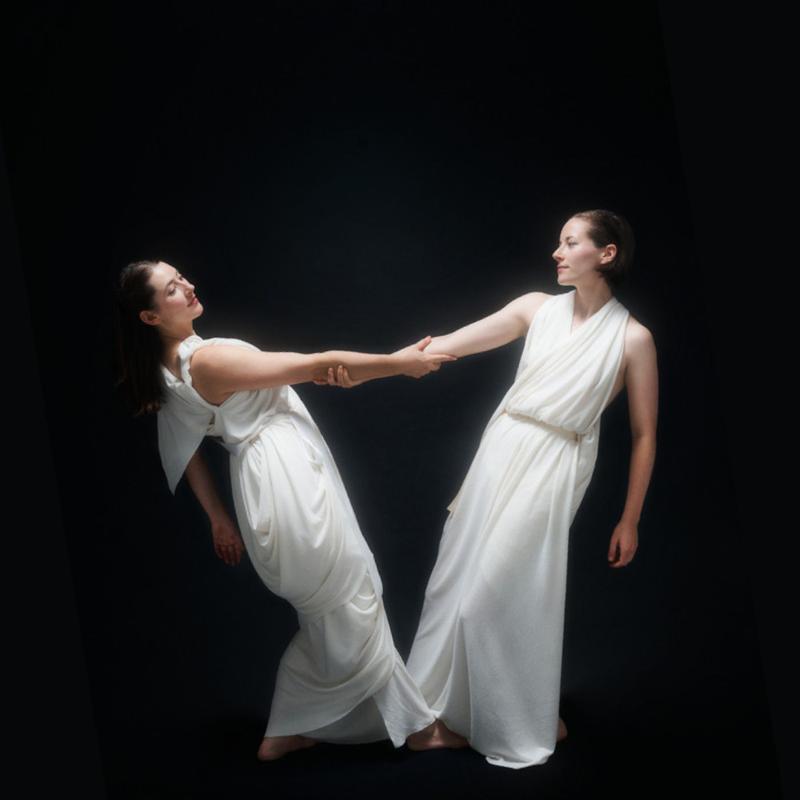
WWNYC's Public Song Project is back this year. We invite you to send in a song based on something in the public domain. This year, we're teaming up with the Internet Archive to share your songs with millions of people who visit their playlists every day. You can find out more about it by going to wnyc.org/publicsongproject. If you need some inspiration for submitting, you might be able to find some from my next guests, who were the winners of the project in its very first year, and now they are out with their debut album. Chloe and Lily Holgate are two New York-born and raised sisters who perform as Sibyl. Their self-titled debut album features poetry of Emily Dickinson and Edna St. Vincent Millay set to original musical arrangements that are built around their voices. And they're here with me in studio to perform some of it now. Chloe and Lily, welcome back.
Lily Holgate: Thank you so much for having us.
Chloe Holgate: Thrilled to be here.
Alison Stewart: What's going to be the first song we hear?
Lily Holgate: This song is called Witch Wife. It's a setting of Edna St. Vincent Millet's poem, also called Witch Wife and it is a spooky, witchy exploration of a poem that really inspired us.
Alison Stewart: This is Sibyl.
[MUSIC - Sibyl: Witch Wife]
She is neither pink nor pale
And she never will be all mine
She, she, she learned her hands in a fairy tale,
And her mouth on a Valentine.
She has more hair than she needs
In the sun 'tis a woe to me
And her voice is a string of colored beads
Or steps leading into the sea
She loves me all that she can
And her ways to my ways resign
But she was not made for any man
And she never will be all mine
Alison Stewart: That was Chloe and Lily Holgate, AKA Sibyl. Their self-titled debut album is out now. First of all, congratulations.
Chloe Holgate: Thank you.
Lily Holgate: Thank you so much.
Alison Stewart: On the record, that's so great. Chloe, did you always know you would perform together, or were you on separate paths and then you suddenly realized, "Hey, we could do this together?"
Chloe Holgate: I think we always made music together. We always sang together, we always made up dances together. But it did seem like maybe just because of going to college, and I pursued classical singing, and Lily was doing classical violin, we were doing parallel things. But it's funny that it took the pandemic for us to say, "Wait, we could do this together. We could at least try."
Alison Stewart: Were you open to it?
Chloe Holgate: Oh, definitely. I think that was such a strange time for all performers. Because we were in each other's bubble, it just felt like the universe finally provided us the time to actually invest in a collaboration.
Alison Stewart: Chloe, people have talked about the term blood harmony, that siblings sound different when they sing together. First of all, do you believe in blood harmony?
Chloe Holgate: I do. I mean, I actually haven't heard that term, but that's very cool. For me, it feels more like a mental connection where I'm listening to Lily's voice, I think she's listening to mine, and we lose ourselves in the process and become something bigger.
Alison Stewart: Lily, how do you work that into your music?
Lily Holgate: Into my music, like outside of?
Alison Stewart: Or when you're singing with your sister, how do you work the blood harmony in your music?
Lily Holgate: Honestly, it's both reassuring and really difficult because sometimes the frequencies of our voices, which are different in their own ways, but timbrally very similar, it can be really difficult for me to actually tell who is who. Even though I know what note. I'm like, "I'm on a different note." Sometimes, just the frequencies get jumbled up. And then when I add my viola or violin into that, it's just aurally very confusing. [chuckles]
Alison Stewart: Oh, that's so interesting. That's really interesting. You are New York City natives. You should say you went to the special music school on the Upper West Side. What kind of music did you study, Chloe?
Chloe Holgate: I studied classical music. Oh, my gosh. [chuckles] Classical music, but mainly classical piano. At special music school, all of the children also sing in choir every week. That was my happy place, definitely. I mean, piano is exciting. My favorite thing that we did was there was an after-school program for improvisation, and I really loved exploring, improvising on the piano. But my happy place was always singing.
Alison Stewart: How about for you, Lily?
Lily Holgate: My happy place was also singing. There's an amazing chorus teacher there. But for me, I found my love in chamber music, which I really pursued in college and after college playing in a string quartet. And I think what's cool is that Chloe and I are-- Our separate interests have found a home in this collaboration because chamber music is, it's small ensemble playing, and this is about as intimate as it can get. It's been really cool to experience the training that I got at that school, and then later in college and working, and how that translates into what we've been doing together.
Alison Stewart: I'm speaking with Sibyl. They're otherwise known as siblings, Chloe and Lily Holgate. Their self-titled album is out now. The album is centered around the poetry of Emily Dickinson and Edna St. Vincent Millay. Lily, what inspired the idea for the album?
Lily Holgate: When we started writing music together, we were both a little sheepish about writing our own text. We're musically trained. I'm not necessarily-- I'm sure one day we'll get there, but there's such a wealth of incredible poetry out there, and we wanted to highlight the works of these two amazing women whose work-- I've been familiar with Emily Dickinson's work for a really long time, and then in college I got really into her stuff. I think what we both found was actually how naturally their work lends itself to music.
Alison Stewart: Oh, that's interesting.
Lily Holgate: Setting it to music is not as difficult, maybe as it could have been, just because of how they write. Chloe may have more to say on that.
Chloe Holgate: Yes, and in different ways. I mean, Edna St. Vincent Millay, the structure of her poetry is more lends itself to a song form, as you just heard. Emily Dickinson, letting her words guide the music. As you'll hear in the next song, I Felt a Cleaving in My Mind. The form is a little bit less predictable or standard poetry form, but it leads to a really wacky musical exploration, which you'll hear, I hope.
Alison Stewart: Let's listen. Let's hear it. This is I Felt a Cleaving in My Mind by Sibyl.
[MUSIC - Sibyl: I Felt a Cleaving in My Mind]
I felt a cleaving in my mind
I felt a cleaving in my mind
As if, as if my brain had split
I tried to match it, seam by seam
But could not make them fit
I felt a cleaving in my mind
I felt a cleaving in my mind
I felt a cleaving in my mind
I felt a cleaving in my mind
I felt a cleaving in
Felt a cleaving in my
Felt a cleaving in my mind
As if, as if my brain had split
As if, as if my brain had split
I tried to match it, seam by seam
But could not make them fit
The thought behind I strove to join
Unto the thought before
But sequence ravelled out of sound
Like balls upon a floor
The thought behind I strove to join
Unto the thought before
But sequence ravelled out of sound
Like balls
But sequence ravelled out of sound
Like balls upon a floor
But sequence ravelled out of sound
Like balls upon a floor
But sequence, but sequence
But sequence ravelled out of sound
Alison Stewart: That was Sibyl. I Felt a Cleaving in My Mind by Emily Dickinson, set to music by my guests, Chloe and Lily Holgate. Their self-titled debut album is out now. Chloe, do the poems lead the music, or do you have pieces of music, and you find a piece of poetry, it lights up a bulb in your head, "Aha, that's the right song?"
Chloe Holgate: No, the poetry leads to the music, absolutely. Sometimes there have been-- Like the one that you'll hear next, I think Lily came up with a really beautiful harmonic bed of sound. But the poetry absolutely is what led to us finding the melody. And with Cleaving, all of it came from the poetry. I think setting it to music led to a deeper understanding of the poem. And yeah, I think it's all really inspired by the poetry.
Alison Stewart: Now, Lily, you're both sopranos. What does that mean for you in terms of how you arrange the songs?
Lily Holgate: That's a really good question because I think as we've gone along, we've been trying to figure that out. For as similar as we sound, we do have very different voices. And Chloe, she's a trained singer, so she has certain skills that if I was trained, maybe I would have too, but we lend different qualities to our sound together, even though we are both sopranos. I think what we've been trying to do is write more to my strengths and her strengths, and that's taken a while to figure out. We've done a lot of part swapping, where all of us swap parts just because today, this isn't feeling so easy for me. You do it. We've done that a lot as well, but we're finding our way. [chuckles]
Alison Stewart: You have a couple of songs that are not Emily and Edna-related on the album. Why do they make sense alongside these two great poets?
Chloe Holgate: Oh, that's a great question. We have a folk song, I'll Fly Away, and we have Down in the Willow Garden, which is a murder ballad, which was a project that we thought we wanted to explore even. We thought we wanted a whole album of murder ballads, but they're too dark. It was too much to sit in that all the time. Although, I think-- Lily, do you want to talk about what the poetry explores as far as mental health?
Lily Holgate: The poems we chose are very reflective of, of course, things in our own lives, struggling with depression, for example, or anxiety, and trying to find work that really speaks to something personal within each of us. Something about the traditional songs that we arranged was weirdly complements those texts, whether it be a murder ballad. It's a story of a woman being murdered and wanting to give voice to these women poets, and then explore our own female voices and our own struggles. There's a mashup of exploring female voices. I think, in all this.
Chloe Holgate: There's a lot of tension and release. With the murder ballad, it's giving voice to the voiceless. It's told by the point of view of the man that killed this woman, Rose Connelly, but because we're two female singers, there's something eerie about it, but also we're telling her story now. Then with I'll Fly Away, it's the opposite. It's like a release at the end of the album.
Alison Stewart: The last song you're going to perform is the same one that you won the Public Song Project with in 2023. Any tips for people submitting songs to the Public Song Project now? Any advice on how to find something that inspires them?
Chloe Holgate: Ooh.
Lily Holgate: I think, for me, something that's always important is, does it tell a story, and is it a story that speaks to you? Whether it's a song that you're covering that's in the public domain, or if you're setting a poem like we-- What just gives you that spark of inspiration, or can you hear a potential sound world around whatever story you found, even if it's in a very brief poem or something. That, for me, often drives what we do is, what is the story behind this?
Chloe Holgate: I think that's so true, and I think it's like there are so many public domain things you could choose that I would be overwhelmed. You really have to choose what speaks to you and not what's the most obscure thing that no one else would do. I think it's what's exciting to you.
Alison Stewart: I have been speaking with Sibyl, AKA Chloe and Lily Holgate. Their self-titled album is out now. What's the last song you're going to perform for us?
Lily Holgate: This is Afternoon on a Hill, a poem by Edna St. Vincent Millay.
[MUSIC - Sibyl: Afternoon on a Hill]
I, I, I, I will be the gladdest thing
Under the sun
I will touch a hundred flowers
And not pick one.
I will look, I will look at cliffs and clouds
With quiet eyes,
Watch the wind bow down the grass,
And the grass rise, the grass rise
And when lights begin to show
Up from the town
I will mark which must be mine
And then start down