
Cameron Crowe on His Rock Memoir 'The Uncool'
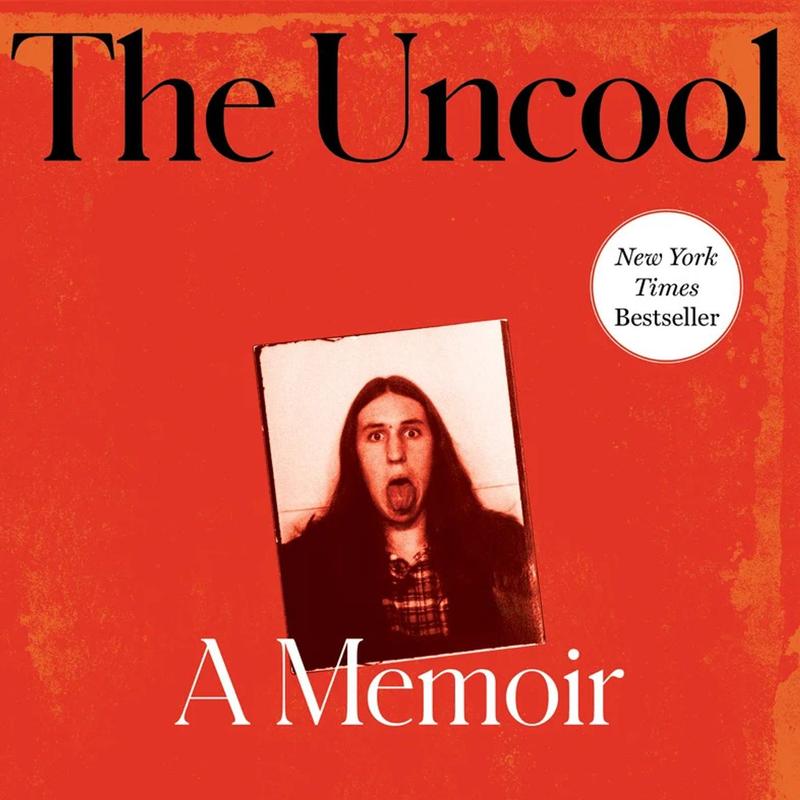
David Furst: Cameron Crowe, Oscar-winning screenwriter, acclaimed director, and celebrated music journalist, thinks he used to be uncool. At least that's the title of his new memoir. The book follows Cameron's childhood in California and his dive into the world of rock and roll when he was still a teenager in the 1970s. He was working for Rolling Stone, interviewing acts like the Eagles, the Allman Brothers Band, and Kris Kristofferson all before he was legally allowed to be in some of the clubs where they are playing. This memoir is full of anecdotes about David Bowie, Joni Mitchell, Emmylou Harris. Fans of his movie Almost Famous will recognize some of the real stories that formed the inspiration behind the scenes in the movie. The Uncool: A Memoir is out now and Cameron Crowe joins us to talk about it. Welcome.
Cameron Crowe: It is good to be here. By the way, those opening chords of Take It Easy never get old, right? [crosstalk]
David: It's irresistible. It's so great. So great, so recognizable. I should mention, if anybody has a question for Cameron Crowe about his career in music journalism or anything, we'll be taking some of your calls. 212-433-9692. That's 212-433-WNYC. I got to come back to the name of this book.
Cameron Crowe: Let's do it.
David: The Uncool. You must have been one of the coolest teenagers in America at that time. You want to check out uncool? I wasn't writing for Rolling Stone when I was 15 and getting backstage at who concerts.
Cameron Crowe: It feels good when you say it, but at the time, I didn't feel cool, and I don't feel it. I still feel like the outsider I was in high school and a little younger than everybody else because my mom skipped me all these consequential grades, but no, I named it the Uncool because so much of the music that I loved and the people that opened doors for me as a young journalist were similarly outcasts growing up. This was music that came from people that found their own kind of community of people that loved music. That was where I fell in. That made me feel among friends.
David: That love of music that you're talking about, that is infused in almost every line in this book.
Cameron Crowe: I love that you say that, because it is about loving music, and how you love music, that comes from your family and your friends and your background. It's the music you choose that tattoos your soul a little bit. I just wanted to write about that. I've had a wonderful time as a director and I do that and I love that, but I didn't want to write a book about-- one of the memoirs that you read, sometimes it's like, "Here are my tablets from the lofty mountain of my memory, the sepia toned brilliance of my past." No, I just wanted to write a book about the people that opened the doors for me as a young guy with a lot of questions and a love of music. I really got so much help from people that, looking back, I probably should have been more intimidated by.
David: Was it because you were so young that you weren't intimidated?
Cameron Crowe: Maybe it's-- My mom used to say like, "Put on your magic boots." I thought like, "Wow, this really works." Until, of course, the day that it did not work and then you're like, "There are no magic boots. They don't exist."
David: You mentioned your mom. This book is also this really emotional look at your family history, including the loss of your older sister Cathy. In fact, you dedicate the book to her. Can you talk about that?
Cameron Crowe: Well, Cathy passed away early. She was 19, I was 10, my sister was 15, and it was something we didn't talk about in the family. She took her own life, which none of us really understood. For many years I wanted to write something about her, and then the time arrived where I realized that I owe everything to her because she was the one, when I was eight and had a crush on somebody in my school and I was already younger than everybody else, she said, "This music that I love, you should love too. It'll give you that feeling. You can even give a record to this girl that you have a crush on." It was Beach Boys music.
It was like that luscious, happy, sad, don't-worry-baby, God-only-knows-type type stuff. I just felt like, "Boy, this is the music I love. This is the happy, sad kind of feeling and emotion." It defined like everything that I chased as a journalist, to capture that feeling that great music can give you, that transporting thing, and it came from Cathy and also my sister Cindy.
David: Does that happy, sad define a lot of your work as well? That happy, sad.
Cameron Crowe: Absolutely. I love it. It's the feeling of life. It's the sweet and the sour. It's the thing that makes you appreciate the highs. Those aching lows serve a purpose, and a great song can just transport you to that place where you don't feel alone. You just have to listen to this thing that makes you feel a certain thing like 20 times in a row. That's the passion of being a fan, and that's what the Uncool is about.
David: Well, we are speaking with director Cameron Crowe, talking about his new memoir, The Uncool, following his life and career as a teenage music writer in the 1970s. We could take some calls. 212-433-9692. That's 212-433-WNYC. Let's hear from Brian right now, calling in on the Upper West Side. Welcome to All Of It. [00:06:10]
Brian: Thanks for having me, and, Cameron, pleasure to chat with you. I'm reading your book right now as we speak.
Cameron Crowe: Thanks.
Brian: I started reading it appropriately while in San Diego. I thought it'd be a cool vibe to start when I was on business there.
Cameron Crowe: Oh, great.
Brian: I have to ask you, how did you really feel-- I don't want to ruin the book for anybody or your story, but when they took the tapes from you for that big interview and the cover story, my heart sunk into my chest when that happened. I have chills right now thinking about that moment, and you were so young. What was going through your head and how did you really feel?
David: Well, let's explain what this is all about. This is tapes from your interviews with the Allman Brothers Band, right, when you're working on a piece for Rolling Stone. Is that correct?
Cameron Crowe: Yes. It was my first big tour that I got invited on, and I just felt like, "Boy, I belong here." By the way, I love this question and I love that you started the book in San Diego, because that's where this began. Yes, Greg Allman, his brother Dwayne had died in a terrible motorcycle accident. There had been another member of the band that died, too. The band also got a terrible story in Rolling Stone, where the writer made fun of them for being Southern and stuff like that.
I walked into it, I don't know, like I just have these questions to ask. The band took me in and trusted me. Then the night before I left to go back home to write the story, Greg Allman, then the leader of the band, he called the room. He had a call made to me at 2:00 in the morning, saying, "Bring all the tapes. Come to my room and bring your ID." Basically, what he did was in a state of paranoid, I don't know, fury, really. He took all my tapes. I got to say, I didn't think I'd ever get them back. It was emotionally violent. I did get the tapes back, and I wrote the story, and many years later, I got to have an interaction with Greg where we addressed it.
The truth is, to this question, I was scared to death. I thought I was going to get beaten up. Greg Allman wanted me to sign a contract saying the tapes now belong to him. It's now like 3:00 in the morning, and I literally could not stop shaking. When I did the audio version of The Uncool, it all came back to me. I had to stop. I realized that the pain of that, of being 16 and roughed up in that way was still there.
I've been talking about it since, and I wrote about it, so I've worked my way through it, but it's a great question, because when I was 16, I thought, "Well, I'll just deal with this and move through it," but here I am many years later, and it was a knot in my soul, and it was very scary. It's the kind of obstacle you get early in your life, and you either make it over and learn from it or you succumb to it, really, and out of fear, go and do something else. I kept going thinking that there would be other challenges as a journalist. Your question is great because it was more seismic than I even knew as of eight months ago.
David: Well, at one point, your detail in this memoir, you meet the rock critic Lester Bangs, someone whose writing you really admired, and you get this advice that you should not try to be friends with the bands that you cover. This is a scene that is fictionalized in Almost Famous with Philip Seymour Hoffman playing Lester Bangs. Let's hear that scene. [00:09:53]
Lester Bangs: God, it's going to get ugly, man. They're going to buy you drinks, you're going to meet girls, they're going to try to fly you places for free, offer you drugs. I know it sounds great, but these people are not your friends. These are people who want you to write sanctimonious stories about the genius of rock stars, and they will ruin rock and roll and strangle everything we love about it, because they're trying to buy respectability for a form that is gloriously and righteously dumb. You're smart enough to know that. The day it ceases to be dumb is the day it ceases to be real.
Cameron Crowe: Boy-- [crosstalk] [00:10:31]
David: Yes, tell us about that moment and about Lester Bangs, and that advice and were you able to follow it?
Cameron Crowe: Yes. I know what he meant. The big thing that I remember from that day, and that was the first scene we filmed in Almost Famous, and it was pretty much word for word shot in the same restaurant as this happened near my apartment, where we lived. That was pretty trippy. What he was saying more than anything else, I think, was he was using the word us. I was 15 talking to my hero who's larger than life. I've only written a few things and he's already welcoming me into the club of writers. I couldn't believe it.
What he was saying is, "Yes, write about music. It's dying. It's dead. It's almost over, but, hey, you're here. Don't try and be in the band. You're not there to be in the band, you're there to write about it and write truths about it." I think that's what he was saying. Lester had friends that were in bands, for sure, but really, I think what he was saying, besides welcoming me into a place where he could say us, which is amazing, I totally didn't deserve it, what he was saying was, "Don't think you're in the band because they're nice to you."
I've seen journalists show up and dress like the people they're interviewing and think that they're there to be in the touring party that continues forever. No, you're there to report and write. I would always go back to my room and transcribe and never try and be in the band. Well, once I tried to play guitar in an Allman Brothers kind of jam session that was after one of their concerts. The guitar was sitting there. They were kind of doing a hoot Nanny, [00:12:18] and I was like, "I'm going to play this guitar. I know two chords."
I started strumming, and I felt-- Their head roadie was a guy named Red Dog, who'd befriended me. I'm starting to strum, and I'm looking at Greg Allman, who's looking at me kind of like, "That's interesting what you're trying to do. It's messing up my song, but it's kind of interesting." I felt the guitar lifting out of my hands almost like a holy mission to remove it from me, but in the most delicate way, and give it to somebody who could actually play. At that moment I realized, your instrument is the keyboard. Not the musical keyboard, it's a typewriter. You don't belong in the band, and that's what Lester's saying.
By the way, Philip Seymour Hoffman brought Lester to life in a way that I could have only dreamed about. I don't know much about how Lester, who died young as well, I don't know how much Lester would have liked the movie Almost Famous or whatever. He was a prickly but fun guy. I know one thing, he would have loved Philip Seymour Hoffman. Those two would have gone off and maybe we never would have gotten the performance from Philip Seymour Hoffman because they would have had too much fun on their own. Those two belong together. I always enjoy it hearing that scene. [00:13:39]
David: Well, our guest is writer, director, music journalist, and one-time member of the Allman Brothers Band, Cameron Crowe, here today.
Cameron Crowe: 45 seconds.
David: 45 seconds.
Cameron Crowe: I would put it in 45 seconds.
David: Your new memoir is The Uncool, following your life and career as a teenage music writer in the 1970s. If you have a question, give us a call. 212-433-9692. Let's take another call right now. Molly calling in from the West Village. Welcome to All Of It.
Molly: Hi. Thank you so much, Cameron, for taking my question. I can't wait to read the book. You spoke earlier about the way that music is tattooed on our souls so early by family, by friends and all these experiences. I hope that that's still the case, but I worry that with the rise of streaming and how most of us consume music now, that that's becoming less and less the case. I'm curious about your thoughts on that.
Cameron Crowe: It's, once again, really good question, Molly. It's like, it's too easy in a way to say like, "Oh, I remember time before there was streaming," or "Oh, you got to listen to it on vinyl." That's true, but also true is culture and music is a rushing river. It's just blasting away and we're just on the riverbank watching it flow. I just feel the same passion. The delivery system is different. I feel the same passion about music that I did then and I felt it really recently.
We did a little book tour for The Uncool and I met a lot of music fans. I got out of my writing room and got to actually hang with people that loved music like me. People were talking about [unintelligible 00:15:31], this band, the way I used to talk about the Allman Brothers Band There's passion out there, and it's always best, I found, if a friend actually shows you a song or a song is playing when something great is happening in your life and you realize, "This is a song that's always going to remind me of this moment." Suddenly music is fresh and new and as powerful as it ever was. I'm just happy it exists in any form, and it's there if you look for it, both algorithm wise or just friends passing along something that moved them. It's the fan experience. I love it.
David: I love hearing that. At the center of not just this memoir, but the movie Almost Famous, really, is your mother, Alice, who provided so much wisdom scolding education, guidance. If you have seen Almost Famous, the fictionalized version of your mother is very familiar to fans. What did she think about her portrayal in film? She's played by Frances McDormand in the movie.
Cameron Crowe: She loved it. She just said like, "My one quibble is that I never went barefoot in the house. I don't want people to think that I went barefoot on the rug. That's weird. I would never do that." Other than that, I think she watched in wonder at how Frances brought that character to life. There was a moment where I told my mom on the set-- We were shooting in our hometown, so I knew my mom was going to show up, and so she showed up and I said, "Please don't bother Frances McDormand. She's an Oscar-winning actress and please don't talk to her. Let her do her thing." My mom was like, "Okay."
I turn around two minutes later and she's got Frances McDormand off in a corner and they're talking in this fevered-looking conversation. Later I asked Frances what it was, and Frances said, "I love your mom, but I had to tell her what I'm going to do is not you and it's not me. It's going to be someone else, so I hope you enjoy it." Frances McDormand was able to handle my mom like few ever were able to do. She went toe to toe with my mom. They went to the other corners of the ring and I think they were satisfied with each other.
David: That's fantastic. If you'd like to join this conversation, we're going to take another call right now. 212-433-9692. We're speaking to director, music journalist Cameron Crowe here on WNYC. Let's hear from Mike in Sparta, New Jersey. Welcome.
Mike: Hey, Cameron, how you doing?
Cameron Crowe: Hey, Mike, how you doing?
Mike: Great, thanks. I just finished the audio book. It's fantastic. Absolutely loved it.
Cameron Crowe: Thank you.
Mike: Almost Famous, one of my favorite movies. There's something you mentioned in the book that was one of my favorite scenes in the film, which is Patrick Fugit. You guys are at the Hyatt house, his first time there, with Penny Lane. You're walking through the hallways and he stops and looks into a doorway, and it's Pete Droge playing that guitar and singing harmony with that other woman. He stands there for 10 seconds and then gets pulled away. I thought it just captured such a great part of LA at that time, I would imagine, but also just the song itself was a beautiful little snippet. I just want to say my appreciation for that. It was such a little snippet.
Cameron Crowe: Thanks, Mike. I just saw Pete and his wife Elaine, and those are the two people that are in that scene. Thanks for mentioning that. It's one of my favorite parts of the movie. It's a mini tribute to Graham Parsons and Emmylou Harris and the song, who I got to see up close as a young journalist when they were just starting to play together. I wanted to attribute to that feeling because there was such amazing sparks that those two threw off. I wanted for like 10 seconds of William to see something like that, romance and music and here's what love looks like. Love and music. Then he gets yanked away. I love that song. It's called Small Town Blues, and I just love it. Pete and Elaine wrote a great song there. I love that you mentioned that scene.
David: Let's take another call. Philip in the East Village, welcome.
Philip: Hey, thanks. Hey, Cameron, yes, that thing you were talking about earlier, feeling really connected to music from early on in your life, but not necessarily having the musical talent or ability, like getting handed the guitar by Greg Allman and trying your best, I feel like I really relate to that. At what point, was it almost semi disappointment to you that you weren't necessarily musically inclined, or at what point did you realize that you're a good writer and music journalism is still a way for you to keep that connection alive?
Cameron Crowe: I'm only now realizing kind of how much I was supposed to be a writer. I was just ready for any road in. I even tried to be in a band. It was called Masked Hamster. It was three guys. Masked Hamster, the Masked-
David: Fantastic.
Cameron Crowe: I know, it's a much better name than a band, but that happens sometimes. We played I Can't Explain, the who song, and they told me the band was breaking up at the end of our first day together. Then a couple days later, walking through the neighborhood, I heard the Masked Hamster playing I Can't Explain without me. That was my first lesson in interband politics. Also, I was starting to really love Lester Bangs and Dave Marsh and some of the great rock critics, Greil Marcus and Ben Fong-Torres. They were as epic as some of my rock heroes.
I realized that if I kept at it and instinctively did the 10,000 hours of doing it, that I might have a certain bit of craft. I think it was really fun to go back and write The Uncool because that was going back to the analog beginnings of just learning to write. I would write on yellow legal tablet pages and just go forever. I did that on this book, and had to cut it down from 400 to 600 pages of yellow legal tablets. That's where I'm meant to be, not in the Masked Hamster, sadly.
David: Well, it sounds like we heard about you getting kicked out of two bands today.
Cameron Crowe: It's all they do. I sample my wares and it's like they move on.
David: Well, in the few moments that we have left, in just the last few seconds here, you write a bit about your relationship with Joni Mitchell throughout the years. You're currently working on a biopic about her, is that right? Can you give us any updates?
Cameron Crowe: Well, I am, and biopic, we're going to do it this next year. Biopic kind of has the feeling of genre, like there's a kind of story that you tell where it just feels like genre. This is going to be different. It's more of a story about a person who happens to be Joni Mitchell, who happens to become the top of her field. Not because she was born with it, but because she just never gave up. She never stopped trying to be better. That curiosity and that kind of light hearted feeling of like, "Well, I'll just dust myself up off and keep on going," is one of my favorite feeling about a character. Her life kind of lines up with what I love to write about, and it did as a young journalist.
She picked me to do one of her first big interviews when I was-- I don't know, it was 1979, and I've really been interviewing her ever since. I'm just so happy that it happened, but it morphed into doing this movie. We've been working on it for about four years, and the movie is her life from her point of view. I'm very honored to be the handmaiden.
David: Well, thank you so much for the update, and thank you so much for talking with us today.
Cameron Crowe: My pleasure.
David: Cameron Crowe's new book, The Uncool: A Memoir, is out right now. Thank you so much for joining us on All Of It.
Cameron Crowe: David, thank you so much.