
'Billy Preston: That's the Way God Planned It'
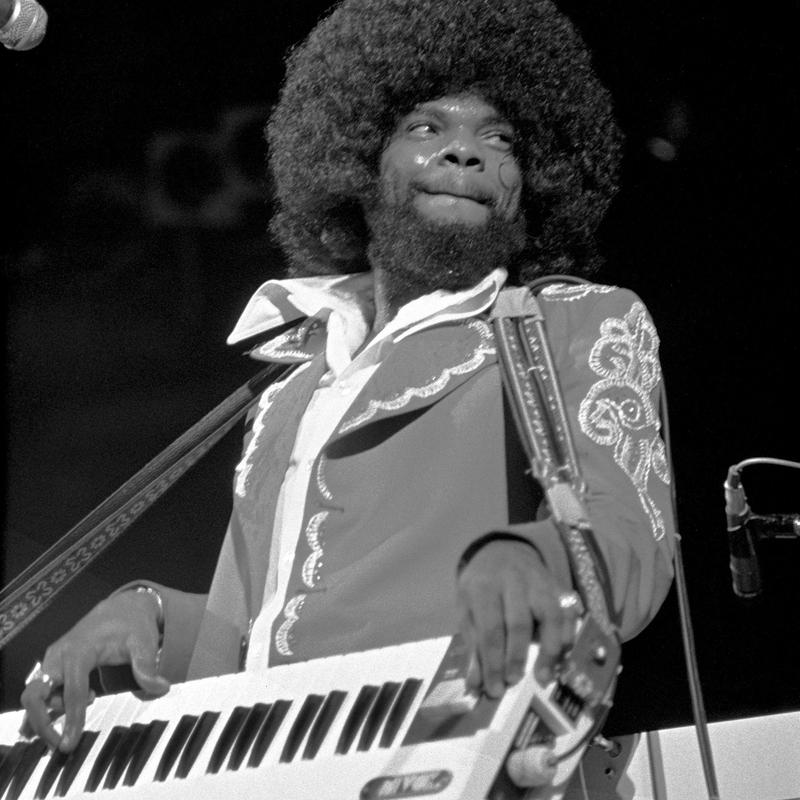
Alison Stewart: This is All Of It on WNYC. I'm Alison Stewart. Billy Preston was a gigantic talent. He started young, playing the organ and singing backing vocals from Mahalia Jackson as a kid. He was a prolific session musician. He landed number one hits as a solo artist like this one.
[music - Billy Preston: Will It Go Round in Circles]
He was a happy, kind man who grew up in the church and was haunted by the burden of what that meant. A new documentary called Billy Preston: That’s The Way God Planned It, premieres at Film Forum this Friday. The New York Times called it a "mind blowing documentary." I'm joined by its director, Paris Barclay, as well as producer Jeanne Elfant Festa. Welcome to All Of It.
Paris Barclay: Beautiful. Thank you for having us.
Jeanne Elfant Festa: Thank you so much.
Paris Barclay: An honor to be here.
Alison Stewart: Listeners, feel free to join in here. Did you ever get a chance to see Billy Preston perform? Do you have a special connection to his music? Our number is 212-433-WNYC, 212-433-9692. The film opens up with a performance. Billy Preston's playing and George Harrison is there, Leon Russell, Eric Clapton. Then Billy spontaneously gets up and dances. He's caught the spirit. Why was that the right moment to introduce us to Billy Preston, Paris?
Paris Barclay: We didn't know where we'd be today in the world, but we knew that that unabashed joy was needed. Billy just expressed this joy that came out of his soul and through his feet and through his keys. We thought if we do one thing in this film, we have to lift people up. We have to remind people that there is beauty and there is music, and there is soul. Billy was one of the people who brought that soul to pop music. It ended up being perfect for today that we just open up with a burst of joy.
Alison Stewart: How about for you? What did you think that was the right time?
Jeanne Elfant Festa: That's exactly what we need today. We need to build bridges. We need to understand each other better, and we need to spark conversation, and we need to love one another.
Alison Stewart: One of the first things we hear someone say about Preston in the doc is he was built for show business. He Was not built for show business. How are both of these things true, Paris?
Paris Barclay: They are very true for Billy Preston. He was built for show business because he was a performer who had what David Ritz in the film calls perfect anticipation. He never wrote any shit music. He walked into the studio, he would figure out what the song was like that, and then he'd be able to play it. Anytime you give him any genre, country, pop, soul, rock, he could just play it. That's just an amazing talent. Someone who can do that and then dance and then be the effervescent personality, is a show business personality.
On the other hand, he's also a really sensitive guy. By sensitive, I mean capital sensitive. He felt everything and took everything in. He had a really tough time growing up. He had some very bad experiences that we believe, according to his friends, really changed who he was. He kept that hidden and he kept going on. The show business triumphed over the pain that he was feeling. That's what we get to explore in the documentary.
Alison Stewart: It's really interesting. You can see the light in his eyes when he plays music. He's just happy. He's beyond happy, actually.
Paris Barclay: Yes. David Ritz says when he's playing, he's great, but when he's not [unintelligible 00:04:16]
Jeanne Elfant Festa: He's in his bliss. When he's playing, he's in his bliss, and when he's not-
Paris Barclay: He's a holy mess.
Jeanne Elfant Festa: Yes, holly mess.
Paris Barclay: Something like that.
Jeanne Elfant Festa: Yes. Holy mess. That's what he said.
Alison Stewart: Do you remember the first time you heard Billy Preston?
Jeanne Elfant Festa: I do. I do remember the first time I heard Billy Preston. I was on the floor on my-- I was about 10 years old, listening to Let It Be in Abbey Road with my parents on their shag rust carpeting. My dad said, "I know I have these records of this kid," and he meant Billy, because you could hear the organ out of that music. Sure enough, he had about five of Billy's top albums. My mind was just blown.
Alison Stewart: Let's talk to Mark, who's pulled over his car to talk to us.
Paris Barclay: Thank you for driving safely, Mark.
Mark: It's a driveway moment, which we like to talk about here on WNYC.
Alison Stewart: Mark, you're on the air.
Mark: I just wanted to mention that as a lifelong Beatles fan, as a lifelong Billy fan, one of the things that struck me in Peter Jackson's Get Back film, the expansion of the Let It Be film is as soon as Billy makes his appearance, everything starts to gel between his presence making the others behave themselves, and his contribution which ties it all together. It's just a miraculous transformation right there on the spot and right there captured on film. Every musician I know was stunned by that moment.
Paris Barclay: Mark, you get to see a different version of it in the film. We've actually Peter Jackson, with the help of Jonathan Clyde and Olivia Harrison, allowed us to use the footage and some of the footage that's on scene to cut together the Billy perspective of coming in there with Glenn Johns and with Ringo Starr narrating it. Billy Preston: That's The Way God Planned it, you see the story from inside Billy Preston and you hear about what was going on from some of the people who were there. I hope you'll tune in to see that [crosstalk]
Jeanne Elfant Festa: You can witness everything that you said prior to this about that anticipation and the way he was in the room, and how it wasn't just that anticipation, it was that when he walked into a room, he didn't suck the air out of the room. He could read a room like no other. He was an empath, so that anticipation musically and emotionally, got him just to just be, and all that flowed over everyone.
Alison Stewart: I'm speaking to director Paris Barclay and producer Jeanne Elfant Festa about the new documentary, Billy Preston: That's The Way God Planned it. Listeners, you can join in here. Did you ever get to see Preston perform? Do you have a special connection to one of his songs? Give us a call or text us. 212-433-9692, 212-433-WNYC. We have a clip here, and it's Billy Preston at 11 years old on the Nat King Cole show from '57. Let's listen. We can talk about it after Nat King Cole speaks first.
[clip play]
[music]
Preston stars a young version of W.C. Handy in the '58 film, St. Louis Blues, alongside Nat King Cole, who was playing him as an adult. How did Billy Preston get access to the national spotlight, Paris or Jeanne [unintelligible 00:08:24]
Paris Barclay: Billy Preston played in the church from the time he was five years old. He played for Mahalia Jackson, and he got a little bit notorious. He was actually on television. I think they recorded one of the sermons in which he conducted the choir at the ripe old age of five. He was born to be in front of the camera. I think they looked at him and said, "This guy has a magnetism," that stayed with him throughout his life, and suddenly they put him on.
Jeanne Elfant Festa: That's right, yeah. You could see, I think it's Pearl Bailey and Mahalia Jackson in that clip from that movie. He did sing with Mahalia, This Is and the [unintelligible 00:09:05], of course. His gospel roots started when he was born [crosstalk]
Alison Stewart: How did the church shape Billy Preston as a performer, and then how the church shaped Billy Preston as the person?
Paris Barclay: That's a really good question, deep question. Let's deal with the easier part, which is as a performer. You're playing, and we go through this in the film, and when you're a church accompanist, you are basically orchestrating a movie. You play for the preacher, you play under it, you play the hymns, and you bring everyone together.
I think Corey Henry says in the movie, if you do it right the contributions increase, I'm paraphrasing. He was very natural with that. He could play any song, follow any musician. That was great. He was at home in the church. That was his place. His sisters, his mother were church going, and they brought him, and he loved it. As a person, it became complicated because he was also discovering his sexuality.
In discovering that, the church has got an opinion on this, especially the Baptist Church as he was growing up, and so it became a difficult conflict in his life. We talked to people who knew him then and people who knew him later in life, who felt that's a complication he could never quite resolve.
Alison Stewart: Let's talk to Anthony from Nutley, New Jersey. Hi, Anthony. Thank you for taking the time to call All Of It.
Anthony: Thank you. Love the show. The documentary sounds absolutely wonderful. I love Billy. I saw him with George Harrison in the Dark Horse show. George let him do all his songs. He was so wonderful with George, and he was fabulous. I saw him with the Rolling Stones and they let him do his numbers also, they got another drummer. Nobody had the tickle that Billy had. If you hear, like, Get Back with the Beatles on the roof, he tickles. Nobody had that tickle.
Paris Barclay: That's great. The Billy Preston tickle will go down [inaudible 00:10:53] That's part of what is amazing about him, because when you can play with the Beatles and you can play with the Rolling Stones, and you can continue on with George Harrison and with Ringo Starr, and he even played with John, there's something there that they want to keep near them, that Billy Preston offered. There was something there that they wanted to hold onto.
Alison Stewart: It was interesting, I thought that his relationship with George Harrison, it was special. What do you think it was?
Jeanne Elfant Festa: Olivia said they saw each other. That was the expression that she kept using.
Paris Barclay: It's a great expression.
Jeanne Elfant Festa: They saw each other and they were very, very, very close.
Alison Stewart: Let's talk to Elle from Long Island. Hi, Elle, thanks for calling All Of It with your Billy Preston memory.
Elle: Oh, yes. He was quite a genius. One thing that I remember during the time he came up and started playing, was after coming out from under the wings of the church and playing in the secular world, he played for Little Richard, and he traveled. He was the pianist for Little Richard and his band for quite some time. In fact, they were somewhat two of a pair.
Paris Barclay: There's a lot of stuff there.
Elle: He was influenced and encouraged, and even directed by Little Richard in many things. I just think that him going on to, oh, my goodness, Roberta Flack and doing Where Is The Love?
Alison Stewart: Thank you so much for calling in. We appreciate that. What was Little Richard's influence on him?
Paris Barclay: It's a really good story because Little Richard found him when he was just 16 and said, "Come to Europe with me and play the keyboards," and he did. Richard was the headliner when he met the Beatles. A lot of it is all intertwined.
The movie gets into this, it's really interesting that two of his biggest influences were Little Richard and Ray Charles, who are not exactly the same kind of performer, but you could see Billy Preston is a combo of both of those with Ray Charles's soulful careful phrasing and really beautiful balladry, and then Little Richard's flamboyant is the word I think we use, and playful and delirious way of performing. Billy Preston took those two together and fused them into one.
Jeanne Elfant Festa: You can hear it on that song, One After 909. Is that the right title? I think I got that right.
Paris Barclay: Yes, One After 909, the Beatles album. It's one of the first songs John Lennon ever wrote. They did it again in Let It Be with Billy Preston going crazy in Jerry Lee Lewis mode on the keyboards. It's just an extraordinary life, an extraordinary performance. It was very Little Richard, you're right
Jeanne Elfant Festa: [inaudible 00:13:46] it was, yes.
Alison Stewart: We're talking about the new documentary, Billy Preston: That's The Way God Planned It. We'll have more after a quick break. This is All Of It.
[music]
You're listening to All Of It on WNYC. I'm Alison Stewart. I'm speaking to director Paris Barclay and producer Jeanne Elfant Festa, about their new documentary, Billy Preston: That's The Way God Planned It. It will be at Film Forum, starring this Friday. This is a great text. It says, "Having a nice flashback to childhood, watching Billy Preston on the Midnight Special. My fav album he played on was the Stones' Black and Blue, arguably their funkiest recording here in New York."
Paris Barclay: I agree. He brought the funk to the Stones, and they loved it.
Alison Stewart: It's interesting because he was on Apple Records at first, and then he went to A&M. There's a part in the film talking about what that campus was like. Then he signed to Motown. Paris, what's interesting about the labels that Billy Preston landed on through the course of his career?
Paris Barclay: Oh, that's really interesting. I've never gotten that question. Starting with Apple was huge for him because as your first label to be taken under the wing by George Harrison and have access to the biggest producers and the aura of the Beatles, but unfortunately, it was just as the Beatles were splitting and the company was in disarray.
Then he lands at A&M, where pop music is just growing like weeds there with Carol King and with James Taylor, and suddenly he's in this pop stratosphere. That's where his biggest records were made, Nothing from Nothing, and Will It Go Round in Circles. Then eventually, as they, and we talk about this in the film, tried to put him into a little bit of a black box, e became frustrated.
Then coming to Motown with Barry Gordon's assistance, was a delight at first because Suzanne de Passe was there. She was his friend, she took care of him. He had that huge hit record, With You I’m Born Again, that cemented his later legacy. Each one provided a different Billy Preston as he moved through.
Alison Stewart: Absolutely. That song with Syreeta, oh, that song is magnificent.
Paris Barclay: It's beautiful.
Alison Stewart: I want to play another song by Billy Preston. He co wrote it with Joe Cocker, You Are So Beautiful. In the documentary, it suggested that the song was about his mother. Let's listen and we can talk about it on the other side.
[music - Billy Preston: You Are So Beautiful]
What changes about that song if you think it's about his mother?
Paris Barclay: He says it's about his mother, although I can remember a time when I couldn't go to a wedding without hearing that song. It was the wedding song for a while. Just to correct the record, he wrote it with Bruce Fisher, who was interviewed in the film.
Alison Stewart: Bruce Fisher, sorry.
Paris Barclay: Joe Cocker was the first recorded and made it a huge hit record, but Billy's recording was out there as well. I love Billy's recording. I love the strings, I love the sound of his voice. I think it's extraordinary.
Jeanne Elfant Festa: It is. It's extraordinary. It's absolutely beautiful. Bobby Watson articulates it with his expression. Bobby Watson, he said, "You're telling me that that his mama?" He actually wipes away tears. It was so beautiful in the moment. He was--
Paris Barclay: Bobby Watson was one is his longtime bass player.
Alison Stewart: This text says, "His live rendition of Summertime, where he does it in the style of both Bach and Ray Charles, is such a wonderful intro to Preston that I've played it for a number of folks to inculcate them into the Church of Preston." That is from Clarence in Brooklyn.
Paris Barclay: We got a lot of great clips and video on our film, and we spend a good deal of money getting them. That's when we couldn't get when you get into the George Gershwin estate, but you can go on YouTube and find it, because he plays Summertime as Bach, he plays Summertime as Ray Charles. It's so brilliant to see how quickly he can shift between these different styles.
Jeanne Elfant Festa: With that song, Music is My Life also, at the very beginning, it gives you that glimpse of [crosstalk]
Paris Barclay: A little flavor of it.
Jeanne Elfant Festa: [inaudible 00:18:44] a little flavor of it. Oh, that song takes me away.
Alison Stewart: It's interesting because Billy, he was purely an entertainer. He loved to entertain, but he was also a private person. How did the privacy show up in his relationships?
Jeanne Elfant Festa: Everyone said he was hard pressed to learn about his life. David Ritz was saying how, "I tried to get him to speak about his personal life because I wanted to write a book about him," and so he couldn't. They remained, "very close friends" and then Kenny Burke, they became very close friends. I think he opened up to Kenny, definitely opened up to Tony Jones.
There's some things that he kept back. I remember, it's Suzanne de Passe interview, and it still chokes me up when she said, "I wish I said the things that were none of my business." Am I quoting that right? We all choked up when she said that.
Paris Barclay: For me, it's part of the reason why I identified with him so much. I'm not nearly as private, but I've had a lot of therapy, so I can deal with things like some early abuses that I had, and my alcoholism, and all the problems that Billy and I shared. I can work through them in a way that allows me to use them as educational tools or to help other people.
10 years, the difference of 10 years, I'm 10 years younger than Billy Preston, has been huge, because the world is changing, and there's more tolerance of people who are not necessarily straight. Billy was not necessarily straight. I just wish he had been born a little bit later, because we'd still be enjoying him like Stevie Wonder.
He'd still be there producing music that could be greater than what he was ever able to do in his lifetime. The secrecy, I don't begrudge him for that, because he was in a time when this could be very destructive. You really only want to let the people you're really close to in.
Alison Stewart: One of the things I thought was interesting in the film was he wore a lot of wigs. That's fun, and that's big on stage, but the wigs are something else. The wigs mean you're hiding who you are, truly.
Paris Barclay: We were talking about that last night that maybe we should have called this, Billy Preston take the wig off or something. Mick Jagger in the film gives him a little jostle about that. I always thought that was his actual hair, and I'm sure many listeners did too. I always thought Billy had a big Afro. Mick Jagger will explain to you when you see the film that it's just all a series of wigs, and he would choose different ones to wear in different performances. He says he loved the wig because he could take it off and then he wouldn't be recognized, and he could just go through life without being recognized. It's a metaphor for Billy in his life.
Jeanne Elfant Festa: Yes, it is. That and the complication of playing the B-3 organ.
Alison Stewart: Oh, that's an ama-- When you hear about learning how to play the B-3 organ.
Paris Barclay: If you don't play the B-3 organ, it's not just sitting there with a keyboard. It's two keyboards and lots and lots of switches and pedals that do bass. It's just a complicated beast. Corey Henry, who's a great organist himself, breaks it down. Then David Ritz really says something, this complicated instrument perfectly suited Billy Preston's complicated self. That's one of the reasons why they just fit together so well.
Alison Stewart: We're talking about the documentary, Billy Preston: That's The Way God Planned It. I'm speaking to his director, Paris Barclay and Jeanne Elfant Festa.
Paris Barclay: You said it right every single time.
Alison Stewart: Yes. We should talk about drugs. They come up in the film.
Paris Barclay: Who doesn't love to talk about drugs?
Alison Stewart: When did Billy's drug use clearly become self destructive?
Paris Barclay: I don't know. That's hard to say. What would you say, Jeannie?
Jeanne Elfant Festa: I think the crack at Gwen crack.
Paris Barclay: Around the Rolling Stones time.
Jeanne Elfant Festa: Rolling Stones, sure, he said it was a party all the time, but I think the crack epidemic, when that drug became so available and so cheap and so highly charged it really did a lot of people [unintelligible 00:22:45] the crack [crosstalk]
Paris Barclay: Weird thing about Billy, played extremely well high. That probably prolonged his use of drugs because everyone talks-- Bill Maxwell talks about how he could come into a session completely high and still be amazing. The keyboard, something about that musical soul was still working despite the fact that the mind may have been riddled with cocaine. That's one of the amazing parts of Billy Preston's story too, because he's truly a functional alcoholic drug addict until he's not. When he's not, then everything goes downhill.
Alison Stewart: Out of the people you talked to, did it affect him personally?
Paris Barclay: Yes, he became a different person. Bob Ellis and other people talk about this. He became meaner and he became harder and [crosstalk]
Alison Stewart: [unintelligible 00:23:28] that was it.
Paris Barclay: [unintelligible 00:23:29] is his thing. Suzanne de Passe talks about it too. There was just a different person that came out. Having had experience with drug and alcohol addiction, have seen that it can change you. It can make you the meanest version of yourself. It can make you the most selfish version of yourself. I can see. I would have loved to have met Billy and known him personally, but I can see how that can take those demons and bring them to the fore.
Jeanne Elfant Festa: Robert Margalef was saying in the film that we didn't have the tools back then. There wasn't AA or OA. We didn't have those tools to say, "I'm going to take you to a meeting" It wasn't so prevalent. Yes, we know [unintelligible 00:24:10] was founded years ago. Then it was happening, but it wasn't acceptable. It wasn't something that you could, "This is where I'm going. This is what you need. Let me help you." When it came to him finally, and he went and sought treatment, he had something to stand on. I think it was really because of that judge [crosstalk]
Alison Stewart: I was going to bring up, the judge is in your documentary?
Paris Barclay: Yes. For the first interview ever, we have Judge Kamins, who was one of the people who sentenced Billy over and over again, and who looked at all of his life, and he eventually protected him a bit by sending him to prison. Billy wrote him a letter back saying, "That changed my life. You may have saved my life by sending me to prison." That's, for me, one of the really moving points.
When we got that interview, and it's all due to Nigel Sinclair and the White Horse people actually convincing this judge to come from retirement to talk in a documentary, which he's never done before, and that changed our perspective on him. There were some crimes and some things that he did, we don't sugarcoat that. The judge puts it in perspective.
Jeanne Elfant Festa: He certainly does. He did it as a teaching tool. He said it. "I've never done an interview before. I'll never do an interview again."
Alison Stewart: This is a great text. It says, "When I was the ripe old age of 11 years old, my big brother and I were blessed with a pair of complimentary tickets to the matinee show at Madison Square Garden of the Concert for Bangladesh. It was my first rock concert. There was a lot of love and light coming off that stage that day. Billy certainly was the source of love emanating from that stage."
Paris Barclay: That's beautiful. He would love to hear that. Part of the joy of making the documentary is just to bring that joyful, effusive self to life and for people to experience it. Now he's been forgotten a little bit, get back up to people to be a little curious about him. When we did the doc, and it began with Jeanne and the White Horse people just to say this is a subject worth telling, and as we got into it, there was a lot to tell.
Alison Stewart: Billy Preston: That's The Way God Planned It premieres at Film Forum on Friday. Thank you so much for being with us.
Jeanne Elfant Festa: Thank you for having us.
Paris Barclay: Thank you. I really enjoyed it. Great questions. Thank you.
Jeanne Elfant Festa: Thank you.