
American Songbook at Lincoln Center
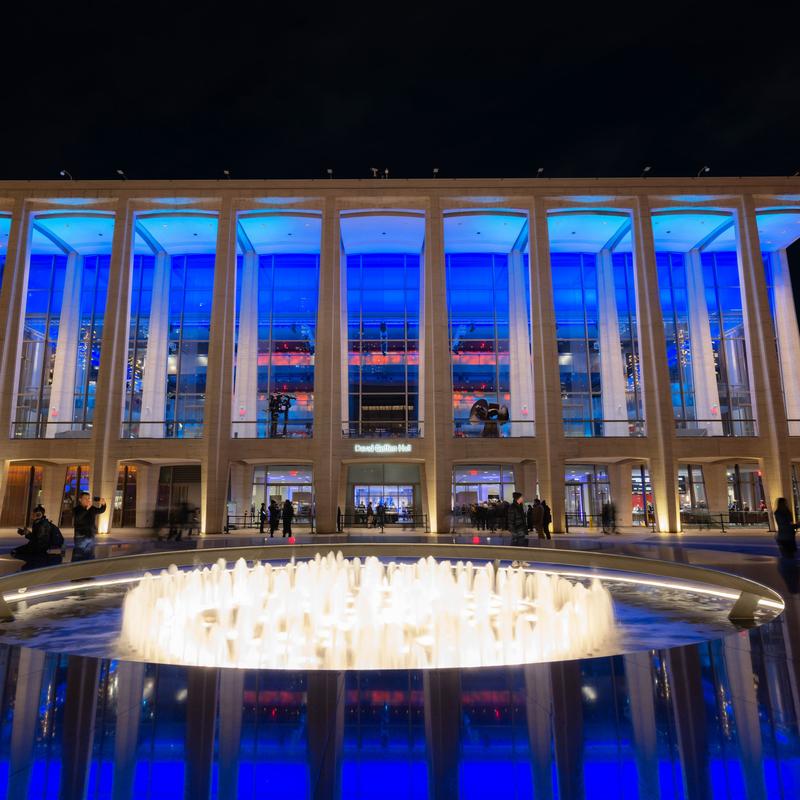
Alison Stewart: This is All Of It on WNYC. I'm Alison Stewart. Mid-month, Lincoln Center will kick off its annual American Songbook series, and on March 19th, my next guest, Tony-winner Ruthie Ann Miles, will perform her first major solo concert. Not too long ago, she stopped by our studio with the team from The Public's The Seat of Our Pants, and now she's back here with us in-studio to give us a very special concert preview. Hi, Ruthie.
Ruthie Ann Miles: Hello.
Alison Stewart: Lincoln Center's American Songbook has been running since 1999, bringing artists to reinterpret and reimagine foundational works in the American musical canon. This year's series was curated by my other guest, Clint Ramos, Tony-winning costume designer and Artist-in-Residence at Lincoln Center. Clint, welcome to the show.
Clint Ramos: Hi.
Alison Stewart: Clint, how does the American Songbook series fit into your duties as Artist-in-Residence?
[laughter]
Clint Ramos: Well, I think a lot of my duties involve programming and also consulting with artists we engage with. I'm also the Visual Director for the Summer for the City Festival, and so in many ways, I'm just the busybody at Lincoln Center, really.
[laughter]
Alison Stewart: Licking Center's busybody, I like that. Ruthie, what was the appeal of being a part of this series?
Ruthie Ann Miles: Well, to be honest, Clint took me out for lunch, and he asked me if I would be a part of American Songbook, and I said no.
Clint Ramos: She was my first ask.
Alison Stewart: Your first ask?
Clint Ramos: First ask, yes.
Alison Stewart: Interesting.
Ruthie Ann Miles: Yes, and I said, "No. No. Thank you, but no." I say a lot of "no" in my life, and he said, "Would you consider--"
Alison Stewart: It's okay. It's good to say no sometimes.
Ruthie Ann Miles: I think so, too.
Alison Stewart: Sometimes it's okay.
Ruthie Ann Miles: It turns out I say "no" 99% of the time, so he said, "It's time for you to say yes." I said, "Clint, I haven't done this before. I haven't been on stage by myself before. I'm petrified. I would need to be surrounded by my best friends, barefoot, in pajamas, and blindfolded so that I wouldn't see the audience and I wouldn't be scared about being the one that people look at." Then he reached out to my reps, and they said, "Hey, Ruthie, you excited you might do this?" I said, "No. No. I very clearly told Clint no," and somehow they all interpreted my very clear "no" as "yes." Then suddenly, it was on the calendar, and here we are.
[laughter]
Alison Stewart: Clint, why did you know this was Ruthie's time to be able to do this? Because you heard "no," but you knew instinctively "yes" was the right answer.
Clint Ramos: Yes. Ruthie and I have known each other for a long time, and I consider her one of my great friends. I feel like Ruthie is probably the best interpreter of lyrics in the American musical theater world. Not only is she an amazing singer, but the way she imbues life into song is singular, and I'm not saying this because she's my friend, but because we all know it.
Ruthie Ann Miles: That's very sweet.
Clint Ramos: I knew that Ruthie, in her artist journey, really needed-- not "needed," but we were ready for Ruthie. It wasn't that Ruthie was ready for us. She's been ready for us a long time, right? I think we need to hear from Ruthie in this manner.
Alison Stewart: When you finally got to "yes," when your "no" turned into a "yes," why did it turn into a "yes"? Did you start to believe in yourself the way that Clint believes in you?
Ruthie Ann Miles: I wish I could say yes, because that would be a wonderful hero story; I start to believe in myself, and then I step into my light and my power and my strength. The first thing I did was I took two weeks to work up the text message to Adam Rothenberg here, who's my right-hand man. He's playing piano for me today, but I said, "Hey, Adam, everything in me wants to scream and run the other way. Is this something you think that you could hold my hand through?" And with nothing but emojis and exclamation points and love, Adam was like, "Yes, of course."
Then I said, "Then you have to literally take my hand and walk me through this, because I don't know how to do it, and everything about me is screaming the brakes." Just step by step, by step, and with love and care, we've created a program.
[laughter]
Clint Ramos: A wonderful program, yes.
Alison Stewart: Look at that smile on her face, sort of a smile. [laughs]
Ruthie Ann Miles: Is this a smile? My daughter recently asked me what a grin is, and I said, "Well, it's not far from a grimace." That's what I feel like I've got on, but you tell me.
Alison Stewart: Well, consider this a practice run.
Ruthie Ann Miles: Yes.
Alison Stewart: This is what you're going to do. You're going to sing a song for us.
Ruthie Ann Miles: That's right.
Alison Stewart: What are we going to hear?
Ruthie Ann Miles: The first song I'd like to sing for you is Take Me to the World. It's about this woman who has been sheltered in an odd story. They live in a shopping mall. It's a story of this woman who longs for life, longs to take a breath, longs to see what the world is like, longs to see the sun, longs to see what the clouds are, and what fresh air is like in her lungs. It comes towards the beginning of my program, and especially where it falls, I talk a little bit about my personal history and just the way that I felt like I've been drowning, and how I really do want to see the world. That's what the ask of this song is.
Alison Stewart: This is Ruthie Ann Miles.
[MUSIC - Ruthie Ann Miles: Take Me to the World]
♫ Let me see the world with clouds, take me to the world
Out where I can push through crowds, take me to the world
A world of skies that's bursting with surprise to open up my eyes for joy.
Take me to the world that's real, show me how it's done
Teach me how to laugh, to feel, move me to the sun
Just hold my hand whenever we arrive
Take me to the world where I can be alive.
We shall see the world come true, we shall have the world
I won't be afraid with you, we shall have the world
I'll hold your hand, and know I'm not alone
We shall have the world to keep
Such a lovely world, we'll weep
We shall have the world forever for our own. ♫
Alison Stewart: That was Ruthie Ann Miles. Ruthie will be performing a solo concert, Perfectly Imperfect, as part of the American Songbook series. She's my guest, along with Clint Ramos. Clint is the curator of Lincoln Center's upcoming event, American Songbook. That was great, by the way.
Thank you.
Alison Stewart: Just wanted to say that. Clint, this year's American Songbook series is titled "Echoes of an Inheritance." What does that mean?
Clint Ramos: Yes. When Shanta Thake asked if I would be interested in curating the American Songbook, of course, it's such a great honor, and I really wanted to look at those two words: "American" and "songbook." I think what I wanted to do was really get back to the artist and approach American music or the American Songbook, not as a fixed archive, but as a series of questions, right?
And the artists that I've invited were excited about this idea, like, "What if it is a songbook? What if the American Songbook is not also this repertoire, but rather how we create song in this country?" I think at the heart of this is that I wanted to really punctuate this idea that American musical identity is us, all of us now, right? With all of what we bring, our many histories, and always this desire to search for the undiscovered. As you can see with all of the artists that we've engaged with, it really runs the gamut between form and content.
Alison Stewart: It's been interesting because Ingrid Michaelson's on the list. You've got Grammy-winning gospel singer Donald Lawrence.
Clint Ramos: Yes.
Alison Stewart: How is that reflected in the lineup, the diversity of the people you have?
Clint Ramos: I think when we think about, again, going back to those two words, what is it to be American? And, how do we create song now? All of that is so much a part of our history, and we can only look at our own music if we look at ourselves, really. I think we are in such, I would say, a cultural contradiction period in America-
Alison Stewart: Well put. [laughs]
Clint Ramos: -right now, and there is this very visible desire to pursue this manifest destiny, when I really think that the undiscovered, the riches are within us. I think that's how, at least, I've looked at these amazing artists across all acts, right? Yes, it is about diversity or representation, but it is really about, "Who are we as Americans and how do we create song?"
Alison Stewart: Ruthie, your concert on March 19th is called "Perfectly Imperfect." What inspired the name?
Ruthie Ann Miles: Again, and I don't mean to berate myself, but I said to my reps and to Adam and to my friends who are helping me create this, I said, "Anything that comes from me is going to be imperfect just by nature." For example, if I do a slate for an audition, you see me running back to take my shoes off because I don't do shoes in my home.
You'll see me take off my shoes, and I'll stand on a piece of paper and say, "Hi, I'm Ruthie Ann Miles. I'm 42 years, yada, yada, ya," and then I'll take my shoes off, and then I'll run back to the camera, and that's just who I am. You're never going to get a perfect take from me. Then I thought, with lots of discussion and therapy, "That is who you are, and that's okay. It's actually wonderful. We embrace you."
If I can accept myself just as I am, knowing that the end product may not be perfect the way that someone else could see, but that means I am perfect and imperfect, and that's just right.
Alison Stewart: On the event page, it describes the concert as an exploration between the different roles that you've played in your life: artist, daughter, wife, and mother. How did you approach the concert and the set list with that in mind?
Ruthie Ann Miles: Wow, Alison, that's a little heavier.
Alison Stewart: Yes.
Ruthie Ann Miles: Oh, is this okay?
Clint Ramos: Yes.
Alison Stewart: If you're comfortable, and if you're not, it's fine.
Ruthie Ann Miles: Yes. My personal story includes, now that every song in the whole wide world is interlaced with the music of my two daughters that we lost in a car crash-- We were hit by a car, and there's no song, no melody that doesn't have them in it. What makes it hard is that even happy songs have a loss in them. Even joyful songs remind me that I'm longing for something, and so it's this constant push and pull. It reminded me, as a Korean-American daughter, when we first immigrated to America, what it was like to be in two different worlds, pushing and pulling all at the same time.
As a wife, I am being pushed and pulled in different directions. As a mother-- now we have a five-year-old daughter, Hope, and I get pushed and pulled in all these-- and it's just who I am now. If I can embrace that, and if I can create this arc in the story that I would like to tell, and I hope the audience would be flexible and be gracious with me as I try to do all of this in an hour, but the beginning of the concert starts in winter, and eventually we sense spring is coming. Then, by the end, I hope the audience sees that even though we know summer is coming, the sun is coming, it's okay to still feel the stillness of winter and the loneliness.
The push and pull is always going to be there; two steps up, one step back, and that's what I'm hoping that the audience will see through everything.
Clint Ramos: I think they will. I think part of what Ruthie's talking about is that across all of the artists that we've invited, is that what you will witness, aside from exemplary performances, of course, are artists creating in the minute. They are bringing their full selves, their full humanity, because how could you not? I think American song requires us to be fully in that, to be fully in ourselves, to deliver a kind of honesty that we associate being American with.
Alison Stewart: It's so interesting to hear you talk about that, and thank you for your candor. This is a pay-what-you-wish concert series-
Clint Ramos: That's right, yes.
Alison Stewart: -and that really struck me.
Clint Ramos: Yes.
Alison Stewart: Tell me a little bit more about why you decided this should be a pay-what-you-wish.
Clint Ramos: Well, most of our performances at Lincoln Center are free or pay-what-you-wish. I think Lincoln Center, institutionally, this is what we do. We give gifts of culture and the arts to New Yorkers and to those who visit us, and it's very important. Not a lot of people actually know this, but it's important that we not only create access, but we sustain access.
Alison Stewart: Why is it important to you that it's pay-what-you-wish, Ruthie?
Ruthie Ann Miles: It means that everybody can come. There's, of course, the option to pay more for those who can cover someone else, and there's people who cannot afford that, but they want to come and witness and be and grow and experience. Those people can pay what they can or not, and there are people who can and will. It's so inclusive.
Alison Stewart: I'm talking with Tony-winners Ruthie Ann Miles and Clint Ramos. Clint is the curator of Lincoln Center's upcoming event series, American Songbook. Ruthie will be performing a solo concert, Perfectly Imperfect, as part of it that is happening on March 19. Could you play us out with one more song?
Ruthie Ann Miles: I'm happy to. Thanks, Alison.
[MUSIC - Ruthie Ann Miles: Here Comes the Sun]
♫ Here comes the sun
Here comes the sun, and I say it's all right.
Little darling, it's been a long, cold, lonely winter
Little darling, it feels like years since it's been here
Here comes the sun
Here comes the sun, and I say it's all right.
Little darling, the smile's returning to their faces
Little darling, it seems like years since it's been here
Here comes the sun
Here comes the sun, and I say it's all right.
The sun, sun, sun, here it comes
Sun, sun, sun, here it comes.
Little darling, I feel the ice is slowly melting
Little darling, it seems like years since it's been clear
Here comes the sun
Here comes the sun, and I say, oh, it's all right.
Little darling, here comes the sun, you're all right. ♫
Alison Stewart: That was Ruthie Ann Miles. Did I forget to ask you anything that you think is important that you want to tell people about the American Songbook?
Clint Ramos: No, thank you. Can you please visit us at americansongbook.org to see all the information about all of our events?
Alison Stewart: Clint Ramos, Ruthie Ann Miles.
Ruthie Ann Miles: Thank you.
Alison Stewart: The concert is on March 19th. Thank you for coming in. We really appreciate it, and we appreciate you.
Ruthie Ann Miles: Thank you so much.
Clint Ramos: Thank you.
Ruthie Ann Miles: Thank you.