
Alex Rodriguez the Man vs. ARod the Controversial Sports Personality
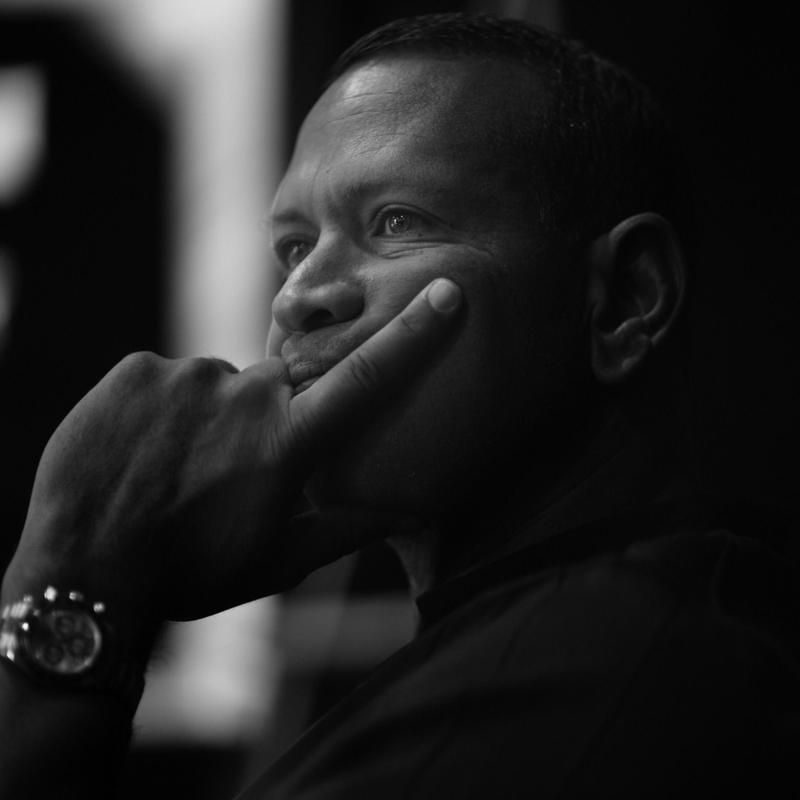
Alison Stewart: This is All Of It on WNYC. I'm Alison Stewart. Alex Rodriguez is one of the most accomplished athletes in professional sports history. He's also one of its most polarizing. Everything he did, he did big. He broke into Major League Baseball at 17 as a first round draft pick. At the time, he was awarded the most lucrative contract in sports history at 25. When the Texas Rangers paid him $252 million.
That attention that deal brought him only intensified when he was traded to the New York Yankees. Alex delivered. He holds the record for the most grand slams. He was the 14 time All Star. There were World Series victories. You get the picture. Alex Rodriguez broke another Major League baseball record in 2014 when he was suspended for an entire season for using performance enhancing drugs. It was his second time caught doping after promising it wouldn't happen again, which begs the question, why would a player who is so talented cheat? He referenced this in his retirement speech at Yankee Stadium in 2016.
Alex Rodriguez: I can't say enough about these fans. I've given these fans a lot of headaches over the years and I've disappointed a lot of people, but, like I've always said, you don't have to be defined by your mistakes. How you come back matters too.
Alison Stewart: A new HBO docu series provides more insight. It is titled Alex vs. ARod. Joining me now to talk about it is its codirector, Gotham Chopra. Gotham, welcome to All Of It.
Gotham Chopra: Thanks for having me. Glad to be here.
Alison Stewart: What was your experience with Alex Rodriguez before the documentary?
Gotham Chopra: I didn't have any personal relationship with him other than I'm a die-hard Red Sox fan, so, I like a lot of people, hated ARod. I knew him as ARod. He was iconic but from Red Sox perspective for all the wrong reasons. It was not personal, but I didn't like the guy and I probably believed most of everything I'd read about him, which was mostly not good, at least from the Boston perspective. That did change pretty dramatically when I did meet him. Now, going back three and a half years ago, we had a breakfast here in Los Angeles and it was very revealing to me as a filmmaker, as a storyteller.
Alison Stewart: What made you want to tell the story of Alex Rodriguez?
Gotham Chopra: It was that. My immediate recognition in that breakfast, hearing him, listening to him, understanding, one, that he was pretty self aware, he knew how people thought about him. Also, I guess that. As a filmmaker, you know that films can only be as good as the characters and characters are good when they're complicated. With Alex, there was already a very public narrative by the sports fan. As a Red Sox fan, was familiar with that narrative as a cheater, as a guy so aloof and out of touch and everything.
Then in that very, very brief glimpse at that breakfast, a guy was self aware, who was thoughtful, who is now a father at the time of pretty young girls, teenage girls, and just really also his reasons for wanting-- Obviously, we were meeting to talk about the potential of collaborating together. His, at the time, at least willingness to be accountable, to take account, that was obviously interesting to me.
Alison Stewart: Was he eager to tell his side of the story?
Gotham Chopra: Yes, I think he was eager to tell his reasoning. He said this in other interviews and certainly is like his story had been, in his opinion, told so many times, not from his point of view and covered. He was one of the most scrutinized athletes and really at an interesting moment because it was largely, certainly when he started out and as you refere in your introduction, when he got traded from the Mariners then to the Rangers and signed the big contract and all of that, it was like pre-social media.
He had all this attention in a time that was before we cover everything to death. He felt like it had been told many times, but not really from his point of view. I wouldn't say he was eager, but he was willing. He was stepping into the possibility of doing it.
Alison Stewart: For someone listening to this who has no interest in sports whatsoever, how would you explain it to this average person that would get them interested in watching this docu series?
Gotham Chopra: I'd say it's a great question because it's how we approach or how I approach these stories is okay. Why is somebody who doesn't care about baseball or doesn't like the Yankees or whatever it is, why are they going to care about this? I think the thing is with Alex, he was a celebrity. He was beyond baseball, and he was one of the players that really transcended the sport.
This is about perhaps one of the greatest baseball players of his generation, one of the most famous people who screwed up on the most public stage, and then how he climbed his way out of that hole. In that way, the baseball of it all is not-- he should be, in my opinion, a Hall of Famer. He certainly has the stats and all of that, but the baseball part isn't relatable. That's mythic in terms of what he accomplished on the baseball field.
The mistakes and then the taking account of the mistakes and then climbing out of the hole, and that is a deep, deep hole, both in his career, but also psychologically, mentally, emotionally, that's human. That is very human. What's not, again, human is necessarily doing it on such a public stage, having so much scrutiny. That process of, how do I right the wrongs of my past, that's pretty relatable and, I think, redeemable, and so that's really what this is a story about.
Alison Stewart: I'm speaking with Gotham Chopra, the director of the HBO Sports documentary series, Alex vs. ARod. It's about the complicated career of baseball superstar Alex Rodriguez. Part 1 aired last Thursday. Part 2 coming this Thursday. Part 3 airs on 11/20. You clearly had a lot of access to Alex and the people in his life. What kind of ground rules did you set as a documentary filmmaker?
Gotham Chopra: The only ground rules really are we have to be willing to go there. In some ways, that was the premise of this project. We weren't necessarily collectively signing up to do the definitive biopic from the cradle to the grave sort of stuff. Alex, by the way, is 50 years old, and he's accomplished a lot since his baseball career is over and he's got, who knows, a bright future, I hope.
That wasn't necessarily what this story was about. It was about the mistakes. It was about this thing that he did on the most public stage and taking account. That was the premise from day one. This is what we're talking about. He was up for it. It doesn't mean you figured it all out and you necessarily set rules of how you're going to talk about it, but we're going to do that.
Then the other thing is, it's probably not going to be smooth sailing. We're not going to agree on everything. I'll certainly listen. We're going to be partners and collaborators. I, and in this case, HBO, will have the final say creatively. Again, that's just something you establish up front, especially when you sense that you're going to go into some areas and some tricky areas. It doesn't mean you're not going to listen and be sensitive to some of the things that he may be sensitive about, but that's a ground rule. Beyond that, there were no, like, "Oh, we'll talk about this, but we won't talk about that." There were no necessarily rules of engagement.
Alison Stewart: That's how you kept your journalistic practices intact.
Gotham Chopra: Yes, it is. Look, my background is as a journalist and reporter. I was careful to say, "I'm not a reporter in this case. I'm a storyteller." Now, you have a lot of the same-- you want to be objective, you want to get to the truth of something. Storytelling is different than journalism.
Certainly you're doing it with the partnership of the subject in this case. It's not like we came in and did a documentary on Alex Rodriguez. We did it with him. That brings with it a different set of standards. Again, I would say everything is truthful and stuff like that, but when I say it's 100% the whole truth, it can't be. It can't be. Yes, we maintain those standards and that sense of objectivity.
Alison Stewart: There's two very interesting things that happen within the first five minutes of the film. You start the doc with him suggesting to you how maybe you should start the doc, how he should walk into frame, and then you use it, use his explanation to you, and then you show him walking into the frame. What does that moment tell you about Alex Rodriguez?
Gotham Chopra: One, he's incredibly self aware. He's still very much the guy who's trying to craft the way in which he's perceived. There's an element of, I don't want to call it staging anything, but, "Hey, what do you think of this?" This is how documentaries start.
So many people have watched it now and given me-- people are like, "Oh, that's really sweet. That's funny. That's cute." There's a playfulness to it. That's also Alex. I think a lot of people think of him as this manipulative cheater, all of that. There's something that comes across in that moment that's pretty funny and I think playful and quite redeeming in its own way.
I leave it up to people to interpret it how they want. Again, it partly goes back to your other question of, "Hey, we're just trying to show you, in some ways, how the sausage was made." It's a little brief moment, but trying to give some visibility. Part of making a documentary or a story is it's the choices you make, what goes in and what goes out.
You're not just throwing up cameras and then keeping them on for the next two years or however long this took to make. You're making choices of what goes in and goes out. Sometimes you try to, like, "Here's some of the things that normally wouldn't go in, but we're going to put it in so you see how this is crafted."
Alison Stewart: Then the next thing you ask him is about his use of performance enhancing drugs. You ask him, "Are you going to be honest about it?" What did you think his answer was going to be? [chuckles]
Gotham Chopra: I was hoping. We had talked certainly about it off camera and it's yes, but I think I knew. I think in that he says, "It's complicated." Actually, in that first, first time I asked him, he uses an example of like, "Let me give you an example of answering a simple question about performance enhancing drugs."
He gives the answer that he gave largely for his career, where he himself at a certain point says, "I came across as slippery because I never gave the total truthful answer. I always tried to maneuver around it." He gives one version of that, and then he gives the version that's Alex, now, 50 years old, perspective, having gone through a lot of therapy, being outside of the game, being a parent. He sort of gives the, "Hey, I'm the one who's responsible for the mistakes I made."
Alison Stewart: He uses the word slippery a lot in the documentary. Do you have a sense of what that means to him?
Gotham Chopra: Yes. Dishonest and untruthful. There's certainly times that he just openly brashly lied, but there were a lot of times when he was dancing around the truth, elements of the truth, but then not giving the full account. I think that's almost even more slippery where you're admitting to certain things but not the full thing, and you just get lost in the gray. He was an expert at that.
Look, I empathize with it sometimes too, because it was on such a huge public stage. It was the New York Yankees. It is one of the biggest institutions in sports in the biggest, most media crazed city possibly in the world. He just wasn't equipped to deal with it.
Alison Stewart: We're talking about the new docu series, Alex vs. ARod. My guest is Gotham Chopra. We'll have more after a quick break. This is All Of It.
[music]
Alison Stewart: You're listening to All Of It on WNYC. I'm Alison Stewart. My guest is Gotham Chopra. He's a codirector of the HBO sports documentary series, Alex vs. ARod. Part 1 aired last week, Part 2 airs this Thursday, and Part 3 airs on 11/20. It's about the complicated career of baseball superstar, Alex Rodriguez. The documentary explores Alex the man and ARod the player. Could you explain the difference, what you saw as the difference?
Gotham Chopra: Yes. ARod is this persona that in some ways was created on the baseball field initially because of just how incredible this guy is. ARod was a nickname that Seattle Mariners broadcaster, so where Alex started his baseball career, ARod was this nickname that the broadcaster gave him in part just because how awesome he was. That awesomeness really defined the early part of his career, first on the Mariners, then when he got traded to the Texas Rangers.
Over time, ARod became this larger than baseball persona, and a lot of it had to do with this contract that he signed for $252 million when he got traded. That was the early 2000s or I think around 2000 to the Texas Rangers. Alex was ahead of his time. Now it's somewhat commonplace. We hear a lot about athletes signing these massive deals and the hundreds of millions of dollars.
Alex, way before, he was the first in that way. I think that brought a lot of anger, resentment, jealousy, just disbelief. The ARod pPersona, which Alex definitely participated to, was almost in response to that. He became this character more than he became a person. Just all this venom and, in his way, in his own response, defensiveness and guilt and shame. A lot of it has to do with his family background, his childhood. That's ARod. It's like this Persona that just grew and grew and grew all throughout his career.
Alex is the human being underneath that. Alex has a complicated backstory which we get into a lot in his father left him when he was 9, 10 years old. Alex is this person that, especially now, I think, 50 years old, a lot of perspective, has some self awareness of who he is, the mistakes that he made, what he aspires to. Those are the two. ARod is a character. Alex is a human being.
Alison Stewart: You interviewed a lot of people who are close to Alex, including his ex-wife, Cynthia. She describes him as being stunted. Why did she describe him that way?
Gotham Chopra: Cynthia really, in my opinion, steals the show. One, it was just amazing that she was willing to participate in this. I got underneath that. I, along with my co-director, Erik LeDrew, got to know her pretty well. She's an amazing woman. They have a great relationship. Not just because they're raising, co-parenting, two daughters, but because I think of this bond that's even endured beyond their marriage. She's really interesting.
She describes him as stunted because she's like, "Listen, he missed a lot of the milestones that most of us go through as kids to teenagers to young adults." He went from, basically, maybe when he started playing baseball 12, 13 years old, at a somewhat more organized level, you could see the talent. He was just a superstar. By the time he was 17, 18 years old, he was one of the most scouted baseball players in all of high school. He was getting scholarship offers, but really he was getting the attention of Major League Baseball. He ends up, at 18 years old, becoming the number one pick of the Seattle Mariners.
I think with that becomes this massive acceleration. He doesn't go to college. He doesn't hit the milestones. He doesn't have the experiences that most of us do and are seminal to us as we become adults. He's a superstar, and then all this money and all this fame and everything that comes with that. By the time she meets him, and it's, I think, in his early 20s, he's just missed so many of those formative moments in his life. I think that's what she means. She's a really interesting person. She has a degree in psychology, etc. She's incredibly [unintelligible 00:18:59]
Alison Stewart: She goes in. She goes in, in the documentary.
Gotham Chopra: Yes, she does.
Alison Stewart: There's just this great shot you have of him, which I think tells a lot. He's young, he's being interviewed, he's very young. He turns around and he trips and trips in the pool. You can see there's trouble ahead.
Gotham Chopra: There's trouble ahead. For all his incredible accomplishments-- he's a clumsy teenager. I think in that moment, his half brother is talking about-- he's also foreboding, like, "Yes, he was incredibly talented on the baseball field, but he was still a kid and he wasn't prepared for what is coming for him." We found that amazing clip of him stumbling.
Alison Stewart: In front of the whole press pool. [chuckles] He just falls in the pool. It's a big part of the documentary. I don't want to get into it in too much depth because you get into it quite a bit. Alex's father left home when he was 10. He hadn't seen him in 14 years. Cynthia arranges an opportunity for them to meet later. I was curious if you asked him this. Why didn't Alex try to find his father?
Gotham Chopra: We talked about it. I think there's so much packed into that moment, that part of his life, when his father left, 9, 10 years old. It was pretty dire straits. They were not a well-to-do family before that, and now losing that stability, but also, frankly, that income and his mom had to start working multiple jobs. This is where I think Alex, again, had to grow up.
He started thinking, even at that young age, probably 13, 14 years old, baseball was no longer a thing that he just loved and was going to have fun. It was a responsibility and it was going to be the thing that saved his family, saved his mother in particular, and so he just started focusing and locking in on that. I think that's part of it. He just didn't have, in his mind, time.
I think there was just also all this sadness that then turned into anger and resentment in a way. He would say, I think, that it became partly the fuel for him to reach the levels that he did in baseball, which initially were just awesome. Before all the PED and all the other stuff, it was that catalyst, in a way, his absent father.
Alison Stewart: What about his mother?
Gotham Chopra: His mother is incredibly a strong woman. She, basically, raised him and a sister and a half brother by herself after the dad left. She worked multiple jobs and all of that. It's an archetypal story in many ways. She's on food stamps. Alex talks about that remembering those $500 rent that had to be paid every month and just how much stress that created.
He talks about how he went from that, remembering that in his early teens, to signing this $252 million. That's, in some ways, like a metaphor for this wild journey he went on, which on the one hand is amazing, on the other, it just created so much instability. He says shame because he wasn't equipped to handle it.
Alison Stewart: He spoke very frankly with you in the film about his use of performance enhancing drugs, which he lied about for years. You have Katie Couric in the documentary, just him lying to her face about it. At the end of the day, why did he lie?
Gotham Chopra: I think he was just in a house of mirrors and he knew that he had crossed a line, he loved the game so much, he didn't want to lose it, he's very concerned about his reputation, and frankly others lied about it and gotten away with it, and so he-
Alison Stewart: That's true.
Gotham Chopra: -thought, "Why can't I?" There was just so much at stake. There was a lot of money at stake because once you admit it, you have to take account and deal with the repercussions of it. Baseball, there's all sorts of terms in your agreement. Eventually, the Yankees did. The second time around, there was a lot of financial repercussions around that. There's also just tons, tens of millions of dollars at stake.
Alison Stewart: Alex saw a therapist he calls Dr. David and he credits him with "rewiring his brain." Honestly, as you watch him as a 50-year-old person, he looks like he has been through a lot of therapy in his life. He's a very therapized person. What did he figure out in therapy?
Gotham Chopra: It's interesting because Dr. David, who he gives a lot of credit, but Dr. David is for his life, basically. Dr. David passed away I think in 2020. In some ways, I think he's still in therapy, but at least that version, that therapist is incomplete. I think again like just what he learned about is just, one, getting underneath it, so understanding the roots of all-- so going back to his father leaving when he was 9 or 10 years old, and then this endless quest to gain the approval of the people around him, maybe to somehow gain the approval even of his father in his absence and all of that.
I think it's just getting underneath that, but I think it's also then realizing you got no one left to blame at a certain point, and now you have people that are counting on you. The only way to be responsible is to take account for that, at least the way he describes it.
I never met Dr. David, but I certainly heard a lot about him as the guy was pretty merciless in that way. He was like the coach that Alex needed. You don't get to blame anyone else at this point. You can't blame lawyers, you can't blame agents, you can't blame other people. This is on you now. When Alex met him, he was still a very young man, so there's a long life ahead. You want to live a productive life, then you better come to terms with this.
Alison Stewart: What is Alex Rodriguez doing today?
Gotham Chopra: Alex is incredibly accomplished. One, he is a major league baseball broadcaster, won multiple Emmys for fox. He just covered the World Series. I'd say he's one of the foremost baseball minds. The guy still loves baseball more than anyone, I think, ever, and so he loves covering it. He's also entrepreneur and businessman. He's the coowner of the Minnesota Timberwolves and NBA team. He's taking all of that life that he led on a baseball team in team sports within an organization, especially like the Yankees, and now integrating that, but as an owner. He's successful and accomplished.
Alison Stewart: The WNBA team, too.
Gotham Chopra: Exactly. Yes. The Minnesota team in the WNBA. I would say the thing Alex would say, I've been around him so much the last couple of years, that he's most proud of is he's a father to two daughters. One is a sophomore, I think, in college, and then one is a senior in high school, and very close, very close, and a good role model for them.
Alison Stewart: The name of the sports series, the HBO sports documentary series is Alex vs. ARod. I've been talking with Gotham Chopra. Thanks so much for being with us.
Gotham Chopra: Thanks for having me.
Alison Stewart: There's more All Of It on the way. We're going to talk about DOC NYC.