
Actor Tim Blake Nelson's New Novel
Tiffany Hanssen: This is All Of It. I'm Tiffany Hanssen in for Alison Stewart live from the WNYC studios in Soho. Thanks so much for spending part of your day with us. Coming up on today's show will mark the 25th anniversary of the release of the soundtrack to the film, O Brother, Where Art Thou? We'd like to know how much the music impacted you. We'll also talk about what books you might want to give as gifts this year. Klezmer clarinetist Michael Winograd is here with his band to perform live in WNYC's Studio 5. That's the plan. Let's get started with actor and writer Tim Blake Nelson.
[music]
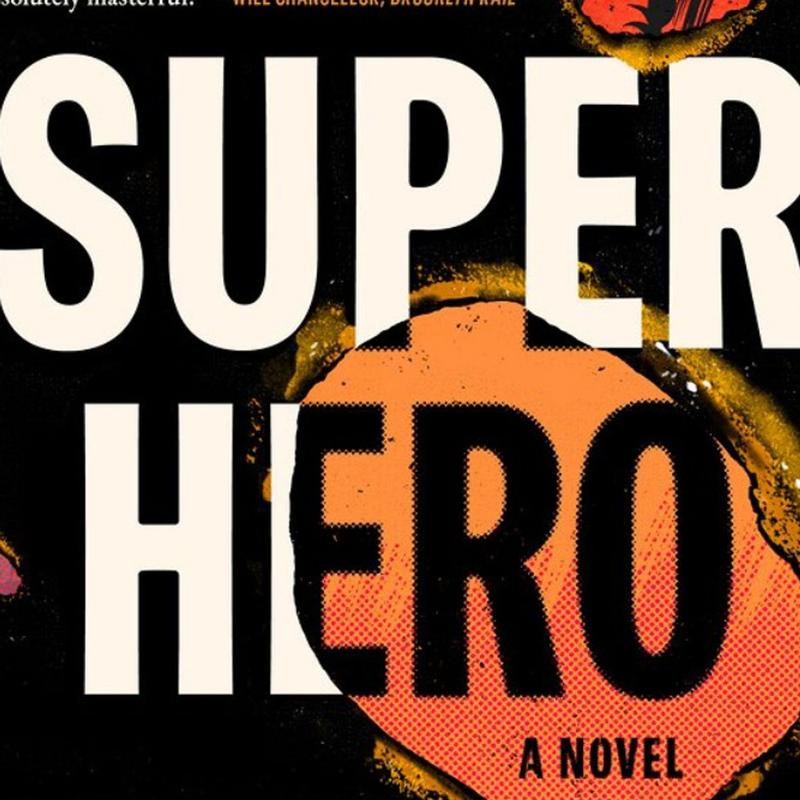
Actor Tim Blake Nelson is known for starring in comedy crime dramas such as O Brother, Where Art Thou? The Lowdown and Sci-Fi series like The Watchman and Captain America. The latter partly inspired his latest novel titled Superhero. It's a satire about the Hollywood industry of blockbuster films which follows an a lister actor named Peter Compton, who fell from grace after multiple stints in rehab and a three-year prison sentence. Given yet another chance to redeem himself, his producing partner and his wife, Marcy Levy convinces him to sign on to star as Major Machina. I hope I'm saying that right, Tim.
Tim Blake Nelson: Yes.
Tiffany Hanssen: A superhero who is part machine, part man, based on the 1955 comic book. Peter is hesitant at first, but he does it anyway. As you might expect, it doesn't take too long before things go south. The $160 million production is bogged down with egos, competing interests. There's even an outburst from Peter that has the potential to damage his career after it goes viral. Los Angeles Times called the book a kaleidoscope of a novel with a host of characters, each with a rich past wanting to create art. Superhero is on shelves now. Novelist, actor, playwright, photographer, director, filmmaker Tim Blake Nelson is in studio with us to discuss. Hi, Tim.
Tim Blake Nelson: Hi.
Tiffany Hanssen: Let's just talk about blockbusters for a second. Moviegoers, we've been seeing superhero films in the last, I want to say decade, really take over the landscape. You've even starred in one. To me, that feels like an unexpected turn of events that we would just be inundated by these superhero movies. I'm wondering if you think we've seen the writing on the wall for a while and what you think about it.
Tim Blake Nelson: I would even say it's over two decades because the first Marvel MCU movie came out at the beginning of the 21st century with Iron Man.
Tiffany Hanssen: Oh, it's been that long.
Tim Blake Nelson: Yes. I was then in the second one, which was Incredible Hulk. Then in the middle of it all, I did Fantastic Four and then most recently Captain America. I feel actually very lucky to have been a part of the MCU. I am someone who, even though my roots and interests lie in indie cinema and arthouse cinema, I actually appreciate the MCU. I love these movies. I love going to them. My wife and I raised three boys in the city. We never missed one.
I think it's been by and large salutary for the industry to have these movies come out and do so well. I think they are a distinctively American phenomenon. That has been both a good thing, but also, one could argue, a negative. The novel I wrote is exploring why superhero movies accomplished what they did as this, not only American phenomenon, but a global one, which reached its apogee in probably the 20 teens with the Avengers trilogy, but is still going strong. Now, Marvel is owned by Disney, but you also have DC and those superhero movies.
Tiffany Hanssen: Is there something about American culture that lends itself particularly to these types of stories?
Tim Blake Nelson: I think they could only have happened in America. The IP for the Superhero movie, it goes back to comic books, which were a mid-century phenomenon of the 20th century. I think only American optimism, American belief in a Manichaean system with a clear right and wrong in the world, good guys and bad guys, when coupled with the fact that we have the resources with hundreds of millions of dollars to put into these movies that other film industries in other countries just don't have, I think only in America could you have these movies.
Again, only in America, the country that could construe itself as having been the good guys in two world wars who came in and saved the world. Only in America could you have had the original IP of the Superhero comic.
Tiffany Hanssen: The Shining City on the Hill.
Tim Blake Nelson: Yes.
Tiffany Hanssen: You've been in a couple, you mentioned. What is it about the behind the scenes that you thought really lent it so well to a novelization?
Tim Blake Nelson: I've been lucky enough to be on a lot of movie sets. Whether they're little ones, and I've been on ones where there was a crew of six, from the little ones to the big ones with crews of 300 or more. They're little societies, they're microcosms. That's what really interests me since I know the world pretty well. In exploring how people relate in that Microcosmic society and how that might project in bigger ways about America itself.
Tiffany Hanssen: Come together as a community for a very brief amount of time, and then poof.
Tim Blake Nelson: That's right, yes. Because the relationships are built in as being finite, at least temporally, there's an intensity that goes along with that because you're working 12-hour days, but you also know that in a couple of months, and on a big movie, maybe three or four months, it's all going to be over. Even subconsciously, you just invest more in everything. There's just a crazy intensity to the pecking orders, the relationships, the stakes, the gossip, the betrayal, the victories, the despair that occur on a movie set that makes it a place that's rife for examining human interaction.
Tiffany Hanssen: Is it like junior high?
Tim Blake Nelson: In a lot of ways, yes, it is, but distinctively adult.
Tiffany Hanssen: We'll get to the book. I want to dive into the book. Why write a book, Tim? Why not write a series about that? We have the studio that's out there. People love it. They love the behind the scenes. Why not put it on the screen?
Tim Blake Nelson: I'm interested in the thingness of the thing in terms of form and content and how form can be content. I guess that when I'm setting out to write a story, the form is just as important to me as the narrative, and I like to take advantage of the form. A novel, unlike any other artistic medium, allows you inside the mind of a character.
I like to think about when I go to see a play or a movie, or I set out to write a play or a movie, or to act in one. What really intrigues me about those forms is that we actually watch people dissemble. That's really interesting. There's a mystery involved, because you never really know in the best narratives what a character is really thinking. It's all inference on your part as an audience member.
The draw there, at least for me, is just wondering, "What are they really thinking? How are they lying? Or what information are they withholding to get what they want?" In a novel, particularly when you indulge in point of view within a chapter or sometimes a whole novel, if it's from one character's point of view, you're afforded the ability to get inside of a character's mind and know the truth of what they're thinking. I like to indulge in that, in writing a novel. That's why I love writing a book, is I can do what's essentially a converse of scripted narrative and really indulge in point of view.
Tiffany Hanssen: Peter Compton, who is the A list actor in your book, signed up to play this superhero character, Major Machina. I instantly thought of someone who played Iron Man when I was reading Peter initially. Like, "Oh, that's got to be Robert Downey Jr." One, were you thinking like that? Two, how do you get around people like me thinking that if that's not what you want?
Tim Blake Nelson: There are aspects of Robert Downey Jr. in the character, certainly the biography, but he is not Robert Downey Jr. I even go out of my way to describe him physically, and he's not Robert Downey Jr. Also, I'm borrowing from a lot of different leading men with whom I've worked over the years, and I've actually never worked with Robert Downey Jr.
Much of the specific narrative doesn't have to do with him. Certainly once you finish the novel, it's clearly not Robert Downey Jr. I want the novel to be credible, and I will say that there's nothing in the book that I didn't either experience directly or hear from a very reliable source who experienced the stuff directly. You labeled it earlier as a satire, and that's not inaccurate, but I would call it also a satire that is absolutely rooted in the truth.
Tiffany Hanssen: We're talking with filmmaker, playwright, photographer, director, actor, Tim Blake Nelson about his book Superhero. It's out on shelves now. You're not mad at me if I think, initially you're not mad at not me, but the reader initially, if they're like, "Oh, I know who that is. Oh, I know who that is." Are you worried at all that your reader is getting sidetracked with trying to peg different real life characters on fictionalized characters
Tim Blake Nelson: Inevitably there is going to be that response because I'm writing about it as a practitioner, so I've been on many movie sets, so of course people are going to wonder. To answer your question directly, yes, if that becomes a distraction, I think it's working against the bigger mission of the novel from where I sit. The novel is meant to be, and I'm sorry to sound grandiose, but it's meant to be an American tragedy, the character of Peter is rooted very much in the classical American tragic hero.
Tiffany Hanssen: Define that.
Tim Blake Nelson: I don't think that I'm a great American writer like Fitzgerald or Hemingway or Faulkner, but I'm influenced by them. It's a character that has ambitions, a character who has every resource to succeed and does, but he's also hubristic, and that affects his inevitable downfall.
Tiffany Hanssen: Inevitable because it's an American story, inevitable because of who Peter is?
Tim Blake Nelson: In particular, it's American because he achieves fame and wealth on distinctively American terms. You would measure him in America most of all as a great success, but much of what catalyzes that success then also ends up destroying him. That's why he's an American tragic hero.
Tiffany Hanssen: Does it make him more or less empathetic?
Tim Blake Nelson: That's a really good question. I find the character of Peter to be empathetic. I think you feel for him. I've read in some of the responses to the novel that he is a anti-hero. I'm comfortable with that because the novel is being received well. It hasn't been an attack but it did surprise me because I find him, or at least when I wrote him, I meant for him to be deeply flawed, yes, but also to have intelligence and charm, and for it to be believable that he would have the success that he does.
Tiffany Hanssen: As an American tragedy unfolds in his life, in his actions, in what he does, how did you avoid getting too dark?
Tim Blake Nelson: I guess I never concerned myself with that. I just wanted to write what's true. Certainly there are many other characters in the novel who bring optimism, humor, even when characters are acting selfishly or narcissistically, it's fun, I hope, anyway, to follow what they're doing. The novel is meant to be entertaining and even as at times it gets quite dark, it's meant to pull you along because it's got a big sweeping narrative. There's a lot going on and a lot that happens, I hope.
Tiffany Hanssen: As on the page, so in life though, right, still, you found that humor, you found that thread pulling you along while you were creating these movies in these little micro communities that you talk about. It wasn't just all work and no play.
Tim Blake Nelson: Yes, make no mistake, I delight in what I've been able to do in life. I sometimes can't believe the places I've gotten to go and the people with whom I've been blessed to collaborate. I think I'm definitely on the lucky tree. I have rarely looked at what I do with foregrounding how arduous or challenging it is. Yes, I work very hard at what I do, but like many people say, it often doesn't feel like work.
Tiffany Hanssen: One of the things I like, and you mentioned this, about the ability to go into the backstories and to get into the minds of your characters. How did it deepen your understanding of who they were as you were going along and writing this? Did you have it all mapped out, or did you surprise yourself as you're writing about an 11-year old studio head who would become a studio head? Did you surprise yourself?
Tim Blake Nelson: Absolutely. I guess because I come at writing initially from the point of view of an actor, I'm really most comfortable allowing character to lead. I read this quote from P. G. Wodehouse about how he would start his novels with character. Not with plot, but with character. That has always animated my own approach. I knew that this Peter Compton guy was going to be a character. I wanted to tell the story of the making of a superhero movie as a way of examining broader issues in our culture.
I decided on the movie star, his producer wife, a DP, the head of a studio, these were going to be my--
Tiffany Hanssen: Director of photography.
Tim Blake Nelson: Yes, director of photography. These were going to be my characters, but I didn't know where it was all going to end up. I let the characters lead me, and they surprised me beautifully. It's why I delight in waking up and writing every day, because I get to be told by these people, I'm inventing where we're headed and allow them to guide me.
Tiffany Hanssen: Before I let you go, I have to ask you about-- Our next segment is about O Brother, Where Art Thou? About the music for it. Obviously you were in that film. What'd you think when you read the script for the first time?
Tim Blake Nelson: I thought I would play any role in this script. I would love to be any part of it. When Joel sent it to me, he didn't tell me that they wanted me to play one of the three leads. I delighted in it. As John Turturro said when we were shooting the movie, and I knew this already because I was a devotee of Coen Brothers movies, but it was great to hear it from one of their muses. He said, "As good as the scripts are to their movies, it's the movie, that's where it really comes alive. They're an example of how no matter how good the script is, the movie's going to be twice as good.
Tiffany Hanssen: Of course, you can find these things online now, you go back and read one of their scripts for whatever film, pick a film, and then you compare it up against the movie. The script, as you say, is fantastic, and the movie just takes it to 11.
Tim Blake Nelson: Absolutely. Additionally, the script is exactly an exact blueprint of what the movie is going to be on the page so that they don't change the dialogue, they rarely cut stuff. When you read the script, you could almost watch the movie and read along with it.
Tiffany Hanssen: Favorite song from the soundtrack.
Tim Blake Nelson: Obviously, I want to say In the Jailhouse Now, but no, because I got to sing that, but no, it would be I'll Fly Away.
Tiffany Hanssen: I would agree with you on that.
Tim Blake Nelson: The montage to I'll Fly Away is so poignant, and it just deepens the movie and makes it so much more than a comedy.
Tiffany Hanssen: We've been talking with Tim Blake Nelson, novelist, actor, writer, playwright, photographer, director, filmmaker. New book is called Superhero. It's on shelves now. It's been a delight. Thank you so much.
Tim Blake Nelson: It's been a delight to talk to you as well. My pleasure being here.