
Actor Luke Tennie on Starring on "Shrinking," "The Pitt" and "Abbott Elementary"
Alison Stewart: This is All Of It. I'm Alison Stewart live from the WNYC studios in Soho. Thank you for sharing part of your day with us. I'm really grateful that you're here. On today's show, we'll speak with the commissioner of the city's Department of Cultural Affairs. Her name is Diya Vij and she's joining us in studio, we'll continue our full bio conversation about the book Judy Blume: A Life, and we'll learn about the new HBO docu series Born to Bowl. That's the plan. Let's get this started with actor Luke Tennie.
[MUSIC - Luscious Jackson: You and Me]
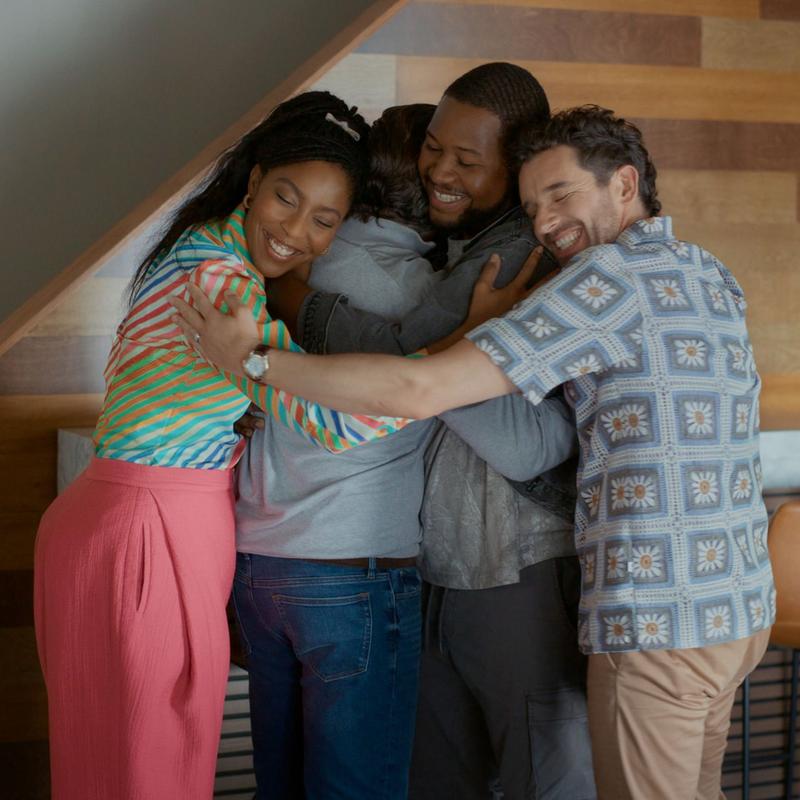
Alison Stewart: Luke Tennie is a busy man. You can see him on three critically acclaimed shows, The Pitt, Abbott Elementary, and, of course, Shrinking. When Shrinking premiered, viewers quickly fell for Sean, a young army veteran navigating post-traumatic stress disorder and stepping into therapy for the first time. Now in Season 3, my next guest and Shrinking star Luke Tennie is showing us a new side of Sean. He's someone who's older, a little wiser, and trying to move forward. He's got a new girlfriend or an old girlfriend. He's considering finally moving out of his friend and former therapist Jimmy's garage.
Now Luke has also joined the hit sitcom Abbott Elementary as Dominic, a brand new fourth grade teacher trying to find his footing. He's also pulling the night shift as a fourth year resident Dr. Crus Henderson on the high-intensity medical drama, The Pitt. He'll make his appearance this week. Actor Luke Tennie joins me now in studio. Luke, it is nice to meet you.
Luke Tennie: What an intro. Thank you for that. Golly. It's nice to meet you too.
Alison Stewart: I have to ask you about this. This is a really incredible time in your life as an actor being on three critically acclaimed shows all at once. What do you think you'll remember about this time?
Luke Tennie: Great question. I think my kids are the reason why I got these jobs. A lot of people be saying that. I can't explain why. Let me break it down. There's a weird thing in acting where if you really want a job, you're probably not going to get hired for it. It's going to be obvious to the casting director for some reason that it's like a necessity for you, and that creates this weird energy that's immeasurable but somehow still something that people can perceive where it's like that's just not the right fit.
When you just left your babies after wiping butt all night and mixing the formula and trying to put everything together and keep everybody, it's just like I will do whatever I can to feed those kids whether or not you hire me. Something about that energy makes people go, "He'll do." I'm pretty sure that's why I'm busy, is because I've figured out whether these people hire me or not. That energy is something that they can rock with, which I ain't going to fight them on that.
Alison Stewart: It probably helped you relax in some way.
Luke Tennie: I think you're right. I'll figured out now I'll clean floors, I'll work at the restaurant. I do not care. I'll do whatever I have to do. It doesn't just have to be saying words on this camera, but what an honor to be able to do so.
Alison Stewart: Let's talk about Shrinking. Most people around here know we love Shrinking on this show. It's basically about three therapists who work together and their families and their relationships. When Michael Urie came to the studio and I interviewed him, I said, "What do you like about the show?" and he said he liked the way it approached mental health and it helped him seek therapy. How did Shrinking's focus on mental health, what did it mean to you when you first picked up the script?
Luke Tennie: It meant the world, especially being able to play a young African American man who's experiencing benefits from committing to therapy. Shout out to Michael. I'm a big fan of him. I'll talk about that man till the cows come home.
Alison Stewart: Oh, he was so good in King Richard II.
Luke Tennie: Oh, my gosh. I wish I could have seen it. I saw him in Once Upon a Mattress.
Alison Stewart: Oh, he was good in that too.
Luke Tennie: Yes, he's good in everything, man. This dude, he crazy good. I remember talking about how good he is with Jason on the first day his character was introduced. What an incredible actor. Anyway, had to take that time to talk about him. What it means to me is, our show is entertainment, but there's also a bit of education in it.
There's a bit of responsibility that's taking place on behalf of the writers. They're doing the bulk of the work. That's not saying the actors are doing nothing, but we come in and we say the words that they done the research to make sure are arranged in a healthy way in pertaining to mental health and just the whole awareness around being mentally fit.
Alison Stewart: Tell me how Sean was presented to you in Season 1.
Luke Tennie: Apparently I was wrong. I was just wrong about who this guy was. I got the audition. It was very clear to me who Sean was. I'm like, "If he's this dude who's struggling with all this anger, obviously that's something that we can't see right when we meet him." He's got to have some gentleness to him. It was very clear to me that that was what the words were telling me to play. Come to find out, apparently Brett and Debby said that's not what they were looking for at all. They were looking for the stereotypical-- They saw him as a roid rage kind of guy, just mad, ready to go.
I don't think that the character was written race specific. I think that they were open to anyone. I think when I came in and did that, me thinking that that was exactly what it was-- They said that they didn't redirect me. They were just like, "Oh, good," and just explored it further just to see what would happen. I ended up getting hired for doing it wrong. Shout out to them for making wrong right in the case of Sean.
Alison Stewart: You did it right for you.
Luke Tennie: Yes. Amen to that. [chuckles] I'm very grateful. Very, very grateful.
Alison Stewart: In Season 3, we're seeing some developments in Sean's character. What's been especially rewarding in the arc that he's taking?
Luke Tennie: Oh, man. He's the client we follow the most. I think that that means it's responsible to give him the burden of hope for the viewer. I think he represents hope. He represents what it could look like for a viewer to commit to what they're seeing in front of them, which is therapy, which is making a change, which is a little bit beyond the stereotypical self improvement. It's more like getting into the nitty gritty and arming yourself with tools so that when you have to face the slings and arrows of outrageous fortune, you're not just taking arms for no reason. You've got a strategy in doing so.
Alison Stewart: Have you related to how your character has developed over these three years?
Luke Tennie: Yes. He and I both changed a lot since I met him and he met me. He was a really angry dude who didn't really know why. He didn't know it was particularly connected to war. He didn't know he was ignorant. He just knew he came back with something. When he went overseas, he did what he had to do for his country, and something came back with him. He didn't know what it was. He didn't know how to identify it. He didn't know how to shake it. The last thing he expected to do was embrace it. For me, when I started, me and my wife were in this lovely two bedroom apartment, recently married, and now we're coming up on five years. We got two kids.
Alison Stewart: Congratulations.
Luke Tennie: Thank you. Sean and I are both growing. This dude has got his own food truck. I got these girls who I already miss. I left them yesterday. I'm like, "I wonder what they're up to." Just waiting for pictures from my lady.
Alison Stewart: Hopefully she'll text you some today. My guest is actor Luke Tennie. He's with me to discuss his character Sean on Shrinking, as well as both Abbott Elementary and The Pitt. Let's listen to a clip from Shrinking. In this scene, your character Sean, who was just dumped, he's explaining how he feels to his therapist, played by Harrison Ford. Let's listen.
Sean: We talked about it more, and she said that being with me was keeping her from moving forward. I understand it, but it's still annoying.
Dr. Paul Rhoades: Maybe it's annoying because deep down you realize that you should be moving on, too. I know you want more: A real relationship, your own place, a sailboat in Connecticut. The last one is mine, but point is, if you're not growing, you're not living.
Sean: No. I lived this morning twice.
Dr. Paul Rhoades: I'll make a note of that. Patient keeps bragging despite having been dumped.
Sean: I missed the notebook.
Dr. Paul Rhoades: So do I, kid. My handwriting got too shaky. Have I taught you about the field?
Sean: Is this more your crunchy, munchy, spiritual crap?
Dr. Paul Rhoades: Life is a conversation with the universe.
Sean: And we're off.
Alison Stewart: That was Luke Tennie. [chuckles] What lessons are Sean learning this season?
Luke Tennie: I think it's very hard for people who are comfortable to be told by people who love them that that's not the goal. He says, "If you're not growing, you're not living," and oh, man, that's so true. I think comfort is a dangerous, dangerous enemy of those who are really, really doing the work to improve themselves. In Sean's case, comfort is particularly dangerous because he doesn't just have to improve himself, he has to handle these extremely dangerous scars in a responsible way. They're not going to go away. He's always somebody with the potential to snap.
When people are in AA, even if they've been sober for years and years, part of the steps, the journey is for them to admit that they are an alcoholic. That's, I think, something that Sean is learning here. From Sean, it's like, you don't get to say, "I'm done." For you to actually achieve the progress you told me you wanted, you must continue to grow, to live. At this point it's a little annoying for Sean. It's not this detrimental criticism like it might have been in years prior and seasons prior, which I think shows some of his growth.
I think Paul is telling them some stuff that he knows, which is why he anticipates the crunchy munchie, but that crunchy munchy stuff really changes people's lives. Sean is the example of how lives can change.
Alison Stewart: You're working with Harrison Ford in that scene. What have you learned from working with someone who is, it's overworld used, but he is an icon?
Luke Tennie: That's the word to use.
Alison Stewart: It is the word.
Luke Tennie: That's the one for him. He is iconic. I think what's real cool about H, this dude, he really is a workhorse. I see your sign over there, "Work hard and be nice to people." My favorite people who I've seen in the industry, it's like, if you missing either one of those, the other one doesn't count. If you work hard and you're not nice, it doesn't matter. If you're nice and you don't work, it doesn't matter. You need both. You need both to execute. H is the prime example of what that is. He's like a fake curmudgeon. That's just not who he is. He is giddy. He loves it, which is crazy, too.
When I meet people who see Shrinking, they're like, "Oh, hey, are you the guy who plays Sean?" I'm thrilled. Also, it's new for me, so I ain't tired enough of that. Maybe I'll get tired later on and be respectful or whatever, but right now I'm like, "Hey, yo, it's nice to see you." I always try to holler and all of that. That's part of it. For him, that curmudgeon might just be because if he takes the time to talk to one person, he ain't never going to get nowhere. That's not the case for me. Not everybody know Luke Tennie, but everybody knows Harrison freaking Ford.
This dude, he's just cultivated this facade, so he get from place to place. It's probably why he became a pilot. He was trying to get on the plane without having to worry about all the nonsense. I should ask him why. Was that for efficiency? He's the prime example of that. The kindness really greases the wheels, and the hard work are the wheels. It's the gears. It's the thing that props up the whole machine. He's a prime example of that. The main thing I learned was all of our suspicions are correct. If you're a good person who works hard, it might just happen that you could become an icon. It helps when you look and sound like that.
Alison Stewart: Yes, sometimes.
Luke Tennie: At least a little. Why is he still so handsome? What is going on? Golly.
Alison Stewart: We got a really nice text about you. This says, "Love how Luke plays Sean, a character whose growth comes clearly painfully for both the character and the audience who's been compelled to love him."
Luke Tennie: Oh, my gosh. That's very sweet.
Alison Stewart: That is a very sweet text.
Luke Tennie: Who said that? A listener?
Alison Stewart: Yes.
Luke Tennie: Hey, yo, thanks, dawg. That's very kind. I'm trying. I'm just trying to hold my own in this comedy with a bunch of titans, so thank you. [laughs]
Alison Stewart: It's interesting. The show is about chosen family. Like, Jimmy shows up for Sean. Sean shows up for Jimmy's daughter, Alice. Jimmy's mentor figure is Paul. What's it like? Sometimes it's very funny. Sometimes it's really sad, the show. Tell me a little bit about working between those two ideas, the comedy and the tragedy.
Luke Tennie: Jason, he always says, and I can channel him a little bit, he's like, "There's a fine line that we like to play between comedy and pathos, and I think that's what people want to see right now." He's so right. He's so right about that. The reason why people are connecting to that so much is because gone are the days where we are looking for, and when I say we, I mean the majority of viewers, the majority of fans of TV, gone are the days where we're looking to see the same person we saw last week.
Love Seinfeld. It's hilarious. The reason why it worked is because at that time, collectively, as a society, we needed to see people who we could identify, who we could trust. Even same with Fresh Prince. I remember watching that show as a kid. I'm like, "Why is he still making this same dang mistake, bro." The only time they actually complete an arc is in the final season of a sitcom is usually where a character starts to grow up a little bit.
We're in a new age. People want to see the reality. People want to see something that shows them that it's worth it. I think, especially for people around my age, it's a hopeless time. When I was a kid, we were made these promises. If you work hard, you're a nice person, and you go to college, maybe you take out some loans, you'll be able to get a house. There's so many people my age who will never own property.
When we watch TV, we want to see something real. We want to laugh, but we want to cry because we too busy working to be able to let them tears out. It's nice to turn on a show that comforts you by punching you in the stomach and then giving you, I don't know, a nice, shiny red apple or something. It's a little both sugar helping the medicine go down.
Alison Stewart: I'm talking to Actor Luke Tennie. You've recently joined Abbott Elementary. You've been with Shrinking since the beginning, but you joined Abbott well into it being on the air. What was it like to join the cast of Abbott Elementary when they're off and running?
Luke Tennie: For real. It's so cool. That show is like an elder brother to us on the lot because Abbott was the titan on WB, like the big shots. Then we started Shrinking, putting it together. We knew it would be a good show. We didn't know it would be the hit it is today. It's really speaking to people, which is really cool to be able to say. Abbott, they were doing this thing where it's the same thing, comedy and pathos. They're just leaning harder into the comedy. It's the old model of TV. They got 21 episodes a season. It's a true half hour, which really means 22 minutes. All of that is TV jargon for the listeners out there.
If you guys pay attention to the way things used to be, TV shows, they used to come on for a whole school year. Now we're getting these streaming shows that come in. They're about half the episodes. Shrinking, we say it's a half hour, but it's 35 minutes. That's 15 extra minutes than something like Abbott. All the technical stuff was different.
I go to that set, the camera is swinging around you. If it's panning, that's your scene partner. If the camera is not on you when you're doing the punchline, you got to do it again. You got to make sure everything is caught, captured, and has a sort of chemistry and a pluckiness that actually contributes to the style and the genre of the show. Whereas in Shrinking, we cross shoot a lot of time. There's two cameras running on-
Alison Stewart: Oh, interesting.
Luke Tennie: -one take of a certain scene, and then they can stitch it all together from different takes. It's different on Abbott. At the same time, the heart of these projects are trying to make you laugh and also give you something that you need to be aware of. In Abbott's case is you need to be aware, these teachers that are raising your kids, they are sacrificing everything just to make sure that they got reading, writing, and arithmetic. It's crazy out there for them.
Alison Stewart: It's interesting. Your character on Abbott recently shared that he has an ADHD diagnosis, and he takes medication to help him. What were your thoughts about the way they handled it on the show? First, let's start there.
Luke Tennie: Shout out, for me, Malcolm-Jamal Warner playing Theo Huxtable. I don't know if people remember this, but when I was young, I felt like I had something. I had some letters, something. I don't know what. I got family members who are diagnosed with ADHD. Theo Huxtable was a character who had dyslexia. He was always this bright kid, but he struggled on tests. Then seasons later on on that show, he was a teacher, and then he was working in a community center and was really taking the lead in his community, helping these kids get their education. I was like, "Wow, it's so cool that he's able to do all of that, even with a learning disorder."
Now I look at my trajectory. I didn't know I wanted to be an actor at the time I was watching that, but I remember being heavily inspired by Theo's character for my character, Dominic, because it's the same thing. He's somebody with a diagnosis that is something that would be detrimental to here, especially at a young age. In his time, it was stigmatized to take medication, to figure out how to manage it.
To me, it's just a really cool legacy because I was so inspired by that storyline with Theo that now as Dominic, I feel like, in a contemporary way, that's a pretty common diagnosis for a lot of these kids because of the state of the world right now, because of the state of technology. It's really cool to see somebody like that in a position of education.
Alison Stewart: Let's listen to a clip from Abbott Elementary. In this scene, it's a misunderstanding of a conversation that happens earlier around your character having ADHD. He thought he heard Barbara talking about it. It leads Jacob to thinking that Dominic might be gay. This is Abbott Elementary.
Dominic Clark: I could use some advice.
Jacob Hill: Oh. Come in. Sit. Let me share my wisdom.
Dominic Clark: I don't want to make a big thing of this, but that conversation in the lounge yesterday, I can't shake it.
Jacob Hill: I totally hear you. 100% on the same page, but what are you talking about?
Dominic Clark: Well, you know. Mrs. Howard and Ms. Schemmenti were talking, and Mrs. Howard shared some opinions that didn't sit right with me because I'm that way, so it was a little offensive.
Jacob Hill: Oh, my God. I didn't realize you were--
Dominic Clark: Well, I am.
Alison Stewart: Abbott Elementary has a distinct rhythm. It's comedic rhythm. What is it?
Luke Tennie: [chuckles] Yo. First, let me shout out Chris Perfetti. That dude, he's nailed some sort of physical expression of what he's doing vocally so well to the point where you can imagine what he's physically doing. Come. Sit. You can hear the energy in his veins as he's doing his pseudo Jack Sparrow kind of motions. Shout out to him. Keeping it together when he was around was crazy hard.
I think that their style is something that's-- it's people in moments of crisis. That's what Abbott is. There's always a crisis. There's always a fire to put out. The reality is, it is in elementary school, so the crises are very different than something like The Pitt, but they still mean the world to these teachers. Here's an opportunity for Jacob Hill to take someone under his wing. Of course, he thinks Dominic and him share the same orientation because Dominic over here trying to be euphemistic and make suggestions. He could have been clear on that front.
Yo, #gaydhd #straightdhd is one of the funniest things I have ever read in my life. Oh, my goodness gracious me. I was looking that man in the face, fully prepared to be the actor I am trained to be okay. I'm a theater guy. I could do this. I could lock in. This man asked me gaydhd and I broke three times just trying to keep it together. He's so funny. He is so sincere. I was like, "Golly, I'm embarrassed, man." I'm trying to be a professional over here. He keep making me laugh, but I finally got through it. It's one of the funniest scenes I've ever been in my life.
Alison Stewart: Because you are professional.
[laughter]
Luke Tennie: I'm trying, man. It's so much fun to do that. It's a very different style of comedy than something like Shrinking. I'm a little less of a straight man in this show, which is fun for me because I feel like I'm working through the steps as a comedic performer to on my way to being given more challenging material like Chris. Chris gets very challenging material. It don't look that way because he just cold with it. He good at his job.
Alison Stewart: You get to be challenged in The Pitt.
Luke Tennie: Yes, big time.
Alison Stewart: I saw the episode early.
Luke Tennie: Oh, you saw it?
Alison Stewart: I saw it.
Luke Tennie: This is thirteen.
Alison Stewart: You play Dr. Crus Henderson.
Luke Tennie: That's correct.
Alison Stewart: How would you describe Dr. Crus Henderson? Characters will meet him shortly.
Luke Tennie: Strong, cool, and collected. There's something I want to say, but I can't say yet because the episode ain't out. The way that they describe him using his name, that, to me, was a-- He's somebody who's cruising. He's somebody who's really just got it on lock. He's just confident. He trusts his training. He trusts the other healthcare providers around him. He just has this sort of hope that it's going to work out, they're going to crack it. I think that sort of presence is something that we haven't really seen on The Pitt. I'm curious to see because I haven't seen anything except what I went in to do ADR for, like voice matching. That's all I've seen in the show so far, so I can't wait.
Alison Stewart: Ooh, it's good. [laughs]
Luke Tennie: I'm glad to hear that because I wouldn't know. I don't know.
Alison Stewart: Was there any particular part of working on The Pitt that really pushed you out of your comfort zone?
Luke Tennie: Oh, yes. All of it. They don't have sides. For the listeners, sides are small, little pieces of paper that have the scenes for the day. Usually on a set, if you're an actor, you go into your trailer and there's sides there for you next to your contract. You signed your contract. You grab your sides, you can rehearse your lines. Not on The Pitt. On The Pitt, it's just come ready.
Alison Stewart: Ooh.
Luke Tennie: We ain't got that. We ain't got that for you. The only time you see sides is when there's a very challenging medical scene, and then you have an actual doctor who has written out your blocking, what you would do if this were an actual hospital on the sides, which you must return back to the doctor before you go to lunch. They're very, very specific about it.
Alison Stewart: Oh, interesting.
Luke Tennie: They don't play them. Them scripts are not getting lost floating around in the ether. The doctor needs to make sure they got all the sides before you break. It's really, really exciting. The biggest challenge there is acting like I know what I'm talking about.
[laughter]
Alison Stewart: I want to tell people that you attended the American Musical and Dramatic Academy, the College of Performing Arts. You think about someone in the academic sense, learning how to train, learning how to be an actor. What is something that you go back to from those days that you use regularly in your life as a working actor?
Luke Tennie: I got a quote from one of my favorite teachers, Ray Verda. He said, "There are rarely emotional solutions to technical problems, but there are always technical solutions to emotional problems." I think about that every day. Most people look at acting and they think this is an emotional thing that you have to do, and they're correct, but the reality is, most of the stuff that you see is setting up the few moments of emotion that anchor the whole story.
It's like, I don't know, thinking off the top of my head, take Daniel Kaluuya in Get Out. This guy is incredible. For the majority of the movie, he's not in the Sunken Place. That one time, though, he has to be ready and prepared when Catherine Keener starts tapping that tea glass. Oh, my gosh. It's so juxtaposed from the casual conversation that you spend with Rose and Daniel's character in the car when they end up hitting the deer and when they're just doing the dinner stuff.
You got to know how to just communicate like a normal human being first. Once you get that on lock, then you can start cracking those emotional issues with your technique. The foundation of technique will free you into discovering those emotional places that your character will go. I think about that every single time.
Every time the emotion is a tough nut for me to crack, I just go back to technique and think about what physically I need to make sure my character is doing. Do I understand these words? Does my character know what he's talking about here? Am I lying? What's my point of view? What's my relationship to who I'm talking to? Where am I coming from? The basics. I think about that frequently, and it helps me.
Alison Stewart: I'm going to read one more text. Our listeners love you, by the way.
Luke Tennie: Oh, wow.
Alison Stewart: This says, "One of the most engaging things about how Luke plays his character is how he uses quiet to be loud, calm as power. Standing face to face with these legends shows the path he is on in his career. Keep going.
Luke Tennie: Who is sending these texts?
Alison Stewart: [laughs] Our listeners are great.
Luke Tennie: Like T.S. Eliot. Y'all writing poetry over here. What's going on? Man, thank you, yo. Yes. That you you discover my tricks here. You can see I try not to lean into the typical, but I also try not to over complicate things. I just think if my character is real mad, what if he's quiet here? If my character is really nervous, what if instead of him fidgety, he's frozen? I just try to think about the opposite and just see how that goes.
What's great about TV and film is you got takes. I can do the stereotypical, traditional route if I'm asked to, but it's a good opportunity for me to explore some things that are a little bit of a risk. I feel very seen by that last one. Golly. Those are my tricks as a performer. I've been a big dude my whole life, so when I started on stage, I was like, "They going to see me, so I should move with purpose. Can't miss me. There's a big old dude over there. Look at that giant head he got, them clown feet." I should move with great specificity and purpose. Otherwise, I'm just going to be distracting.
That allowed me to understand that I am not the actor who's a sculptor, who takes the giant block of clay and knocks all the stuff that's not the piece out of the way until you reveal a statue. That's not me. I'm a painter. I start with the blank space. I start from neutral, and then I add, and then I mix colors, and then I go there. The reason why I use those analogies is because a lot of my favorite actors are sculptors. They throw a bunch of stuff at the wall, and then you whittle away and then reveal the character. For me, I start from base, Luke, and then I add the character on from there because there's a lot of clay in my case. [laughs]
Alison Stewart: You can watch Abbott Elementary, you can watch The Pitt, and of course, you can watch Shrinking to see actor Luke Tennie. Luke, thanks for coming to the studio.
Luke Tennie: Yo, this was great. I really appreciate it. Thank you. Your questions were awesome, and you got a great vibe. Congrats to you on these eight years. I'm happy for you.
Alison Stewart: [laughs] Thank you.
Luke Tennie: Cheers.
[00:28:23] [END OF AUDIO]
Copyright © 2026 New York Public Radio. All rights reserved. Visit our website terms of use at www.wnyc.org for further information.
New York Public Radio transcripts are created on a rush deadline, often by contractors. This text may not be in its final form and may be updated or revised in the future. Accuracy and availability may vary. The authoritative record of programming is the audio record.