
Recapping the Oscars with Louis Virtel
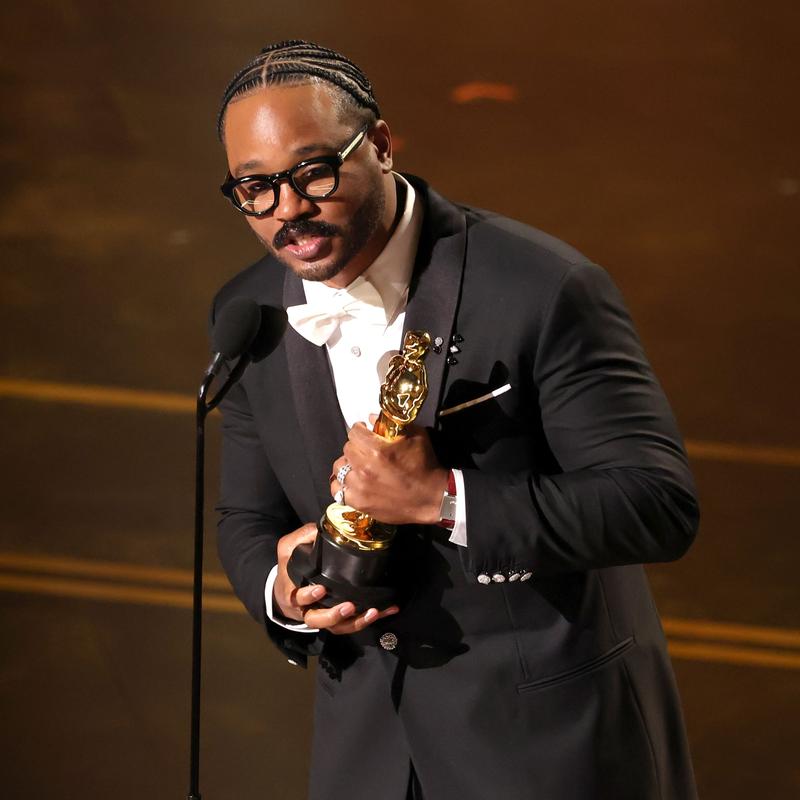
Alison Stewart: This is All Of It on WNYC. I'm Alison Stewart. One Battle After Another director Paul Thomas Anderson won Best Picture and Best Director at the Oscars. Sinners' director Ryan Coogler won for Best Original Screenplay. Both won Oscars for the first times in their careers. Best Actor winner Michael B. Jordan thanked the Black giants of Hollywood and for executives for taking a chance on Sinners.
Michael B. Jordan: I want to thank Warner Brothers. I want to thank Mike and Pam for believing in this dream, this vision of Ryan Coogler, and betting on a culture and betting on original ideas and original artistry.
[applause]
Michael B. Jordan: You're an amazing, amazing person. I'm so honored to call you a collaborator and a friend. You gave me the opportunity and space for me to be seen. I love you too, bro. Love you to death.
Alison Stewart: History was made at this year's ceremony. Autumn Durald Arkapaw became the first woman to win Cinematographer for Sinners, and the song Golden from KPop Demon Hunters became the first K-pop tune to win Best Original Song. Hamnet star Jessie Buckley became the first Irish actress to win Best Actress, and presenter Javier Bardem the Best Documentary Feature and Short-- winners-- all shared pointed statements against war and school shootings. Sean Penn didn't show up even though he won award for Best Supporting Actor.
Let's get into it with Louis Virtel, co-host of the Keep It! podcast, and Oscar aficionado, is joining me to talk about the night's biggest moments. Hey, Louis.
Louis Virtel: This is what I'm on earth to do. I'm thrilled to be back here. Hi, Alison.
Alison Stewart: By the way, Jessie wanted to say that he loves you. He just--
Louis Virtel: I love him, too. Also, I'm a writer on Jimmy Kimmel, and we spend our time doing fake Truman Capote impressions for each other just anyway, so to hear him do it so brilliantly is fabulous.
Alison Stewart: He's the best. Hey, listeners, we want to hear from you. What did you think of the Oscars? Who are you most excited to see win? Our number is 212-433-9692. 212-433-WNYC. It was really quite a competitive year for the Oscars. Which wins were you most excited to see last night?
Louis Virtel: Oh my God, there were so many I was excited to see. Honestly, the races intensified right up until the end, which rarely happens at the Oscars. We usually see people storm to victory-- a couple of years ago, Da'Vine Joy Randolph. I wouldn't be surprised if that were the most awarded single role in history, you're just waiting for these people to get the crowning achievement, get the Oscar at the end. I was really just excited to see-- and this sounds vicious of me, but-- the bloodbath of it all. Somebody was going to leave disappointed since several different people were promised the wins at different points.
Alison Stewart: Conan returned to host the Oscars for a second year in a row, and he began his opening monologue, warning that the show might get political for some people, and recommended anyone who's uncomfortable to watch an alternate version of the show, alluding to Turning Point USA's All-American Halftime Show. Let's listen to Conan shouting out Hamnet during his F1 monologue.
Conan O'Brien: In Hamnet, William Shakespeare's wife Agnes gives birth by herself in the woods-- or as we call that here in America, affordable healthcare.
[audience scoffs]
Conan O'Brien: Too real for you, huh? All right.
[laughter]
Conan O'Brien: F1. I loved F1. A popcorn movie. It was great. F1 was terrific.
[applause]
Conan O'Brien: Yes. F1 is up for Best Picture. It's the story of a race car driver who finally wins after deciding to go faster.
[laughter]
Alison Stewart: Louis, how would you rate his performance this time around?
Louis Virtel: You know what's interesting? I love some of the jokes. Actually, in the recap of all of his best jokes, I haven't seen my favorite one much, which was at the beginning of Hamnet, a message comes on the screen explaining that the names Hamnet and Hamlet were used interchangeably. That's when I knew I better buckle up. That level of just dry-- that droll take on a movie is what I want from Conan O'Brien.
His thing isn't really damning. Someone like Tina Fey and Amy Poehler, they get up on stage and they're sticking daggers in people in such a fun way that's so memorable. Conan, I think, is very affable. I like the jokes that played most into that. I've actually thought he seemed more nervous this year, which surprised me.
Alison Stewart: That surprised me as well. Also, there were quite a few recorded bits, which I thought was interesting.
Louis Virtel: Correct. Some of those really worked. I really liked the Jane Lynch interruption, the dystopian YouTube world we'll be entering when it comes to the Oscars in the future. She played that so brilliantly, too, with the harshness I expect of Sue Sylvester from Glee.
Alison Stewart: It was interesting. PTA, Paul Thomas Anderson, he was the director of Magnolia, Boogie Nights, Phantom Thread, just to name a few. It's hard to believe this is his first time winning an Oscar. Why do you think that was important that he actually won the Oscar for this particular film? One bad after another.
Louis Virtel: I don't think he's ever made a bad movie. If you go all the way back to Hard Eight, there's so much potential even in that first movie, let alone all the incredible characters he's given us over the years. I truly think his signature achievement is that almost any character in any of his movies could be their own movie. I can't say that for almost any other director. For it to finally happen here, one, feels inevitable.
Two, I would compare it to Scorsese winning for The Departed in that it's just a very well-done whiz-bang feature. It's a brilliant action movie. There are contemporary things going on in the movie, but I think what people love about it is the slickness of the entertainment. It's a hard film to deny because you're so gripped by it the entire time. It's so engrossing.
Alison Stewart: It's interesting because this was the first year that casting had a category. Why you think it's important to recognize the role of casting?
Louis Virtel: I think everybody watches a movie and has the opinion afterwards. If the ensemble is functional and fabulous and there's lots of characters you wouldn't have expected or performances you wouldn't have expected, you're like, "God, who put that together?" I think it takes this amorphous thing we're always thinking about, which is, "How did this come together, and puts a word to it, and puts an accolade to it?"
Seeing that speech last night, I thought that woman gave an incredible face to the casting world. That woman felt like somebody who cast you and was like, "Can you do that again? Send it another self-tape."
Alison Stewart: Let people hear her. One Battle After Another casting director Cassandra, hope I get this right, Kulukundis. Let's listen to her speak about winning the One Battle After Another Casting Director's Award.
Cassandra Kulukundis: Wow, wow, wow, wow. I have to obviously thank the Academy for even adding this category, and for the casting directors that fought tirelessly to make it happen despite everything in their way.
[applause]
Cassandra Kulukundis: I dedicate this to you and to the casting directors who never got a chance to get up here, who didn't even get a chance to get their name on the movie. There for you guys. When Paul Thomas Anderson calls you, you enter the PTA witness protection program, and you literally don't talk to your friends and your family unless they have somebody that's right for the movie. I put them all to work, and I get mad at them when they haven't provided.
I have to thank all the crew who I'm in all of your departments, whether you like me or not, whether it's locations-- who really hates me-- stunts, production design, art directors, everyone, and editors, obviously. Thank you. This is a thing. I just thank you for-- 10 movies. We've done this for over 30 years. We grew up together, I guess. This is freaking insane. I have one before you, which is also crazy.
[laughter]
Cassandra Kulukundis: Hi. I hope you get one tonight.
Alison Stewart: She really explained well what a casting director does. She's up in everybody's business.
Louis Virtel: I know. She said, "And I'll name the people who dislike me." That's how the movie gets made. It's like, "No, you are fearsome. I believe you."
Alison Stewart: Recapping last night's Academy Awards with Louis Virtel, co-host of the Keep It! podcast, and an Oscars historian. Listeners, we want to hear from you. What did you think of the Oscars? Who are you most excited to see win? Any movie or performance you wish had taken home an award? Our lines are open. 212-433-9692. 212-433-WNYC.
Alison Stewart: This text says, "I was sad The Secret Agent didn't take an award, but not mad at the ones who did. It was so competitive, and Michael B. Jordan's performance was extremely deserving. People from Recife should take the award for best fans and cheering."
Alison Stewart: What did you make of The Secret Agent? That was an amazing film.
Louis Virtel: There are actually a few movies that struck me this way this year, where it's ambiguous throughout, you almost don't know what's happening, and then at the end you feel so satisfied. The movie delivers in ways you cannot anticipate even watching the rest of the movie. I actually was rooting for The Secret Agent to win the casting award because the amount of characters in this movie that aren't in any other movie that put you right in the time and place of this movie. No movie had time and place like The Secret Agent this year.
For that reason, I wish it had gotten something else. I was very surprised, actually, that Sentimental Value ended up taking International over it.
Alison Stewart: that was a little surprising. There were a lot of history-making moments we talked about K-pop. Demon Hunters winning Best Original Song, the first K-pop song to win. Sinners' Autumn Durald Arkapaw became the first woman of color and the first woman, period, to win for Best Cinematography. What do some of these historic wins, what do they highlight about Hollywood and the Academy's interests, and where filmmaking is heading?
Louis Virtel: Honestly, they strike me a little, I don't want to say depressing, but a part of me thinks, "How can we still be having firsts?" It's like when SNL announces they finally have their first Latina cast member or something, I'm like, "It's been going on for 50 years. How is this possible?" I think it just highlights that for the most part, I'll say, white people making movies are, by and large, still listening to each other. That when you finally get these minority producers, or actors, or performers stepping up and making big splashes, it's that is still an act of defiance. They have to defy people in order to succeed.
Alison Stewart: Let's talk to Marsha, in Queens. Hi, Marsha. Thanks for calling All Of It. You're on the air.
Marsha: Oh, hi. Thanks for taking my call. I think that Conan, the host, was nervous because of all the threats that were made against the Academy. I can't think of anything else that it could have been because he's been a host for many years and he's never shown that nervousness before.
Alison Stewart: That's interesting, talking to a writer for Jimmy Kimmel about how a host or someone who's in one of these situations can find themselves caught between politics and their job.
Louis Virtel: Right. In a way, I feel like when confronted, he enjoys making a political statement. You're right. You do never know what's actually happening up to the minute backstage, and there are often changes to the script last minute. Things are going in the teleprompter last minute. There are changes. That, as a host, is terrifying. You want things set in stone, especially if you're Conan O'Brien, who has workshopped this material for weeks and weeks at various clubs around LA.
Alison Stewart: This is an interesting text, and it's one I know you agree with. The tribute to Rob Reiner and his wife was moving and memorable.
Louis Virtel: Oh. The in memoriam segment is the triumph of this Oscars. I was wondering how they would do it. We lost so many luminaries this year, as we all know. It wasn't just that they were all great, they were also idiosyncratic. I wanted the specificity of what they brought. You can't just say Diane Keaton was great. You need to get into it, you need to talk about the decades that she brought, how she was a brilliant actress, comedian, person, actor, just the many hats all these people wore. Of course, Rachel McAdams actually used the phrase "many hats."
I love that they basically had to reinvent the In Memoriam. We had to stop it, take a moment to honor the full spectrum of what these people brought. We started with Rob Reiner, we got to Diane Keaton and Catherine O'Hara, and then eventually to Robert Redford when Barbra Streisand appeared, and I knew she was going to appear. What can prepare you for that level of legend? What can prepare you?
Alison Stewart: We're talking about the Oscars with Louis Virtel. We'll have more after a quick break. This is All Of It.
[music]
Alison Stewart: You're listening to All Of It on WNYC. I'm Alison Stewart. My guest is Louis Virtel, he's the co-host of the podcast Keep It!, and an Oscars historian. That's what we're calling you. I've decided you're already a historian.
Louis Virtel: Oh, I better be at this point. Yes.
Alison Stewart: You better be. I want to read this to you, this text that we got. It says, "Terribly disappointed. For months, I dreaded that One Battle After Another would spoil the night for Sinners. Sinners is the vastly more interesting, multilayered, and original film, but the Oscars keep awarding white men with guns because any invitation to confront actual complexities of America's issue is too scary. Sinners, a truly exceptional, revolutionary, and open-hearted film was robbed in so many categories by the totally average, pat-on-the-back, performative, political "One Battle"."
Woo. That person, he's got a beef with "One Battle". Putting on your hat objectively, did "One Battle" deserve Best Picture?
Louis Virtel: First of all, I just want to say about the person texting, this is who I want to be talking about the Oscars with. It should be this intense all the time, I just want to say.
Alison Stewart: Yes.
Louis Virtel: Honestly, for me-- look, I'm just some gay guy-- this is not particularly a movie year I'm going to reflect on as some of my favorite movies, personally. I just felt like it was a lot of action movies, it was a lot of what I would call boy movies, really. Did it deserve it? I think a lot of the performances in One Battle After Another were fabulous.
I have to say the same thing about Sinners. I would say that, I think, there was a general richness to Sinners that I preferred if we're comparing the two movies.
Alison Stewart: I agree. I do think that one--
Louis Virtel: I don't know what I would have picked overall, actually. If I had to pick a Best Picture winner, I might have picked-- I thought Marty Supreme was also really entertaining too, so I'm almost sorry to have to pick that one.
Alison Stewart: I do think that when the time comes, when it's the 100th anniversary of the Oscars or whenever they do a film montage of great scenes in films, that one scene from Sinners, the dance scene for I Lied To You, which brings the past, and the future, and the present together in one image, will be in montages forever. I do think that.
Louis Virtel: Yes. Also, that's the part of the movie that elevates it to the fantastical. It expands the idea of cinema within the movie. I did love that. I also did feel it was lightly on the nose, like I was watching an opening montage of So You Think You Can Dance. I did think that. Again, there are so many performances in that movie that were great that we don't even talk about. I thought Hailee Steinfeld was amazing in Sinners, and she got nothing this award season.
Alison Stewart: This text says, "I was very annoyed that KPop Demon Hunters winners were played off the stage after very little time. The Oscars is interested in having them perform Golden as entertainment, but completely uninterested in hearing their words." How did you feel about them playing them offstage?
Louis Virtel: Now, I think I have a pretty good memory for this. I don't remember anybody played off that abruptly before. It was like a thud. I was with a room full of Oscars aficionados, eggheads like me, we clutched our hearts. It was astonishing. It was such a historic moment, too. It was just unthinkable. I didn't expect that of the Oscars, honestly.
Alison Stewart: Let's go to Nora. Nora's calling in to All Of It. Hey, Nora, thanks for calling.
Nora: Hi. Thank you for taking my call. I will say I like to watch the Oscars every year because I like to see these artists who've sometimes poured years into projects. The odds are so against we artists. I like that part. Has anyone else mentioned the closing scene in which Conan O'Brien gets tricked into thinking he's been named host for life and then gets gassed in his office and dumped? At first, I thought it was in a garbage chute, but you see a flicker of flames. I was just shocked by that. I don't see that as funny at all.
Alison Stewart: Thank you for calling in. That was a callback to One Battle After Another, right?
Louis Virtel: Yes, literally. They almost added nothing to it. It's just the scene in general, and then the button on that scene was that Mr. Beast, famous YouTube star, would then be the next host for life. I was actually pretty surprised how just literal it was, like, "Here's One Battle After Another, starring Conan."
Alison Stewart: What's interesting, there was a nod towards Gen Z.
Louis Virtel: Right. Yes.
Alison Stewart: You know it?
Louis Virtel: Right, yes. There should be one, but I like this ceremony old school.
Alison Stewart: You like it old school. Why?
Louis Virtel: That's the nibble they get.
Alison Stewart: That's interesting. Why do you like it old school, the Oscars?
Louis Virtel: I just think that's the thrill of the Oscars, that it hearkens back to old school glamour. We have these unbelievably talented stars who, in these performances, belong in the same canon as all the people Michael B. Jordan mentioned, for example, Sidney Poitier, Halle Berry, the years and years of stars we've had.
I just like that overall, the most exciting thing about this is you're seeing people whose names they win and they get added to a list that goes all the way back to Janet Gaynor, that goes to Claudette Colberts, and the Bette Davises, and Vivien Leighs and all that, and that we're continuing a heritage and making the heritage better, frankly.
Alison Stewart: Let's talk to Taylor on line 2, calling in from Manhattan. Hi, Taylor. Thanks for calling All Of It. You're on the air.
Taylor: Hi. Thank you. I had a question for our guest. I saw most of the nominated movies, but for me, No Other Choice was definitely my movie of the year. I know that it didn't receive any nominations. I was wondering if our guest had any thoughts or tea about that.
Louis Virtel: I think about campaign dollars. I think about how much campaign financing goes into these things, really. I'm surprised The Secret Agent got that far. You think about who's really propelling these things, and you really depend on arts connoisseurs to make their opinions known about what the most important, prescient, urgent films are in a given year to propel the ceremony where it needs to be. Sometimes we just get the most entertaining movies who win Best Picture.
I have to say, in general, and I think this is true for most deep Oscars fans, I don't know that most Oscars fans really stand, as we say, Best Picture. I feel like our favorite categories tend to be things like original screenplay, or they tend to be things like-- even some of the technical categories, because that's when we get the most interesting winners.
Alison Stewart: That's interesting because Guillermo del Toro's Frankenstein, it had three wins last night in hair and makeup, production design, and best costume design. Why did this film stand out to you?
Louis Virtel: I think it's just it looks the artiest. If I'm going down an Oscars ballot, and let's say I'm voting quickly, as some of these people might have been, that might be an easy decision to make. If you look at Frankenstein, you're like, oh, you remember how Jacob Elordi looks, you remember the vast venues this place goes, it's the movie starts in Danish and then we go into his laboratory, etcetera. I actually didn't love the production design of Frankenstein. As I said on the podcast, I felt his laboratory looked like a Frankenstein escape room, just everything you expect in it.
Alison Stewart: That's really funny. This said, "Why didn't Sean Penn accept his award? I thought he was very deserving. I loathed his character. I was crazy impressed."
Louis Virtel: Yes. Oh, pardon me.
Alison Stewart: We're having computer difficulties.
Louis Virtel: I'm back. I apologize.
Alison Stewart: You're back.
Louis Virtel: Oh, yes. Oh. Yes. It's interesting. Sean Penn, when he gave a speech winning one for Milk back in 2009-- that was the ceremony-- he was funny, but also a bit off color. There's something about him that is just generally uncomfortable with audiences. I don't know where he's coming from not coming to the ceremony, but I would have liked to hear him give a Joe Pesci-style three-or-four-word speech and walk off. That would have been lovely.
At the same time, because he wasn't there, we had more time for other things like that great tie in the short category later.
Alison Stewart: That was amazing. Because when Kumail said it, at first, you're like, "Is this a bit?"
Louis Virtel: Yes. There's only been, I believe, seven ties in Oscars' history, most famously the Best Actress tie between Barbra Streisand and Catherine Hepburn for Funny Girl and The Lion in Winter. No, a tie is still baffling. You're conversing with everybody, like, "Was it really the same number? Is there a five-vote swing?" You're trying to figure out how it's possible.
Alison Stewart: What did you make of all the reunions of casts last night?
Louis Virtel: I feel like that's a standard of award shows now. You can basically expect reunions when you go to these things. That's what most of the effort, I think, behind the scenes with bookers goes into, "How can we craft a moment that feels fresh and yet also is recognizable to viewers at home, like, 'Oh, they remember that movie,' or, 'They remember those people hanging out together?'"
Louis Virtel: I was saddened that Wendi McLendon-Covey, hilarious in Bridesmaids, was not part of the Bridesmaids reunion, but then she posted on social media that she allegedly, or she says herself, had a neck lift and couldn't be there. I'm like, "Okay. Great answer."
Alison Stewart: While we're talking about it, let's listen to the cast of Bridesmaids celebrating 15 year anniversary.
Cast 1: We are so happy to be back here to present the Oscar for Best Score. Now, a film's score helps us to feel. It invites us into a world. Oh, sorry. What's happening? Oh, are these notes?
Cast 2: I think these are the letters from people in the audience.
Cast 1: Oh. That's absurd.
Cast 3: I guess I'll open mine up. This is strange.
Cast 4: Okay.
Cast 3: Mine says, "First of all, you ladies look extremely beautiful tonight." Oh, that's nice. Oh, thank you. "You're all aging well."
[laughter]
Signed Stellan Skarsgard.
[laughter, applause]
Alison Stewart: That bit went on for a little while. What about this group of actresses, and I'll use actress because you mean actors/actresses, but what about this group of actresses stood out to you 15 years later, looking at the five of them?
Louis Virtel: I am honestly shocked at the range they all have. Rose Byrne has put an exclamation point on that this year by getting nominated for this crazy movie, If I Had Legs I'd Kick You, but she's an amazing comedian. She's, of course, fabulous in Spy, with also Melissa McCarthy, who herself is also an amazing dramatic actress nominated a few years ago for Can You Ever Forgive Me?
Then Kristen Wiig, whom I just said this on Twitter last night, I think she is the best actor in the history of SNL. If somehow she were punished, not allowed to do comedy and we would only put her in prestige indie dramas, I'm telling you she'd be nominated for a whole bunch of Oscars. I think she's so real, never a false note on screen.
Alison Stewart: Let's talk to Adam, calling in from Brooklyn. Hey, Adam, thanks for calling All Of It.
Adam: Hi. I just want to give a shout out to my favorite film of the year, Caught Stealing by Darren Aronofsky. I just really felt like it really got dismissed and swept under the carpet because it was just too similar to One Battle After Another in that an auteur is pivoting to dark comedy. There just wasn't enough room in the narrative for two times that. It just got brushed aside. It was really an excellent film. I'm not saying it was better than "One Battle", but it was on par, at least for me. I love both directors so much.
Alison Stewart: Thank you so much for calling in. Somebody who couldn't stay on the line was surprised at how vicious and how competitive-- maybe competitive is a better way to put it-- it can be, the campaigning for Oscar season. Can you speak to that a little bit?
Louis Virtel: Oh, yes. Again, I think it's just brutal, what you think is going to win at the beginning of the season, and then the season is so long. What we're left with at the end is-- I can't even really say why opinion shifted sometimes. In this case, I actually thought Sean Penn would win way back in September, and he did end up winning. That almost, in a way, is reassuring to me, like, "Okay, but a strong instinct we can just follow up on, and he will win."
I want to say about Caught Stealing. I remain surprised that Darren Aronofsky directed that movie. It felt very out of step for him. His movies are usually very insular. His movies are usually very insular, and you're really stuck inside a character's head. I'm thinking of Black Swan, for example, but it was like One Battle After Another, pure whiz-bang, a pure entertainment. Austin Butler was actually sensational in it.
Alison Stewart: As we wrap up, which films would you have liked to have seen more recognition last night?
Louis Virtel: My favorite documentary this year was It's Never Over, Jeff Buckley. I get a little--
Alison Stewart: So good.
Louis Virtel: It was so fabulous. Look, I love music biopics, perhaps in an apologist way, but I thought this was the rare music biopic that needed to explain a genius, needed to explain where this person was coming from because he's hard to interpret. Everything we know about him is a little bit in the ether. We don't know what we know about him, and we obviously have so little music to listen to of his.
I just thought it made you get it. I loved the interviews. I loved hearing the music in that context and hearing his story. I've seen that movie three or four times now.
Alison Stewart: It was good to see Amy Madigan win.
Louis Virtel: Oh my. Oh, please. Also, it hearken back to Ruth Gordon winning for Rosemary's Baby. It's like a kooky woman knocking on your door, and you're like, "Oh, this woman seems harmless. What can go wrong?" and the answer is, "Everything."
Alison Stewart: Louis Virtel is the host of Keep It! Louis, thanks so much for joining us.
Louis Virtel: Oh, always a blast. Thank you for having me.
Alison Stewart: There's more All Of It on the way after the news.