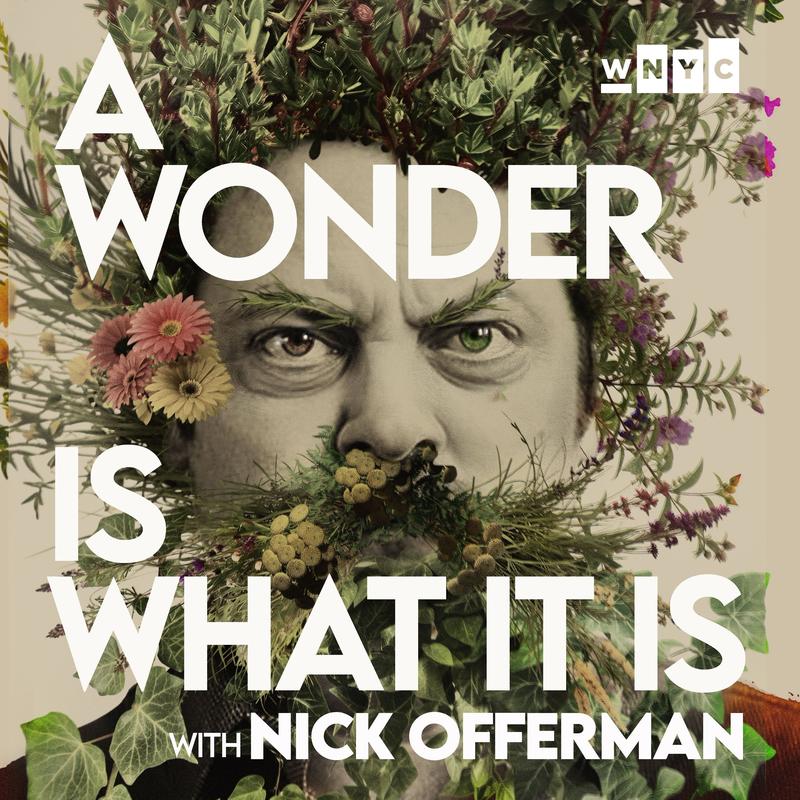
Nick Offerman: Good morning or good afternoon, and welcome to the first episode of A Wonder Is What It Is. I'm Nick Offerman, an actor and author, and woodworker, but I'm not a poet myself, although I have published one haiku entitled A Bratwurst. It goes like this. Tight skin flute of pork. Juices fly, explode in mouth. A little mustard. A Wonder Is What It Is is a series of poems read aloud by me, one per episode, slowly, and then some thinking aloud on those lines of poetry, also by me, Nick Offerman, also slowly.
I prefer poems that make me think about our human relationship with Mother Nature, like flowers and woodchucks and such. I have long been a fan of the poet and author Wendell Berry, a writer of affectionate agrarianism and common sense. I'm convinced he understands something about the world to which more of us should pay heed. I've always jumped at any opportunity to pay that heed forward. Once a week throughout April for Poetry Month, I will pop by All Of It to share his poetry. This is the first installment. Without further slow talking, here is today's offering from 1973.
A Warning to My Readers
Do not think me gentle
because I speak in praise
of gentleness, or elegant
because I honor the grace
that keeps this world. I am
a man crude as any,
gross of speech, intolerant,
stubborn, angry, full
of fits and furies. That I
may have spoken well
at times, is not natural.
A wonder is what it is.
I just love this as an opening salvo for this series, a perfectly concise example of Wendell Berry's unvarnished expression of his humanity, with such a touching juxtaposition between his undeniable eloquence and the humble expression of his flaws. His fiction reads like this as well, with such an admirable economy to every sentence and turn of phrase, with a constant reverence for the mystery of the creation. I do hope you'll come back to hear more slowly presented adulation in episode two. Thank you.
[music]
Copyright © 2026 New York Public Radio. All rights reserved. Visit our website terms of use at www.wnyc.org for further information.
New York Public Radio transcripts are created on a rush deadline, often by contractors. This text may not be in its final form and may be updated or revised in the future. Accuracy and availability may vary. The authoritative record of programming is the audio record.