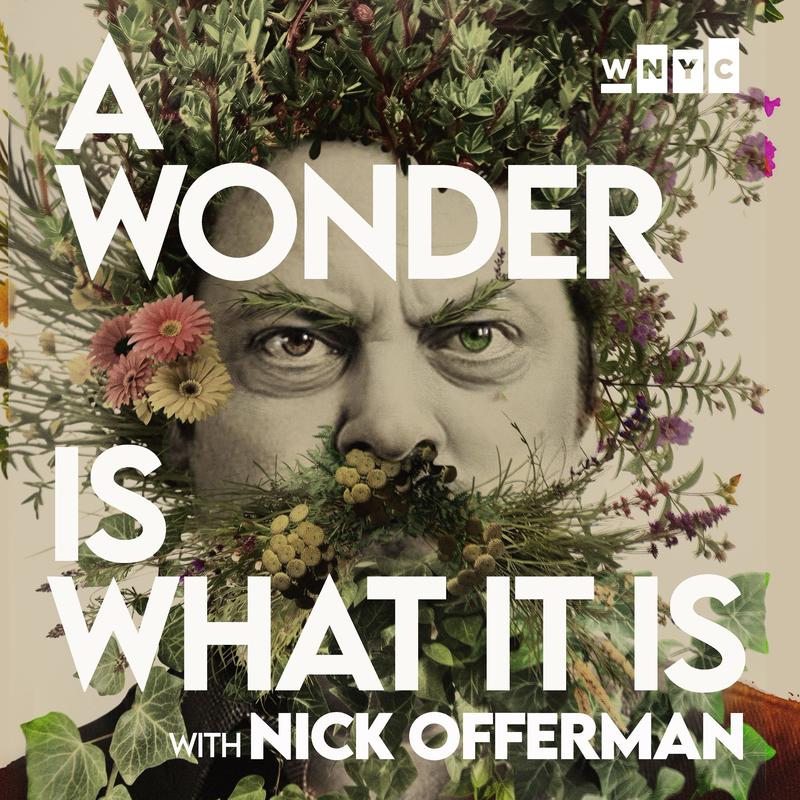
Nick Offerman: Good morning or good afternoon, and welcome to another episode of A Wonder Is What It Is. I'm Nick Offerman, an actor, and author, and woodworker, but a poet I am not. A Wonder Is What It Is is a series of poems read aloud by me slowly, and then some thinking out loud on those lines of poetry, also by me, Nick Offerman, also slowly. Each week of this poetry month, I am highlighting a different piece of verse by my favorite poet. A venerated writer, agrarian activist, and purveyor of common sense, the great Wendell Berry. Today, I'll be reading "A Vision," written in 1999.
A Vision
If we will have the wisdom to survive,
to stand like slow-growing trees
on a ruined place, renewing, enriching it,
if we make our seasons welcome here,
asking not too much of earth or heaven,
then a long time after we are dead
the lives our lives prepare will live
here, their houses strongly placed
upon the valley sides, fields and gardens
rich in the windows. The river will run
clear, as we will never know it,
and over it, birdsong like a canopy.
On the levels of the hills will be
green meadows, stock bells in noon shade.
On the steeps where greed and ignorance cut down
the old forest, an old forest will stand,
its rich leaf-fall drifting on its roots.
The veins of forgotten springs will have opened.
Families will be singing in their fields.
In their voices they will hear a music
risen out of the ground. They will take
nothing from the ground they will not return,
whatever the grief at parting.
Memory,
native to this valley, will spread over it
like a grove, and memory will grow
into legend, legend into song, song
into sacrament. The abundance of this place,
the songs of its people and its birds,
will be health and wisdom and indwelling
light. This is no paradisal dream.
Its hardship is its possibilities.
[music]
Nick Offerman: Jonas Salk said, "Our greatest responsibility is to be good ancestors." Yet we are faced every day by the ways in which our civilization is failing to adhere to this instruction. I love Wendell Berry because he tells us that we need to get our heads out of our butts in a very beautiful and moving way, and pay the creation of nature from which we draw life with even a fraction of the reverence we pay the gods of wealth and industry. I hope you'll meet me back here once more for Episode 4.
[music]
Copyright © 2026 New York Public Radio. All rights reserved. Visit our website terms of use at www.wnyc.org for further information.
New York Public Radio transcripts are created on a rush deadline, often by contractors. This text may not be in its final form and may be updated or revised in the future. Accuracy and availability may vary. The authoritative record of programming is the audio record.