
A Tradwife Travels Back in Time in 'Yesteryear'
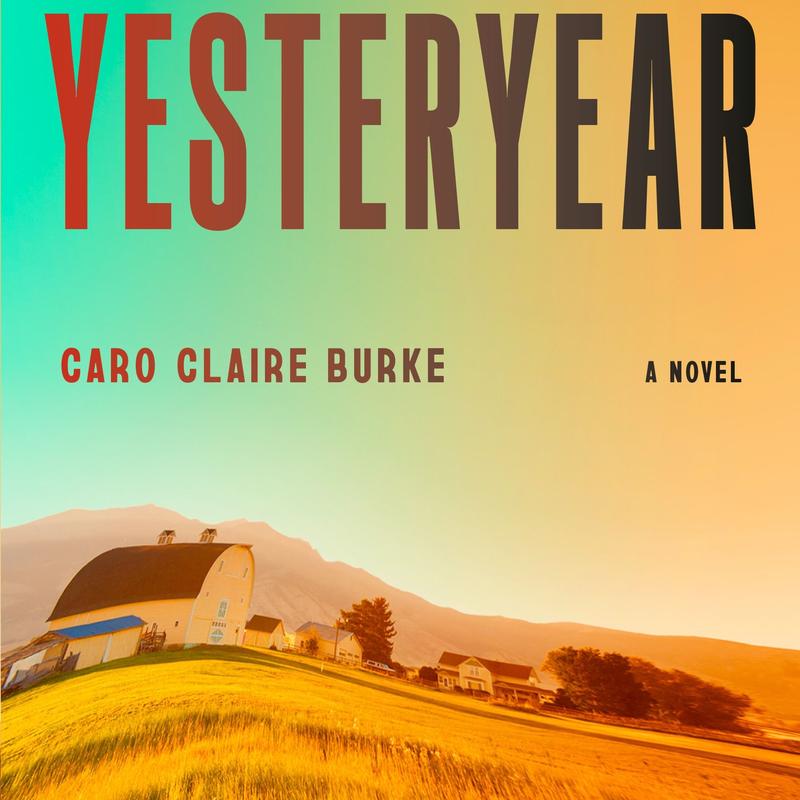
Alison Stewart: This is All Of It on WNYC. I'm Alison Stewart. When tradwife was added to the Cambridge Dictionary last year, you knew the Internet culture entered the mainstream. A portmanteau of traditional and wife, the word describes someone who follows old school gender roles, sometimes engaging in a lifestyle that goes back to the earth. Farming, homeschooling, chickens. Think supermaxing Little House on the Prairie.
That's where we find the protagonist of the debut novel, Yesteryear. Natalie Heller Mills describes herself as a "flawless Christian woman." She dropped out of Harvard to marry the son of a political dynasty. They move to Idaho, start their own rants. About to have their sixth kid, they raise chickens, bake bread, and yes, it will be posted on the Internet. Her farm, Yesteryear, has brought her fame and a series of problems as well. The biggest one, one day, she wakes up and realizes there's no more social media, the world isn't watching. It appears that a traditional-- She's a traditional wife and has a traditional farming life in 1855, the cleaning, cooking, and surviving. How will Natalie get out of this situation? What got her there in the first place?
The novel Yesteryear is a be careful what you wish for novel. It takes a sharp, biting, and funny look at feminism, hypocrisy, and performative behavior. It is written by Caro Claire Burke. She is our guest. Hi, Caro.
Caro Claire Burke: Hi.
Alison Stewart: When did you first become interested in tradwives?
Caro Claire Burke: In the winter of 2024, I downloaded TikTok on a whim, and I very quickly was sucked into that world. I found myself questioning why I was so interested in these visuals.
Alison Stewart: What's the difference between a tradwife and a tradwife influencer?
Caro Claire Burke: A tradwife is someone who just adheres to these traditional norms of what it means to take care of your children and maybe be subservient to your husband. A tradwife influencer is someone who performs that online, often, for monetization. The irony is that very often they're making a lot of money. These women are the breadwinners, but they are performing an idea of subservience.
Alison Stewart: Was there a certain post that just clicked off in your brain, like, "I need to write about this?"
Caro Claire Burke: No, I think it was the volume of how many there were and how many people were talking about it and how many contradictions were rife in the topic.
Alison Stewart: Why did you sit down and decide to write about it?
Caro Claire Burke: I've always been a fiction writer. That's how I make sense of the world around me. I think that the tradwife discourse sits at the intersection of every single conversation about womanhood that I've always been interested in. I think that it seemed like such an incredible opportunity for me to explore it in my natural artistic mode, which is fiction.
Alison Stewart: How long did it take you to write your first draft?
Caro Claire Burke: My first draft was about nine weeks.
Alison Stewart: Nine weeks?
Caro Claire Burke: Yes. It was, "It'll never happen again like that."
[laughter]
Caro Claire Burke: It was very strange.
Alison Stewart: All these writers were, "What?"
Caro Claire Burke: I promise it's never happened like that before, and it will surely never happen like that again.
Alison Stewart: Did your main character come to you just like-- Some writers say, "It comes to me from the heavens, and I write down what she says."
Caro Claire Burke: She did. Natalie has a very specific voice, and as soon as I found her, I really felt like I understood what the book was going to be.
Alison Stewart: I'm going to ask you to read the first couple of pages, and then we can talk about the story a little bit more. This is the first page and a half of Yesteryear.
Caro Claire Burke: This is the last day of the life I imagined for myself. I woke up two minutes before my alarm went off, like usual. 5:58 and bing. Eyes wide open, ready to greet the day. I've never had a hard time waking up in the morning. Never use the snooze button either. Not once in my life. Sobriety helps. I don't drink. Discipline helps, too. I was born with spades of discipline. I'm practically overflowing with it.
Which is why I think I've never had that much trouble with anything in my life. Not motherhood, nor marriage, nor building a business, nor serving him. All of it appeared to me as a series of tasks to be accomplished each day at the right time, in the correct chronological order. I know it's not that easy for other people, but it really is for me. That's why all those strangers liked me so much. That, and the money. The money definitely helped, too.
It was wintertime, January. A cold front had just blown through the pass. By my bedroom window, the radiator was puffing hot air. The sky outside was deep as death black, and would be for another few hours. Our farm was nestled in the rolling divots between two mountain ranges in Idaho, which meant we didn't see the sun until nine or so in the winter months. We were located five miles down a long, winding gravel country road. Not even airplanes flew overhead.
In the darkness, I listened to the distant mooing of Sassafras, our beloved dairy cow. I could tell by the pitch and register of her moans that my husband, Caleb, was milking her, right on time. The man was good. My husband was not disciplined before he met me. He was the youngest of five boys, the runt of the litter in an American dynasty. His father was the latest senator in a long line of US senators currently barreling through a presidential bid. Third time's the charm. His mother was a homemaker who had spent most of her life drowning in Chardonnay.
Together, through a near-fatal combination of paternal neglect and maternal sympathy, they had raised Caleb to be soft and spoiled and sweet. The only thing more valuable than a person with God-given traits is a person who's willing to learn. My husband, that man, had been willing to learn. Who was I? A flawless Christian woman. The manic pixie American dream girl of this nation's deepest, darkest fantasies. The mother every woman wanted to be, and the wife every man wanted to come home to. Like a nun in a porno, it didn't make sense, but also, by God, it worked. My name is Natalie Heller Mills, and I was perfect at being alive.
Alison Stewart: That was Caro Claire Burke. She's reading from her book Yesteryear. We meet several different versions of Natalie. First of all, the Natalie we first meet, we heard a little bit about her life. What did you want us to take away from her when we first meet her?
Caro Claire Burke: Natalie is a woman who doesn't allow any vulnerability to come through. She has worked very hard for a very long time, by the time we reach the beginning of the novel, to have a perfect performance of a woman as her presentation to the world. It's very important to her that you see that.
Alison Stewart: The next Natalie we meet is her interior self?
Caro Claire Burke: Yes.
Alison Stewart: How would you describe her interior self?
Caro Claire Burke: Natalie's interior self is acidic and ambitious and cold and very funny.
Alison Stewart: Why was it important for her to be so funny?
Caro Claire Burke: That was just how she was when I found her. I think her humor was actually very essential to figuring out the rest of her personality. She sees the world with a lot of irony and derision, and also clear-headedness.
Alison Stewart: Then over time-- Well, it's interesting because her internal monologue, she's a real witch, maybe with the B instead of the W. What do you need to keep in mind when you're writing a true B word?
Caro Claire Burke: That was something that I think I didn't think about in the first draft. I just tried to have her be who she was. Then, in the editing process, you have to make sure that some of her humanity does come through and that you see that she's still struggling and that she has challenges just like the rest of us.
Alison Stewart: Then the third Natalie we meet is when she wakes up, and she realizes she's in an alternative place. Her life in the 1850s, with laundry that needs to be done. There are traps outside of the house or a trapper outside of the house. Animals that need to be fed or they die. Why did you want to make life so difficult for her?
Caro Claire Burke: I think it wasn't that I wanted to make life difficult for her. It was that I wanted to put her in the time period that she seemed to think was so much easier than the one that we're living in. That time period was quite hard for people to live in. There were none of the modern amenities that we are so familiar with now. I think it was more of a wanting to push her theories to their final conclusion.
Alison Stewart: We're talking out the book Yesteryear. My guest is Caro Claire Burke. It's her debut novel. We talk about Natalie in that intro you read. She's a Christian. She's headed to Harvard. This is before the whole tradwife starts. What is it about seeking education that makes her think this might be her ticket out?
Caro Claire Burke: I think that she's someone who, at an early age, really does have a lot of ambition and wants to harness that ambition in all of the ways that she thinks are socially acceptable. She is raised as a Christian fundamentalist and thinks that it's acceptable to get a college degree. If she's going to get one, she's going to get the best one. I think she saw herself as a bit of a prophet until her experience at college told her otherwise.
Alison Stewart: Yes. What does she expect to find when she goes to Harvard?
Caro Claire Burke: She envisions Harvard as a debating ground of the likes of Socrates and Aristotle. She thinks she'll be having these grand conversations about religion and spirituality and the divine will of man. What she finds is much more, I guess you would say, human than that.
Alison Stewart: Her roommate, she has a little problem with her roommate.
Caro Claire Burke: Yes.
Alison Stewart: Could you describe her roommate for us?
Caro Claire Burke: Her roommate, Reena, is-- In all the ways that Natalie is a stereotypical cold-headed woman, her roommate is a little bit bullheaded in her own right, but is more of a stereotype of a very liberal woman. They don't really see eye to eye on anything.
Alison Stewart: That's where she meets her husband, Caleb. He's part of this political dynasty. I'm trying to find this part that I wrote-- where you wrote about him. Oh, I can't find it right now. What does Natalie see in him? Because you described him as the runt of a political family.
Caro Claire Burke: I think she sees her own future laid out in front of her. He's a very nice man, and he's interested in her, and that has never happened to her. He's wealthy, and he has stability. She thinks, "Well, I've been told my whole life my job is to get married and have children." She sees her future rolled out in front of her.
Alison Stewart: It's interesting. She likens him having money to not really having a purpose in his life.
Caro Claire Burke: It is funny. He starts out the novel as actually being quite kind and very sweet, and he just isn't ambitious. He doesn't worry about life because he doesn't have to. He has quite a bit of money. For Natalie, this is an unacceptable outcome to have a man who doesn't have a job.
Alison Stewart: How does that affect her?
Caro Claire Burke: She becomes very much a dog with a bone. It's her job to get Caleb a job and to make sure that he is respectable so that, in turn, she can be respectable.
Alison Stewart: Yes. The book notes that she agrees to be his wife, and she's got to figure out a way to make this marriage work. How to make it work for her, how to make it work for them. She makes a lot of compromises along the way, and the book mentions that perhaps she should have been a man, had what's available to men. What would have been available to her if she had been a man? What does she think would be available to her?
Caro Claire Burke: I think Natalie thinks that if she was born a man, she could have ruled the world. I think she has a very traditional understanding of gender. Her ambition, her desire to remake the world in her image, she sees those as masculine traits and therefore as failings in herself. Also, she sees her husband's inability to harness those traits as failings within him.
Alison Stewart: The book also brings in class as well. She's a daughter of a single mom, and her sister is struggling. Her family's from a working-class background, and she turns her back on that part of her life. Why does she seem to be at odds with her past and want to launch into a new life?
Caro Claire Burke: I think that any level of instability is something that she is just not fundamentally comfortable with. Yes, you mentioned she has a sister who goes through similar marital struggles and ends up leaving her husband and being quite financially unstable. I think Natalie views this as quite threatening, the idea that a woman could choose less money and less stability. Independence is something that is counter to every decision she has made within her own life. It's an option that she can't consider.
Alison Stewart: In the book, she talks about angry women who are out there who have a lot to say about her life and a lot to say online. Who are these angry women in her mind?
Caro Claire Burke: Yes, the angry women are the people who comment on her posts. They're the ones who ironically give her the most engagement and probably help her monetize her account the most. They are women that she perceives as liberal and often living in cities and commenting things like, "None of this is real life. This woman is faking everything." Natalie sees herself as having a very symbiotic relationship with these women.
Alison Stewart: It's hard not to read this book and to think about politics. How are you thinking about politics?
Caro Claire Burke: I think that the plight of womanhood right now is one where I think a lot of women feel like there is no correct answer. There's no correct way to "have it all," to have children, to have a job. I think in the last few years, we've seen that come to a head. A lot of women are hoping for solutions and not really finding any. I think we see both political parties offering different, or maybe no answers at all.
Alison Stewart: We're talking about the novel Yesteryear. My guest is Caro Claire Burke. All right, Natalie, she wakes up, she's in this house. It's the 1850s. In her mind, she's a guy who looks like her husband, but kids who could be her kids, they say her kids. What does she think's going on? Is it a bad dream? What's happening to her?
Caro Claire Burke: This is, I think, the central question that she's trying to figure out. I think at first it just feels like a nightmare, like a full-body terror. As time goes on and she still doesn't wake up, she starts to wonder, "Is this a reality television show hoax? Is this a test from God?" She's very devout. "Is this a punishment from the devil? Is this purgatory?" She doesn't know, and the reader doesn't know. You're moving through all of these theories as you try to find out what's taking place here.
Alison Stewart: I don't want to give away too much. I'm not going to give away anything. She has to stay put for a little while and figure out what's going on.
Caro Claire Burke: Yes.
Alison Stewart: Then she ultimately has to make the choice about whether she's going to stay or she's going to go. She's going to venture off of the property. Do you think she's a brave person?
Caro Claire Burke: That's a great question. I think Natalie is brave, yes.
Alison Stewart: What makes you say that?
Caro Claire Burke: I think that even though she makes every single decision that is counter to one that I would make in my own life, I do think that she often is afraid, and she often makes decisions in spite of her own fear. I think that that's probably the definition of bravery. She finds something within herself to move forward even when she feels almost paralyzed by fear.
Alison Stewart: All right. You make the reader wait a long time to find what's happened in the book. Why did you wait so long?
Caro Claire Burke: That's a good question. I don't think it occurred to me that I could do it earlier. Maybe it would have been easier for me if I had. Yes. I knew that I was working towards an ending, and I knew how I wanted the ending to feel. Most of the book was actually constructed with me just stumbling my way through in the dark to get to that ending. I think that if I had found another way to get there faster, I probably would have.
Alison Stewart: What did you learn about pacing in terms of the book?
Caro Claire Burke: Oh, everything. This was a master class. Just in my own experience of creative work, I think writing a really pace-forward book, it's very much about emotion and very much about releasing information at the right time. All of that was trial by error. I had never written a thriller before, and so it really was, every day, I felt like I was just trying to take five steps forward in the pitch black.
Alison Stewart: What have you learned about being an author that you didn't know before?
Caro Claire Burke: I will probably be able to answer that question in 10 years.
Alison Stewart: [laughs] I mentioned at the beginning of this segment that it's already in adaptation to be a film or a TV show. Can you tell us a little bit more?
Caro Claire Burke: Yes, absolutely. It has been optioned to become a film in partnership with Amazon and Anne Hathaway's production team. She will be starring as Natalie, and I think that she will do a stellar job.
Alison Stewart: You are pregnant with your first child.
Caro Claire Burke: I am.
Alison Stewart: Congratulations.
Caro Claire Burke: Thank you so much.
Alison Stewart: Has that made you think about the book differently now that that child is finished? [laughs]
Caro Claire Burke: Yes. It's funny, there are certain lines that hit me a little bit different. I was skimming through it today. I don't know if it's the book that makes me feel different, but I very much, for a long time, didn't want to have a child until I could write a book and get my career off the ground. It does feel very much like kismet that it's happening all at once.
Alison Stewart: The book is Yesteryear. It's great. You can just read it in one sitting. Two sittings. Three sittings. You want to definitely read the book. It's really, really good. Caro Claire Burke has been my guest. It is nice to have you in the show. Thank you so much for coming by.
Caro Claire Burke: The pleasure is all mine.
Alison Stewart: That is All Of It. Coming up on the show tomorrow, books, books, and more books. Patrick Radden Keefe will join us to talk about his latest, London Falling. I'm Alison Stewart. I appreciate you listening, and I appreciate you. I'll meet you back here tomorrow.
Copyright © 2026 New York Public Radio. All rights reserved. Visit our website terms of use at www.wnyc.org for further information.
New York Public Radio transcripts are created on a rush deadline, often by contractors. This text may not be in its final form and may be updated or revised in the future. Accuracy and availability may vary. The authoritative record of programming is the audio record.