A Celebration of Arab American Poetry
Alison Stewart: You're listening to All Of It on WNYC. I'm Alison Stewart. April marks both National Poetry Month and Arab American Heritage Month, a time to celebrate the rich cultural contributions of Arab American voices. From classic poets to contemporary Arab American writers, there's a wealth of work that speaks to this moment and offers new ways of understanding the world around us. For example, Lebanese poet Zeina Hashem Beck's book O explores the limits of language as well as home and exile. Then there's Palestinian American physician Fady Joudah, whose poetry collection is called The Earth in the Attic. Explores identity, loss, and displacement.
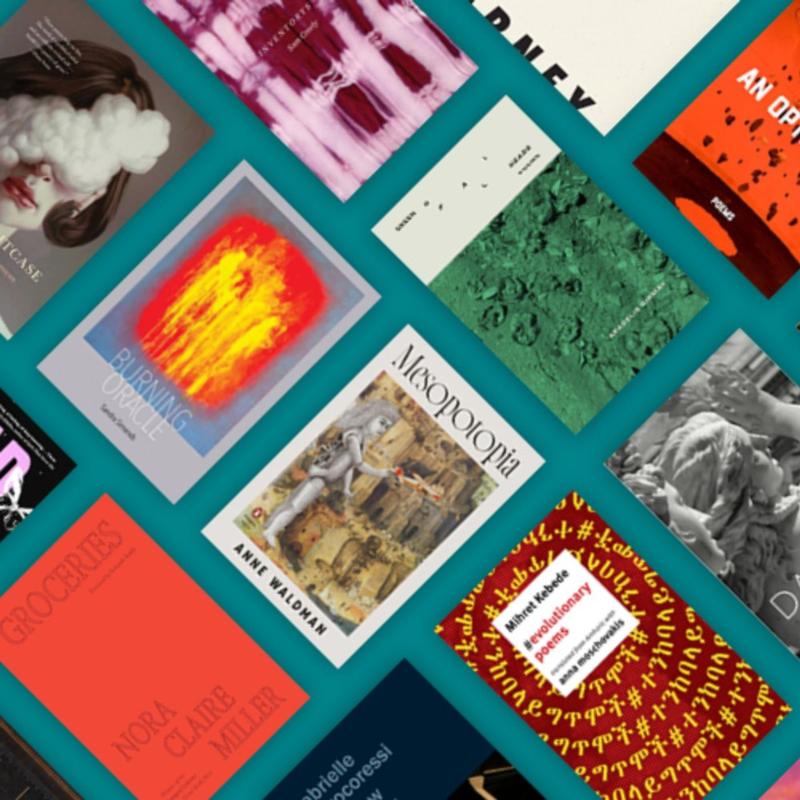
This Tuesday, the New York Public Library is hosting a celebration of Arab American poets featuring special readings from 6:30 to 8:00 PM at the Stavros Niarchos Foundation Library Event Center. To help us explore some more recommendations is Cleo de Lasa, here from the New York Public Library? Nice to meet you.
Cleo de Lasa: Very nice to meet you.
Alison Stewart: The Poetry Committee read more than 200 books to select their 25 picks. How did you and your colleagues decide which collections to highlight? What were you looking for?
Cleo de Lasa: That's a great question. I would say that we were looking for poetry that spoke to the contemporary moment. Not necessarily books that were following a certain trend, but things that really reflected where we are in the world, both politically and socially. When it comes to poetry, what can be really cool about it is looking for poems that explored myth and explored past forms.
I remember there's a collection that I really liked called No Swaddle that was all sonnets. I think looking for poetry that stood out, was outside of the box, but reached in with the history of the forum.
Alison Stewart: That's pretty cool to be on the poets committee at the New York Public Library.
Cleo de Lasa: It was pretty fun. Certainly quite the responsibility. We read our books independently, and there'd be some chatter throughout the month of like, "Ooh, really liked this one. Keep eyes on this." Then we would meet at the beginning of the month and highlight the books that we liked, inevitably get into some of the ones that we didn't care for as much. Those conversations were always very fun.
Alison Stewart: You're going to read a poem for us? What are we going to hear first?
Cleo de Lasa: The title of the poem is-- It is The Economy by Ariana Reines in the book The Rose. The Rose is one of my favorites of the year. It was on our list. It was actually difficult to find a poem from this collection because a lot of it was maybe not safe for--
Alison Stewart: Public radio, yes.
Cleo de Lasa: Yes. I thought that this one really got to the heart of the collection and was very poignant, punchy, and I'm excited to read it. The Economy.
I didn’t love
That I had this
Tendency
Toward melody
Or the appetite for drama
Always obvious
In my thinking
& in everything
I did. I wasn’t TV
Though I watched myself passively
As though brained or
Bludgeoned out of the fullness
Of my own reality. I felt
I had to respect what seduced me
Even if stupidly-- even when it made
Me stupid-- or meant I was--
Making of my mind a begging bowl
Laying myself waste for the devil
Making an innocent victim of the child within
So ferociously I did fear
Something adult, like sovereignty
Survival was a big-
Box-store-bought
Blanket. Not wet
But scented
With the antiseptics
Of the factory
It would take days
To air out, get it to resemble
The picture of something homey
And grandmother-made
I know what it’s like to pay
Money for such.
The three-dimensional
Image of things. To find
Them feeling hollow and smelling
Wrong. I know what it’s like.
The imitation of life.
I almost know what it means.
I disciplined my own form and the thinking
Within me. That may not be a religion
But it was grim theology.
The more muscle I had the better
I felt I could contain and conduct
The sorrow within. The smoother
Ran my blood and lymph.
My body dismayed me and I hated,
Adored it. Recurrent dreams
Of defective dolls kept coming back
To warn me. You are not a thing.
You are not the object against which forces
Tilt that you cannot control.
You are the entire subject of the world.
Tears rolled down a cheek of stone
My friend Terry writes about water
And land, mother and brother
Like a singer. I once despaired
To her that the only endangered
Species I had managed to speak up
On behalf of to that moment
Was myself. This seemed squalid
And narrow to me. Terry said it was real
Territory. I blinked melancholy
Into the seething night
Like a spotted owl in the eye
Of a security camera
Black and white bird without
Offspring or prey. My body
Is filled with plastic
I left my mother to die
To write these lines
You will parry that such is a false
Economy. But so
Are all the other ones we live by
Alison Stewart: In celebration of National Poetry Month and Arab American Heritage Month, Cleo de Lasa, a member of the New York Public Library's Poetry Committee, is here to share a few suggested readings, O by Zeina Hashem Beck. She was on your list before as well.
Cleo de Lasa: Yes. 2022.
Alison Stewart: Tell us something she does with language that draws you in.
Cleo de Lasa: A lot of her poems in that collection are bilingual. They're written in Arabic and in English, which I don't speak or I don't read Arabic. There's a little note at the beginning of the collection that says that the Arabic and English they serve both as a translation, as an echo, and as a contradiction of one another. I think this speaks to something that I love out of poetry in general, which is that you can sit there and let-- You can read the words, and you can understand them, but you can also know that the large majority of maybe what the poet's intentions are are going to wash by you and that other people will be able to have that interpretation that you don't. I thought
O is an excellent collection. I wasn't on the committee back in 2022, but I wish I was, to review it. There's a lot in this book about memory and family, nationality and homelands, which those all come up, definitely, throughout the rest of the books that I read in preparation for this. A lot of the contemporary Arab poetry covers a lot of those themes.
Alison Stewart: The Earth in the Attic by Dr. Fady Joudah. It was published in 2008. He's both a physician and a poet. I love that combination. How do you think his professional experiences shaped the depth of his poetry?
Cleo de Lasa: It's really interesting because I, halfway through the collection, read some background on him and was like, "Oh, this is quite clarifying," because there is a lot of stuff regarding-- It came out in 2008, so a lot of it was written after the Second Intifada, and he was working as a doctor with Doctors Without Borders in Palestine. I think that there are a lot of poems in there with very, I would say, intense themes of war and of healing as well, of caring for others.
My favorite poem in this is a poem called Resistance that is actually about an elderly couple living in domestic bliss in the midst of war.
Alison Stewart: Oh, wow.
Cleo de Lasa: I think that speaks to his role as a doctor as well; it's like, he's caring for others with destruction around them.
Alison Stewart: Tell us about Rifqa, Mohammed El-Kurd's collection.
Cleo de Lasa: Rifqa is excellent. That's 2021 written. A lot of it, Rifqa, is about his grandmother and about the connection of him to his grandmother and them to the land of Palestine. All of these collections are definitely very political. There's a great line, actually, in O, that was, "If I told you I do not choose to write about war and the children, would you believe me? I'm tired of knocking on the doors of empires."
I think that is Mohammed El-Kurd is not afraid to write about war and the children, will directly confront the genocide in Gaza. He has a really strong poetic voice. I found his writing to be really cutting and beautiful. It was a collection that you saw everywhere for a period, and I think deserves the acclaim and attention it received.
Alison Stewart: We've got about a minute and a half left. Is there any poet that I haven't mentioned that you'd like to shout out?
Cleo de Lasa: Yes. I really enjoyed reading Something about Living, which is Lena Khalaf Tuffaha, which was written after the March of Return protests. It won the 2024 National Book Award for Poetry. I found that the poems they really did center, she is a Palestinian poet, around Palestine, but they are really universally applicable to the current moment. I thought there was one that really could have been written about the America today.
Every empire seems invincible
as its borders submerge, its manicured hillsides
incinerate between guaranteed
next-day deliveries.
I read that, and I hear climate change as well, of like, "What do we sacrifice in order for endless convenience?" I thought that was an excellent collection. That was considered for the 2024 list.
Alison Stewart: We have been talking about National Poetry Month and Arab American Heritage Month with Cleo de Lasa, a member of the New York Public Library's Poetry Committee. If you'd like to hear more about the list, you can find it on the Best New Poetry Books at nypl.org. Thank you for coming to the studio.
Cleo de Lasa: Thank you so much for having me.
Alison Stewart: There's more All Of It on the way. The new series, The Testaments, continues the story of The Handmaid's Tale. Set in an elite private school where future wives receive "training." Coming up, star Chase Infiniti and showrunner Bruce Miller will join us.
Copyright © 2026 New York Public Radio. All rights reserved. Visit our website terms of use at www.wnyc.org for further information.
New York Public Radio transcripts are created on a rush deadline, often by contractors. This text may not be in its final form and may be updated or revised in the future. Accuracy and availability may vary. The authoritative record of programming is the audio record.