A Bridesmaid Survival Guide
[music]
Alison Stewart: This is All Of It on WNYC. I'm Alison Stewart. Engaged couples and their families often spend thousands of dollars on weddings, contributing to a $70 billion industry. However, there's another party that also pays the costs, the bridesmaids, and they are not okay. A new book argues the tradition of asking close friends and family to max out their credit cards and an unseen amount of emotional labor is overdue for a reckoning. This book also poses the question of what you should consider before saying yes to being asked to be a bridesmaid. It explores the optics of modern weddings in which some couples are afforded brand deals, and everything is shared on Instagram and TikTok.
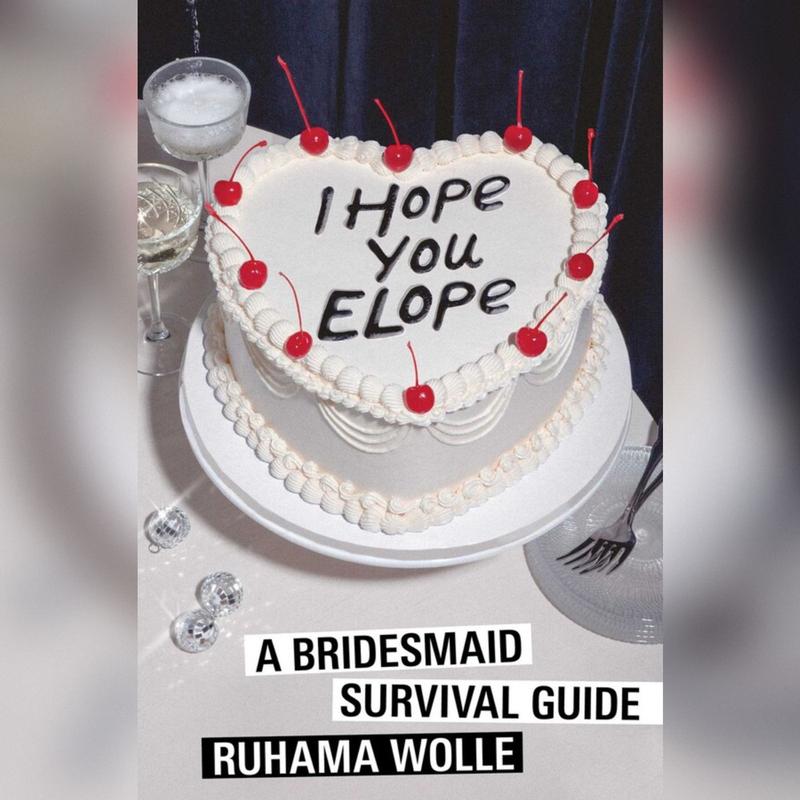
The book is titled I Hope You Elope: A Bridesmaid Survival Guide. It is out today. Author Ru Wolle is the style partnership editor for The Cut. About three years ago, she went viral for a piece about bridesmaid burnout titled To All My Friends, This Is My Bridesmaid Resignation Letter. She joins us in studio. Hey, Ru.
Ruhama Wolle: Hi, Alison. Thank you so much for having me.
Alison Stewart: Listeners, we want to hear from you. Are you attending a wedding soon? Are you part of the bridal party? What expectations have been set? How are you managing the costs? If you've been a bridesmaid or a maid of honor, what advice would you share with someone stepping into the role? Or have you been asked to be part of the of the bright little party but respectfully declined? Tell us your story.
Our phone number is 212-433-9692, 212-433-WNYC. This is a no judgment zone, by the way. Call us now. 212-433-9692, 212-433-9692. The time of your resignation, you'd already spent more than $4,600 at weddings.
Ruhama Wolle: Yes, I did.
Alison Stewart: When did you reach your true breaking point?
Ruhama Wolle: I feel like I reached my true breaking point when I realized that I couldn't even be honest with my girls. Your best friends, the people that you can really tell anything to. I was like, "This is not me." I can be honest with the people that I love. I felt like in this season, that it truly felt like a revolving door is the best way to put it, of a season.
Alison Stewart: Oh, you're in the zone. When you get in that zone, you are in the zone.
Ruhama Wolle: Yes. There's something about wedding culture that just really forces us women to bite our tongue. Stay silent. There's a point in the book where I say silence is the glue that holds the fantasy together. That's what the role requires. I don't think it should be that way. I think that was the moment when I was like, "It doesn't feel good to be this silent about all this frustration I'm feeling about what I'm being asked to participate in."
Alison Stewart: With 2020 hindsight, why do you think you kept saying yes again and again and again to the tune of $4,600?
Ruhama Wolle: You just believe that that's what you're supposed to do. You love your people. At the end of the day, I'm a big supporter in showing up for your community, showing up for your friends. It's truly how I start the book, which is I'm like, we do a disservice to each other as women, because even I think the biggest wake-up call and red flag simultaneously for me was the bridesmaids who were also participating with me. I'm like, "Y'all had me fooled. You really made me believe this was fun for you." The minute I wrote that resignation letter, the honesty started pouring in of people who were participating alongside me, being like, "Gosh, Ru, I'm so glad you finally said it."
I'm like, "Girl, I thought you were the reason I was staying silent, because you were one of the agreeable ones. I felt like I had to be agreeable as well." Because the reality is, you don't want to be that one bad friend who either says, "I don't want to wear that dress," or "I don't want to participate in this." You're afraid what happens next. The nos really scare a lot of folks
Alison Stewart: In the book, I Hope You Elope, you write-- You're a great writer, by the way you write, "They dress it up as an honor, a celebration, a sisterhood. Somewhere between the mood board and Venmo request, though, it morphs into something else entirely. A role you never applied for and a job you'll never be paid for. No one warned you about that shift. They just let you discover it the hard way." What gap did you see in the wedding conversation that you hope this book would address?
Ruhama Wolle: I think the reality of the matter is when we think of it first, from the POV of, let's say, it is your first time being a bridesmaid. Nine out of 10 times, it's probably the bride's first time being a bride as well, and her first time having a bridesmaid or even understanding what comes with it. I think the reality of the matter is no one has explicitly said here is what comes with being a bridesmaid. It becomes this guessing game for the bride. It becomes a guessing game for the bridesmaid. The costs are a lot more than people underestimate. I think people also underestimate how much of a time commitment it is. That comes into the emotional labor of it all.
We kind of whap it down to, "Oh, it's just one weekend. It's like, "No." There is a moment where I'm like, the reality of how long you're a bridesmaid is from the day you were asked to the day of the wedding. That is truly the season of you being in that role. At any point, you can be asked to support in any capacity for those eight months, a year before the wedding. I think people truly don't fully understand what comes with the role. My thing is, if you did understand it, would you be so quick to say yes in the ways that we just throw that yes out there so quick?
Alison Stewart: A new book provides both candid and humorous insights to help bridesmaids set their own boundaries. Ru Wolle, author and style partnerships editor with The Cut, joins us to discuss her book, I Hope You Elope: A Bridesmaid Survival Guide. Listeners, we want to hear from you. Are you attending a wedding soon or to be part of the bridal party? What expectations have been set? How are you managing the costs? If been a bridesmaid or a maid of honor, what advice would you share with someone stepping into the role? Or perhaps you've respectfully declined the role of bridesmaid. Tell us your story.
Our phone number is 212-433-9692, 212-433-WNYC. It's interesting in the book cause you go into the history of weddings. Tell us something interesting that you learned about the history of weddings that you didn't know before.
Ruhama Wolle: Down to the fact that I didn't even know what the whole concept of wearing something blue came from, the Victorian era. The fact that we as women wear white is also tied to that era. For me, it really comes down to when people confidently say, "Oh, it's tradition, Ru. That's what it is." I'm like, "But who's tradition?" If you want to sum it down to why the role of bridesmaids exists in the Roman times, it was a way to keep vengeful spirits and kidnapper suitors who were trying to either take the bride away, and so her maids at the time would dress alike in white garments as a means to confuse suitors.
For me, I'm like, if we really look back at the history of how it came to be and now we see how it exists, I'm like, whose tradition is it and why are we still continuing to follow it in this fashion and form.
Alison Stewart: When in your history did you notice a change? When it changed from being a traditional thing to being something a little bit more. We'll talk about it later. The costs of being a bridesmaid in 2026.
Ruhama Wolle: Post World War II, when we really get to the root of reconstruction, and we're really thinking about the height of capitalism as it exists, that is truly when the concept of the family and the home was center especially for America. At that point in the bride also became the center. It really became by Made in USA by essentially all that came with the wedding. The things that we think about now, down to fabric and silhouettes, that was the rise of that. It really became from this communal element to it is her day. I think that shift is really what got us to where we're at right now, that concept of her day.
Alison Stewart: Walk us through some of the costs of being in a bridal party in 2026.
Ruhama Wolle: The dress.
Alison Stewart: The dress.
Ruhama Wolle: We hope that it is just one dress, but if you are in a multi ethnic wedding, there are two dresses in today's world, that really starts at 150 to 175 without alterations. Then you have hair and makeup. If your bride is not biting, that cost, that can easily cost 150 to 175 as well for a hair stylist and a makeup artist. People also forget we as women, there's prep work. You are about to be on 4K camera. There is waxing. There's all the prep work as well.
Then there's the bachelorette, the bachelorette trip. Those are now international trips, if not domestic flights, that you still have to take those a weekend anywhere from Nashville to even Jamaica will cost you at least a 1,000 to 1,500. Let's say the wedding is also a destination wedding on top of that.
Alison Stewart: Just throw them all. Throw them all in there. Let's get them all in there.
Ruhama Wolle: Truly, if you are someone who is in a destination wedding, participating in a bachelorette, trying to hit a bridal shower as well, and let's say you and your bride live in two different states, you will probably come out $3,000 to $4,000 easily on one wedding.
Alison Stewart: Let's talk to Tanya, who's calling from the Bronx. Hey, Tanya, thanks for taking the time to call All Of It.
Tanya: Sure. Years ago, I'm going to qualify this because I'm 63 now, but I was in my early 20s. A friend of mine asked me to be her bridesmaid, and I was so excited. Then I get to the place to pick up the dress because, of course, we pay for the dresses. I immediately called her, and I said, "I will not wear that horrible dress." She goes, "It's horrible." I said, "It is so ugly. I will not wear that dress." She goes, "All right, so I will make you the maid of honor, and you can pick out a dress that you want. Then the maid of honor, I'll make her be one of the bridesmaids, and she can wear that dress." I said, "Okay, great."
As a 63-year-old looking back, I'm like, "Oh, my gosh, who does that?" I laugh about it, I'm mortified about it, but when I look back at those pictures, I am so glad that I did not wear that dress.
Ruhama Wolle: Shout out to you for being vocal. I'm also like, what happened to the other one who had to step down and just be a normal bridesmaid?
Tanya: She was fine. We all stayed friends. We're still friends. I'm 63. I was probably 26, but nobody complained. Everybody just went along, and I didn't even think about it. It's not until I was more mature. I started to think.
Ruhama Wolle: There's something that I say in the dress chapter of it all. I say that you learn a lot about who your friend is as a bride and as a person by the dress she chooses for her friends and her bridesmaid. Because I would hope to believe that we really passed the culture of, like, "I don't want you to outdress me," because I'm like, no one is outdressing you. It is your day. There is no bridesmaid dress that will outdress the dress.
I think that I would really hope to believe that you would want your friends to feel beautiful and to feel like themselves on the day that they're also championing and celebrating you. Shout out to you for really setting that boundary and saying I can't wear this. This is not flattering.
Alison Stewart: This text says, "If I want to travel, I'll do so of my own accord. My money isn't yours to spend." This said, "Not quite a bridesmaid, but a best man. In a span of two years, I had to travel to Brunei as well as Vietnam to do my best man duties, 10 days trip each time. They cost, though, especially one of them ended up in a divorce. For the next wedding, I told my best friend, "Dude, you're only allowed to do this one time. The divorce is not on me. I did my part."
Ruhama Wolle: There you go.
Alison Stewart: Let's talk to Shan, who's calling in. Hey Shan, thanks for taking the time to call All Of It.
Shan: Hi, thanks for having me. I'm just really enjoying this conversation. It reminded me of the time I was asked to be a bridesmaid by my sister-in-law. It was a very specific cotton candy pink she was having us wear. I am a very masculine, more masculine-presenting woman, and my choice of dress is more masculine. I had wanted to wear the same color suit. It was this whole back and forth. We had bought this jumpsuit that was closer to the color, and she was very much like, "It needs to be the exact same color." Then, when we kind of got there, it was like, "Well, are you going to wear the same shoes, heels? Are you going to wear this jewelry?" It became this whole thing.
I had to say, "I can't do this." I think the thought process behind it was like, you're going to stick out, like what you were saying before, it's going to draw attention away. It really became like a big, severe from her side of the family to mine that we're still working through. Her mom still doesn't look me in the eye. It's an interesting, it really brought up a lot. It was funny to me that the groomsmen were all wearing blue and the girls were wearing pink. Then here I am, non-binary person, being like, "What do I wear?" I really am excited to read your book because I just relate to it so much and we're working through it, our family's doing okay. It reminded me of that story.
Alison Stewart: Oh, thank you for sharing that. We really appreciate that.
Ruhama Wolle: Thank you so much for sharing that. Because it's unfortunate that there is something about control that really plays a role in weddings and in that season, and sometimes it brings out characters of the people that we love that really can hurt us, and also make us question the relationship. It goes back to this conversation of tradition. I say that the season of weddings that we're in right now, I say it's a pressure cooker that we millennials and Gen Z have inherited. It's also an issue that is very much ours.
I think there was a time and a place where I'm sure bridesmaid culture wasn't as fun for our parents' generation, but I think because of social media and Pinterest of it all and all that. This is still back to what you just shared, which is that a lot of folks, brides, will get on Pinterest or social media when they first have gotten that proposal ring and start plotting out their big day. I think they get lost in thinking that that is exactly what they need to execute for their big day.
There's a point in the book that I say at the tail end where I'm like, if we took away this prescriptive idea of weddings, and you and your partner sat down, did not open social media, did not open Pinterest, and say, "What does celebrating our union and our love look like with our community?" I'm sure it'll look so differently than what your normal wedding, traditional wedding looks like in today's world. Because I think we're all just regurgitating the same thing, down to the fact that people believe their bridal party has to be in this cemetery.
Now I think people are having more fun and playing where a bride will say, "Hey, this is the mood, and choose whatever color within this color palette and whatever silhouette." I'm loving those moments because you see bridesmaids in florals and different colors, and the photography looks incredible. I think that's what I want to also encourage folks to just have fun and to play. More than anything, I'm like, your community showing up, spending a lot of money at the least. Let them feel like themselves and let them feel great and joyful in the things that they're also participating in to love on you and your partner in this big day. I'm sorry that that was your experience, but whew.
Alison Stewart: I'm talking about the book, I Hope You Elope: A Bridesmaid Survival Guide. My guest is Ru Wolle. We'll have more with Ru and more of your calls after a break. This is All Of It.
[music]
Alison Stewart: You're listening to All Of It on WNYC. I'm Alison Stewart. My guest in studio is Ru Wolle, author of the book I Hope You Elope: A Bridesmaid Survival Guide. You write about the hidden workload of bridesmaids, the emotional impact of it. How do you define emotional labor?
Ruhama Wolle: Emotional labor can look so many different ways. I think people also forget the emotions come when you're also giving up more than you are willing to give up, right down to PTO. Especially when you think about, "Oh, wow, now that I have three weddings within one year, I no longer could take time off for myself to go to this vacation." There's also the emotional component tied to finances, which is I have now been to 12 weddings within the span of four years, and I have not put a dent on my student loans, or I have not saved up.
People forget that that emotional tie can really also have resentment in it. There's also the emotions that come with participating in a wedding. Brides feel it. It's a trickle-down effect from their family. There's the family pressures of how it needs to look for certain folks within the family. That pressure trickles down to the bridesmaids. There are aunties pulling aside bridesmaids to, "I need you to do this, and I can't have you moving this way." I think there's a lot that bridal parties are expected to juggle emotionally. You're also showing up for your friend at a time that's also hard for a bride.
There could be a 3:00 AM call that you're receiving because she just found out that her dress might not make it in time. There are so many different components of having to be emotionally astute that people forget that you probably are juggling all that life is throwing at you as well on top of this that I think people underestimate.
Alison Stewart: Let's talk to Lisa from Westfield. Hey, Lisa, thanks for calling All Of It. You're on the air.
Lisa: Hi there. How are you? I got in late to the conversation, so I don't know if this is mentioned. I also don't know if it's actually fitting. I wanted to add something that happened with me that I understand may be a new trend. My son, who is on the West Coast. We are on the East Coast. He got married last year, and his lovely new wife included the mothers and the favorite aunts at the bachelorette party in one country. We had so much fun. I will tell you, those young girls did not hold back just because old ladies were there.
In addition, what this did it gave me an entire weekend to get to know her mother. We're on opposite coasts, so when else would we really have gotten to know each other? You know, it's not at the wedding.
Alison Stewart: I appreciate your call, Lisa. Thank you so much for calling in. Let's talk to Kemp from the Upper East Side. Hey, Kemp, you're on the air.
Kemp: Oh, hi. I just wanted to tell you my story. I felt like I'd been a professional bridesmaid. I had a closet full of dresses that brides had said, "I tried to pick out a dress that you could wear again. I never wore any of those dresses again."
Ruhama Wolle: It's the biggest lie.
Kemp: When I got married, I had decided to have one friend be the maid of honor. She can pick whatever dress she wanted to wear. I had some little girls be flower girls, and they could wear whatever they wanted to wear. I wore my mother's wedding dress, which I was so pleased that I could fit into. That's how we kept it cheap.
Alison Stewart: Thanks for calling in. Suzanne is calling in from Brick, New Jersey. Hey, Suzanne, we want to hear your story.
Suzanne: Hi. I had a good friend who asked me to be a bridesmaid. We were friends in high school. She was first engaged, and I was in college, and I was going to be the maid of honor. Then we had not really a falling out, but we just lost touch with each other. Fast forward four years, and she asked me again to be a bridesmaid. I wasn't in a spot, financially, where I could do it. I wasn't in the spot where I felt like a really good friend connection to this person anymore. I still felt like I had to, because who says no to a bride when she asks me to be her bridesmaid?
It was really in retrospect, I wish I hadn't between the cost of the dress, which I didn't like, and gave away at a, I don't know, Goodwill or a prom donation. There was flights and all these costs, and 20 years later, I don't talk to this person.
Alison Stewart: Oh, that's hard. Thank you much for sharing that. It's interesting how can a person go about saying no?
Ruhama Wolle: Before I even get into that. I love the point that she brought up about having not spoken for such a long time and then being surprised that she was asked to be a bridesmaid. In the friendship chapter, I call it bestie inflation. I'm like, think of Oprah, and you get a sedan. I'm like, there are too many women throwing out the term bestie, especially when it comes to wedding season. I'm like, in any select season of anyone's life, you probably have three max, four women who can really or friends who can really show up for you in the capacity that is authentic and can really give that ride or die feel.
I truly think that to hit this note of six to seven women, I'm like, if we really run down the numbers, they're probably placeholders. That reality--
Alison Stewart: A relative of somebody in his family.
Ruhama Wolle: Exactly. I'm like, as a bridesmaid, you have to know if you are a placeholder. Just because someone made you a bridesmaid or you asked them to be a bridesmaid, and you haven't spoken for seven years, don't feel like you have to now reciprocate that. I think you have to really assess the season that you are in, in that friendship. That being said, I think the no I always say is let it be rooted in truth. You don't come out and say just no. You want to really explain what that reason is.
If it is a capacity, you say, "Hey, love, I want nothing more than to show up for you on your big day. Of course, I'll be there for the wedding and be there to celebrate you. Right now, you understand what's happening with family obligations, and you know that I've just been recently laid off. I cannot take this on financially. I still want to be able to show it for you in different ways, leading up to the wedding. We can talk through that. I love to treat you out to maybe a spa day."
Figuring out solutions as well in that, and just having a very open dialogue conversation. If someone is really a true friend, they'll be able to say, "I hear you. I know exactly what's going on in this season. I appreciate your honesty." If they really want you, they'll say, "How about this? I'll bite the cost on the dress. Don't expect you to show up to the bachelorette the bridal shower. I just want you there for the big day, standing next to me."
There are friends who will say that and do that. You'd be surprised how they'll also meet you halfway or even more, or other times, there are friends who want somebody who can fully show up and say, "Thank you for that. Yes, I actually probably will just have you show up as a guest if that's okay." You're out then, and the friendship is still intact. It might feel a little off. That's the reality of the situation. If anything, you saved yourself $3,000 and resentment that would have grown in the process of you doing that and maybe ended the friendship as well. I think we have to just be very upfront from the beginning and do that with truth, and I think with a warm conversation.
Alison Stewart: Final call. Diane, you've got a minute to tell us your story because it's a good one.
Diane: My daughter recently got married. The bridesmaids were to wear a shade of pink, rainbow of pink. These were friends she had since fifth, sixth grade. One of the bridesmaids wanted to pick out a coral dress. My daughter was fine with it. That's what the girl, young woman wanted. That made her feel good. Good enough. Maybe the color might be more prominent in the photographs, but who cares? That's what the young woman friend of hers wanted to do. People need to chill out. Relax.
Ruhama Wolle: Amen to that.
Alison Stewart: People need to chill out. That is the best advice we have gotten. Did people respond well when you sent your resignation letter?
Ruhama Wolle: Most people did. Most people felt like they finally were heard. There were some folks who called me the wedding grinch. I'll take that. Listen, I'm like, if that's what it takes, I'll play that role. I agree with you. I think we really need to reel it back and chill out.
Alison Stewart: To quote Diane. The name of the book is I Hope You Elope: A Bridesmaid Survival Guide. It's by Ru Wolle. She is the style partnership editor with The Cut and an author of a book which is out today. Thanks for coming into the studio.
Ruhama Wolle: Thank you so much, Alison. A pleasure.
Alison Stewart: Coming up next on All Of It, vacationing alone might seem pretty daunting, but it can be really rewarding. Up next, we're speaking with travel journalist Amelia Edelman to hear her tips for traveling solo and how to make the most of it. I'll meet you back here after the news. This is All Of It.
Copyright © 2026 New York Public Radio. All rights reserved. Visit our website terms of use at www.wnyc.org for further information.
New York Public Radio transcripts are created on a rush deadline, often by contractors. This text may not be in its final form and may be updated or revised in the future. Accuracy and availability may vary. The authoritative record of programming is the audio record.