
Why Is Leaving MAGA So Difficult?
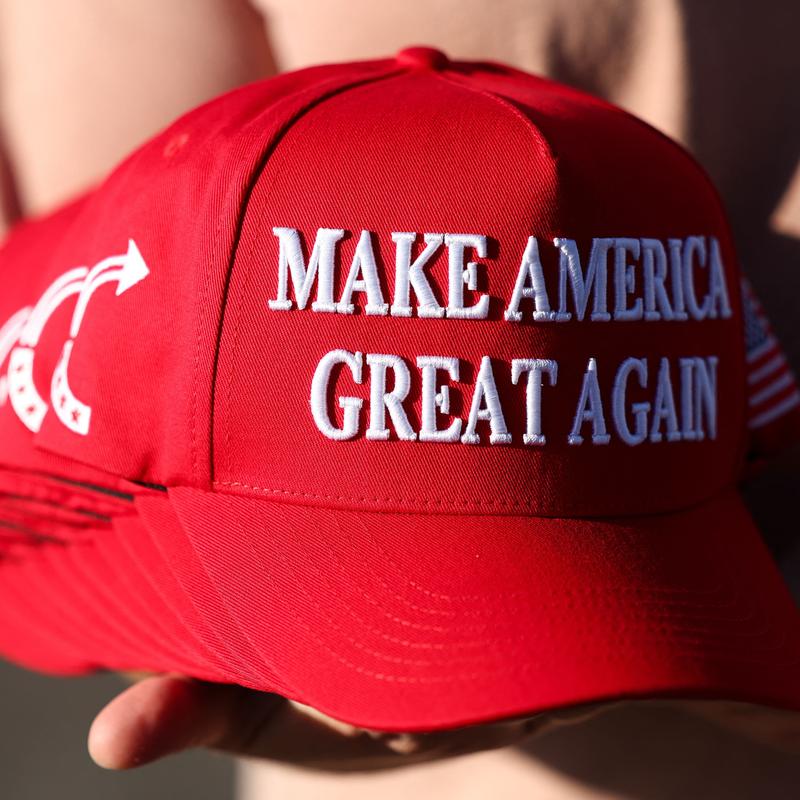
David Remnick: A recent poll, this one from NBC, found that only 30% of the American public identifies with the MAGA movement. Now, that's very far from a national mandate, but MAGA has a huge influence and power over the entire electorate. To people outside the movement, the intense loyalty of the coalition in the face of endless scandals and political setbacks is sometimes absolutely confounding. Defections seem rare, and they come with the risk of reprisal, even reprisals from the President himself. Our producer, Adam Howard, spoke to someone who's trying to make defection easier.
Adam Howard: Back in 2016, Rich Logis was a man in search of a political movement. He was drawn to candidates who were looking to break the stranglehold of the two-party system. He even voted for Ralph Nader more than once. When Donald Trump came along, he liked his economic rhetoric, but he especially liked that he was viewed as a threat by the establishment. Logis became a Make America Great Again true believer. He wrote MAGA articles, he hosted a MAGA podcast. He even contributed to the call script for the Trump campaign. Somewhere along the way, Logis hung up his red hat for good.
He built a website called Leaving MAGA, where people like himself can share their stories and provide an outlet for friends and family struggling with MAGA believers. I talked with Rich Logis the other day about what it means to walk away from the MAGA movement. Rich, you once wrote that the Democratic Party is the most dangerous group in the history of our republic, foreign or domestic, more than Islamic supremacists, more than the Nazis. Did you really believe that? What led you to that conclusion?
Rich Logis: Sadly, I did. One of the reasons I believed it is because all I consumed was a very steady diet of MAGA media. It was the kind of media that I wrote for. I wrote numerous articles, freelanced. I had a professionally produced podcast. I allowed myself to be influenced into believing that because it was what I was hearing in MAGA media. It was what I heard from those with whom I'd gotten close in MAGA. Looking back on it, I know how delusional it all sounds. At the time, what I wrote was what I believed.
There are other statements that I made also that I'm quite ashamed of to this day, having referred to Democrats, for example, as malignant. It's one of the reasons why I went back and apologized to so many of my longtime friends with whom I'd lost contact with, who were blue voters, because I needed to offer a mea culpa to them because of the way that I had thought about them and lumped them into that group.
Adam Howard: What was it specifically about the Democratic Party that MAGA hates so much?
Rich Logis: Those in MAGA believe that liberalism is the source of all of our national ills. Our political ills are the source of hardships in each of their households. There's a belief that liberal democracy has often failed many of us in the country, which, in fairness, I think some of that concern is valid and is warranted. The belief was and is that anything that even is perceived as liberalism should be considered a threat. That could be anything ranging from Democrats are coming for our guns to children are being indoctrinated in the public schools, to anything that has to do with electoral power, for example, that Democrats and liberals are trying to import foreigners and brown people to replace white people.
These kinds of beliefs were what I trafficked in, and these kinds of falsehoods are what I propagated as a pundit and as a MAGA activist for many, many years. I think that there's a lot of trauma within the MAGA base, whether it's political or economic. I think a lot of MAGA support, especially those kinds of beliefs, Adam, I believe that they are cries for help. I'm not qualified to make any diagnosis. I'm not a therapist or a clinician. There's a lot of pain within MAGA. I think that a better question of asking what's wrong with you in MAGA? I think a better question is, what happened to you? I discovered through getting to meet people who left that they endured all kinds of trauma, whether it was in their households, their families, or their churches.
Adam Howard: When you were writing and doing the podcast and all that stuff, were you excising some personal demons of your own, or what was your personal goal and mission? How did you view your role in the movement?
Rich Logis: I looked at the 2016 victory as a second founding of the country, and I actually viewed Make America Great Again as something very progressive and very forward-facing. I was 39 years old in 2016. Make America Great Again was not nostalgic for me. I wasn't thinking about the good old days back in the '60s and '70s. I had become a parent for the first time in 2016, and I justified so much of my-- I became a parent for a second time in 2019. I justified so much of what I wrote and said as doing it for my family. Many in MAGA would say exactly the same today with those who have children, they would say they're doing it for their family.
In looking back on how I approach this, I felt like I was not just a peripheral character in this. I viewed my role as being a true patriotic soldier in this existential battle of good versus evil. Anyone who was with us, we considered ourselves to be on the right side of history, and we were the real Americans. Anyone who was against us, they were on the wrong side of history, and they were the fake Americans.
Adam Howard: What was the inflection point for you? Because you're going from having those very deeply held beliefs to breaking with MAGA. When did that happen? Why did that happen? How did you fall out of love with this movement?
Rich Logis: To paraphrase Hemingway, my epiphany happened gradually and then suddenly all at once. There were numerous factors that eventually led me to leave. There was Trump's mismanagement of the pandemic. There were the stolen election lies. I never believed that the election was stolen in 2020. There was January 6th. There was my governor, Ron DeSantis, who platformed anti-vaxxers at his pressers. I was never an anti-vaxxer. I believe that the COVID vaccine was, in fact, a medical miracle.
The final straw for me was on May 24, 2022, which was the Uvalde, Texas, school shooting. It took me an entire year to come to a realization that I was wrong and that so much of what I believed turned out to be false and inaccurate. One of the ways that I came to that painful but liberating conclusion was I diversified my news and information sources, and I realized that Democrats were not our enemy and that liberalism was not an existential threat to us.
After Uvalde, I quietly left MAGA. There was something at the time that was really gnawing at me. Because I had always been so unapologetically public in my support for Trump, I felt that I needed to be public in my renunciation of the movement. It was an exact day, August 30, 2022. I wrote an article. I published it, and I said in there that I was wrong, that I was sorry for supporting Trump and MAGA, and that I wanted to apologize to anyone whom I may have hurt with my words and my deeds, and my past actions.
The God's honest truth is that I never actually thought anybody would care. It turned out that people did care. The people who commented and responded to me almost instantaneously after publishing that were friends and family of those still in the thrall of MAGA. They approached me with what was very tangible desperation in their voices and their messages because they so badly wanted to have a relationship again with their MAGA close one.
After that, that year's time where I finally broke from MAGA, I spent the next many months recounting my story. From recounting that story is how was born, from all of that, our organization, Leaving MAGA, which is now in our second year. The core part of what we do at Leaving MAGA is the storytelling. It's featuring others who, like me, left MAGA as well.
Adam Howard: What do you say to those who might argue, why didn't you check out after birtherism or Access Hollywood or Charlottesville or the whole litany of transgressions?
Rich Logis: I think that's a fair criticism. I didn't agree with the statements about women and Muslims. Looking back on it, the moment that my curiosity should have ceased and I should have run was Trump's comments about the late John McCain. That was the moment when I should have said, "I cannot support this person." I so quickly got deep into MAGA that I justified the unjustifiable because I believe that even with those flaws, that Trump was still a much superior choice to Hillary and the Democrats.
Adam Howard: How was your departure from MAGA received by your friends in that community?
Rich Logis: One of the hardest parts of leaving MAGA was knowing that you're going to walk away from a second family and you're not going to have relationships with them anymore. It's hard to have relationships after you leave, because now you went from being a MAGA soldier to now being the existential threat, because, remember, anyone who was not with us was wholly against us. Those with whom I'd grown close in MAGA, my relationships, they ended. What came of that, though, was I was able to create a new community with people who left.
I was able to also rejuvenate some of the relationships with people I'd lost contact with. In fact, one who was very influential in my life said to me, "Rich, I always knew that you'd come back." I feel like the lesson and the moral and all of that for those listening who have friends and family in MAGA, and I suspect most who are going to hear this do, don't give up on your close ones. Because if I left and the others-- If we all left, it's possible for others to leave. Don't feel like that those relationships are lost. They might be strained right now, but I don't believe that they need to be lost.
Adam Howard: What would you say is the ultimate goal of the Leaving MAGA site?
Rich Logis: We are looking to just continue to feature people who left. What does it look like to leave MAGA? What does that exactly mean? Someone must take responsibility for their past actions and rhetoric. I don't believe that you can actually leave, and you can't sever yourself from the movement unless one takes accountability. Taking accountability means reclaiming your individuality and reclaiming your humanity. It means no longer engaging in the kind of language that you read earlier about what I said about Democrats.
As part of taking responsibility, as part of a reclamation of humanity and individuality, what happens is something that I refer to as becoming a born-again human being. You realize that those people with whom you disagree are not-- They're not evil, they are not your enemy. They are fellow Americans. Even more importantly, they're fellow human beings. When being in MAGA, we lose sight of that humanity. Donald Trump himself traffics in this rhetoric all the time, referring to people as animals and referring to others as vermin. This kind of language is what I celebrated when I was in MAGA until I realized, to my own personal horror, the kind of person I allowed myself to become.
Adam Howard: What kind of people has the site been drawing?
Rich Logis: The people whom we feature, they have fully left. There's a whole variety and diversity of people who left. We have a multiracial, multi-ethnic coalition. We have those who are gay Trump voters. We have, for example, one lady, Stefania, whose entree into MAGA was through Christian nationalism at her church. We have another, Jason Riddle, who served time for his role in January 6, and he rejected Trump's pardon. There's another, we have James Hicks, who is a Black former MAGA supporter, and so desperately sought community that there's a photograph that he shares of him as a Black man wearing a Confederate flag wristband.
This is somebody who got very, very deep into MAGA because he so yearned for what it is that we all need, which is a feeling of belonging and gathering. Those who come to us don't have to become a Democrat or a liberal or a progressive. We have those who are centrists, those who are left, those who are center-left, and we even have some who still share some conservative beliefs.
Adam Howard: We're having this conversation right now amidst a resurgence of the Jeffrey Epstein story in the headlines. The last time it was the dominant story, there was this-- Maybe this was wishful thinking, but there was this expectation that this was one of the rare stories that might actually break up the MAGA movement or certainly create a fissure? Do you believe that that happened, or do you believe that it's not actually going to move the needle in any real way?
Rich Logis: I think that this story is the flame that won't extinguish itself. I'm actually very encouraged by the fact that there are congressional Republicans who are willing to buck the President and release more of these files. It's become increasingly more difficult with this story for us to conclude anything other than the fact that the President has not been honest about his relationship with Jeffrey Epstein. I think for those in MAGA, there's a question to ask, an existential question. If Donald Trump is lying about this, what else is it that he might be lying about?
Adam Howard: When he says things that are just blatantly, obviously untrue, like drug prices are coming down a 1,000% or there is no inflation, or that the Epstein story is entirely a hoax. How do people in the MAGA movement reconcile that?
Rich Logis: Unfortunately, there are some in MAGA who will support Trump no matter what. Even if there was irrefutable evidence that Trump knew exactly what Jeffrey Epstein was doing and did nothing about it, there are some people in MAGA who will remain devoted to the President.
Adam Howard: Why is that? Why do you think he personally inspires that level of devotion? Do you think any other figure in American political life could accomplish that?
Rich Logis: No, I don't think so. I think that the reason that Trump has the kind of allegiance that he does with so many in MAGA is because he very wisely took MAGA, which was not new and novel. It was a form of right-wing politics that have existed for generations. He branded it. As part of the branding, he's the person who is the expert when it comes to this form of politics. I think that so much of the sycophancy that people in MAGA have toward Donald Trump stems from the fact that he's an irreplaceable figure in MAGA.
There are others who will eventually try to jockey for that position, but I think that when Trump is finally off the political scene, it's not that MAGA will go away, but it will unravel. I think that there are people right now who recognize some of that unraveling. I could name people like Nick Fuentes, who has taken to his audience to harshly censure the president. I think he's a person who recognizes that there's going to be a post-Trump MAGA, and he wants to position himself as a leader. I think Charlie Kirk, rest in peace, was trying to do that with Turning Point.
Adam Howard: You mentioned them unraveling, but what does that really look like, and what does that mean?
Rich Logis: There's going to be millions of people who are going to be at a political crossroads. They're not going to have a leader anymore. I don't think a J.D. Vance or a Marco Rubio, a Marjorie Taylor Greene. They don't inspire MAGA the way that Donald Trump has and continues to. What the election results recently show is that when Trump is not on the ballot, MAGA struggles. I don't see that changing. He himself is the singular figure who drives MAGA. Without him in the picture, MAGA will weaken. As it weakens, we need to be there to catch all of those millions of people who might get attracted to whatever the next iteration of MAGA is.
Adam Howard: What has it been like for you personally? How have you changed once you've left MAGA behind? Did you ever have moments of being tempted to go back?
Rich Logis: Leaving MAGA was good for my soul and my psyche. While I have no regrets about leaving, I will admit that sometimes when I tell the story of my MAGA odyssey, even today, talking about my past, the feelings are conjured. Those feelings of being welcomed and feeling like you're part of something, and the exhilaration that comes from that. Those feelings haven't gone away. It's just that I've now transferred them and I channel them in a different way.
Adam Howard: Your organization isn't the first and won't be the last working against the MAGA movement. What would you say to people who are skeptical, since the movement has endured, and Trump is back in the White House, and obviously, MAGA politicians control both houses of Congress? What would you say to skeptics of both your transformation and then also your mission to turn people away from this?
Rich Logis: The fact is that we did make poor choices in the past. I don't hold it against anyone who might be suspicious of our own transformations. What I would ask them, though, is to consider offering grace to anyone who legitimately changes and seeks penitence. I think for Leaving MAGA, we know that we're in the long haul, that this is an old saying that activism is a life sentence. We're not just an anti-Trump organization. I feel like there's a plethora of those, and most of them have not fared very well. We're not positioning ourselves as simply anti-Trump. We're positioning ourselves as pro-humanity and pro-human being, and pro-change.
Adam Howard: Thank you so much for coming in and sharing your story with me.
Rich Logis: My pleasure, Adam. Thanks for having me.
David Remnick: That's the Radio Hour's Adam Howard speaking with Rich Logis, the founder of Leaving MAGA.
Copyright © 2025 New York Public Radio. All rights reserved. Visit our website terms of use at www.wnyc.org for further information.
New York Public Radio transcripts are created on a rush deadline, often by contractors. This text may not be in its final form and may be updated or revised in the future. Accuracy and availability may vary. The authoritative record of New York Public Radio’s programming is the audio record.