
Trump Guns for the FTC. Plus, Are We the Losers in the Paramount v Netflix Battle?
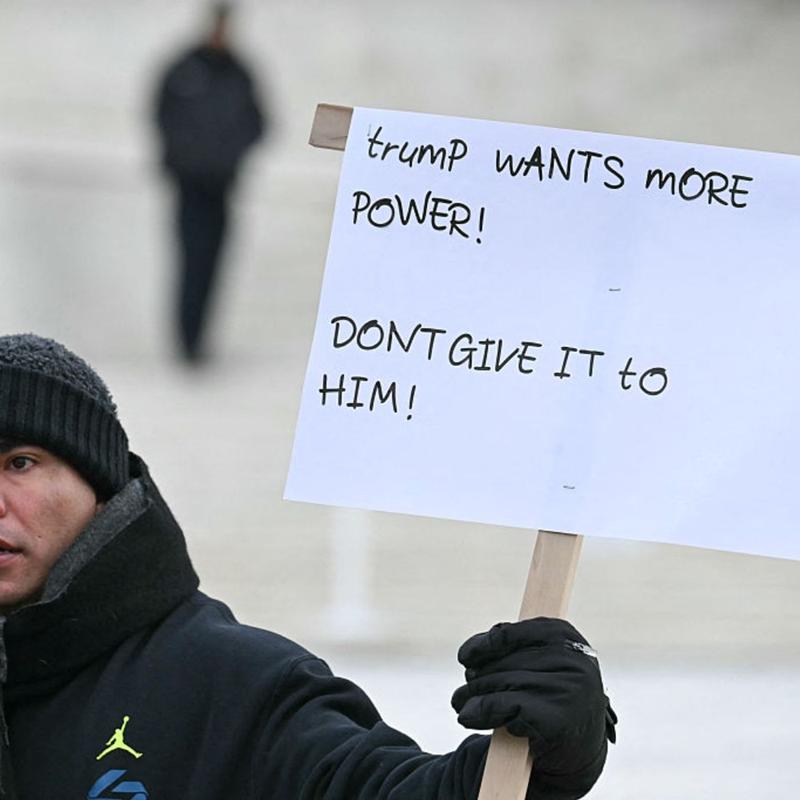
Title: Trump Guns for the FTC. Plus, Are We the Losers in the Paramount v Netflix Battle?
Micah Loewinger: Hey, it's Micah. As we approach the end of the year, I want to ask you one more time to consider donating to OTM. Before you hit that skip button, just hear me out real quick. Listener support is an absolutely crucial source of funding for On the Media, especially with the elimination of federal funding for public media this year, which for WNYC amounted to a loss of nearly $3 million per year.
That makes listener support even more important. It's what gives us the freedom to investigate the stories and issues that we think are important and interesting, like how the Pentagon press corps was taken over by right-wing influencers, or the history of shortwave radio, or how mainstream media have fueled the AI bubble. Your support gives us the editorial independence that makes the show what it is.
As you spend these last days of 2025 thinking about what's important to you, please support On the Media. Oh, and here's another reason to give to OTM before December 31: all donations up to $15,000 will be doubled thanks to the Minaki Foundation and Michael Holzer. That means your year-end gift will have twice the impact for OTM. $100 is worth $200, $500 is worth $1,000, and so on. With everything we have planned for the next year, and let's be honest, everything we will need to cover, now is the best time to get off the fence and support this show. To give, go to onthemedia.org/donate. Thank you all so much, and enjoy the show.
[MUSIC]
Noah Rosenblum: The Supreme Court has been expanding the president's power in ways that would have troubled our anti-royalist founders.
Brooke Gladstone: This week, the High Court seemed inclined, despite precedent, to let Trump fire an FTC commissioner without cause. From WNYC in New York, this is On the Media. I'm Brooke Gladstone.
Micah Loewinger: I'm Micah Loewinger. Also on this week's show, Netflix is vying with Paramount to buy Warner Bros., which owns, among many other things, CNN. The President may or may not have a finger on the scale.
President Trump: I'm not involved in that. I will be probably involved, maybe involved in the decision. It depends.
Brooke Gladstone: Plus, when it comes to legal protection, should a notorious gossip blogger be considered a journalist?
Joel Simon: When I hear about these edge cases, I resist and say, "Well, that person is not a journalist," but as I dig deeper, I think about, "Who gets to decide that?"
Micah Loewinger: It's all coming up after this. From WNYC in New York, this is On the Media. I'm Micah Loewinger.
Brooke Gladstone: I'm Brooke Gladstone. With Christmas greetings from the Supreme Court, Justice Sonia Sotomayor.
Justice Sonia Sotomayor: You're asking us to destroy the structure of government and to take away from Congress its ability to protect its idea that the government is better structured with some agencies that are independent.
Brooke Gladstone: This week, Trump v. Slaughter finally made it to the High Court, a roughly nine-month journey launched by the president's attempted firing of Rebecca Slaughter, a commissioner at the Federal Trade Commission, the independent agency charged with battling consumer fraud and enforcing antitrust regulations. The President wants to fire somebody again? It's not just an HR issue, though. It's so very much more than that. Justice Elena Kagan.
Justice Elena Kagan: The result of what you want is that the president is going to have massive, unchecked, uncontrolled power.
Brooke Gladstone: Here, the Court is revisiting a case with a long, complicated history, but the conservative majority seemed primed to change that history even before Monday's oral arguments escaped the advocates' lips. Justice Brett Kavanaugh.
Justice Brett Kavanaugh: Unaccountable independent agencies raise enormous constitutional and real-world problems for individual liberty.
Brooke Gladstone: Yes, the majority is poised to do what it nearly always does and find for Trump. Pack your bag, Slaughter. Yet in 2018, she was Trump's pick for the FTC. Why is she out? Not for malfeasance or neglect of duty. Trump said simply over email that allowing her to remain would be "inconsistent with the administration's priorities." If the Supreme Court rules in Trump's favor, it would effectively hand him control of the nominally independent FTC and not just the FTC.
Noah Rosenblum: There's no question about what Donald Trump wants the removal power to do. He has telegraphed that over and over again in multiple different contexts.
Brooke Gladstone: Noah Rosenblum is associate professor of law at New York University, specializing in constitutional law and legal history.
Noah Rosenblum: He wants the removal power so that he can threaten government officials, tell them to do what he wants them to do, and if they fail to do it, he'll fire them.
Brooke Gladstone: You wrote an amicus brief with Nathaniel Donahue for the Slaughter case. Let's talk about how we got here. The Constitution, it turns out, is kind of a shoddy document from an HR point of view. [laughter] It doesn't specify who has the power to fire these appointees. Tell us a little bit about that hot summer in Philadelphia when this document was drafted.
Noah Rosenblum: To back the story up and go back to the Constitutional Convention, there's a big debate about the extent to which they do or don't want to specify the specifics of the structure of government in the document. After considering a few different alternatives, they decided to say very, very little, to leave the framing of the government and the working out of the relationship of its different components to later actors, as opposed to putting it all in the Constitution, basically, to letting it work itself out through the ordinary political process of legislation. By making the structure of government something that you can work out through ongoing legislation, you can make it more adaptive to the different circumstances that might present themselves.
Brooke Gladstone: It doesn't get preserved in the amber of the late 18th century.
Noah Rosenblum: That's exactly right. In fact, the original conception of the framers was that they had less experience of democratic government than they knew we would have under the Constitution they themselves were framing.
Brooke Gladstone: Something else that you observed is that it was really hot that summer. They'd been there a long time. You say that another reason, perhaps for not addressing this issue, was they just wanted to go home.
Noah Rosenblum: Why they don't talk about removal is a subject that later law professors and legislators will spend a lot of time arguing about, but given the way the convention itself unfolded, it seems most likely that they just forgot about it. By the time the convention was coming to an end, they decided, "Well, this is more trouble than it's worth. We'll sort this out later."
There was this default rule working in the background, what's called the symmetry rule, which was probably guiding some of their thought. The symmetry rule says that in the absence of any other law on point, the power that appoints is the same as the power that removes. You actually see Hamilton say this in The Federalist Papers, which could have been one of the reasons why the convention decided that they did have to specify appointment, but they didn't have to worry as much about removal. The question seems to genuinely have been left open and wasn't settled.
Brooke Gladstone: Let's jump to Teddy Roosevelt. Because of that hole, that ambiguity, he determined that the president can do anything not explicitly forbidden by the Constitution or the laws passed by Congress. Likewise, Woodrow Wilson.
Noah Rosenblum: This is where the story starts to get really interesting. In the late 19th century, you have a series of presidents who are basically the creatures of their party. In that capacity, they really are just glorified HR managers. In order to keep the parties together, you have to have goodies with which you can pay off party supporters. There is no goodie more valuable than a plum federal patronage position.
Presidents would just appoint their cronies to various positions to reward the party. Teddy Roosevelt is a champion of what has come to be called the stewardship theory of the Presidency, which is that the president can do anything on behalf of the American people that he's not affirmatively forbidden from doing. He wants to use that power to advance this expert-driven conception of government that where matters are technical, they should be left to non-political experts to decide on behalf of the American people.
Even though Wilson is a different party from Teddy Roosevelt, that same attitude seems to inform Woodrow Wilson's approach to government, maybe even more so. There's a longer story here about Wilson's megalomania, especially as we get to the end of his presidency, in which he comes to understand himself as the kind of privileged vessel for the realization of global peace and things like that.
Brooke Gladstone: We have this hole in the Constitution, which fuels hopes of expanding presidential power. All this culminates in a 1926 case, Myers v. The US. Frank Myers, a postmaster in Portland, Oregon, nominated by Wilson in 1914, seemed to have annoyed some powerful people. Wilson decides to cut him loose, but then Wilson suffers a terrible stroke. He's basically catatonic, leaving his wife, Edith, to basically run the country.
You've said that Wilson's advisors are sort of draping his body in ways to suggest that he's still with it, like Weekend at Bernie's, but, but meanwhile, Myers is begging for a chance to plead his case about why he should keep his job. First, the senators say yes, and they say, "No, there won't be a case. Just pack your bags and go." He sues. By the time it gets to the Supreme Court, William Howard Taft, the former President, is Chief Justice, and he rules that President Wilson has the right to fire Myers, but only for a particular reason.
Noah Rosenblum: The question for Taft is whether the president has the power to remove a postman despite a statute that would prevent the removal. The way Taft himself, a former president, thinks this through is that when a government officer is exercising purely executive functions, who doesn't really have any criteria for their decision and is exercising pure political discretion, then clearly, they need to be within the control of the president because the president is the national leader of the people.
He rules that since Myers is a purely executive officer, the president must be allowed to remove him. Remember that Taft, like Roosevelt before him, is committed to this expertise vision of government. He recognizes that the old crony system of patronage was bad and that there have been major steps to move beyond that. He doesn't want to open the door to bringing that world back in. He also notes that when you have government officers with particular kinds of responsibilities, it might be inappropriate for the president to be able to exercise the same kind of power over them that he does, where you have somebody like the postman.
Brooke Gladstone: An official in an agency that does things that are quasi-legislative or quasi-judicial, the president doesn't have the right to fire except for cause. They're taking bribes, or they're incompetent, or they're not showing up for work, but not because of policy disagreements. Jump ahead nine years. 1935, the Supreme Court confronted another case about presidential firing power, Humphrey's Executor v. The United States.
This time, it's Franklin D. Roosevelt trying to fire an employee without cause. What do you know? The employee was an FTC appointee. By the time the case gets to the High Court, the plaintiff is dead. That's why it's called Humphrey's Executor v. The US. Why did you think, given the Taft decision, that FDR thought he could win this one?
Noah Rosenblum: Many of the judges who had decided Myers were still on the Court. You can see why that might've confused Roosevelt. If you read the Myers opinion that the president has complete control over the government to realize his policy program, well then, yes, sure, you think your odds in the Humphrey's Executor are going to be really good, but in fact, when the Humphrey's executive decision comes down, it's unanimous against the Roosevelt administration.
That includes four of the judges who'd been in the Myers majority. That, to me, as a historian, strongly suggests that they saw those two cases as on all fours with each other. The FTC is applying the law to facts. That's quasi-adjudicative. The FTC is making determinations about the specific meaning of the law within broader bounds that have been prescribed in statute. That's quasi-legislative. Given that it's acting in these quasi-adjudicative and quasi-legislative ways, it's totally fine for it to be independent of the president. After all, there have been already, by that point, 50 years of agencies that look a lot like the FTC that are independent from the president, too.
Brooke Gladstone: Again, you can never leave aside political considerations. There are a lot of people who were worried about FDR asserting too much power. He famously gave that speech, "Don't worry, I'm not trying to be a dictator. Besides, I wouldn't be a very good dictator if I tried."
Noah Rosenblum: "Don't worry." Exactly.
Brooke Gladstone: That had to have played a role.
Noah Rosenblum: Absolutely. The fear of FDR as a dictator does inform both Supreme Court opinions of that time and other actions within the legislature. The defeat of Roosevelt's attempt to reorganize the executive branch, the defeat of his court packing plan, no question. Scalia would later point to Humphrey's and say, "Hey, the only way to understand this case is as part of a court that's worried about FDR's dangerous overreaching."
I got to be honest, I think Scalia said that because he just didn't understand the logic of quasi-legislative and quasi-judicial. There are other places where Scalia says as much and accuses the Court of just making things up. Moreover, there are some big progressives and New Dealers on that Humphrey's Executor court, and they vote with the Humphrey's Executor majority. Even if you thought that this was really a political case, you might've expected them to, I don't know, write a dissent in which they said something like, "Clearly, the Court is acting politically, and we disagree," or drop a concurrence, saying, "We think that here, the president is overreaching," but they don't do that, right?
In fact, I was in the Supreme Court archives this past summer researching this. For the Supreme Court, Humphrey's Executor is not a hard case. For them, the case is already decided by well-established logics and precedents.
Brooke Gladstone: Now, the conservative majority on the Supreme Court claims in large part to be originalist. They base their rulings, they say, on what they believe is closest to the original meaning of the text of the Constitution. Kind of like biblical fundamentalists, right? If expected, they rule in the president's favor in Trump v. Slaughter, wouldn't the Court actually be overlooking then the Constitution's original intent?
Noah Rosenblum: I certainly think so. The Court has telegraphed over and over again that they're going to overrule the Humphrey's Executor precedent. I think this is about presidentialism, not originalism. This is a real tension for the Court, which they've tried to resolve by claiming that the original reading of the Constitution creates this strong presidential democracy, but every scholar of the 18th century knows that's not true.
The Court at this point has to know that that's not true as a matter of history as well. I think they've become fetishists. They really believe that there is a thing called executive power and that you can understand it in isolation from legislative and judicial power. It has its own essence. They're just kind of going around the government and asking, "Well, is this essentially executive power or not?" That's just not how the Founders would've thought about this at all.
Brooke Gladstone: Caleb E. Nelson is a leading originalist, and he's been cited by every conservative justice now on the Court, but in this case, he wrote that textual and historical evidence for giving the president unlimited power to fire officials is "far more equivocal than the current court has been suggesting." He also said that it would grant the president more power than any member of the founding generation could've anticipated.
Noah Rosenblum: Yes, I think Caleb's essay marks a real turning point in the scholarship on this question. The logic of presidential democracy that you see reflected in the Court's current approach just is not the way that the Constitution thought about democratic government.
Brooke Gladstone: What happens to the FTC? What happens to the Federal Reserve? Trump has already tried to fire one of its members, Lisa Cook, because of her resistance to cutting interest rates. What is the consequence of this, what appears to be inevitable decision, granting Trump this firing power over independent agencies?
Noah Rosenblum: That is the million-dollar question, and it's a lot of what oral argument in this case focused on. I don't come away from argument persuaded that anybody knows what the limiting principle is actually going to be. The questioning opened with Clarence Thomas asking the government whether there were any principal officers who could be insulated from presidential removal, and the government saying, in principle, no, although there might be some special exceptions, which was them, I think, nodding towards the idea that the Court would come up with a cockamamie carve-out only for the Federal Reserve, that that theory, the idea that government should be able to operate as an extension of the personality of the chief executive, that just is the administrative theory of fascism.
I don't mean that in a hyperbolic way; I mean it very pragmatically in a very scholarly way. If you were to go talk to fascists, public lawyers in the 1930s, and say, "How do you think about administration?" they would say, "Oh, under fascist government, administration is nothing other than an extension of the personality of the chief executive."
Brooke Gladstone: In October, the "No Kings" protests drew, reportedly, 7 million people in the US and still more in 20 foreign countries. No Kings is a catchy name for the biggest protest ever in this country, but did the organizers in fact get it right? Is the Supreme Court trying to create, in Donald Trump, an American king?
Noah Rosenblum: I do think that the majority of the Supreme Court has been expanding the president's power in ways that would have troubled our anti-royalist founders. Some of the ways that kings most abused their powers and that bothered the framers do seem to be in front of us again today: self-dealing to advantage your friends and family, right? That's the kind of thing that kings did and that the framers were really concerned about, creating new offices, sending people to harass others when they interpreted the laws in ways that kings disagreed with.
That's the kind of thing that the framers worried about and that the President seems to be doing, and, just since we're talking about the FTC and removal, firing people who had a different interpretation of what the law demanded of them and treating government not as a creature of law, but rather as an institution loyal to the person of the king. Well, that was precisely the kind of thing that the anti-royalist founders worried about.
Even as they sought to create a stronger chief executive, they were crystal clear that it was not going to create a royal office. This is kind of a small point because we don't think about oaths of office anymore, but I do think it's pretty striking that the president of the United States swears an oath of office, that that oath involves upholding the Constitution, and other officers of the Republic swear oaths of office not to be loyal to the president, but to be loyal to the Constitution.
I actually think that the No Kings slogan gets that part exactly right. The Supreme Court seems to be confusing the president's power over the government with the kind of power monarchs exercise over the government, whereas the key feature of the American Republic is that the president, like other officers of the United States, is nothing more than a creature of law.
Brooke Gladstone: Noah Rosenblum, thank you very much.
Noah Rosenblum: Brooke, it's truly been my pleasure.
Brooke Gladstone: Noah Rosenbloom is associate professor of law at New York University, specializing in constitutional law and legal history.
Justice Ketanji Brown Jackson: One would think-
Brooke Gladstone: Justice Ketanji Brown Jackson.
Noah Rosenblum: -under our constitutional design, given the history of the monarchy and the concerns that the framers had about a president controlling everything, Congress's view that we should be able to have independence with respect to certain issues, should take precedence.
[MUSIC]
Micah Loewinger: Coming up, Hollywood and Washington are both at the table to negotiate a mega studio acquisition.
Brooke Gladstone: This is On the Media.
[MUSIC]
Brooke Gladstone: This is On the Media. I'm Brooke Gladstone.
Micah Loewinger: I'm Micah Loewinger. As the High Court considers the fate of Rebecca Slaughter and the limits of presidential power, Hollywood has been busy working on a high-stakes test case.
News clip: New this morning, Netflix has inked a deal with Warner Bros. Discovery to buy the iconic TV and movie studio and its streaming assets, including HBO. We should mention Warner Bros. Discovery is CNN's parent company.
News clip: Netflix announced the multibillion-dollar deal this morning after a week's long bidding process.
Micah Loewinger: But then--
News clip: Paramount Skydance, coming in with a hostile bid for Warner Bros. Discovery, making an all-cash $108-billion offer for the entire company. Now, Paramount is offering more than $2 more, per share, than Netflix and wants to include CNN, TBS, and Warner Bros. networks that Netflix didn't want.
Micah Loewinger: No matter who prevails here, a potentially monopolistic merger is the sort of thing that the Federal Trade Commission is supposed to oversee. As Slate's Mark Joseph Stern recently observed, the Slaughter SCOTUS ruling will, in effect, decide whether President Trump can pack the FTC with loyal commissioners to greenlight the bidder that does his bidding.
Right now, that party appears to be Paramount Skydance, helmed by David Ellison, son of Republican mega donor Larry Ellison. Unlike Netflix, Ellison's Paramount asked to also buy Warner Bros. broadcasting unit, which includes CNN. As he made clear this week, the President really wants someone to do something about his least favorite news channel.
President Trump: I'm not involved in that. I will be probably involved, maybe involved in the decision. It depends. I think it's imperative that CNN be sold.
Micah Loewinger: When it comes to persuading the President, it's been observed that the master dealmaker seems to side with whoever spoke to him last, which might explain why Ellison and Netflix CEO Ted Sarandos have been fighting for facetime at the White House.
Oliver Darcy: It's unclear precisely what they've told the President in these meetings.
Micah Loewinger: Oliver Darcy is a reporter and lead author of the newsletter Status, which covers the media, Hollywood, and Silicon Valley. He's been tracking the potentially seismic consequences of a Warner Bros. sale.
Oliver Darcy: What's interesting about this deal is CNN from a business aspect. If you look at the bottom line, CNN's not a major contributor, and it's actually considered one of the declining assets inside Warner Bros. Discovery's portfolio because it's on cable. People are cutting the cord. That's going the way of the dinosaur, right? Netflix doesn't even want to purchase them.
It's not part of their deal. What's interesting, though, is CNN's playing an outsized role in this whole thing, and I think Donald Trump is going to bless whichever deal neuters CNN the most. Right now, it seems that would be with the Ellison family because they have signaled very openly that they are going to make changes to CNN should they win Warner Bros. Discovery's assets.
It's not too hard to do the math on that, but you can just look at the changes they're making at CBS News since taking over. The first thing they did was appoint the anti-woke, anti-DEI founder of The Free Press, Bari Weiss, as its editor in chief. Now she's hosting Town Halls with Erika Kirk. You can see where the future of that news organization is going. I suspect, if David Ellison gets his hands on CNN, Bari Weiss will lead that news organization as well, and they will make some significant changes to appease Trump.
Micah Loewinger: Earlier this week, The Wall Street Journal reported that recently, David Ellison "offered assurances" to Trump administration officials that if he bought Warner Bros., he'd make sweeping changes to CNN. This report cited "people familiar with the matter." Late last month, The Guardian reported that Larry Ellison, David Ellison's father, one of the richest men in the world, in at least one phone call with White House connections, talked about "possibly axing some of the CNN hosts whom Trump is said to loathe, including Erin Burnett and Brianna Keilar."
Oliver Darcy: We should also note that as part of David Ellison's bid to take over Warner Bros. Discovery, he has gone to the Middle East for financing. As part of this bid, the sovereign wealth fund of Saudi Arabia, Qatar, the UAE, they would own a part of CNN, which would be also unprecedented and worrisome, given that the Saudis just the last few years ordered the butchering of an American journalist, so not exactly a great press freedom record. The other part of this bid to take over CNN would be Jared Kushner, the President's son-in-law.
Micah Loewinger: Essentially, Donald Trump's own son-in-law is a financial backer of a potential merger that the President is potentially on the hook to greenlight. How is that not, in and of itself, just a disqualifying conflict of interest?
Oliver Darcy: I think a lot of this behavior has been normalized by this White House over the last decade. It's just sort of accepted as this is the way Donald Trump wheels and deals. This is more of what you would expect in a country like Russia, where the oligarchs would suck up to the person in power. This is not how business has normally been conducted under Republicans and Democrats in the United States.
Micah Loewinger: 60 Minutes recently aired an interview with Marjorie Taylor Greene, who discussed her decisions to resign from Congress and break up with the President.
Marjorie Taylor Greene: After President Trump called me a traitor, I got a pipe bomb threat on my house, and then I got several direct death threats on my son.
Host: On your son?
Marjorie Taylor Greene: On my son.
Host: You say the President put your life in danger and that you blame him for the threats against your son.
Marjorie Taylor Greene: The subject line for the direct death threats on my son was his words. "Marjorie Traitor Greene." Those are death threats directly fueled by President Trump.
Micah Loewinger: After that interview, Trump then took to Truth Social to say, "They are no better than the old ownership, who just paid me millions of dollars for fake reporting about your favorite president: me. Since they bought it, 60 Minutes has actually gotten worse." In that post, he's referring to CBS's decision to settle with the President after he sued the network over how 60 Minutes edited its interview with candidate Kamala Harris.
The settlement, of course, came as CBS's parent company was looking for federal approval to merge with Paramount, but anyway, it's been a couple of months since David Ellison and Bari Weiss took over CBS, and obviously, the President would like more capitulation. How would you evaluate the network's journalistic output as of late?
Oliver Darcy: I think you've seen some worrisome signs happening at CBS since Bari Weiss took over, one of those being, the head of Standards and Practices resigned. You're also seeing more integration with Bari Weiss's outlet, The Free Press, on CBS's programming. The publisher of The Free Press said that there's going to be more integration with their site and CBS News. They certainly don't have the same standards that CBS News has. We're early on. Yes, there are signs of great journalism still happening at CBS News. I would think it'd be easier to evaluate what CBS News looks like under Bari Weiss after her first year. Some of the stuff takes time to shake out.
Micah Loewinger: Let's look a little bit at Hollywood and how these potential mergers could affect the film industry. Hollywood union leaders have been speaking out against both of these mergers, and Variety called it a "lose-lose situation" for workers. You've said that the general consensus is that the Netflix merger would be worse for Hollywood than a Paramount one, but both are ultimately just bad. Why?
Oliver Darcy: The Netflix merger terrifies Hollywood because Netflix has been anti-movie theater for so long. They have done damage to the movie theater business by streaming movies at home. Will Warner Bros. continue to put movies in theaters under Netflix ownership? Netflix says, "Yes, we will continue to do that," but people view Netflix very skeptically in Hollywood. On the Paramount side, while Paramount is saying, "Yes, of course, we're better, we're going to put movies in theaters," they're also promising some $6 billion in synergy, which is translation for cuts to the workforce, likely.
Micah Loewinger: Why do they have to use words like that? It's so frustrating.
Oliver Darcy: I agree, but they would say if Paramount buys Warner Bros., there's duplicative jobs, so they're going to get rid of those jobs, which is going to lead to mass layoffs in Hollywood. I think outside, even the Middle Eastern money, outside David Ellison catering to Trump, just the economics of it scares Hollywood. If you're an actor or an agent, you want more studios, not less. You want to be able to shop your deals and clients to as many people as possible to get the best price. When you have only a few studios in town, that reduces competition, which favors the studios, but it certainly doesn't favor the talent and the entire infrastructure that supports Hollywood.
Micah Loewinger: Yes. Richard Brody, a film critic writing in The New Yorker, used the word "monopsony" to describe this dynamic, where you reduce the number of buyers, which in turn means much less competition for scripts and IP, much less bargaining power for workers. The anti-competitive consequences kind of affect all sides of the ledger.
Oliver Darcy: It affects our culture, I think. If you have just a few handful of gatekeepers that are in the pocket, let's say, of Donald Trump, that's problematic. I keep thinking back to when The Apprentice, which was an Oscar contender, was released, and they couldn't get distribution. You're seeing Amazon very much playing along with Donald Trump. You're seeing, obviously, Paramount playing along with Donald Trump. Ted Sarandos is at the White House, even. The fact that these huge Hollywood giants are trying not to offend the federal government, I think that's not great for art. The best art is provocative and challenges authority. If you only have a few studios that you can do business with, it's really not great.
Micah Loewinger: Paramount recently announced that it would distribute Rush Hour 4 after Trump personally requested that the film come out. This was despite MeToo allegations against the director, which had led to it being shelved. It seems like a merger like this would have immediate effects on the kinds of films that are getting made. As you've noted, Warner Bros. produces about a quarter of films released to the box office.
Oliver Darcy: I think it's interesting that Donald Trump inserted himself into Rush Hour 4. It's obviously not because Donald Trump cares much about the Rush Hour series.
Micah Loewinger: Even though, let's be honest, the first two films are kind of classic.
Oliver Darcy: I think they're classic. I don't think the third one is very good, but look, Donald Trump's probably not watching them. I think what he cares about is Brett Ratner, who's directing this Melania Trump documentary, who has been at Mar-a-Lago. I think he's trying to do him a favor, probably, and saying, "Brett Ratner is a great guy. He should get Rush Hour 4. Why won't anyone make this movie?" David Ellison came along and said, "Sure, we'll make it." I think that's likely what's happening here, not that Donald Trump wants to resurrect the series from the '90s because he's a fan.
Micah Loewinger: We're speaking on Thursday. There's a lot that we don't know about what's going to happen with this deal. The way the winds are blowing right now, which side do you think has more leverage?
Oliver Darcy: I surveyed about a half a dozen, maybe more, seasoned media veterans or executives. It seems like a toss-up. What's notable here is that it's possible none of these deals actually ever get done because of all the regulatory hurdles that they're going to have to clear. On the Netflix front, it's certain to face a great deal of scrutiny in the European Union and with state attorneys generals, and also with the President, if CNN, I guess, is not part of this deal.
You've already heard Republicans making noise about how this would be monopolistic. Basically, you can't have the dominant streamer go and purchase one of their top competitors like this. On the Paramount front, you're seeing a lot of Democrats raise significant concerns about what's happening there with the Middle East money that's involved, with David Ellison sucking up to the White House.
I think state attorneys generals are also going to view this very skeptically. I think the EU is still going to look at this. It's possible, at the end of the day, that none of these deals are able to actually clear the necessary regulatory hurdles to make it over the finish line. In that scenario, Netflix probably benefits the most because they get to, for a couple of years, freeze some of their main competitors from the space.
Micah Loewinger: Maybe we can end this by putting our media critic hats on. How would you evaluate the coverage of these two potential mergers?
Oliver Darcy: I think it can be improved to stress that the behavior you're seeing from Donald Trump is the behavior of an aspiring autocrat. It's wildly abnormal. There should be a lot more coverage about David Ellison being a willing participant in this gambit to secure the business assets that he wants. Donald Trump has been given almost a permission slip by big tech and big media moguls because every time he's pushed them, they've caved.
That's true whether it's Facebook rolling back hate speech and misinformation protections, Tim Cook going to the White House and presenting Donald Trump a fake award made out of gold, Google and YouTube platforming OAN, that far-right conspiracy channel. It's true in media, where Disney and CBS have settled meritless lawsuits with the President. Every time he has pushed them, they have given him something that he wants.
It's natural, I guess, for someone who just wants power to continue to push the envelope. Someone needs to say no to him. David Ellison, unfortunately, seems to be more of a yes man, willing to do whatever it takes, even if it includes sacrificing CNN to get his business deal across the finish line. I think that deserves a lot more scrutiny.
Micah Loewinger: Oliver, thanks so much.
Oliver Darcy: Thank you.
Micah Loewinger: Oliver Darcy is a media reporter and lead author of the newsletter Status, which covers the news media, Hollywood, and Silicon Valley.
[MUSIC]
Brooke Gladstone: Coming up, how the fate of a gossip columnist got under the skin of a guy who spent decades defending actual journalists in actual peril.
Micah Loewinger: This is On the Media.
[MUSIC]
Brooke Gladstone: This is On the Media. I'm Brooke Gladstone.
Micah Loewinger: I'm Micah Loewinger. To end the show, we're bringing you a story about a contentious legal battle at the edge of what can arguably be called journalism, a battle featuring two celebrities and a notorious gossip blogger, Perez Hilton. I first learned about this saga from a new piece about Hilton in the Columbia Journalism Review titled "The OG News Influencer."
Its author, Joel Simon, was the executive director of the Committee to Protect Journalists for many years and is now the founding director of the Journalism Protection Initiative at the Craig Newmark Graduate School of Journalism, so in other words, a serious guy. How did he come to write about Perez Hilton?
Joel Simon: I don't want to present myself as the ultimate authority on Perez Hilton. In fact, I pretty safely ignored his career until he was involved in a legal matter that would have implications for press freedom. Perez Hilton is a blogger who, for 20 years, has chronicled celebrity culture and is a celebrity himself. He's been a bully. He really went after Britney Spears when she was having mental health issues, and he seemed to really taunt and show a real lack of compassion.
One of the things he's done that I think has been really controversial, especially for a gay man, is he's outed a number of celebrities, and that leads to attention and clicks. That's part of his shtick, but he's also been a consistent chronicler of the celebrity and the gossip beat, which, of course, is a historic part of journalism.
Micah Loewinger: Perez Hilton has now become, according to you, an interesting and important edge case in the legal protections afforded to journalists.
Perez Hilton: Hello, everybody. It is Perez, the queen of all media, the original influencer, and allegedly, I have been subpoenaed by Blake Lively.
Micah Loewinger: Lively claimed that she faced consistent sexual harassment and a hostile work environment on the set of It Ends With Us, the film directed by Justin Baldoni that she co-starred in, and that when she raised these claims, she was met with some kind of organized smear campaign from Baldoni. After she came out and attempted to sue Justin Baldoni for this, he responded in kind, claiming, in fact, she was throwing at him trumped-up legal charges, and around and around and around this spun for a very long time. What is Lively's team after exactly?
Joel Simon: She alleges that this smear campaign was coordinated, and presumably that Perez Hilton was a part of it. They wanted to see Hilton's notes and other documents. It was a bit of a fishing expedition because they didn't seem to have a lot of evidence, at least that I saw.
Micah Loewinger: Perez Hilton, at first, he told you was on Blake Lively's side, but then he switched to team Baldoni.
Joel Simon: I asked why that happened, and the answer I got was, "I read the legal filings from Justin Baldoni, and he had the goods, and I changed my mind, and I'm allowed to do that."
Micah Loewinger: What did his coverage look like? Because Blake Lively's team pointed to Hilton's commentary as evidence that he was either being paid for it or was entangled with Baldoni in a deeper way. What kinds of things would he say about Blake Lively?
Joel Simon: It's voluminous. There's so many posts and YouTube videos. What I would say is, it had a lot of attitude. It was very critical. Just to give an example, he would consistently refer to her as Subpoena Serena. After he was subpoenaed, there were a lot of people subpoenaed as part of the legal effort.
Micah Loewinger: Serena was the character that Blake Lively played in Gossip Girl, arguably her most iconic role. Just as a taste, here's a video from last May.
Perez Hilton: Shameless and shamtastic, Blake Lively first started dating Ryan Reynolds in 2011. Stanky Blanky and Dick Pool got married in 2012. Ever since then, she has been very ambitious. Nothing wrong with that. I respect a hustler, but the sham-poo [chuckles] company owner, see what I did there, has been trying to portray an image of who she is that does not align with the reality.
Micah Loewinger: In addition to the mean nicknames, was there at least some journalistic aspect to this?
Joel Simon: Absolutely. He was getting alerts every time there was a legal filing, and he was going through those filings. It's sort of a niche audience that is following every single development, but he was often the first to get that information out there. He relied on the legal filings and then a kind of network of sources, who he didn't disclose to me, but definitely, there was new information. Absolutely.
Micah Loewinger: Okay, let's return to the kind of legal jeopardy of all this. How exactly did she go about pursuing Hilton? What did her legal team accuse him of doing?
Joel Simon: They're not pursuing Hilton; they're pursuing Justin Baldoni, and they claim that Hilton had information relevant to that legal action.
Micah Loewinger: Hilton, as you know, in your piece, has libel insurance, but he wasn't being sued for libel; he was being subpoenaed to have his reporting materials potentially enter into evidence and to maybe testify in court. His insurance wasn't all that helpful. He ultimately couldn't pay the legal fees to defend against the subpoena. What did he do?
Joel Simon: He did two things that lawyers will always, always, always advise people not to do, which was one, he represented himself pro se, in other words, without a lawyer. Two, he had to produce legal briefs. He just relied on ChatGPT to draft those legal briefs.
Micah Loewinger: How did that go?
Joel Simon: Well, when he first did it, he told me that his original filing had a bunch of false citations in it.
Micah Loewinger: It just hallucinated fake case law? [laughs]
Joel Simon: Yes, it's kind of illegal hallucinations. That was pretty embarrassing. That got called out.
Micah Loewinger: Is there not a kind of legal landscape that is supposed to protect journalists from getting sucked into lawsuits like this?
Joel Simon: Well, yes and no. It really goes back to events from half a century ago, beginning in 1968, when Earl Caldwell, a journalist for The New York Times, was covering the Black Panthers in San Francisco. He received a federal subpoena for grand jury testimony and said that "If I testify about my contacts with the Black Panthers, they're never going to talk to me again, so my reporting will be undermined, and the First Amendment will be threatened."
At the time, news organizations routinely complied with these sorts of subpoenas. The New York Times decided to contest the subpoena. Eventually, that Caldwell case was merged with another case, Paul Branzburg, a reporter from Ohio, and the case ended up before the Supreme Court in 1972.
Micah Loewinger: The Supreme Court didn't ultimately side on Branzburg and Caldwell's side, right?
Joel Simon: Correct. They actually lost the case. They didn't assert that journalists should never have to comply with a subpoena, but they created a test that they thought would balance the public interest in having the testimony with the First Amendment protections for press freedom. They said that journalists should only have to testify if they had information that was relevant material and could not be obtained elsewhere.
They lost the case 5 to 4, but in the dissent, the 4 dissenting justices kind of embraced that notion that there should be a balancing test, and that balancing test was later incorporated into state shield laws and also into guidelines that was used by the Justice Department in evaluating whether or not to subpoena journalists. Journalists had some legal protections in law, but these protections vary tremendously from state to state because these are state shield laws.
In some states, journalists have what's called absolute protection. They never need to testify. In other states, they have qualified protection. They might have to testify if their source is not confidential. There are so many definitions of who is a journalist and who is not a journalist. In some states, it has to do with what kind of journalism they do and whether they have an institutional affiliation. Depending on where you live and the kind of journalism you do, you may or may not have shield law protections.
Micah Loewinger: Perez Hilton lives in Nevada, where he was served. Nevada has really robust shield law protections. Blake Lively's team, meanwhile, filed the lawsuit in New York, which has weaker shield laws. How does that come into play?
Joel Simon: The legal battle in Nevada was about whose law should apply. Hilton felt that if the Nevada law was applied, he would not have to testify. That's what he was asserting, but actually, he lost that argument. The judge ruled that New York state law was applicable. At the end of July, when the judge made this ruling, Hilton assumed that he was going to have to comply with the subpoena.
Micah Loewinger: This is where the American Civil Liberties Union steps in. Why did the ACLU elect to represent Perez Hilton pro bono?
Joel Simon: There was a fan who came to the hearing, and afterwards she went to Hilton and said, "Hey, I know people at the ACLU. Maybe they would take up this case." Hilton had a meeting with Chris Peterson, who is the legal director at the ACLU of Nevada. His point was that the ACLU generally sues governments and doesn't even get involved in civil cases, so this was already a departure.
What the ACLU was concerned about was that the government is basically asserting in all sorts of different contexts that people who are engaged in news gathering are not journalists, and they're not entitled to any sort of legal protections, and that if they could make the case with Hilton broad in the definition of who's a journalist and who is entitled to these protection and these rights, then they could actually defend the rights of all sorts of people who are engaged in news gathering in more informal ways and not affiliated with the traditional or major mainstream media, and that Hilton, because of the platform that he has, would get visibility.
They saw this as an opportunity to make an important legal point that would have benefits to a significant number of Americans who do news gathering more informally, while also drawing attention to these issues.
Micah Loewinger: There wasn't an opportunity to set a legal precedent here because Lively's team just kind of dropped the whole thing.
Joel Simon: Yes. When they called the Lively team, the Lively team informed them that they actually had been able to obtain the information they needed elsewhere and were withdrawing the subpoena. What Hilton told me was that they didn't like the PR. They didn't like the optics of taking on the ACLU because they perceived themselves as the victim. I reached out for comment. I didn't get a comment, so I don't know if that's accurate.
Micah Loewinger: You said that the ACLU's interest in Perez Hilton in his case had to do with the question of who qualifies as a journalist and what qualifies as journalism in the eyes of the law, at a time when journalism is rapidly evolving, thanks to social media and changes in the habits of news consumers.
Joel Simon: Yes, that is the fundamental question that interested me. I don't really have a personal interest in Perez Hilton.
Micah Loewinger: Don't worry, you've made that clear.
Joel Simon: Yes. Okay, but I really think this is a critically important edge case with broad implications for press freedom. I go back to my career as the executive director of the Committee to Protect Journalists, and basically, my experience has been the same in every context, which is sometimes when I hear about these edge cases, I kind of resist and say, "Well, that person is not a journalist. That person is not operating within the framework of journalism," but as I dig deeper, and I think about, "Well, who gets to decide that? Who gets to define where journalism ends and what rights are extended to people who exercise journalism informally?" I always come down on the side of we have to be generous with these rights.
We have Don Lemon doing kind of informal videos. We have Pulitzer Prize-winning journalists who are doing Substack. The whole way in which journalism is conducted is changing, and we need to evolve to address this reality. If that means that a certain number of journalists who maybe don't practice the profession with the highest ethical standards also receive some level of legal protection, so be it. That is a tradeoff I am willing to make.
Micah Loewinger: Joel, thank you very much.
Joel Simon: Thank you, Micah.
Micah Loewinger: Joel Simon is the founding director of the Journalism Protection Initiative at the Craig Newmark Graduate School of Journalism. That's it for this week's show. On the Media is produced by Molly Rosen, Rebecca Clark-Callender, and Candice Wang. Travis Mannon is our video producer.
Brooke Gladstone: Our technical director is Jennifer Munson, with engineering from Jared Paul. Eloise Blondiau is our senior producer, and our executive producer is Katya Rogers. On the Media is produced by WNYC. I'm Brooke Gladstone.
Micah Loewinger: I'm Micah Loewinger.
[MUSIC]
Copyright © 2025 New York Public Radio. All rights reserved. Visit our website terms of use at www.wnyc.org for further information.
New York Public Radio transcripts are created on a rush deadline, often by contractors. This text may not be in its final form and may be updated or revised in the future. Accuracy and availability may vary. The authoritative record of New York Public Radio’s programming is the audio record.