
The Ellisons Prepare to Expand Their Media Empire
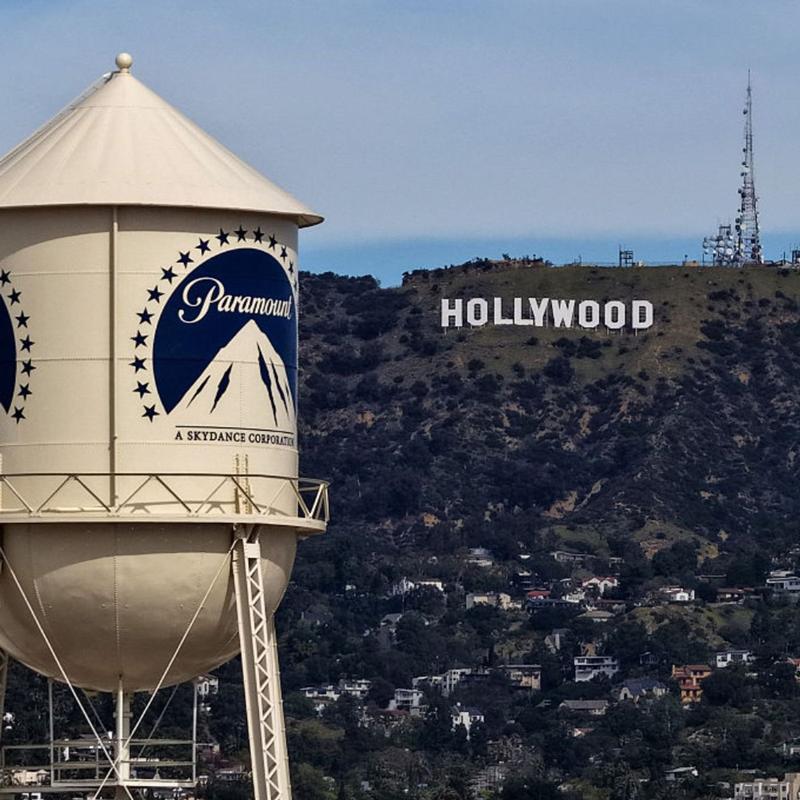
News clip: Paramount has emerged as the winner in the battle to control Warner Bros. Discovery.
Micah Loewinger: To understand what this takeover means for us, the consumers, we need to get deep in the weeds of a theory called "media capture." From WNYC in New York, this is On the Media. I'm Micah Loewinger. Also, on this week's show, a new study says last year was the deadliest in decades for journalists.
Jodie Ginsberg: That has come from the unprecedented killings of mainly Palestinian journalists. Israel was responsible for more than two-thirds of the global total killings.
Micah Loewinger: Plus, four years since the start of the war in Ukraine, an Oscar-nominated film tells the story of the first American journalist killed by Russian troops.
Craig Renaud: It was the hardest thing I've ever had to do to keep documenting the murder of my brother. I knew without a doubt, that's absolutely what Brent would have wanted me to do.
Micah Loewinger: It's all coming up after this.
[music]
Micah Loewinger: From WNYC in New York, this is On the Media. Brooke Gladstone is out this week. I'm Micah Loewinger.
News clip: Paramount has emerged as the winner in the battle to control Warner Bros. Discovery.
Micah Loewinger: In the high-roller poker game, to win the coveted prize of Warner Bros. Discovery, the billionaire-owned Paramount Skydance pushed all its chips into the middle.
Brian Stelter: Paramount topped $31 per share for all of WBD and sweetened its proposal in lots of other ways. Enough to lead the WBD board to say that Paramount's bid was superior.
Micah Loewinger: Netflix had been the frontrunner to acquire the umbrella company over HBO, TNT, DC Comics, and, of course, CNN. Warner Bros. had rejected a number of previous bids from the Ellison family, owners of Paramount Skydance. Apparently, this latest offer was one they just couldn't refuse.
Chris Palmeri: It's more than just a dollar more a share. Larry Ellison is personally backstopping all the equity that they're going to put into the deal, $40-plus billion. He's backstopping some of the debt they're refinancing, $15 billion worth. If they don't get regulatory approval, they would pay $7 billion. They agreed to pay $2.8 billion to Warner Bros. to get them out of the Netflix deal, so a staggeringly large amount of money that Paramount's committing here.
Micah Loewinger: The deal isn't done as regulatory hurdles remain, including a California Department of Justice investigation into the acquisition. We do know that the Ellisons have crucial White House support. The potential control the Ellison family would acquire over the media landscape would have few peers. There's actually a phrase in scholarship that describes what's happening right now, "media capture," or the idea that when the government fails to codify protections around the media's obligation towards public interests, political and commercial interests can take over.
No coup required, just a slow, steady transfer of power. Victor Pickard is a professor of media policy and political economy at the University of Pennsylvania. He recently wrote about how American media have actually seen three cascading layers of capture. Capitalistic, oligarchical, and authoritarian. To start with capitalistic capture, we have to go a little ways back in time.
Victor Pickard: In the late 1800s, early 1900s, with the newspaper industry, there was a structural transformation where they shifted to a more advertising-dependent business model. They went from relying on advertising revenue, roughly 40% of their overall revenues in the mid-1800s into the 1860s. By the early 1900s, they were relying on advertising for well over 70% of their revenues. What that did was it changed the relationship between publishers and readers.
Publishers saw their readers not as engaged citizens in a democratic society, but primarily as consumers whom they would deliver to advertisers. It also incentivized further media consolidation. You saw the rise of newspaper chains and press, Barretts, Pulitzer, and Hearst, and others that took over many newspapers and would sometimes exert political control over the types of coverage and content that was being produced. For broadcast media, it makes sense to look at the early 1930s.
Micah Loewinger: Yes, in the 1930s, there were three networks that essentially dominated the market. CBS, NBC, and the Mutual Broadcasting System. The FCC, in the early 1940s, basically cornered NBC, splitting it up into what has become NBC and ABC. What do you think regulators could have done at the time to steer us away from the type of media consolidation that would follow?
Victor Pickard: This critical juncture in the early '30s, which culminated with the Communications Act of 1934, established the Federal Communications Commission and really sanctified this commercial broadcast media system. At that time, there was even, up until the very end, ongoing debates about, should we at least have some set asides for public programming?
There was this proposed amendment called the Wagner-Hatfield amendment that tried to reserve 25% of the airwaves to non-profit, non-commercial educational programming. Not to leave your listeners in suspense, that did not pass. Throughout the '40s, you had these ongoing media policy battles where they tried to mandate things like mandated public affairs coverage or to not allow for excessive advertising. They did not succeed in passing these public interest protections. By the end of the decade, they did establish what later became known as the fairness doctrine.
Micah Loewinger: What exactly was the fairness doctrine? How did it work?
Victor Pickard: The fairness doctrine is widely maligned and misunderstood. It's often conflated with the equal-time rule. In fact, fairness doctrine was more progressive than that. It was based on this idea that broadcasters, in order to hold on to their monopolistic rights to the public airwaves, to hold onto their licenses, had to cover controversial issues that were important to local communities and to do so in a balanced manner. It was this affirmative duty that broadcasters had to uphold. There's a long history to how this very imperfect media policy was deployed and adhered to, but it was at least some kind of social contract that these commercial broadcasters had to give something back to democratic society in order to hold on to their licenses.
Micah Loewinger: You talked a little bit about how earlier efforts to introduce some kind of regulation for public interest content fell flat. In the late '60s, we did finally see the birth of public media. The Corporation for Public Broadcasting was created in 1967. Obviously, it's been defunded by this administration, but how would you say that American public media has compared to other Western democracies?
Victor Pickard: The US was a global outlier pretty much from the beginning when we established this hyper-commercialized broadcast media system. By the end of the '60s, we did finally establish a public broadcasting system, but it never followed the original blueprint that at least one of the revenue streams would be based on a 5% excise tax on television sets. Compared to most democratic societies around the world, the US public media system was always deeply impoverished. It was always forced to rely on private capital. To even call it a public media system really was a bit of a misnomer.
Most of its funding came from individual listeners and viewers like us, also foundations and also corporations, sometimes euphemistically referred to as enhanced underwriting. If you look at how much we allocated towards our public media system at the federal level, and this is before the rescission package, when even this paltry amount was jettisoned, it came out to about $1.59 per person per year. You compare that to the Brits, who spend close to $100 per person per year for the BBC. Many other democratic countries spend far more than that. It shows, I would argue, in the health of their democratic society.
Micah Loewinger: You've actually studied the correlative effect between public media spending and the strength of a country's democracy. How do you study that kind of thing?
Victor Pickard: It's actually not as complicated as it sounds. The Economist magazine puts out this democracy index on an annual basis that really assesses the health of democratic societies around the world. The US, of course, has been characterized as a flawed democracy for a number of years now. What you find is that the countries that are determined to have the strongest democracies also have the healthiest and best-funded public broadcasting systems. This doesn't necessarily argue for causation, although my co-author, Timothy Neff, and I found positive correlation that they tend to rise and fall together. At the very least, it puts to rest this deeply American fear that if government gets involved in funding our media, we're on some kind of slippery slope towards totalitarianism.
Micah Loewinger: I have more to ask you about the future of public media in just a moment, but let's talk a little bit more about history. You were walking us through how early revenue models for newspaper and other commercial media, radio and TV, set us up for this capitalistic capture that we're currently experiencing. You argue that regulators have made it worse over the course of the 20th century, culminating with the Telecommunications Act of 1996, which essentially dictated how many radio and TV stations a single company could own. This move opened the door for another type of capture, oligarchical. Can you explain that?
Victor Pickard: Sure. What you see with the capitalistic form of media capture are these systemic incentives to grow larger, to consolidate and conglomerate. You start seeing these massive media conglomerates spanning a number of markets. To give one stark example would be the radio company, Clear Channel. Prior to the 1996 Act, one company could not own more than 40 stations nationwide, 20 AM stations, 20 FM stations. The Telecommunications Act jettisoned that rule. It allowed Clear Channel to quickly buy up a bunch of stations so that before long, they had more than 1,200 across the country. Oftentimes, with this consolidation in media ownership, you had a homogenized form of radio content.
Micah Loewinger: There's one famous example in Minot, North Dakota, a city that had seen its radio market gobbled up by Clear Channel. There was a train crash that sent a noxious gas cloud into the city. Public officials were not able to get word out quickly enough because of this highly automated, highly consolidated local news market, right?
Victor Pickard: That's right. People were calling into radio stations, trying to report and get the word out about this toxic event that was perhaps even life-threatening. It's certainly a public health disaster.
Micah Loewinger: Here's a clip from a video on the disaster put together by investigative journalist Sue Wilson.
Sue Wilson: Dispatchers were advising callers to listen to their emergency broadcast station.
Caller 1: -to listen to a certain radio station.
Dispatcher: KCJB radio 910.
Sue Wilson: A full hour after the crash, there was still nothing on KCJB or any other radio station.
Dispatcher: We've been putting it on over the radio.
Caller 2: What's the radio station?
Dispatcher: All the radio stations, sir.
Caller 2: I had it on. I haven't heard it once.
Caller 3: How come there's nothing on the radio or the TV yet?
Victor Pickard: No one was home. No one was answering the phone because these programming formats were all automated. This is just a glaring example of a media system that has no allegiance to local communities.
Micah Loewinger: Okay, so we've talked about the capitalistic takeover. The next one on your list is oligarchical. A great example is what's happening right now at The Washington Post with billionaire owner Jeff Bezos.
Geoff Bennett: Washington Post is laying off a third of its workforce across both the newsroom and its business operations. A massive blow at a storied newspaper that has struggled in recent years to stay profitable and retain subscribers.
Victor Pickard: Early on, critics like myself began to feel like maybe we overreacted. When I first heard that he was buying The Washington Post, I thought, "This is very bad," but then he supported a very robust newsroom that was doing fantastic journalism for a number of years. I think we should be learning from these mistakes by now. The temptation to use it instrumentally for political aims is always going to be there.
This is part of the oligarchic media capture problem, which is it might be the case where Jeff Bezos is losing money with The Washington Post. Reportedly, he was losing somewhere around $100 million a year, but he stands to gain billions of dollars in government contracts with his aerospace company, Blue Origin. It's important to note that there are exceptions that not every commercial media outlet becomes oligarchic, and that even commercial media outlets are quite capable of delivering amazing content and hard-hitting journalism. It's not over-determined. At the same time, there are some deep structural problems that we're going to have to wrestle with.
Micah Loewinger: We've talked about capitalistic capture. We've talked about oligarchical capture. Do you mind just quickly defining what authoritarian capture is?
Victor Pickard: Authoritarian media capture would be a scenario where a government takes over or influences media. I think in most cases, it's the latter. Newsrooms aren't taken over by gunpoint. Instead, it's what might be referred to as the Viktor Orbán model, where governments can rely on friendly oligarchs to police the media for them. It often happens in subtle ways and gradually, although increasingly in our own political moment, we're seeing quite glaring and obvious interventions from the Trump administration.
Micah Loewinger: Yes, so maybe on the more subtle side of the spectrum, you encourage your buddies, Larry Ellison and Marc Andreessen, to put up cash to buy TikTok, or maybe you signal that if a certain owner of CBS wants to buy Warner Bros., then they better not let somebody say bad things about the president, et cetera, et cetera. On the less subtle side of the spectrum, you have raiding the home of a prolific Washington Post reporter or having agents arrest Don Lemon and independent journalist Georgia Fort because of their coverage in Minneapolis. I guess we're getting all flavors of coercion from this administration.
Victor Pickard: Oftentimes, the more dangerous form are these subtle influences, even at the level of the individual psychology of individual journalists, where they're internalizing chilling effect throughout media coverage. Certainly, this administration has made it abundantly clear what it sees as off-limits.
Micah Loewinger: Okay, so let's say tomorrow, you and I are imbued with magic powers. We can just snap our fingers and reimagine, remold, rebuild American media from the ground up. We've got well-funded public media. We have no more billionaires, strong antitrust regulations, et cetera. What evidence do we have that audiences would like this, would want this? Have people not gravitated away from legacy journalism on their own volition?
Victor Pickard: You're absolutely right to suggest that it's not as if we can simply build a new media system and they will come. There's this implication that if a news media outlet is no longer profitable, then it's a shame, but it's just going to have to wither away, right? The market has spoken. There's not enough consumer support, but there are many public goods and democratic needs whose value aren't determined by how much they fetch on the open market?
An analogy that I sometimes use is public education. Would we just let public schools all wither away? Would we just determine that the market has spoken, and we can no longer provide education for all children throughout society because it's no longer profitable? That simply is no way to design a democratic society. We have to start looking at our media in the same way. It's a public good that should not be left up to the mercy of these market logics.
Micah Loewinger: Victor, thank you so much.
Victor Pickard: Thank you so much for having me, Micah. It's been great talking to you.
Micah Loewinger: Victor Pickard is the author of Democracy Without Journalism? Confronting the Misinformation Society. Coming up, what happens to coverage of Gaza, now that The Washington Post's Middle East bureau is gone? This is On the Media.
[music]
Micah Loewinger: This is On the Media. I'm Micah Loewinger. This week, the Foreign Press Association launched a petition, calling on Israel to allow reporters into Gaza. Journalists from the BBC, Al Jazeera, Sky News, and more recorded lines for a videotaped plea.
Jeremy Diamond: For more than two years, the Israeli government has refused to allow journalists into Gaza to report independently.
Sophie von der Tann: To show the world the reality of war.
Jeremy Bowen: This fragile ceasefire from--
Joe Federman: Join us.
Alex Crawford: Join us in calling on the United States-
Ayman Mohyeldin: -and leaders around the world to demand Israel let journalists into Gaza.
Jeremy Diamond: This is unprecedented, and it must end. Let us in.
Alex Crawford: Let us in.
Ayman Mohyeldin: Let us in.
Richard Engel: We are about to enter into the Gaza Strip. We are going with the Israeli military. It is very limiting. It is not ideal.
Micah Loewinger: This is NBC's Richard Engel this week, speaking from the back of an Israeli military truck, one of those chaperoned ride-alongs that have become a staple of Western media coverage in Gaza.
Richard Engel: According to President Trump's much-celebrated ceasefire, the war here in Gaza is supposed to be over and reconstruction underway. When you're here, it's clearly not the case. There's no bulldozers here. Nobody's clearing the debris.
Miriam Berger: There's not access to adequate shelter in any way to clean water.
Micah Loewinger: Miriam Berger is a Pulitzer finalist who spent two years reporting from Israel on the war in Gaza for The Washington Post.
Miriam Berger: There's no jobs. There's no money. There's no way out. There's no future. There's just horrific conditions that people are living in.
Micah Loewinger: Nearly 300 Palestinians have been killed since that October ceasefire. Is ceasefire even the right word?
Miriam Berger: For Palestinians, for their experiences? No, the ceasefire is not the right word. The war has continued.
Micah Loewinger: Miriam is writing a book about starvation in Gaza. Earlier this month, she learned that she and seven of her colleagues across the region had been laid off from The Washington Post. In effect, the paper's Middle East bureau is gone.
Miriam Berger: The day was one of real sadness, I think, and frustration. We had all heard the rumors that this could be possible, but I was really shocked by the scale of the layoffs.
Micah Loewinger: The paper has signaled that it will still cover wars in the Middle East, primarily through its national security desk.
Miriam Berger: The national security team at The Post is best in the business, and they will continue to do their fantastic reporting, but it is extremely difficult or perhaps even a fallacy here to try and divorce national security reporting from on-the-ground reporting in places like the Middle East, where you need to understand what our governments are saying and what's really happening.
Micah Loewinger: Especially when it comes to wars that we are either threatening to start participating in funding, et cetera.
Miriam Berger: Exactly, yes. Right now, there could be a war with Iran any minute, it seems. There are so many big questions about what's coming next in terms of the reconstruction of Gaza, in terms of governance, in terms of Israel's role there, in terms of who's going to be paying for all this, who's going to be profiting from all of this.
Micah Loewinger: Miriam Berger says these stories will now fall to the skeleton crew of Palestinian reporters still writing for The Post, though she fears their work will suffer without the support of a bureau.
Miriam Berger: There was so much expertise that was lost, so much knowledge about the region, about sourcing. You need editors that really know their beat. We had fantastic editors who did. I know that those who remain have the capabilities and will continue to do so, but it'll be that much harder without the robust kind of teams that we used to have based in the region.
Micah Loewinger: According to a report released by the Committee to Protect Journalists this week, 2025 was the deadliest year on record in Gaza and around the globe.
Jodie Ginsberg: The headline finding is this was another record year for journalist killings after the record that we saw in 2024.
Micah Loewinger: The CPJ's Jodie Ginsberg.
Jodie Ginsberg: 129 journalists and media workers were killed worldwide, which is more than any year since CPJ began collecting data back in 1992.
Micah Loewinger: Where does this rising trend come from?
Jodie Ginsberg: Well, most recently, that rising trend has come from the unprecedented number of killings we've seen by Israel of mainly Palestinian journalists. That accounts for these few unprecedented years that we've seen recently. The trend that we had been seeing over the last three decades actually had been a decline of journalists killed in conflict settings and a rise in journalists killed in other situations of instability, so places where there's high degrees of lawlessness, criminality, but that has changed since October 7th.
Micah Loewinger: You found that the Israeli Defense Forces specifically have committed more targeted killings of journalists than any other government's military since CPJ began documentation in 1992.
Jodie Ginsberg: There's two reasons for that. One, of course, is the nature of the war itself. The nature of what human rights groups and UN experts agree is a genocide taking place in Gaza. In other words, the high degree of indiscriminate bombings and attacks that have impacted the civilian population writ large. Specifically, we've also seen journalists and media workers deliberately targeted.
That's part of a broader pattern, of course, that we've seen from Israel in attempting to control the narrative and censor information about its war in Gaza. It's not just, of course, the killing and targeting of journalists. It's the targeting of military facilities. It's the forced closure of news outlets, such as Al Jazeera's Jerusalem bureau. It's the continued refusal to allow international independent media access into Gaza. The killings of journalists is part of that overall, what we consider systematic attempt to censor information about what's happening inside Gaza to not just the Israeli public, but to the world writ large.
Micah Loewinger: It's also worth noting that these deaths were not contained solely to Gaza. Your report states, "In the second-ever deadliest attack that CPJ has documented worldwide, Israeli forces carried out multiple airstrikes on two newspaper offices in Yemen, killing 31 journalists and media workers." Israel claimed it struck "military targets," including the Houthi public relations department.
Jodie Ginsberg: Yes, that's right. We recorded that as the second-deadliest killing of journalists as a group ever. Israel continues to claim, without providing credible evidence, that these individuals are not journalists. We have seen this repeatedly from Israel. We have not yet seen in any of the cases that we have brought to the Israeli government, to the Israeli forces, any credible evidence that shows that those individuals were active combatants and that, therefore, they were legitimate targets under the rules of war.
Micah Loewinger: Additionally, the newest report mentions that three of the killings against journalists, including one that you describe as a murder, came after the October 2025 ceasefire declaration.
Jodie Ginsberg: That's right. We've seen human rights groups also allude to this, that despite the ceasefire and actually despite, I think, what has been a diminution in the reporting on Gaza, actually, since the ceasefire, we continue to see the killings of civilians and of journalists.
Micah Loewinger: Tell me about some of the Palestinian journalists in Gaza who've been killed.
Jodie Ginsberg: It's so hard because the numbers are so almost unimaginably high. One of the most egregious examples you might remember was the attack on a hospital, a NASA hospital in Gaza on August 2025, where five journalists were among at least 20 killed in what's often known as a "double tap strike," although, actually, it consisted of multi-airstrikes. Numerous investigations, including a Reuters investigation, showed that the target was a journalist camera that had been positioned at the hospital for months with the Israeli military's knowledge.
It was providing Reuters with a live news feed, although Israel claimed it was targeting a Hamas camera set up on a hospital stairwell. There is no evidence that there is a second camera. Among the five killed included a Palestinian freelance photojournalist, Mariam Abu Dagga, who contributed to the Associated Press and had a young child, and Hussam al-Masri, a Reuters contractor. They were among the journalists killed.
Of course, perhaps the most well-documented and well-known killing last year was that of Al Jazeera reporter Anas Al-Sharif, who had warned his life was in danger after he received repeated unsubstantiated smears from Israel for years. He was finally murdered by Israel on August the 10th, 2025, along with three other Al Jazeera staff journalists and two freelancers. He was deliberately targeted in a strike on a tent that housed journalists.
Micah Loewinger: There was also Hossam Shabat, a 23-year-old Palestinian correspondent for Al Jazeera Mubasher, which is based in Qatar. Shabat had also freelanced for Drop Site News, which is a US-based outlet. What happened to him?
Jodie Ginsberg: Hossam was killed in March in an Israeli strike on his car near the Indonesian hospital in northern Gaza's Beit Lahia. He was heading to a hospital when he was blown up by an Israeli drone. Drone attacks is something that we feature and talk about a lot in the report. An Israeli drone that directly targeted him. Hossam was one of the most well-known journalists. He'd remained in northern Gaza despite the threats because he wanted to report on Israel's assaults on the territory. Israel accused him of being a Hamas sniper and, again, as we have seen repeatedly from Israel, provided no credible evidence to support their claim.
Micah Loewinger: Israel took credit for the attack.
Jodie Ginsberg: This is a pattern that we see from Israel and certainly have seen from Israel prior to October the 7th, but we've seen it repeatedly since October the 7th that it accuses individuals of being Hamas militants without providing credible evidence. It traditionally has done that often after individuals have been killed. A pattern that we have seen during this genocide is of them accusing individuals of being Hamas operatives, again providing no evidence in an attempt, we believe, to justify their subsequent killings. We saw that in the case of Hossam Shabat. We saw that in the case of Anas Al-Sharif. We've seen that in a number of other cases over the last two and a half years, also.
Micah Loewinger: Sudan, Mexico, Russia, and the Philippines were the next deadliest places for reporters. Let's talk a little bit about Sudan, where you documented nine journalists and media workers who have been killed in the ongoing civil war there.
Jodie Ginsberg: One of the journalists who was killed was the director of the Sudan News Agency, Taj Al-Sir Ahmed Suleiman, who was executed by the paramilitary Rapid Support Forces, the RSF, in November, along with his brother in North Darfur State. It's worth saying because, again, Sudan is one of those countries that is woefully underreported. Journalists have to report an absolutely terrifying condition.
Since the beginning of the war, we've documented a trail of abuses. Most of them attributed to the paramilitary RSF. At least 16 journalist media workers have been killed. Female journalists have been raped. Media offices have been turned into detention centers. Homes have been seized. Journalists have been abducted and held for ransom. In some cases, some of these acts were actually filmed and circulated by the perpetrators themselves.
Micah Loewinger: Oh, my God.
Jodie Ginsberg: Which tells you something, I think, about accountability in this moment, how confident many people are in not just owning up to these crimes, but documenting them and, indeed, almost celebrating them.
Micah Loewinger: You mentioned that this year has seen the rise in a new trend, drones being used to kill journalists.
Jodie Ginsberg: Yes, so one of the clear changes and shifts that we've seen in this report is the rising number of journalists killed by drones. Those, of course, are those unmanned aircraft, small flying devices that are controlled remotely. They have the ability to visually identify targets. In other words, it's clear that the people would know who is being killed. The suspected and documented killings of press members have spiked from just two in 2023 to 39 in 2025. Russia killed four journalists in Ukraine using military drones. The killings last year were the highest number of journalist deaths in that war since 2022.
Those killed included Ukrainian journalists Olena Hramova and Yevhen Karmazin. They were attacked while they were reporting for Ukraine's state-funded international broadcast of freedom in the eastern region of Donetsk. A French photojournalist, Antoni Lallican, was killed by a targeted strike from what's called a Russian first-person view drone, also while reporting in Donetsk. This is a particularly worrying trend that we are seeing, this use of highly targeted, individualized warfare that allows militaries and paramilitaries to pick off individual journalists.
Micah Loewinger: What, if any, accountability have we seen for these targeted killings against journalists worldwide?
Jodie Ginsberg: None. There have been very few transparent investigations into any of these targeted killings. No one has been held accountable in a single one of the cases of targeted killing that we identified in 2025. That is not just true, unfortunately, of 2025. That is a very longstanding pattern that we have seen worldwide, that those responsible for the murder of journalists are not investigated. They're not investigated transparently, and they are certainly not held to account. That is a risk to all of us because it's not just about the killing of individual journalists. It's not just about the loss of life. It's about the information that those individuals are trying to get out into the world. Killing a journalist is the ultimate form of censorship.
Micah Loewinger: For three years now, you've been writing reports that have come to similar conclusions, which is that Israel is in a league of its own when it comes to targeted killings of journalists in, yes, a highly dangerous war zone, but in a part of the world where foreign reporters are not allowed. How does it feel for you and your staff to write about this trend year after year with no sign of accountability?
Jodie Ginsberg: It feels both heartbreaking and infuriating, frankly. We have been doing the work to document these killings, these attacks on journalists globally, for more than three decades. The reason that we do this is because it's vital to have that information as the first step towards accountability. Yet, even armed with that information, we have seen very, very little concrete action from the international community in holding Israel to account, in ensuring Israel meets its international obligations.
The test of the international system is not that you apply human rights norms only to your enemies. It is that you must apply those norms, those international human rights norms, universally. A failure to do so undermines the entire global system. That is a cause of enormous frustration that the avenues that we have to try to pursue justice, to try to get accountability, to just even frankly get a change in behavior, are not producing results.
It's not, of course, simply CPJ doing this documentation. This kind of documentation is being also carried out by organizations that work with doctors, with aid workers. We see the same accounts, the same repeated pleas over and over again from a multitude of organizations, and yet we consistently see an unwillingness from the international community to take any concrete action.
Micah Loewinger: Jodie, thank you for doing this work.
Jodie Ginsberg: Thank you for having me.
Micah Loewinger: Jodie Ginsberg is the CEO of the Committee to Protect Journalists, a non-profit that tracks threats to the press across the world. Coming up, a new film tells the story of war reporter brothers whose motto was always, "Just keep filming." This is On the Media.
[MUSIC - Michael Andrews: Liquid Spear Waltz]
Micah Loewinger: This is On the Media. I'm Micah Loewinger. Among the 300 Washington Post reporters who lost their jobs in the February cuts was Ukraine correspondent Lizzie Johnson.
Reporter 2: She's a correspondent on the ground in Ukraine who posted, "I was just laid off by The Washington Post in the middle of a war zone."
Micah Loewinger: Johnson said she's grieving for the stories she won't be able to tell now. Four years in, this week marks the grim anniversary of Russia's full-scale invasion of Ukraine. There are still many, many stories to be told. The cost of covering the conflict has been high. At least 21 reporters and media workers have died, including the American filmmaker, Brent Renaud.
Brent's collaborator for many years was his younger brother, Craig Renaud. When word got back to Craig that Brent had been shot by Russian forces, he did what he and his brother had always done. He kept filming. Craig and his producer, Juan Arredondo, used that footage, along with material from their archive, to make the Oscar-nominated documentary, Armed Only With a Camera. The short film is part tribute to his brother, part salute to war journalists who are still out there risking their lives.
Craig Renaud: I can always remember there being cameras in our home.
Micah Loewinger: Filmmaker Craig Renaud.
Craig Renaud: When my brother was about 10 years old, my dad gave him a Minolta camera. That was the first time he envisioned himself as a journalist. It was definitely from a very young age that we had this seed planted in our minds. I also remember as kids, my brother had a very active mind and imagination. My parents gave him a radio, a transistor radio, and we shared a bedroom. He would lie awake at night listening to the BBC's international news every night.
Micah Loewinger: Tell me a little bit more about your partnership, your relationship working together. What do you think made it successful?
Craig Renaud: I think we complemented each other. Our personalities could not have been more different. I'm very social. I can get people to trust me very quickly. For Brent, you'll hear him talk in the film, "A cocktail party in Brooklyn is more terrifying than being in a war zone." Brent had no ego, no pretense. We grew up in Arkansas. I think Brent's autism and the way that he saw the world, I just think people could really sense that he did really care.
In terms of our filmmaking, we got to the point where we could nod at each other in a dangerous situation. We knew exactly what the other one was thinking. Even going back over 20 years of archives, making this film, I often had to stop and really think who filmed this particular scene because we had become so seamless in our work style. One of the reasons my brother died is because of the style of filmmaking that we do.
We can't just parachute in and film for 24 hours and parachute out. We spend months, and sometimes as long as a year. When we were in Iraq, we were embedded for an entire year on the ground with the Arkansas National Guard. Each day that you stay doing that, you're risking your life exponentially because you're putting yourselves right there. I think the people that you're filming really appreciate that because you are putting your life at risk to tell their story.
Micah Loewinger: You have time to actually build relationships and trust and depth.
Craig Renaud: Yes, that's very important.
Micah Loewinger: You mentioned that line from the film, how Brent was more comfortable in a war zone than in a cocktail party. Tell me about the places and stories that you two sought out. What kinds of stories were you trying to tell?
Craig Renaud: Well, we always were very interested in character-driven stories. The very first film that we did for HBO was called Dope Sick Love, where we spent a year and a half following heroin addicts in the streets of Manhattan.
Matt: Tracy ain't from this world. This is all new to her.
Tracy: Sexually. That's what he does for a living, so it's the last thing he really wants to even address or deal with when he's with me.
Matt: You can get trapped and caught up in this lifestyle. Once you cross a certain boundary, it's like no turning back.
Craig Renaud: When our approach, whether it was a film like that or in a war zone, was very much with no judgment and just a very fly-on-the-wall, cinéma vérité approach. Our goal was always to place viewers right in the present moment with what people were going through.
Micah Loewinger: You capture the moment that Juan Arredondo, a fellow journalist who was injured at the scene, the moment he tells you that Brent had been shot in the neck by Russian soldiers in Ukraine.
Craig Renaud: He just kept repeating it, "We've been shot, we've been shot, we've been shot." I said, "Where's Brent?" He said, "He's been shot, too. I've been pulled away into a separate vehicle. He's still there." I said, "Where was he shot?" I said, "Did he have his vest on?" He said, "Yes," and then I said, "Was he shot in the vest or the face?" Juan paused. He didn't answer me, and I knew right then Brent was gone.
Micah Loewinger: We later see you filming his body in his casket.
Craig Renaud: Right here, you can see where the bullet went in.
Micah Loewinger: A voice out of frame asks you.
Unidentified Voice: Why are you doing this?
Craig Renaud: I know this is what Brent would be doing.
Micah Loewinger: Why did you decide to feature his body so much in the film?
Craig Renaud: My answer was very concrete because I knew exactly what Brent wanted me to do, which is to keep filming. That wasn't a guess. That was from conversations that we had had during two decades of being in war zones together. We had many conversations about, "What do we do if one of us are killed? What do we do if one of us are kidnapped?" The answer was always, "We keep filming." It was incredibly difficult. It was the hardest thing I've ever had to do to keep documenting the murder of my brother, but I knew without a doubt, that's absolutely what Brent would have wanted me to do.
Micah Loewinger: There's a very powerful moment in the film where you show us the biggest car bomb in the history of Somalia. Brent goes to a hospital to document some of the victims, which is where he meets a man in a hospital bed who calls him over.
Man in a Hospital Bed: What is your name?
Brent Renaud: My name is Brent.
Man in a Hospital Bed: Brent?
Brent Renaud: Yes.
Man in a Hospital Bed: Can I ask you something?
Brent Renaud: Yes, please do.
Man in a Hospital Bed: The way you hold that camera, it is not you're just holding it. You're doing it from your heart.
Brent Renaud: I am, man. I am.
Man in a Hospital Bed: It really means a lot, dawg. You know what I mean? We can change this world. You and I, we can change this world if you wanted to.
Brent Renaud: Yes.
Man in a Hospital Bed: Believe that.
Craig Renaud: That's my favorite moment in the film. When I was digging through 20 years of archives, I just happened upon this exchange between Brent and this man. I just felt that it was such a powerful example of somebody recognizing Brent's compassion, but also this moment of shared humanity. It's interesting because if you know about how Brent and I make films, the way that we hold our camera is physically from the heart because we are the directors.
We are asking the questions. We want to be making eye contact with people when we're speaking to them. We don't bury our heads in a lens or with the camera obstructing us. Part of it was the physical way he is holding that camera, but also, he's recognizing Brent's heart and the way that he had been interviewing all these wounded civilians and children that had just been injured by this car bomb.
Micah Loewinger: He said, "You and I could change this world if you wanted to." I'm just curious what you think he meant.
Craig Renaud: I heard that as we could all change the world if we wanted to. I do think that goes back to compassion and decency and seeing each other as fellow human beings. I believe what that man is saying, too. I know for Brent, going into places like Somalia with his camera, it really was about trying to change the world.
Micah Loewinger: It was interesting to me that you chose to juxtapose the image of that man lying in his hospital bed with the image of Brent lying in his casket, which is the very next scene in the film. Can you talk a little bit about your experience editing this documentary?
Craig Renaud: A lot of the editing was trying to find those scenes play off of one another so that you would have this powerful impact on the viewer, but even the sound of a sheet of metal that's being glued to the top of Brent's casket.
[background noise]
Craig Renaud: We did not want to shy away from just the horror of war and the violence of it. For us, we had been documenting other people in conflicts and people losing their lives or limbs. Why should it be any different in the moment that one of us are killed? I felt like I had to approach it the exact way I would have filming anybody, even though it was my brother.
Micah Loewinger: You've alluded to sharing these moments with people, often family, a mother, a father's lowest moments. When you look back at some of these most intimate scenes that you've captured, which ones stand out to you?
Craig Renaud: There was a scene that we filmed in Iraq, soon after Saddam went into hiding, and the bombing was going on. There was an Iraqi teenager that was killed, and we were filming with his mother. You can hear Brent's voice behind the camera speaking to her.
Brent Renaud: They say the hardest thing is for a mother to lose a child.
Iraqi Mother: It is. It is. It's true. It's true. I can't sleep. I keep looking to his picture. [cries]
Craig Renaud: She had saved the bloody jeans that were cut off of her son in the operating room.
Iraqi Mother: I'll show you his trouser. This is his leg. Look at all these holes from the bomb, and they said, "We don't hurt civilian people." Look, the blood. Look. [cries]
Craig Renaud: That scene still sits with me to this day. That was over 20 years ago, and I still have a hard time watching it to just see her bury her face in this bloody jeans of her teenager. You could feel the depths of her loss is just unbearable.
Micah Loewinger: You end the film with montages of memorials for other reporters killed, notably in Gaza, where nearly 250 journalists have been killed since 2023. Has your loss and those threats changed your approach to doing this work in the future?
Craig Renaud: Well, when we first brought Brent back and started editing this film, I had it in my mind that this was going to be a tribute to my brother, but it felt like there wasn't a day or a week that went by as we were editing that another journalist was killed. Since Brent died almost four years ago, every single year, there's been over 100 journalists killed around the world. It's become one of the most dangerous professions in the world. There doesn't seem to be any signs that that's slowing down.
Juan and I especially felt like this film had to be bigger than that. It had to be also about all the journalists who are risking their lives to bring people the truth. To us, that's very important. We feel very connected to all these journalists that continue to go out with the risk of being imprisoned or killed. Brent believed and we believe that without journalism, there is no democracy.
Micah Loewinger: This film, which you're last with Brent, is now finished. Are you at a point yet where you're able to think about a future as a filmmaker without him as a partner?
Craig Renaud: Juan Arredondo and I will continue making films together. I will continue making films under the banner of the Renaud brothers. For me, the work is something that really got me through this every day. It got me out of bed every day. It kept me focused, and it helped me heal through this process.
Micah Loewinger: How so?
Craig Renaud: Well, I felt like as long as Brent's name is being said, as long as his stories are being told, that he's very much still alive. The moment that I found out Brent was killed was both earth-shattering in the sense of you've just lost your brother, but there was also this calm and this peace that came over me where I felt like Brent had died doing exactly what he was put on this Earth to do, and that his death would not be in vain, and that what he risked his life for is worth it, which is trying to tell the truth and pursue peace through showing the horrors of war and what people are going through. That is something that is very healing to me because it makes you feel like it is worth it. It makes me feel like Brent's death was very worth it.
[music]
Micah Loewinger: Thank you so much for making this film, and thanks for doing this interview.
Craig Renaud: Thank you very much.
Micah Loewinger: Craig Renaud is the director of the documentary Armed Only With a Camera: The Life and Death of Brent Renaud. You can watch the film on HBO Max. Craig has also set up the Brent Renaud Foundation in honor of his older brother to support emerging filmmakers.
That's it for this week's show. On the Media is produced by Molly Rosen, Rebecca Clark-Callender, and Candice Wang. Travis Mannon is our video producer. Our technical director is Jennifer Munson, with engineering help from Jared Paul. Eloise Blondiau is our senior producer, and our executive producer is Katya Rogers. On the Media is produced by WNYC. Brooke Gladstone will be back next week. I'm Micah Loewinger.
Copyright © 2026 New York Public Radio. All rights reserved. Visit our website terms of use at www.wnyc.org for further information.
New York Public Radio transcripts are created on a rush deadline, often by contractors. This text may not be in its final form and may be updated or revised in the future. Accuracy and availability may vary. The authoritative record of New York Public Radio’s programming is the audio record.