Poetry as a Cistern for Love and Loss
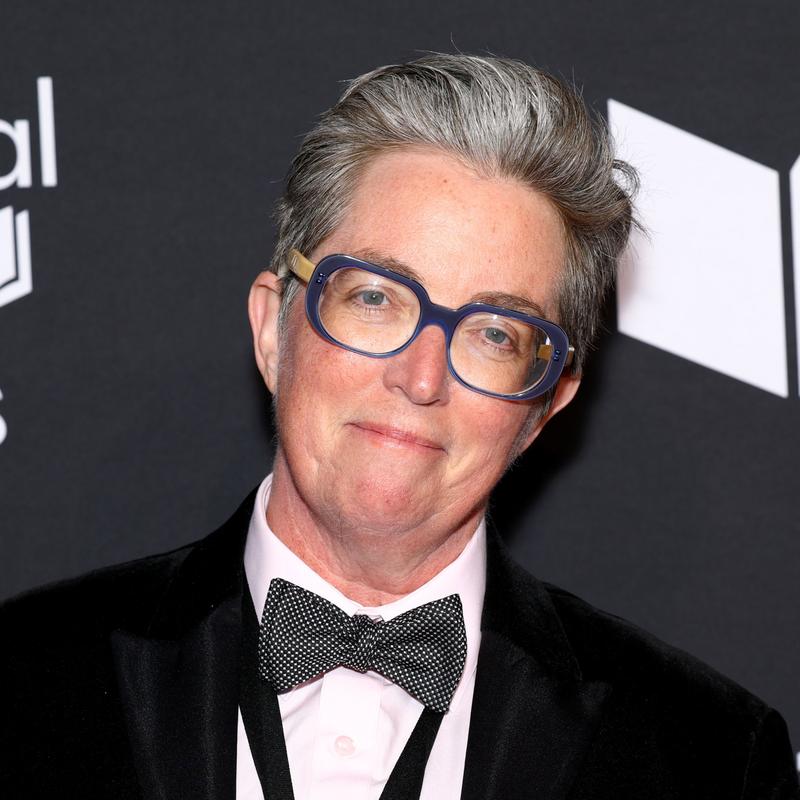
David Remnick: This year, the New Yorker published an anthology called A Century of Poetry in the New Yorker. It was all to help mark the magazine's centennial, and it was put together by our poetry editor, Kevin Young. The book includes works from the early days of Dorothy Parker and moves onward and onward to poems we printed in just the past few years and months. One of those poets is Gabrielle Calvocoressi. Their recent collection called The New Economy was a finalist for the National Book Award this year. Calvocoressi sat down recently to talk about it with Kevin Young. Heads up that some of Calvocoressi's work addresses suicide. This is going to come up in our conversation as well.
[music]
Kevin Young: I was so excited about the opportunity to talk with Gabrielle because they're such a force on the page, in person. You can hear in their poetry this kind of sense of both community and individuality, this sorrow and this joy, this idea of ecstasy and expectation, but it's flecked with real human trial and tribulation, with everyday pain, but also sort of extraordinary moments. Can we start today with the title of your new book, The New Economy?
Gabrielle Calvocoressi: Yes.
Kevin Young: Can you tell us where that title came from? It's not a book about the stock market or inflation, but it is about what we pay, what the cost of things are in some sense. Tell us about it.
Gabrielle Calvocoressi: Yes. Absolutely. It's interesting. I wrote a poem in my last book, Rocket Fantastic, called Praise House: the New Economy. Sometimes I imagine you have this, too. You get a phrase or an idea in your mind, and it just keeps living with you. That poem thinks a lot about what is it to just think of kindness and love and generative hunger and pleasure as a kind of economy in and of itself.
When I was sort of beginning to build this book and make these poems, I thought, "I think the title of this thing that I'm making, whether it's a book or whatever it is, I think I like this idea of The New Economy still. I like this idea." This book is so much about neighbors.
This book is so much about what it is to reach out, what it is to feast with people, what it is to protect people, and what it is to do a lot of times under real duress, which I think like the stock market, we are rising and falling, and often we are doing those things because of forces outside of ourselves that we are at least told we cannot control. Maybe the book is a little bit about that, too. Maybe we can control them more than we think.
Kevin Young: Are your books often connected in this way? Do you find there's crossover connection?
Gabrielle Calvocoressi: Yes. Certainly I would say now they are. Although I think in a funny way there are ways that this book, The New Economy, which is my fourth book-- I can't believe it. I just turned 51 years old. Who knew? Four books.
Kevin Young: Congratulations.
Gabrielle Calvocoressi: Thank you. In some ways, this book reminds me very much of my first book in ways that I can't even totally articulate, but coming back to a lot of these questions about coming home, what it is to come home. More recently, in a lot of ways, because I am interested in things like jazz and opera, long form music, at some point I thought to myself, not just like, "Why couldn't the same ideas come up?" but like, "Why couldn't phrases, why couldn't you start having like you do in jazz? Why couldn't this just be a kind of phrase that I'm playing through the books that I'm thinking about?"
I say things in my day to day life, as I'm sure like lots of people who are listening do, probably to a boring extent. I say the same things a lot of the time, but often with different inflections. I think that's something I actually have really started to try and do in the poems as well, what if I just sounded like myself? What if I said I love you 75 times and every time it sounded a little different, just like we do-- or can I have that donut? Which is also something that might show up in the poems.
[laughter]
Kevin Young: I love that about the poems, those echoes and reverberations that really connect. You've said you often begin writing a poem on your feet, just walking around. The poems have that kind of quality. Could you tell us about that?
Gabrielle Calvocoressi: Yes. I was a kid who-- I have a visual and neurological condition called nystagmus. That affects my balance, and so I didn't walk. I didn't really walk till I was like three years old. I couldn't do stairs. I have poems about it where I couldn't do stairs till I was seven and a half, eight years old. Once I could start walking, I really didn't stop. [chuckles] Walking is still though a thing that's a challenge for me. Balance is tough for me. This act of like walking, moving--
I'm also a professional daydreamer. I love the poets who are like, "Well, I sat down at my desk and the meter came to me." I'm just dreaming all day long. I find few places more generative and more wonderful to dream than being in my fallible body, like trying to cross the street, walking along a trail. That is a really big deal. A lot of times the poems start there. A lot of times my ideas start there. My hopes start there. It's a long time, often, before the poem actually gets to the page.
Kevin Young: I want to ask you about this form you've created, which I absolutely love, The Cistern. Can you tell us about that and how that came to be and how that came to dominate this book?
Gabrielle Calvocoressi: Absolutely. Again, rooted in music to some extent. There is this extraordinary, like, "Maybe we should take a break now and just for an hour listen to Pauline Oliveros right here. Just let the people really dig into it." Paulina Oliveros, really, one of the parents of electronic music, had this remarkable project called the Deep Listening Project. She went down into the Dan Harpel Cistern and had all of these musicians playing down there. You can go listen to the Deep Listening band sessions, and it's worth doing.
Part of her idea was that you could have all of these musicians down there. Because of the resonances of that cistern, people could start playing at different times. Once you got to the top of the cistern, once you were standing on the top, though, it would all come out as a unified vision.
Kevin Young: Ah.
[MUSIC - Paulina Oliveros: Deep Listening]
Gabrielle Calvocoressi: I thought to myself, "What am I other than--" I'm the most recent top of the cistern of my family. I'm the most recent top of the cistern of my own experience, but also perhaps of a certain kind of experience in America, in my neighborhood. I'm part of a cistern. I'm just down in the cistern also speaking my piece, and we're all coming together, and at some point, someone is going to stand on the top and they're going to hear us all.
There's that, and then there's also just this idea of reverberation and echo. Kind of this idea of phrases that come back through my books like, what if I'm just building a deep well here? What if I'm just in a deep well and someday I'm not going to be here anymore? The funny thing is that when I was talking to Copper Canyon about this book and my wonderful editor, Michael Wiegers, was like, "Tell me about the cisterns," I started talking about Paulina Oliveros and the Dan Harpel Cistern. He went, "The Dan Harpel Cistern?" I said, "Yes." He said, "I'm looking at it right now."
Kevin Young: Wow.
Gabrielle Calvocoressi: It's right across from Copper Canyon.
Kevin Young: Oh, wow. Where is that? Remind our listeners where that is.
Gabrielle Calvocoressi: That is in Port Townsend, Washington. If anyone wants to come to the Dan Harpel Cistern with me, I don't have the balance to crawl down into it.
Kevin Young: How big must it be?
Gabrielle Calvocoressi: Oh, my gosh. I wish we could pull it up. It's on the COVID. This is just part of it.
Kevin Young: Oh, wow. It's almost like a mine shaft?
Gabrielle Calvocoressi: Yes.
Kevin Young: It's more than a well.
Gabrielle Calvocoressi: I think they used it for water. I think it's a vast container. They do bring musicians down and stuff. Michael was like, "Maybe we can get you down there," but then I saw the picture of the rickety ladder, and I was like, "Okay, but only on the last day of my life." [laughs] That's it. My dream is that, and anyone who wants to join, people go down in the-- [crosstalk]
Kevin Young: We descend in order to ascend.
Gabrielle Calvocoressi: If the whole book could be read in the cistern-
Kevin Young: Wow.
Gabrielle Calvocoressi: -and then some of us could sit on top and listen, that'd be so rad.
Kevin Young: I think you've achieved that just in the poems themselves. This, would you say, a vast area that you've created that these voices, mostly yours, but I feel like there's others. Yours is full of multitudes. I want to hear a cistern. Can I have you read the first poem in the book-
Gabrielle Calvocoressi: Yes.
Kevin Young: -which is the one the New Yorker published in 2018, Hammond B3 Organ Cistern.
Gabrielle Calvocoressi: [recites a poem]
The days I don’t want to kill myself
are extraordinary. Deep bass. All the people
in the streets waiting for their high fives
and leaping, I mean leaping,
when they see me. I am the sun-filled
god of love. Or at least an optimistic
under-secretary. There should be a word for it.
The days you wake up and do not want
to slit your throat. Money in the bank.
Enough for an iced green tea every weekday
and Saturday and Sunday! It’s like being
in the armpit of a Hammond B3 organ.
Just reeks of gratitude and funk.
The funk of ages. I am not going to ruin
my love’s life today. It’s like the time I said yes
to gray sneakers but then the salesman said
Wait. And there, out of the back room,
like the bakery’s first biscuits: bright-blue kicks.
Iridescent. Like a scarab! Oh, who am I kidding,
it was nothing like a scarab! It was like
bright. blue. fucking. sneakers! I did not
want to die that day. Oh, my God.
Why don’t we talk about it? How good it feels.
And if you don’t know then you’re lucky
but also you poor thing. Bring the band out on the stoop.
Let the whole neighborhood hear. Come on, Everybody.
Say it with me nice and slow
no pills no cliff no brains on the floor
Bring the bass back. No rope no hose not today,
Satan.
Every day I wake up with my good fortune
and news of my demise. Don’t keep it from me.
Why don’t we have a name for it?
Bring the bass back. Bring the band out on the stoop.
Hallelujah!
Kevin Young: So great to hear that. Thank you so much.
Gabrielle Calvocoressi: Thank you.
Kevin Young: Hammond B3 Organ Cistern. That was also gathered in The Century of Poetry in The New Yorker Anthology, 1925 to 2025. It was so great to run that, to see that. Hearing it again, I'm struck by so many lines in it. "I'm not going to ruin my love's life today," or, "Every day I wake up with my good fortune," line break, "and news of my demise. Don't keep it from me." How do you balance this candor, this ability to talk about these difficult things: Death, suicide, loss, things that often, as you say, why don't we talk about it? How do you balance that good fortune with news of my demise?
Gabrielle Calvocoressi: I think this is something I have learned, or I should say, I am learning to do in my life and in my poems in real time. I'm allowing myself to sound like myself doing that. I've just started using periods in different ways in the line. Like, "I am not going to ruin my love's life today," period, as opposed to before, I would have been like, "I am not going to ruin my love's life today like a train surging through the hillsides of Scandinavia."
[laughter]
Kevin Young: You kept going.
Gabrielle Calvocoressi: These days that we have, I imagine people who are listening. There are people like me who some days it is just very hard to be alive.
Kevin Young: True.
Gabrielle Calvocoressi: Being able to talk about that was another closet I was in. I've lived in lots of closets in my life, and that was maybe the deepest. That was one where I was really swimming through the mothballs to get out of it because I thought, "This is something we can't talk about." The truth is we can. I can talk about the fact that there are days where it's very difficult to be alive. Also, sometimes just hearing this piece of music or just smelling the air in a certain way, all of a sudden, it doesn't change the fact that I'm devastated. Also, oh, here I am. Exclamation point.
Kevin Young: I know you've written about your mother's death from suicide, and I wonder is that something you're still writing about in this book?
Gabrielle Calvocoressi: Oh, yes. I think I will probably never stop writing about it. I think that this book is full of her. She is definitely one of the ghosts. Also, I think what is it when we get older than our parents were when they died? She died at 42 years old. I'm 51. I'm older. I wrote about her a ton in my other books. I was still younger than her.
I came to certain kinds of understanding as I approached her age. It's wild to look back at my mother as this young woman, this young woman who was in a lot of pain and who was also a poor mentally ill person in the jaws of the Reagan era. That is a very powerful thing. I think this book tries to also look at that.
Kevin Young: I think it's a book, in some ways, about survival and about triumph as we hear. I wonder about place and thinking about moving there to North Carolina. How does it shape your work?
Gabrielle Calvocoressi: I got to say, I love the South. I think a lot of people might hear that and say, "You're a trans lesbian." Where I live in the South, in Durham, or old East Durham, North Carolina, first of all it's tobacco country. Where I grew up in central Connecticut was actually tobacco. We grew-
Kevin Young: Oh, I din't know that.
Gabrielle Calvocoressi: -broadleaf. Connecticut was the huge tobacco part of the country besides North Carolina. Also, the first town I lived in, Middle Haddam, Connecticut, which is part of East Hampton, Connecticut, with my grandmother, everybody knew everyone, and everyone was in your business in a great way. I'm sure difficult ways, too. The whole town had dinner together four times a year.
Also, and I do say this, and this is the poems, if I walked to the post office and I did not say hello to everybody there, by the time I got home, my grandmother would be standing outside being like, "Mrs. so and so called. She said you must not be feeling well." That is not different than living in a neighborhood in North Carolina.
One of the reasons when we got there I immediately felt so comfortable was there were just grandmothers everywhere. I live my life like my grandmother is going to say something to me. I had a lot of people talking to me about my garden. I had a lot of people being like, "Why are you doing it that way?" and I was like, "I am in heaven."
Kevin Young: You were fine with that.
Gabrielle Calvocoressi: It turns out it's my absolute pocket. I would say the south actually feels extremely familiar to me in many ways. That, I think, brought up a sense of childhood in my poems again, like a sense of being in community, going to church, having people really asking me questions about myself and caring.
Kevin Young: Tell us about the Miss You poems. We have the one, Miss You. Would Lovee To Grab That Chilled Tofu That We Love,and also, Miss You. Would Like To Take A Walk With You.
Gabrielle Calvocoressi: We were deep in COVID. I had lost both my friend, Jenny Tone-Pah-Hote and Randall Kenan. I'm always thinking about my grandmother. My mother is in my poems, but my grandmother is always in my poems. I started thinking, "Gosh, I just miss them so much." Then I started thinking about that phrase, oh, yes, missing, I miss you, I miss you, I wish you, I wish you. I thought to myself, "Gosh, what would it be if I could just say that enough, and in terms of thinking about the craft of poetics, could I make it specific enough? Could I build the scene enough that actually the portal would open and we'd just be there together for a minute?" Maybe we could open the portal.
Kevin Young: Let's do it.
Gabrielle Calvocoressi: [recites a poem]
Miss you. Would like to take a walk with you.
Do not care if you arrive in just your skeleton.
Would love to take a walk with you. Miss you.
Would love to make you shrimp saganaki.
Like you used to make me when you were alive.
Love to feed you. Sit over steaming
bowls of pilaf. Little roasted tomatoes
covered in pepper and nutmeg. Miss you.
Would love to walk to the post office with you.
Bring the ghost dog. We’ll walk past the waterfall
and you can tell me about the after.
Wish you. Wish you would come back for a while.
Don’t even need to bring your skin sack. I’ll know
you. I know you'll know me even though. I’m
bigger now. Grayer. I’ll show you my garden.
I’d like to hop in the leaf pile you raked but if you
want to jump in, I’ll rake it for you. Miss you
standing looking out at the river with your rake
in your hand. Miss you in your puffy blue jacket.
They’re hip now. I can bring you a new one
if you’ll only come by. Know I told you
it was okay to go. Know I told you
it was okay to leave me. Why’d you believe me?
You always believed me. Wish you would
come back so we could talk about truth.
Miss you. Wish you would walk through my
door. Stare out from the mirror. Come through
the pipes.
Kevin Young: I love the end of that poem, "Come through the pipes." I started thinking again of an organ. Not a Hammond B3 organ, but a large organ in a church or movie house. That kind of idea, it's music it feels. How does it sound to you now?
Gabrielle Calvocoressi: I love reading those poems. I have to say, those two, particularly that last one, maybe it is because that is a poem that it has entered a stream of consciousness where it's not about necessarily performing it and people love it, it's actually that it is-- This is something I think that for many of us poets it's what we want. It is enacting its form in the world.
That is a poem that I made, that when I go out in the world, people know that poem, but they know that poem because there's a cadence of it that I think rings true to them, that feels true in their bodies. They can do it, too. We can do it together. I mean it. Everyone should just give it a shot, see what happens. It also sounds really like me. It really sounds like it cannot be artifice to ask my grandmother to come back.
Kevin Young: No. Bring the ghost dog. It isn't easy, I guess. I think that's the other thing. It might be something everyone can do, but the way you do it, you manage to combine all those themes that we've touched on. It isn't just come back to me privately. It's like, let's do the thing we used to do together. Let's open the portal, as you said.
Gabrielle Calvocoressi: Yes, let's open the portal. Let's hit the gong and see what happens. If one wanted to do "what I do here," it's about trusting your cadence, trusting the way you breathe, trusting that the things you see in the world and the way you put them together on a page are alchemical, they can actually make something happen, and this poem does.
My grandmother was the one person who always knew if I wasn't telling the truth, so if I wrote a poem asking her to come back that didn't sound like the truth, either she wouldn't come, or when she did, I'd be grounded. I'm 51.
[laughter]
Kevin Young: I don't think you're grounded. You've managed to make such a beautiful thing and a beautiful book-
Gabrielle Calvocoressi: Thank you.
Kevin Young: -in The New Economy.
Gabrielle Calvocoressi: It's moving being here together. Hey, I just thank everybody here and thank everyone for listening.
[music]
David Remnick: Gabrielle Calvocoressi's book, The New Economy, was a finalist for the National Book Award this year. You can read some of their work at newyorker.com. You can also subscribe, of course, to the New Yorker there as well, newyorker.com. Kevin Young is our poetry editor.
[music]
Copyright © 2025 New York Public Radio. All rights reserved. Visit our website terms of use at www.wnyc.org for further information.
New York Public Radio transcripts are created on a rush deadline, often by contractors. This text may not be in its final form and may be updated or revised in the future. Accuracy and availability may vary. The authoritative record of New York Public Radio’s programming is the audio record.