
Noah Baumbach on “Jay Kelly,” His New Movie with George Clooney
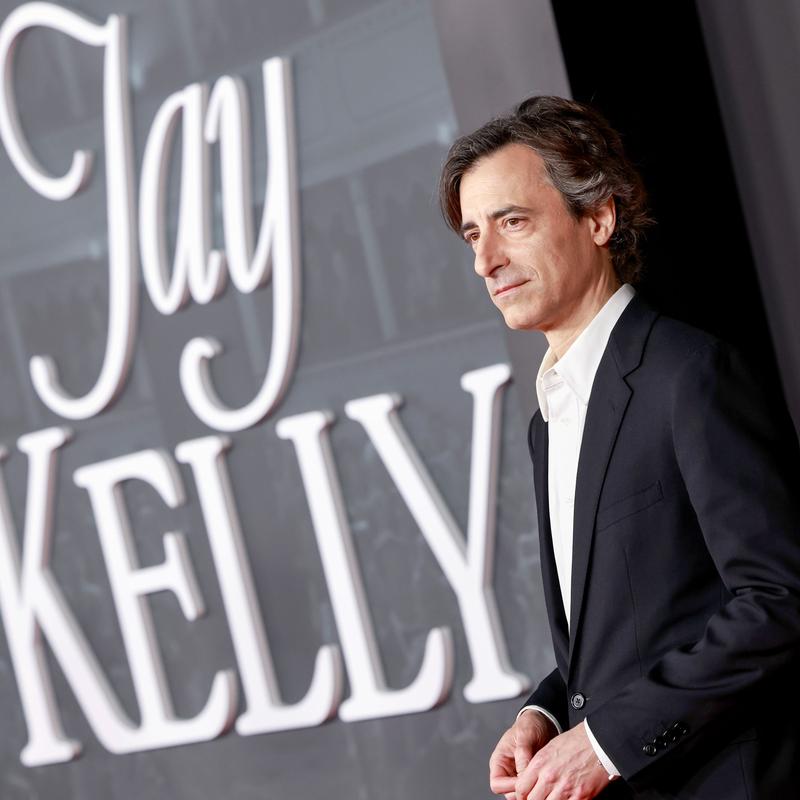
David Remnick: This is The New Yorker Radio Hour. I'm David Remnick. The filmmaker Noah Baumbach was long known for comedies and dramas that drew on his own life. Films like The Squid and the Whale and Marriage Story. Things change, and so did Baumbach's source material. In 2022, he released White Noise, which is based on the novel by Don DeLillo. Then, in 2023, he worked on a smash hit in Hollywood called Barbie. He co-wrote the script with Greta Gerwig, who directed.
Baumbach's latest film is something of a return to form. It's a sharp character study of an extremely handsome, extremely famous movie star having an identity crisis. George Clooney, of course, plays the actor, and Adam Sandler is his beleaguered manager.
Jay Kelly: Suddenly remembering things I haven't thought about in a long time.
Ron Sukenick: Our family's losing it at home.
Jay Kelly: It's like a movie where I'm playing myself or watching myself.
Ron Sukenick: I'm sorry, you got to go again. I didn't hear a word you said.
Jay Kelly: I said I'm suddenly remembering things. Now, what is that?
Ron Sukenick: Memory?
Jay Kelly: Well, yes.
Ron Sukenick: Maybe your memory's trying to tell you something about your present.
Jay Kelly: Like what?
Ron Sukenick: I don't know. I'm tired.
David Remnick: Jay Kelly opened in theaters, and it will stream on Netflix starting this week. Now, we at The New Yorker take a familial pride in Noah Baumbach. He worked as a messenger in the office back when that was a thing. He wrote his first humor piece for us in 1991, and he still contributes every so often. At this year's New Yorker Festival, our own Susan Morrison sat down with Noah Baumbach to talk about the new film.
Susan Morrison: Now, Jay Kelly is a love letter to a certain classic kind of movie. It has this lush Hollywood score by Nicholas Britell, a big movie star, these gorgeous locations. I've read that you've said that working on this movie, it began as an exercise to help you, to prod you to fall in love with movies all over again. When did you fall out of love with them? Why did you have to do that?
Noah Baumbach: It was somewhere on a deserted highway in Ohio at about 4:00 AM with a rain machine shooting white noise that I think I felt like, "Oh, God, I don't know that I like doing this." That movie was just very difficult for me for several reasons. We shot during COVID, which was a big part of it, just because it was so difficult and such a fraught time, but it was just really difficult. I'm proud of the movie, but the making of it was so hard. I was just thinking.
Then, actually, when I was writing Jay Kelly, then I went and worked on Barbie with Greta and the filming of it, and that was a really great shoot. That sort of almost like watching her, as she has many times for me, she led by example, I guess. I had a really good time on that. I felt like, "Well, maybe I do still like it." It's a thing. It's good in a way, too, to check back in with yourself, because I think it's something that I dreamt of doing. It's something I always wanted to do. I've been doing it for a long time now. I was like, "Well, am I doing this only because I do it? Maybe I want to go--"
Susan Morrison: Kind of restart.
Noah Baumbach: Yes. Part of the energy of Jay Kelly is my affection for the medium and both the movies themselves, but also the making of them.
Susan Morrison: I remember now reading about pajama parties on the set of Barbie. It must have been a very different vibe than seeing-
[laughter]
Noah Baumbach: I didn't go to those.
Susan Morrison: -the girls only, I guess.
Noah Baumbach: Yes. There was the Barbie.
Susan Morrison: I'm thinking of filming that scene in the car and the river in White Noise. I mean, that must have been very different.
Noah Baumbach: It was hard. Yes, it was really difficult. It's not like my favorite kind of things to be doing in movies.
Susan Morrison: It's almost an action movie, actually, that part of it.
Noah Baumbach: Yes, it is. I kind of was doing it because it was what the material required. Sometimes I write something, and then when I'm directing it, I realize, "Oh, now I have to actually interpret what I wrote." With that one in particular, I think I realized too late how ambitious it all was. Too late for my own pleasure. It's hard to actually write something and say, "I'm going to fall in love with movies again." I mean, it could have not paid off.
Susan Morrison: Well, the opening line of Jay Kelly, which is the opening scene, is on a movie set as they're wrapping a film. The opening line is, "We're coming to the end." I kept thinking, if I had seen that in the script, it would just make me think it was a Beckett play. It does have kind of a valedictory feel. Even though the whole movie is a love letter to movies, there's also a sense of you as this mature artist, reckoning with your work in the same way that that's what Jay Kelly is doing. For you, was that a little bit of a struggle, or is that just the character that you're writing?
Noah Baumbach: I'm sure. I'm sure it must be. The endings is another aspect of the movie, I think. That was kind of implicit, I guess, in the feelings I was having about do I love this is also now I'm older. I have other things that I-- I have a family, things that I could be spending more time doing, and do I love this enough? That feeling of coming toward facing the end in life as well. I mean, they're facing the end in the movie, but Jay Kelly's facing his mortality.
Susan Morrison: I mentioned to you that last night I was talking to Ian Parker, one of our writers, who wrote a great profile about 12 years ago. He reminded me of something that Greta had said to him when he was working on this piece, which is how very often the first lines of your movies basically tell you everything that's about to happen. In Meyerowitz Stories, Adam Sandler is trying to parallel park.
Noah Baumbach: I didn't get my driving license till I was 40.
Susan Morrison: [laughs] Sandler says, "Am I fitting?" In the beginning of Greenberg, Greta is trying to merge into traffic on the freeway, and she says, "Are you going to let me in?" Then I also realized that Squid and the Whale opens with one of the sons saying on the tennis court, "Mom and me versus you and dad." It's almost like it's a conscious decision to give the viewer the CliffsNotes to the movie before it even--
Noah Baumbach: Just putting it out there. Just so obvious.
Susan Morrison: [laughs]
Noah Baumbach: I don't know. I'm not even that aware of that. It was brought up at a certain point. I think it's really like you always want to tell the story of the movie in the beginning of a movie. The opening shot of Jay Kelly is, in a way, a representation of what the rest of the movie, Jay's journey, is going to be, so whether it's the line or it's something else. A lot of those ones just were the lines. When you were just now talking about Meyerowitz, I was wondering what the first line was. I guess that works.
[laughter]
?Audience Member: It does.
Noah Baumbach: The "are you going to let me in" one I was doing for Greenberg. I was doing an interview after the movie came out. The interviewer pointed out that this was what the story of the movie was. It's like, "Are you going to let her to Greenberg? Are you going to let me in?" I, all of a sudden, felt myself about to cry because I'd never thought of it or realized it.
Susan Morrison: I think metaphors are unconscious. I just now remember that when we first talked about Squid and the Whale 20 years ago, I said there's a lot of ping pong and tennis in this movie. Is that because the movie's about these children going back and forth between their parents as a part of their custody arrangement? You shocked me by saying that had never occurred to you.
Noah Baumbach: No. Now again, I'm shocked again when you say that.
[laughter]
Susan Morrison: Your movies often, we're talking about Squid, have a really strong autobiographical component. This one is about a giant movie star. You're not a giant movie star, but you're a big deal Hollywood director. It's tempting to see Jay Kelly in some ways as a stand-in for you. Especially, it makes me wonder, after the giant success of Barbie, one of the highest-grossing movies of all time, have you vaulted into a slightly different relationship to Hollywood, or is it more just about age, as we were talking about, looking back at your whole career?
Noah Baumbach: I also think the notion of an actor was something that was-- It was a good metaphor for something about playing yourself, which is something a lot of my movies are about. I guess it's how we play ourselves. You think about these things in retrospect. A lot of my characters in the past have been people who define themselves by a certain lack of success or a lack of the success they hoped for, the way they hoped their life would be, their projection of their self, not reaching that and calling that failure, I think, or thinking of it as failure.
Susan Morrison: Like Dustin Hoffman, The Meyerowitz Story, or Jeff Daniels.
Noah Baumbach: Yes, or Greenberg himself. What I realized in doing this was that, in some ways, defining yourself by your own success is the same challenge because it's just another way of not knowing who you are, not looking at where you really are. I think Jay Kelly is-- There's something in him in the beginning of the movie that's motivating him to go out in the world, to find himself in some way.
Ron Sukenick: What's the packing?
Jay Kelly: You've just come from the game? How'd you and Vivian do?
Ron Sukenick: Well, we were up 5-4, and settled for the match-
Jay Kelly: I do too many movies.
Ron Sukenick: -but it's fine. What's the packing?
Jay Kelly: You think I do too many movies?
Ron Sukenick: I think you do just the right amount of movies.
Jay Kelly: Barbara, you think I do too many movies?
Barbara: You do work a lot.
Jay Kelly: See? Barbara tells me the truth.
Ron Sukenick: What happened last night?
Jay Kelly: You can't have too much underwear.
Ron Sukenick: How'd you get the black eye?
Jay Kelly: I'll tell you on the plane.
Ron Sukenick: What plane?
Jay Kelly: The plane that I booked. We're leaving at 1:00.
Ron Sukenick: Where are we going?
Jay Kelly: Meg, where are we going?
Meg: France.
Jay Kelly: France.
Ron Sukenick: France.
Noah Baumbach: There are events that set him going. I liked that about the character, that it was somebody who was-- There's certainly something infantilized about his life, but that there is something in there in ways that we often do. Like, in some ways, talking about coming after white noise of reinventing himself. Like, something in him knows he needs to almost perpetuate his own crisis to move forward in life.
I think I'm interested in that too, of the unconscious things we do throughout our lives. Like, you look back, and you're like, "Oh, yes, I needed a change then. I couldn't have told you that, but I did this, which made the change happen." Certainly, people have gone through-- I mean, divorce is that-- I've dealt with that a lot. It's like what Mike Nichols said about The Graduate. It was like the story of a man who saves himself through madness.
Susan Morrison: Yes. Well, all the movies, and if you think about it, a lot of art is really about the gap between who we are and who we think we are.
Noah Baumbach: Exactly.
Susan Morrison: You and I were talking about this the other day. At first, when I saw you were making a movie about a massively successful person, I thought, "What a change." You were saying that this feeling of failure and unfulfilled ambition and huge success are both ways of having a barrier to who you really are. It made me wonder, is there some kind of medium level of success that is-
Noah Baumbach: Not a barrier?
Susan Morrison: -emotionally more healthy, or is this just the human way?
Noah Baumbach: No, we probably just want more. I think no matter what, there's a gap. No one's ever going to close that gap. I think we look and find different ways in our life throughout-- I mean, it can be more conscious, like through therapy or through whatever, but to reintroduce ourselves to ourselves as we go.
Susan Morrison: You were just quoting Mike Nicholson. I was just remembering something that I read. There are two interesting biographies of him recently. He quoted at one point of saying, "People who figured out how to like themselves, they're really boring. You don't want anything to do with them." Which is kind of interesting.
Noah Baumbach: Yes.
Susan Morrison: I feel like this movie is in the tradition of-- I'm thinking of Seth Rogen's show, The Studio, Robert Altman's The Player. It's a great comedy of manners about Hollywood. There's a great running gag about a piece of cheesecake in his rider that is so funny. Anyway, watching the movie, I kept imagining you through your various movies, making notes of all these little idiocies that you have encountered along the way. Is Jay Kelly, the film, a repository for little things you've noticed? I also assume that Clooney and Adam Sandler themselves have probably lived a Jay Kelly kind of life and have--
Noah Baumbach: Absolutely.
Susan Morrison: Was it like a grab bag of people's--
Noah Baumbach: Yes, I think so. Also, like this idea for a character, which is true for movie stars of a certain level, where they have, like they do, wherever they go, there's always the same things laid out for them.
Susan Morrison: Does this happen for you? Do you have a rider?
Noah Baumbach: No, I don't. I mean, there's definitely that thing of like-- Because also the rider for him, it's this notion of like, in the beginning of the movie, you haven't seen the movie, it's like there's a cheesecake as part of the assortment of things that is in every room he goes into. He says, "I don't like cheesecake. How, why is this always here?" Adams, this place's manager, says, "Well, you once said you liked it, so it made it into the rider."
I also felt like it was actually an amusing way to also, again, tell the story of identity and of like, who are we? Are we the person who said it then? These things, like this rider idea, too, they get repeated. It is sort of like, "Well, I wanted this one time years ago, and I'm still getting it." It can keep you from advancing or changing in your life because it's the same stuff that you had asked for back then. That's what happens, I think, to people sometimes who get too-- they're too bubbled in that way. Again, they're amusing details. The milieu is fascinating to me. It's a world I know well. There are so many elements in it that I felt like I could tell this tale of identity crisis.
Susan Morrison: Well, the cheesecake as part of his composite identity that he's performing. As you just said, this whole movie is about-- At one point, he says, "I don't know who I am. Am I just playing a part?" It's about how we all just perform ourselves and collect little bits of cheesecake and idioms and whatever. It also reminds me of another thing that you do in your films. I'm especially thinking of Meyerowitz Stories, where-- Joan Didion always said that we tell ourselves stories in order to survive, to console ourselves.
You often create characters who, within a movie, they'll tell the same story. You'll hear them tell the same story the way people tell the same family stories or the same jokes. Even in Jay Kelly, Adam Sandler, as the manager, is always calling his clients puppy. One client probably doesn't know that the other client's being called puppy. This way of repeating phrases and stories makes the characters feel so lived in and so real. That's another version of just how you're performing your character.
Noah Baumbach: Yes, and how language, the way we talk or the way the characters talk, becomes self-defining too, and can they break those patterns? I write a lot of dialogue. It comes naturally to me. I think I have an ear for it. I'm always interested in the movies of how the rhythms of how people talk, both as helping me find the characters, often as I'll write myself, and discover the characters while I'm writing the dialogue, but also how what people say is not what they're saying.
I often write a lot of extraneous stuff that isn't even really meant to be focused on. It's like musical-- just sounds and things, or how people talk so as not to have to say anything, but also how people's patterns can change over the course of a movie, and how that is also a way of discovering character or revealing character in a movie.
Susan Morrison: If we all tell ourselves a story about our lives in order to make us feel better, what story is Jay Kelly telling himself?
Noah Baumbach: I guess at which point in the movie we don't know-- I think the story that initially that he's telling himself is that these choices that he's made and the bargains he's made with himself throughout his life were worth it. I think when we all are younger, we make decisions that seem much easier because we think, "Well, I have plenty of time to get to the other thing." Like, "I'm going to read War and Peace at some point." Then you get to a certain point.
I think the point that Jay Kelly's in, in the movie, where essentially it's a shocking realization, even though it's the most obvious thing in the world, which is that this is the only one he's going to get. [crosstalk] This is the only version of his life. These decisions are real decisions, and they've had real consequences, and they're real. It's a shocking realization. It's like that the human experience is your experience. I think that's the story he's telling himself. I think that story starts to show its cracks as the movie goes, which is, I think, true in probably a lot of my movies, is the characters have these stories that are ways to justify the life they've lived.
Susan Morrison: Jay Kelly is wonderful, and I hope you all see it. Thank you so much, Noah.
Noah Baumbach: Thank you, Susan. Thank you.
[applause]
David Remnick: That's writer and director Noah Baumbach talking with The New Yorker's Susan Morrison.
Copyright © 2025 New York Public Radio. All rights reserved. Visit our website terms of use at www.wnyc.org for further information.
New York Public Radio transcripts are created on a rush deadline, often by contractors. This text may not be in its final form and may be updated or revised in the future. Accuracy and availability may vary. The authoritative record of New York Public Radio’s programming is the audio record.