
Influencers Usher in a New Era for #MeToo
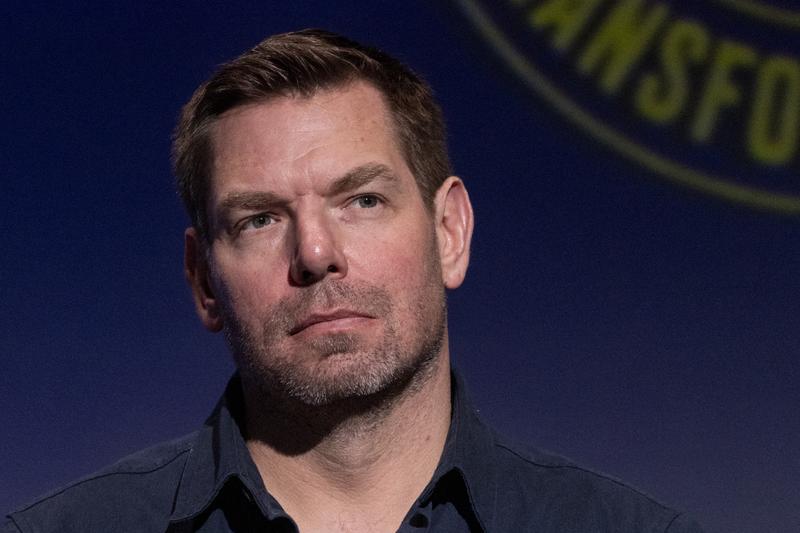
( ETIENNE LAURENT / AFP / Getty Images )
Iván Nagy: You're being compared to Viktor Orbán. You can only be great for the press.
Brooke Gladstone: Hungary's newly elected prime minister, Péter Magyar, says he wants to overhaul state media and support a free press, and changes are already underway.
Iván Nagy: Those independent outlets that had survived the 16 years of Orbánism will continue to be the main source of information for much of the country. The other ones, those ones who were on government payroll, will have a very tough time building their reputation back.
Brooke Gladstone: From WNYC in New York, this is On the Media. I'm Brooke Gladstone. Also on this week's show, a political career cut short.
News Clip: Multiple women have accused Swalwell of sexual misconduct and assault.
News Clip: Breaking news coming just 20 minutes ago, Eric Swalwell announcing he's suspending his run for California's governor.
Brooke Gladstone: Set in motion by a whisper campaign and a couple of influencers.
Melanie Mason: The story comes out, and they all just burst into tears.
Brooke Gladstone: It's all coming up after this.
[music]
Brooke Gladstone: From WNYC in New York, this is On the Media. Micah Loewinger's out this week. I'm Brooke Gladstone. Two weeks ago, Eric Swalwell was a Democratic congressional representative, a cable news darling, and one of the top candidates running to be the next governor of California, but then--
Ryan Nobles: Multiple women have accused Swalwell of sexual misconduct and assault.
News Clip: This Capitol Hill staffer is coming forward for the first time on camera to talk about her experience with Congressman Eric Swalwell.
Capitol Hill Staffer: I kept figuring out ways to blame myself. Well, Eric shouldn't have raped me.
Ryan Nobles: One woman telling the San Francisco Chronicle that she had several sexual encounters with the congressman while working in his office. She also accused him of sexually assaulting her twice while she was too intoxicated to consent.
Christiane Cordero: The Democratic representative denies the accusations, posting this video Friday night.
Representative Eric Swalwell: These allegations of sexual assault are flat false. They're absolutely false. They did not happen. They have never happened, and I will fight them with everything that I have.
News Clip: Today, Lonna Drewes, a former model, coming forward to say that Swalwell assaulted her in his hotel room in 2018.
Lonna Drewes: He raped me, and he choked me. While he was choking me, I lost consciousness. I thought I died.
News Clip: Eric Swalwell announcing, he's suspending his run for California's governor.
David Muir: This scandal now widening tonight, Congressman Eric Swalwell resigning from Congress. It's now official.
Brooke Gladstone: The path this story took into the public eye was swift and unusual. It began with a series of messages sent to Arielle Fodor, a creator better known as Mrs. Frazzled, with 1.4 million followers on TikTok and around 760,000 on Instagram. She's a former kindergarten teacher who focuses on education policy.
Arielle Fodor (Mrs. Frazzled): A new government watchdog report found that the Department of Education basically stopped doing some of its most important oversight of student loan companies last year.
Brooke Gladstone: Fodor posted a story on Instagram with a positive message about Swalwell, and then the messages started showing up in her inbox.
Melanie Mason: It was a warning. It was a warning about Eric Swalwell.
Brooke Gladstone: Melanie Mason is Politico's California bureau chief and co-author with Jeremy B. White of the recent piece, The Whisper Network That Caught Up to Eric Swalwell.
Melanie Mason: She heard from two strangers and also a friend of hers, and they were all variations on the same theme, which is, "You know he sleeps with his staffers, right?" or, "Don't give him your phone number because he'll text you late at night." For her, it was pretty jarring because she thought that he was at least a decent candidate for governor. That's what set her off on this quest.
Brooke Gladstone: She has a huge number of contacts among Democratic staffers. She started asking people, "Have you heard anything about this?"
Melanie Mason: That's right, because there's so much desire for these politicians to get on her platform to reach her audience. They all are courting her and other influencers. She has the phone numbers of all of these staffers and all of these campaign operatives and, quite frankly, all of these lawmakers. I think us reporters would actually be quite jealous. She was able to poke around. What she heard back was, "Yes, there are rumors about this," or "Yes, this happened to a friend of mine." When she'd say, "Well, why don't you say anything?" the response that she got back was, "Well, that's just the way it is."
Brooke Gladstone: "That's just the way it is."
Melanie Mason: That's just the way it is. This is what Washington's like.
Brooke Gladstone: Was she stunned?
Melanie Mason: I think she was stunned because we had just gone through this reckoning not all that long ago. Thinking back on the MeToo movement, Congress was actually somewhat spared from that back in 2017, 2018. If you're a young staffer coming up and people just say, "Oh, of course, he's texting you late at night. That's just what he does," I think that you then think, "Okay, I guess this is what the culture is."
Brooke Gladstone: Yes, rumors were dogging his campaign practically from the start. There's a longtime Democratic strategist, Mike Trujillo, who'd heard a story back in 2017 about a friend of a friend who'd had a negative experience with Swalwell. Since then, he kept hearing similar stories. Then, in December, a month after Swalwell decided that he was going to run for governor, unusually late to jump into a race like that, Trujillo posted on social media that Swalwell had slept with interns, sexually harassed women, sent weird texts late at night. He wrote, "Endorse at your own peril." Did he have an axe to grind?
Melanie Mason: He absolutely had an axe to grind. He's a political operative. As he told me, "Everything I do is political, and I assume that everybody sees what I do is political." He's a very close ally of Antonio Villaraigosa, who's the former Los Angeles mayor, also somebody that's running for governor. I do think that there is also a crusading aspect of this because he had been hearing these rumors for so long. It's the culmination of what's been this year's long, squirreling away of little bits of threads and tips and half-baked anecdotes that he then started pitching to reporters.
Brooke Gladstone: Trujillo's post went viral, got 140,000 views. Eventually, he had to pull it because Swalwell's campaign sent a cease-and-desist letter, tried to discredit Trujillo as his source for this story. The rumors compelled power brokers to finally bring them up to Swalwell directly. He wanted endorsements. He wanted money. They asked if there was anything to the story.
Melanie Mason: Because their credibility is at stake as well. A major endorser like SEIU California, for example, can really be the difference-maker when it comes to maybe pushing somebody into frontrunner status. There was a lot of conversation before they decided who to endorse. In addition to the questions of what is your policy stance or what is your political beliefs, there was the question of, "Is there anything that's going to embarrass you and, by extension, embarrass us?" Sometimes very directly.
I think they would ask, "Did you sleep with staff members?" Across the board, what I've heard from people is that he denied it. Not just denied it, but denied it so emphatically that people were inclined to believe him. I think that people are so used to hearing politicians use all of their hedge words, and maybe try to give themselves some wiggle room. Because he was so definitive in saying, "There's no there there. There's nothing going on," they chose to take him at his word.
Brooke Gladstone: He also apparently lied to his campaign staffers. One of them, you quote saying, "The dude deserves an effing Academy Award for Liar of the Year."
Melanie Mason: He had a call with his senior staff hours before these stories dropped. They then were aware that these stories were coming. They have a Zoom call with him. His senior staff, who are all women, by the way, are pelting him with questions for an hour. They came away feeling satisfied that he was telling the truth. An hour later, when CNN sent an email saying, "Here are the facts that we're prepared to report," these senior staffers saw this. Several of them resigned on the spot. They were so disgusted by what they read.
Brooke Gladstone: I want to back up a bit here. To Mrs. Frazzled, long before this story broke, she starts to act. In February, she posted a cryptic message, expressing disappointment in a Congress member, which sounds to me like some sort of Walter Winchell, "What movie star was canoodling with her co-star in the back of Sardis?" It still managed to elicit a message from Swalwell's then campaign manager, Yardena Wolf. Bring me back to that moment.
Melanie Mason: This very cryptic post was sent to me, and I'm sure other reporters saying, "You know this is about Swalwell, right? Not by her."
Brooke Gladstone: [laughs] You didn't have to guess.
Melanie Mason: Yes, it sounded like that got back to Yardena as well because she sent a message, and it just said, "I heard you had some concerns stemming from these horrible rumors that started from a tweet from a staff-referred opponent. If you have any concerns, I'd love to talk to you about it." I think that Mrs. Frazzled, between the lines, I think she saw that as somewhat of a threat. I don't know if that was the intent or not. She took it that way. After that, she started naming Eric Swalwell by name in her posts.
Arielle Fodor: I have heard from sitting members of Congress, former congresspeople, staffers, former staffers, content creators, journalists, tons and tons and tons of people at this point that there are widespread allegations and conversations about power imbalances around--
Melanie Mason: As soon as she starts saying his name, she started getting more messages saying, "Yes, I've had this experience." She became somewhat of a clearinghouse for these women who hadn't talked about their stories publicly, but felt comfortable sharing with her as a social media influencer.
Brooke Gladstone: That special parasocial relationship.
Melanie Mason: It's fascinating. While it would feel scary to reach out to an investigative reporter, maybe this was the intermediary step that people could feel comfortable with.
Brooke Gladstone: As you say, when Fodor heard from Wolf, she didn't respond to her. Instead, she escalated. Meanwhile, Cheyenne Hunt, a new party, a lawyer, and former Democratic congressional candidate, received a message from a close friend. It was pivotal. What did it say?
Melanie Mason: This friend said, "I was harassed by Eric Swalwell." Her friend specifically said to her, "It was because it felt like his campaign for governor was getting steam." I think that she was distraught at the fact that he could be in a position to have such a powerful job. She knew that her friend, Cheyenne, had this quite large platform and asked her to make this post. That was two weeks ago. The timeline of this is so incredibly fast. Cheyenne does this post.
Cheyenne Hunt: The Democratic candidate currently leading in the California governor's race has a known history of being predatory towards women, and while it may be--
Melanie Mason: Cheyenne and Arielle don't know each other, which I think is also a fascinating element of this. Word gets back to Arielle that Cheyenne is planning to put this post up the night before. That's actually the first time they connect. I think for Arielle, it was this really redemptive moment because I think she felt very lonely. To now have a second person say, "I also know of these allegations," they could then work together to both keep the drumbeat up of this publicly, but they were also gathering these women's stories to then connect them with journalists so they could go through the traditional media vetting.
Brooke Gladstone: Hunt and Fodor started seeking pro bono legal counsel for the women. As you said, they decided to take their stories to the press. I'm just wondering, why didn't they just make the charges themselves?
Melanie Mason: I think even in this wild west new media landscape, where creators have a lot of influence, these two women at least knew that in order to have the most credibility, to have the most impact, it would be important to have the imprimatur of a known news organization. They primarily worked with CNN and established relationships with the reporters there, and felt comfortable connecting these women to these reporters.
Brooke Gladstone: Particularly one named Alison Gordon?
Melanie Mason: Alison, I think, was the primary conduit. That was really important that there was this streamlined process, right? They weren't dispersing these women of, like, "You talk to this reporter. You talk to this reporter." Having CNN and knowing them with CNN, they would have all of their guardrails, right? Their editorial processes, their lawyers. That thing was not going to be published until it was very, very worked through. I think that these influencers knew that they could never offer that. That's why they thought it was important to have the actual details be disclosed in the press.
Brooke Gladstone: Then, the big day, Friday, April 10th. The news stories drop first in the San Francisco Chronicle, then on CNN.
Laura Coates: CNN has new exclusive reporting about Congressman Eric Swalwell. The Democrat is running for California--
Brooke Gladstone: How did they describe that day to you?
Melanie Mason: The story comes out. What Cheyenne told me is they all just burst into tears. It was just this big cathartic moment of, like, "Oh, my God, this is finally out there." It's been full tilt ever since. I was just watching Cheyenne on CNN. They are out talking to reporters. They're being very public about what their role is because they see this as a movement that they want to continue to keep up beyond the Eric Swalwell story.
Brooke Gladstone: He may have had wide support, but certainly not deep support because, within a week, Eric Swalwell had suspended his campaign for governor, resigned from Congress, and then the Manhattan DA opened a criminal investigation. His closest allies and friends abandoned him. You've reported on MeToo stories. You know they can be very tough.
You're asking these women, mostly women, to trust you with traumatic moments from their lives. We've seen over and over again how it often doesn't go well for these women, depending on who their attacker was. How remarkable is it then, that Fodor and Hunt were able to collect these stories and get them to press so quickly, with such rapid and massive consequences for Swalwell.
Melanie Mason: It's stunning. When I was talking to Cheyenne and realized that from the day she got involved to the day the stories ran, it was just 11 days, I was stunned because I do have experience reporting these stories. When they're newsworthy, you certainly are working as fast as you can, but as responsibly as you can. So much of that is about establishing trust, building these types of relationships, and then also interrogating these stories, too, right? That's the responsible role of the press.
The fact that they were able to do that on such a compressed timeline, I do think, speaks to how the influencer relationship sped that trust-building process, so the journalists could then very quickly focus on trying to get corroboration and all of the other necessary steps of turning these stories around. Cheyenne said this is not a green light for content creators to think that they're investigative journalists with sensitive stories. There's a role for them, clearly, but people should not think that this is going to be a replacement for investigative journalism.
Brooke Gladstone: You look at the trail of harassed women in our president's wake. It seems like we live in an age where it's very tough to hold politicians, especially those at the top, accountable. The MeToo movement seems like such a long time ago and almost quaint. Maybe providing stories and evidence of bad behavior doesn't matter anymore. Do you see this story as a continuation of the MeToo movement or something else?
Melanie Mason: I thought about this a lot because we saw such a rush of attention and reckoning and self-examination in 2017 and 2018 during the MeToo movement, and then we absolutely saw a reaction to that, a backlash. Now, this is maybe like a reaction to the reaction, right? I think that that's the way that things happen a lot in politics is it's not a line one way or the other. It's a pendulum.
Brooke Gladstone: Is it a reaction to a reaction, or is it just that Swalwell turned out to be an easy target? No one's going to lose anything if he goes down.
Melanie Mason: Absolutely. The allegations against him are so serious that nobody would want to associate themselves with him, but there was a moment that really stood out to me as this story was being covered that I think is indicative of how things have changed since MeToo. Elex Michaelson, who's a CNN anchor, had Swalwell's lawyer on the show. Swalwell's lawyer said what we've often heard when pushing back against allegations of sexual assault.
Elias Dabaie: These women, certain of them, have reached out to the congressman on multiple occasions, wishing him nothing but the best, saying that they'd vote for him for governor, asking for references for jobs, attending social events with him. Looking at the facts, I do have to question the credibility of these allegations.
Melanie Mason: Elex on TV said--
Elex Michaelson: You know that there's a long history and a lot of evidence of sexual assault experts who say that the victims often go back to the perpetrators.
Melanie Mason: I don't think that that's something that would have been said on TV so quickly in 2017.
Brooke Gladstone: Hell no. [laughs]
Melanie Mason: There were some things that stuck. There is absolutely cultural changes. Remember, Cheyenne and Arielle, they were eight, nine years younger at the time. I do think there's a generational difference that you're now seeing the charge being led by Gen Z women. That's another factor here that we should keep in mind.
Brooke Gladstone: Another factor is the power of influencers.
Melanie Mason: I personally, as a journalist, did not appreciate how strong that reach actually was. They had put together a list of content creators that they were going to blast the story out to when these stories came out. They said that those creators collectively had an audience of 200 million people. There's not a media outlet in the world that would have that kind of reach. These are important players in our news information environment.
Brooke Gladstone: Melanie, thank you so much.
Melanie Mason: Thanks for having me.
Brooke Gladstone: Melanie Mason is Politico's California bureau chief and co-author of the California Playbook. She reported this story with Jeremy White.
[music]
Brooke Gladstone: Coming up, more scandals exposed. This is On the Media.
[music]
Brooke Gladstone: This is On the Media. I'm Brooke Gladstone. Last Sunday, Hungary's prime minister, Viktor Orbán, was on the ballot for reelection. He and his party, Fidesz, lost big.
Tom Hanson: Tonight, Hungary's Viktor Orbán has conceded defeat in what he called a "painful election." Voters turned out in record numbers to end his 16-year, increasingly authoritarian rule. Now, Orbán was backed by both the Kremlin and the White House, something you don't hear every day. Vice President Vance even visiting Budapest last week to campaign for him.
Vice President JD Vance: I've seen a guy who has ferociously advocated for the interests of Hungary. I'm here to help him in this campaign cycle--
Brooke Gladstone: Orbán had systematically brought Hungary's institutions under state control, from the courts to the education system to the press, gutting the democratic checks to his power. Orbán's style of "democratic illiberalism" served as a kind of manual for President Trump and the MAGA right, dubbed "the Hungarian model." Márton Gulyás is the founder and lead anchor of Hungary's top independent news show, a YouTube channel called Partizán. On our show last spring, he explained how Partizán played a vital role in the rise of Péter Magyar, now Hungary's prime minister-elect.
Márton Gulyás: He said that he's fed up with the style of the government, with the misconduct of the public funds and the level of corruption and the concentration of power in Orbán's hand.
Brooke Gladstone: Márton says that before appearing on Partizán, one of Hungary's very few outlets that feature opposition voices, Péter Magyar was an insider, but not a politician.
Márton Gulyás: He was a kind of whistleblower coming from within the system, telling the audience what kind of scandals he witnessed within the circle.
Brooke Gladstone: There were scandals galore, but few resonated like this one in February 2024.
Iván Nagy: Hungary's president at the time, Katalin Novák, pardoned someone who was convicted for helping the head of a foster home cover up child abuse, basically. It brought about the downfall of Katalin Novák, and it brought about the rise of Péter Magyar.
Brooke Gladstone: Iván Nagy is a political journalist from Hungary, now Delacorte Fellow at the Columbia Journalism Review. We spoke to him twice this month, both before and after Hungary's historic election. Nagy says that the rapid erosion in Orbán's seemingly invulnerable power base began with that bombshell story, which quickly brought down Hungary's then-president, a largely ceremonial post.
Iván Nagy: President Novák, before she was appointed the president of Hungary, was the Minister of Family Affairs for Orbán. The huge position created solely for her and for her successors, because one of Orbán's main political platforms is being a pro-family government, offering all sorts of tax breaks and financial advances to families who have multiple children. It's what he uses to try to sugarcoat his very anti-LGBTQ stance in social life. To find out that your president pardoned someone who helped cover up a crime, that is huge.
Brooke Gladstone: It feels so quaint that Hungarians still care about outrageous hypocrisy.
Iván Nagy: From day one, investigative work has kept an eye on this regime, but it's virtually impossible to break through the noise, and especially to have a story that penetrated beyond a certain bubble of society that could access free information, because one of the building blocks of this regime is the complete isolation of huge populations from verified objective news.
Brooke Gladstone: Back to the interview that Magyar did, the one that went viral, you say it kicked off some of the first real backlash that Orbán has seen during his regime. What were these stories that no one paid attention to?
Iván Nagy: Prior to the child abuse story?
Brooke Gladstone: Yes.
Iván Nagy: For instance, one of these stories is that in the 2010s, public money from Hungary Central Bank was funneled into non-governmental organizations, on paper charities, all led and run by people who are related to either the son of the head of the national bank or his business circles. What ended up happening is that around $1.5 billion worth of Hungarian foreigns were embezzled and lost. This is something that journalists have covered for years, that the business circles of the Central Bank leader's son have gotten so rich that they actually purchased skyline apartments, condos in Manhattan's Fifth Avenue.
These are the kind of things that never really reached broader society. It's mostly corruption-related. Hungary's richest man was once the pipefitter, the gas man of Viktor Orbán, a childhood friend. Now, virtually in every industry in Hungary, he owns a majority stake. These kinds of things journalists have covered for long, but one of the many reasons that didn't resonate with people is that people are doing relatively well off in Hungary. Orbán paid a lot of attention to making sure that the amount of money that people see in their bank accounts or in their wallets is just always slightly, a little more than the month before or the year before.
Brooke Gladstone: All people, Iván, or just the elite?
Iván Nagy: Obviously, Orbán's business circles were the biggest beneficiaries of his governance. What Orbán has done to guarantee his success is to make the most vulnerable parts of society feel like they are better off. Wages have actually risen consistently from 2010 until 2022. People felt like they had more money on their bank accounts. Now, the problem was, and what we tried to report on is that, at the same time, Hungary has the highest value-added tax in the world. 27% on every purchase. Hungary has had, after COVID and the war in Ukraine, a 25% inflation rate. All sorts of other economic measures that Orbán imposed on businesses all trickled down to the consumer level.
Brooke Gladstone: Surely, the electorate would have noticed that.
Iván Nagy: Except they did not, because on the surface, it did look like they had more money in their bank accounts. That was the magic of Orbán. A lot of times, before elections, we had seen all sorts of cash advances and tax breaks and many, many ways in which people would see a large amount of money reach their bank accounts.
His regime started to crumble only in the past four years because of all the economic crises, because of COVID, because of the war in Ukraine. They're connecting the dots. Here's Péter Magyar, someone who's been in front of the public eye for two years and telling them that, "You're struggling to pay your rent. I'm pointing to the guy who's responsible for it. It's because of him. Look at his cronies on their yachts. Look at his family getting rich while you're getting poorer. See?"
Brooke Gladstone: We've often looked at Hungary as an example of democratic backsliding, where the press seemed to have less and less influence.
Iván Nagy: Having been an independent journalist in Hungary for five years, I only left a year and a half ago. Hostility was the baseline emotion that you were feeling when you were out reporting, especially if you're reporting on rallies connected to Orbán. It became a rite of passage to receive your first death threat through email. What has changed over the past couple of years, and especially in the past couple of months running up to this election, has been that Orbán, for the first time, really acts like someone who's in danger.
Brooke Gladstone: You've noted that a half-dozen whistleblowers have given tell-all interviews about how the regime operates.
Iván Nagy: Yes.
Brooke Gladstone: Orbán is all over the tabloids now.
Iván Nagy: There is a saying in Hungarian, which roughly translates to, "We've known, but we never thought." Everyone knows officials can be bribed, but until someone gets investigated and taken down for this, people pretend like it doesn't exist. Now, more and more people are coming out to speak up from the army. Someone had a tell-all interview for a press outlet called Telex about just how much it is politically controlled instead of professionally controlled, and how much power Viktor Orbán's own son has within the army to do whatever he wants.
Another very explosive interview a couple of weeks ago, an investigator from the Hungarian police force revealed that the government, through the Secret Service, have been surveilling Péter Magyar's party and tried to compromise members of Péter Magyar's IT team to bring down the internal network of the party. We've known that Orbán's been surveilling the opposition and journalists since 2019, when it turned out that his government has installed spyware on dozens of people's phones in the independent press, and NGO sphere, and political spheres.
We've known Viktor Orbán's son had virtually unlimited power in the army because we've had investigative reporting about it. We've known of all of these things, but we never thought of all of these things, right? I don't know if it makes sense, but the point is, if you have a regime, which is, in many ways, held together by fear, people deciding, being fully aware of the potential consequences, to still talk to the media shows how much of this imaginary power you have left.
Brooke Gladstone: You quoted journalist Noémi Martini saying that, "If someone lit up a match, the place would explode."
Iván Nagy: She was referring to just how much tensions have overboiled in this election campaign. Even from an ocean away, I feel it on my skin. Bombshell after bombshell in the media. Explosive revelations about the government every other day. Viktor Orbán and his government coming up with new narratives every other day. You have sex scandals. You have pedophilia scandals, corruption scandals, foreign policy scandals. You have spy games. This is another thing that Noémi told me. People want this to end.
Brooke Gladstone: Magyar wins. What have we got? A paradise of press freedom?
Iván Nagy: I wish any politician could promise a paradise of press freedom. Péter Magyar, here's the thing about him. You're being compared to Viktor Orbán. You can only be great for the press. Péter Magyar is a super professional politician. He has a very detailed political platform, a program, has a whole section on how he would restructure public media. That is something that Hungarians want. That is something that Hungarians need. As I've mentioned, he's already much more open, like he gives interviews to independent outlets.
Brooke Gladstone: You say that Magyar has a toxic habit, a very thin skin, evidently.
Iván Nagy: Péter Magyar is very active on social media, which means Facebook in Hungary. Every time one of the larger independent outlets writes about him critically, whether that's about his platform or investigating his past, whatever, he shows up in the comment section and launches a tirade against the news outlet, accusing them of being funded by the government or just putting laughing and crying emojis.
Because he has built a cult following, because, let's face it, people believe in him. Many people believe in him as the Messiah. Many of his followers follow him in the act. You see mass unsubscriptions from outlets if they write something critical about Magyar. You see people sending texts and threats like, "Why are you in the way of the change of the regime? You're supposed to be on our side." This is why I believe that there has to be a very steep learning curve in Hungary for media literacy.
People will need to understand that these same people who had been scrutinizing Viktor Orbán because he had unrestricted power for 16 years, who else would you be looking at? The opposition who has no political power? No, obviously, the press was scrutinizing the one man and his regime that's defined this era of Hungarian history. People will need to learn that the press is not there to bash Orbán. The press is always there to scrutinize the one in power.
Brooke Gladstone: We recently had Vox's Zach Beauchamp on to talk about how countries display democratic resilience. He referenced Brazil, South Korea, Poland. Poland, in particular, though, is showing signs of potentially waffling back toward the right wing. Given the mixed messages from Magyar, how sustainable is this current and fragile perhaps resilience?
Iván Nagy: Democratic resilience is a very touchy subject in Central and Eastern Europe. In all of the countries that once used to be part of the Soviet sphere of influence, they've only had really three decades of experience with democracy. That's not enough to build resilience. That's enough to build a basic understanding as long as everyone plays along. In these countries, you mentioned Poland, but you can also mention the Czech Republic, you can also mention Slovakia, people have not been playing along. Figures like Viktor Orbán have not been playing along, or figures like Robert Fico in Slovakia have not been playing along.
The reason they have not is that they understood that these democratic foundations in the society are not strong enough to actually withstand the pressure of an autocrat. Talking about resilience in countries which barely understand democracy in the first place, societies that have barely had an experience with democracy in the first place, and then 15 or 20 years in, we're subjected to an autocrat, it's starting again.
It's something that educated, glasses-wearing, blue shirt-wearing, well-combed individuals like myself from large cities can actually delve into and talk about, but it's not an issue that concerns these societies. These societies are concerned with having enough money in the bank to buy enough food, to pay for rent, to be able to buy a new refrigerator if the old one breaks. That is the focus of life for the overwhelming majority of society. To answer your question ultimately, nobody knows if any bounce-back in terms of democracy would last in Hungary, just as much as we don't know anywhere else in the region.
Obviously, we're getting more and more skeptical of just how resilient democracies are in the US, or in the UK, or across the European Union countries. What is certain is that Péter Magyar would come to government to establish a democracy, partly because he is a democrat. While he resembles, in many ways, an old version of Viktor Orbán, who's very charismatic, who has this central-right Christian approach to governance that is very popular in Hungarian society, he is, at heart, a democrat. Not only that, he will have a lot of pressure on him.
One of the things that keeps coming back in reports when people go to his rallies in the countryside, I myself have followed him for an entire day on the campaign trail last summer, is just how much faith people put in him, just how much people expect of him. He can't let the country down. That alone should guarantee some sort of democratic fortune for Hungary in the coming years. In the long run, it's going to be years and years and years and decades of consistent pro-democratic politics just to establish some baseline democratic resilience.
Brooke Gladstone: Hungarian political journalist Iván Nagy.
[music]
Brooke Gladstone: Coming up, we call on Iván again after election night in Budapest to get him to describe what he saw and ponder what happens next. This is On the Media.
[music]
Brooke Gladstone: This is On the Media. I'm Brooke Gladstone. Hungary's Tisza Party, led by Prime Minister-elect Péter Magyar, secured an astonishing two-thirds majority in Parliament. Hungarian journalist Iván Nagy, who you just heard a minute ago, was in Budapest on election day and told us what he saw and felt.
Iván Nagy: I'm still trying to find the words. I spent most of the night in the press tent not far from where Péter Magyar announced the next chapter in Hungarian history. A little later, I got to join people on the streets. What I saw was complete and utter euphoria. Hundreds of thousands of people, not just from Budapest departments, people from the countryside, took the train up to Budapest. They'd be there to see the results and then eventually celebrate. I later on went on a live TV show just to check in. I tried to find a quiet place somewhere far enough from the crowds, and I got ambushed on live television. All of those things that you usually see when you look at foreign coverage of like a "revolution abroad."
Brooke Gladstone: Soccer games. [laughs]
Iván Nagy: Yes, very similar. The only similar atmosphere I can recall from this country was 10 years ago, when Hungary qualified for the European championships in soccer and won its first game, and the whole city came to a standstill. This was much bigger than that.
Brooke Gladstone: A lot of people were disappointed by the results, right? Where are they?
Iván Nagy: There are some of them, yes. This regime had a massive clientele. It had political influencers. It had pro-government journalists, propagandists. It had thousands of people making an echo chamber of pro-government messages on social media and on the airwaves of public media, all sorts of quasi-government actors in quasi-scientific think tanks, and, obviously, in all sorts of government offices.
We tend to see three responses to the result. One is the staying silent, laying low kind of response, which some of the ministers have done. The other one is the, "We're going to stick together, work from opposition, and turn this around because the nationalists in this country need us." Their argument is that still 2.5 million people voted for Viktor Orbán, maybe a bit fewer, which could sound like a good argument.
At the same time, people, in a very resounding manner, voted for regime change. I don't know how much that argument holds up. Then the third kind of people are what I find the most fascinating as a journalist, are the ones who are leaving the Fidesz camp, at least for a moment, to go and talk to independent media and start pointing fingers at who's to blame for this loss.
Brooke Gladstone: As you predicted, Magyar shut down the state broadcaster M1. In fact, he went on the channel after he won to confront some hosts directly to say, "What has been happening here since 2010 is something that Goebbels or the North Korean leadership would admire. Not a single true word being spoken. This cannot continue." Do you think most Hungarians even care?
Iván Nagy: Turning state media into propaganda was one of the original sins of this past government. It's been a very important campaign promise of Péter Magyar to shut it down altogether. Now, what happened was that Péter Magyar was invited for an interview for only the second and third time in his political career. He went on state radio first and then state TV. Both reporters tried to provoke him, tried to personally insult him.
It's a bold and, in some ways, audacious move to sit down in front of someone who'd been a voice of this propaganda channel for a decade. Look them in the eye and tell them straight that, "You're out of a job. We're shutting this whole thing down," but that is what Hungarians voted for. State TV, state radio, and state service radio. What I mean by that is the state news agency, which delivers news to all radio channels across the country, they still remain the primary source of information for millions of Hungarians.
Now, we haven't really found the in-depth reporting so far of how this result has gone down in the countryside, but news broadcasts on public TV started sounding like the truth. They reported on the victory. They cited, for the first time that I can remember, independent news outlets. They talked to experts who were not paid by the government. I can only assume that it's a massive shock in places that still believe this regime was going to carry on. I think right now, the country's in a shock. Both those who are shocked by how large a victory was and are celebrating it, by also those who are now figuring out that they'd been living in a fabricated world for so long.
Brooke Gladstone: Now, state broadcasters were just a small part of it. It's estimated that Orbán's Fidesz party controlled 80% of the country's media, mostly press that's in private hands. Are these guys going to see the writing on the wall and switch how they cover the news?
Iván Nagy: I think we're going to have to wait and see. There are still months before you can actually start running the country in practice. Many of these outlets, that 80% share of the media market, were not profitable. They were either supported by oligarchs close to government or through state advertising. Now, state advertising will be gone.
Brooke Gladstone: Right.
Iván Nagy: It's going to be gone on day one of Péter Magyar being in office. Also, I'm interested to see how oligarchs will react, because if the whole Fidesz camp starts to crumble, at the end of the day, they might just remain businessmen who will not want to invest in projects that are not profitable. Out of that 80%, it's hard to name more than one or two that are even remotely profitable.
Brooke Gladstone: It could be a laboratory for how to get people interested in what you're writing. Regular news consumers or how to make them news consumers. This is actually a very ripe time to make Hungary's population news-interested because there'll be so much change.
Iván Nagy: This is, indeed, the one opportunity to get this right. This is the mandate that Péter Magyar has received. If he plays his cards right, that would be fantastic for the society of Hungary on the long run. To have a public media that many other European countries have, one that really does not only serve their interests by delivering impartial and objective news, but also cultural content and educative content, and all those things that you associate public media with. What the private actors will do, those independent outlets that had survived the 16 years of Orbánism, will continue to be the main source of information for much of the country. The other ones, those ones who were on government payroll, will have a very tough time building their reputation back.
Brooke Gladstone: Magyar himself rose to national prominence through independent media, an upstart website. Much of the reporting that chipped away at Orbán's support came from these tiny, independent media outlets. I guess that says good stuff about journalism's ability to persevere under an authoritarian leader, or is it simply that Magyar was the perfect person at the right time, a conservative that wouldn't scare the vast majority of conservatives in Hungary, and yet someone who challenged the most extreme impulses of the ruling autocrat?
Iván Nagy: I would say both things that you say are correct. On the one hand, yes, his whole career started on an interview on this YouTube channel called Partizán, which now has 600,000 subscribers.
Brooke Gladstone: Which is a lot by Hungary standards.
Iván Nagy: That is a lot by Hungarian standards. Partizán received the first question at Péter Magyar's first press conference as prime minister-elect. Péter Magyar said that, "The person that you've now just listened to works for Partizán, a channel that filled the gap for public media when public media was propaganda and a place where my political career began." He also praised the next journalist who asked him a question, Balázs Kaufmann, who was the investigative writer who first reported on the presidential pardon scandal that started the entire downfall of the Viktor Orbán regime.
He really does recognize that the press was an important part of keeping the light of democracy alive. On the other hand, what you mentioned in your question is that Péter Magyar was really the right person at the right time. The same channel, Partizán, conducted a survey of Tisza voters to see what their political alignment was. It was perfectly aligned that the same amount of people were left and right and center. It was clearly a popular front that Péter Magyar has led.
It was very important to him to be the kind of Christian Democrat, center-right person, that could not only talk to those opposition people in Budapest who were going to vote for him, nevertheless, but actually connect with those people disenchanted from right-wing Fidesz. As we're talking right now, by the way, they have just fired the number one commercial TV channel's news director. Mind you, the number one commercial channel is owned by Viktor Orbán's top oligarch, and it is a propaganda channel. As we're talking, it happened.
Brooke Gladstone: Wow, so things are moving fast. I'm just wondering if, at that press conference, the two reporters that he praised asked Magyar really difficult questions because he'll flood social media with pushback if he gets challenged. Are there any signs yet that his sensitivity may interfere with his efforts to reform the media landscape?
Iván Nagy: Not yet, and thank you for mentioning this, because this is a tricky relationship, because, on the one hand, Magyar, especially for the foreign observers, will want to look like someone who champions press freedom. At the same time, he does seem to have thin skin. In this moment, I feel like every question you ask him is a tough question. The Hungarian outlets are going to be asking about the dismantling of this current regime.
Since he's not in power yet, what is there to hold him to account on? We don't know if he's going to deliver on his promises. Right now, there's just way too many questions, and Magyar has been giving straight answers to those. Mind you, he's giving the answers that he's been giving on the campaign trail. In that sense, it's not very different now than it was a week ago.
Brooke Gladstone: When did you leave Hungary?
Iván Nagy: I left in August 2024.
Brooke Gladstone: Was there something that pushed you?
Iván Nagy: At that point, I spent the entirety of my early 20s working in the Hungarian press. It was the greatest honor in that sense that I ran a very popular news analysis podcast, and I wrote political analysis and columns that I felt resonated with a lot of people. I did feel like the work that I, but more importantly, my colleagues in my newsroom and in other newsrooms are doing was essential. At the same time, I did feel like it was taking a toll on me. Under Orbán, if you did this job as enthusiastically as a journalist should, it invaded your private life to an extent that went way beyond what is normal for a journalist, which is, in the first place, not normal for any normal person that is not a journalist, but it went far beyond that.
Brooke Gladstone: How would you describe the way it went beyond even the normal devotion to the craft?
Iván Nagy: I would argue that people who cover politics in the US right now, or over the past little more than a year, but, in some ways, over the past decade, understand the feeling that you keep questioning yourself. What is the point of all of this when political life and social life has become so absurd, and then the value of journalism has become so much lower in society, partly because of political actors wanting it to be low?
You just wonder, "What even is the point of covering all of this?" You can't really hold people to account. You can't really access the information that you want to access. You see yourself being discredited at all times. You see a lot of hate flowing through you. I think that is a feeling that's not very alien to reporters in the US right now. Orbán's oligarchs purchased media organizations in Hungary and then turned them around to echo certain political messages. Wonder where I've heard that recently.
Brooke Gladstone: [laughs]
Iván Nagy: The point is that, no, we were not suffering in the sense that we were not beaten up on the street. We were not thrown into jail. At the end of the day, it was a European Union country where all the repression was legal. When you're doing things the legal way, there's only a certain distance you can go in going after your opponents. It was taking a toll on everyone. Then, I had a wonderful opportunity to come study in New York at Columbia University's journalism school, and then I got stuck here for the best.
Brooke Gladstone: For the best, so you don't think you'll go back?
Iván Nagy: See, that's a question that I haven't even answered when my family asked, so I might not do it right here on radio.
Brooke Gladstone: [laughs]
Iván Nagy: To give you some sort of wishy-washy answer to this, we will have to wait and see. This is a momentary euphoria. We know that history keeps moving. Sometimes things that we thought were gone for good return. That is certain that Hungary is going to be under huge economic strain because of what Viktor Orbán has left. It's going to be very challenging for Péter Magyar to pull this country together, or anyone else in the future.
What is this? It's day four? After 16 years of Viktor Orbán in power? It's very, very early to judge. There's a momentary relief, then the country, in that sense, society in that sense is healing. Whether it has healed to the extent that someone want to move back from the brilliant city of New York, I think it would be very early to say that Hungary is back on track.
Brooke Gladstone: It's always a pleasure talking to you. Thanks so much.
Iván Nagy: Thank you. Thank you so much for having me.
Brooke Gladstone: Hungarian political journalist Iván Nagy is now Delacorte Fellow at the Columbia Journalism Review. That's the show. On the Media is produced by Molly Rosen, Rebecca Clark-Callender, and Candice Wang, with help from Macy Hanzlik-Barend. Travis Mannon is our video producer. Our technical director is Jennifer Munson, with engineering from Jared Paul. Eloise Blondiau is our senior producer, and executive producer is Katya Rogers. On the Media is produced by WNYC. Micah Loewinger will be back next week. I'm Brooke Gladstone.
Copyright © 2026 New York Public Radio. All rights reserved. Visit our website terms of use at www.wnyc.org for further information.
New York Public Radio transcripts are created on a rush deadline, often by contractors. This text may not be in its final form and may be updated or revised in the future. Accuracy and availability may vary. The authoritative record of New York Public Radio’s programming is the audio record.