
Hegseth’s Pentagon Axed a Program Meant to Save Civilian Lives
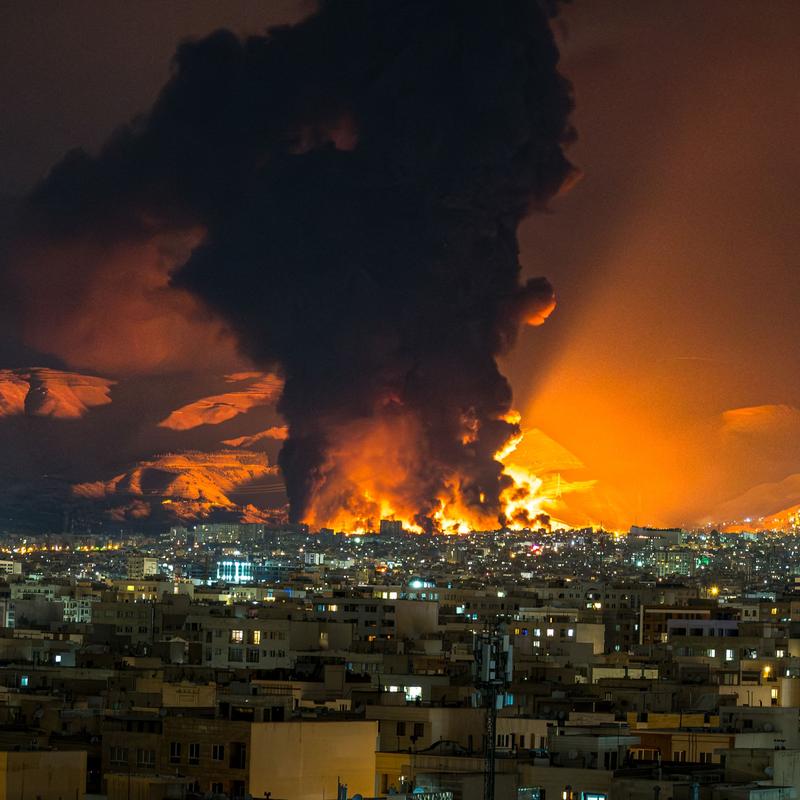
Brooke Gladstone: According to Secretary of Defense Pete Hegseth, in Iran, the US military-
Pete Hegseth: -is unleashing the most lethal and precise air power campaign in history. No stupid rules of engagement.
Brooke Gladstone: What happens when our President and his warrior-in-chief throw out the moral codes the military has spent decades trying to strengthen? From WNYC in New York, this is On the Media. I'm Brooke Gladstone. Upon taking office, Hegseth immediately scuttled a DoD initiative to save civilian lives with tragic results.
Wes J. Bryant: Nearly 200 young schoolchildren and their teachers have been killed. There's more coming out, and there will continue to be more.
Brooke Gladstone: Plus, how the Epstein files are playing in MAGA land.
David Gilbert: Trump promised to end forever wars and he promised to release the Epstein files. They're two of the biggest things that the MAGA faithful are angry about, and they are angered.
Brooke Gladstone: It's all coming up after this. From WNYC in New York, this is On the Media. I'm Brooke Gladstone.
Micah Loewinger: And I'm Micah Loewinger. This week, war continues in the Middle East.
News clip: The United States and Israel are continuing large-scale bombings across Iran, where officials say nearly 1,350 civilians have been killed in 12--
Peter Alexander: The Pentagon telling NBC News in a statement now that 140 American service members have been wounded since the war began. Now, we know that seven Americans have already died.
Micah Loewinger: The natural question of how long this war will go on has been asked, though not exactly answered.
News clip: Yesterday, President Trump told CBS News, "I think the war is very complete, pretty much." He also said the war would be over soon, but not within a week.
Steve Holland: What is your current timeline for how long the war will last?
Karoline Leavitt: Look, as you know, Steve, the President and the US military's initial timeline was about four to six weeks to achieve the full objectives of Operation Epic Fury.
Micah Loewinger: White House Press Secretary Karoline Leavitt.
Karoline Leavitt: Ultimately, the operations will end when the commander-in-chief determines the military objectives have been met, fully realized, and that Iran is in a position of complete and unconditional surrender, whether they say it or not.
Micah Loewinger: Actually, kind of a revealing answer. The war is over when Donald Trump likes how it looks, or when it looks really bad, but there's still time to spin it. Meanwhile, flood the zone with propaganda videos mixing actual war footage with clips of action films.
[music]
Tony Stark: Wake up. Daddy's home.
Jarvis: Welcome home, sir.
Maximus: Strength and honor.
Soldier: Strength and honor.
William Wallace: What will you do without freedom?
Pete 'Maverick' Mitchell: Maverick's inbound.
Saul Goodman: You can't conceive of what I'm capable of.
Master Chief: I'm finishing this fight.
Brooke Gladstone: Maintaining an iron grip on the narrative during the fog of war is easier if you're the one manning the fog machine.
News clip: Meanwhile, photographers from major news agencies like Reuters, Getty, and the Associated Press have been banned from briefings on the war with Iran. Apparently, the secretary's aides were unhappy with the unflattering pictures that were circulated by the photographers.
Pete Hegseth: Death and destruction from the sky all day long. We're playing for keeps. Our warfighters have maximum authorities, granted personally by the President and yours truly. Our rules of engagement are bold, precise, and designed to unleash American power, not shackle it. This was never meant to be a fair fight, and it is not a fair fight.
Brooke Gladstone: Testosterone trumps treaties every time.
Pete Hegseth: Unlike so many of our traditional allies who wring their hands and clutch their pearls, hemming and hawing about the use of force, America, regardless of what so-called international institutions say, is unleashing the most lethal and precise air power campaign in history. No stupid rules of engagement, no nation-building quagmire.
Brooke Gladstone: Trouble is, those stupid rules are enshrined in the US military's ethical code, international law, and the Department of Defense's own law of war, which emphasizes restraint, responsibility, and minimizing civilian casualties. Wes J. Bryant, an Air Force combat veteran, was doing exactly that until last spring as senior policy analyst and advisor on precision warfare and civilian harm mitigation at the Defense Department. Welcome to the show, Wes.
Wes J. Bryant: Thanks for having me.
Brooke Gladstone: You are enlisted to refine a code to mitigate civilian harm. What was it, and what was the process going to be before Trump's Department of Defense scuttled it?
Wes J. Bryant: Well, yes, I spent two decades serving in the war on terror as an enlisted ground warfighter and special operator. I've coordinated and controlled hundreds, even thousands, of airstrikes and other types of fires on the battlefield.
Brooke Gladstone: This is where most of the killing in the war on terror happened, right?
Wes J. Bryant: Correct, through the use of air power, and what ended up being called the Civilian Harm Mitigation and Response project, what it was called was an action plan, was a culmination of actually various administrations, Obama to the first Trump administration to the Biden administration, directing look-backs on the war on terror as the war on terror was winding down, looking at incidents and trends in civilian casualties throughout the war on terror. We had some really big, horrendous incidents.
We also had some trends of civilian casualties. We had a whole lot of collateral damage, a whole lot of destruction of infrastructure everywhere we were operating in the Middle East. This was a program to say, "How can we make the force better? How can we learn from our mistakes and not repeat them in the next conflict?" That's what the Civilian Harm Mitigation Response Action Plan was for. It was largely accelerated forward because we had a few very big, very public civilian casualty incidents in the years leading up to that.
Brooke Gladstone: Such as the withdrawal of US forces from Afghanistan, which was chaotic. Nearly 300 killed at the airport, and many more left behind. Afghans employed by the US as translators and helpers, all left victim to reprisals by the Taliban, but tell me some of the others.
Wes J. Bryant: Well, you had 2016 through 2017, huge operations against ISIS in Mosul, Iraq, and Raqqa, Syria, where we really did level a lot of that infrastructure, though we did pay attention to mitigating civilian casualties and did, I will say, a far better job than what Israel's doing in Gaza in these dense urban populations.
Brooke Gladstone: That's a pretty low bar, huh?
Wes J. Bryant: That is a low bar, but it was still not good enough for US military leadership for what we hold our standards to. We finished with those operations and said we could have done a whole hell of a lot better, basically in protecting the civilian populace here. As you mentioned, the withdrawal from Afghanistan, where we hit the aid worker, confusing the aid worker and his family, a bunch of children, right? Confusing him for an ISIS member. Then, the fact that Secretary Mattis at the time could not even state what actually happened. It's actually a little reminiscent of right now. At least they acknowledged that we actually did the strike there, which our military can't even do right now.
Brooke Gladstone: Right. You're referring to the strike on a girls' elementary school in Iran.
Wes J. Bryant: Correct. Looking back on the strike in Kabul, the military acknowledged that they did strike, but they insisted it was against an enemy. It took The New York Times, and they did a fantastic investigation, mind you, to tell the US military, "No. Actually, you didn't." Then the military went back and said, "Oh, I guess you're right." There are quite a few big incidents over the years. Look back in 2015 in Afghanistan, the incredibly tragic strike on the MSF, the Doctors Without Borders hospital in Kunduz, my deployed unit was a part of that. I have friends that were on that mission.
Brooke Gladstone: How did they feel when they found out?
Wes J. Bryant: Oh, horrible. Nobody wants to be a part of that bombing and gunning down people in this hospital, which is what happened in Kunduz. You feel like a failure, and then there's the moral injury for life.
Brooke Gladstone: You were one of the chiefs in the Training Assessment and Investigation Cell, which was in the broader Civilian Protection Center of Excellence. We've got a lot of bureaucracy here. Could you distinguish between the action plan and the Civilian Protection Center of Excellence, and how this whole years-long change management program was going to work?
Wes J. Bryant: It was a lot of bureaucracy, for sure. There were a lot of clunky acronyms that we could have done a lot better. This was initiated actually under the first Trump administration, Secretary of Defense Esper. It got finalized into policy per DoD and law in Congress under Secretary Austin, under President Biden. What came with that was called the Civilian Harm Mitigation and Response Action Plan.
That was a directive to the Department of Defense to say, "We need to fix how we conduct civilian harm mitigation, how we respond to it when it happens, and here's all the specific tasks you're directed to fulfill." One of those tasks was the establishment of a Civilian Protection Center of Excellence, which I was recruited into. That was to serve as the fulcrum of all of this effort. The hub of learning, of training, of advising, of operations integration, of lessons learned.
Brooke Gladstone: Also, updating policy, updating legal doctrine, making an intelligence doctrine, creating a whole policy on civilian harm investigations and standards. It started when?
Wes J. Bryant: 2022 is when it formally was directed. It began standing up in 2023. It wasn't expected to be fully operational, fully stood up until August of 2025. We essentially had about two years for the entire center to get up on its feet. That's what we were working toward. We were going around to the combatant commands and giving a week and two-week-long courses.
Brooke Gladstone: You were out in the field, and you were also doing war-gaming, right? Full-blown exercises to try and incorporate the lessons learned from the past, focusing on the incidents from the war on terror?
Wes J. Bryant: Absolutely. We were collaborating with war-gaming, with training, with the Central Command that covers the Middle East, the Southern Command that covers South America, Africa Command, Europe Command, the Special Operations Command, even Northern Command that covers the United States.
Brooke Gladstone: Wow. I was really interested that you had entire teams dedicated to what turned out to be a very difficult problem, mapping the civilian populations of your adversaries that, in Afghanistan and Iraq, the military was there for two decades that still often get it wrong.
Wes J. Bryant: Correct. In many places that we operate, in most places, I'd say, our understanding and mapping of the civilian environment and infrastructure is at best reactionary. It happens right before we're about to conduct an operation. We were war-gaming, actually, with Indo-Pacific Command in Hawaii shortly before everything shut down. This was early 2025. Look at the geography for that command.
If we did have something kick off with China, for example, do you really think that we have all of the gargantuanness of China and the urban infrastructure well mapped out? Absolutely not. With that goes what we call a "no-strike list," where we have databases of entities that should be protected per international law. That includes things like schools, churches, healthcare facilities, medical centers, hospitals, places of governance, of culture. Those are historically actually out of date for many areas we operate.
Brooke Gladstone: You didn't get to work on all this very long. There was already word that the transition team under the new administration and the new DoD under Pete Hegseth would put the civilian protection efforts on the chopping block.
Wes J. Bryant: Pretty much from January 20th, it was very obvious that the moves to cut the center were going to come on strong, that we were falling under the whole construct of "woke," because civilian protection is the very first two words in the name, [chuckles] regardless of the good work we were doing. I grew up. I'm a warfighter. I've dropped a whole lot of bombs and killed a whole lot of people. The last thing I want to do is restrain my fellow warfighters. What we were doing was enabling true precision warfare, but it really didn't matter because the name said "civilian protection." The emphasis in the end was on better protecting civilians. That's not something that Hegseth or his people care about.
Brooke Gladstone: By the end of January, a memo was circulated for dissolving the Civilian Protection Center of Excellence across the DoD. For the next couple of months, the leadership tried to save the mission. It didn't work. In March, you were told the center would be gone by the end of the week, and anyone who hadn't signed up for deferred resignation would be fired. The Pentagon was putting in a few bodies to sit in the offices at the center because they couldn't just close it. They needed congressional approval for that. You whistleblew to The Washington Post. Tell me about that experience.
Wes J. Bryant: When that word came down that, "Yes, this is over, guys. The center's being shut down. Everything's going to be rescinded, all the policy, all the changes, guidance. So sorry, we put up a good fight. See you," so I decided at that point to whistleblow to the good people at The Washington Post. I also went public with my name and my title. I knew the risk there, but I believed it need to be said as a whistleblower and not be anonymous, so I'm going to stand up and do this.
Brooke Gladstone: You hadn't been fired yet, but you were immediately put on administrative leave. You got reprimanded. You got a formal memorandum, a letter of admonishment. They tried to do a criminal investigation, too.
Wes J. Bryant: They sure did. I also published an op-ed in The Boston Globe that was critical of Hegseth himself, of his character, and speaking to the dangers of him becoming Secretary of Defense. That actually really pissed people off in the Pentagon even more than my whistleblowing about the center. There were comments made to the effect that, "He can't talk about the SecDef like this. We got to go after him. We got to burn him pretty much."
Yes, they did initially try to pursue a criminal case against me, at least some kind of criminal investigation, under the grounds that I somehow released sensitive information or even classified. Lawyers within the Pentagon really said there's no case for that, but they also tried to put in my record that I could never get another government job of any capacity. That was not pursued, but I was immediately locked out of everything.
I was put on administrative leave pending termination or resignation. Then, eventually, it took a couple of months for them to open this, but an investigation against my security clearance was initiated, which is also damaging, not just from a pride standpoint, but for a career for someone like me who hopes, at least eventually, to be in government again someday when the smoke is cleared.
I spent the next few months basically getting indirectly threatened as I continued to speak out. It took a while, actually, to be filed out of the Pentagon. I formally resigned and, during that time, was told, "Until you're formally off the books, you better keep your mouth shut, pretty much, or else it's going to get worse for you." These were indirect threats that were relayed to me from conversations that were heard from my leadership.
Brooke Gladstone: By June and July, most of the staffers had quit or been fired.
Wes J. Bryant: Right now, there's still a handful of people left, but they have no budget, no real mission or mandate, except on paper. They are locked out of all these operations that have been occurring. They don't have any visibility. They're not doing advising on it.
Brooke Gladstone: The US and Israel strikes. I think it's estimated that 1,200 civilians have been killed, including the nearly 200 children at the school. Do you think that the apparent mitigation of interest in civilian harm has affected how the strikes on Iran and elsewhere have been carried out?
Wes J. Bryant: Oh, absolutely. You have a Secretary of Defense that glorifies violence. He dehumanizes the enemy. He's got an incredible disregard for international law, the Geneva Conventions, and any of the practices that have been meant to safeguard the innocent and really enable what we call precision warfighting. He's fired nearly every senior lawyer in the military. He really is proliferating this culture. It's the antithesis of everything that I came up believing we're supposed to stand for as American warfighters. As far as I know, he has not yet anyway changed the Department of Defense Law of War Manual. He's not changed the law or the policy written down.
Brooke Gladstone: You're suggesting he violates it regularly in the Caribbean and elsewhere?
Wes J. Bryant: Correct. He has not changed our targeting doctrine either. In the precedents that he set, we are violating these policies, even these laws, near daily. First, let's go back to last spring, the Yemen campaign. We can call it a microcosm of what's happening here in Iran, where we hit over 1,000 targets within a very short period, within a few days, all in densely populated urban areas and all with very short notice for the planning teams. We not so coincidentally had a massive increase in reports of civilian harm.
Hundreds of civilians killed, potentially, that have not even, to this day, been addressed by the DoD. No transparency, no accountability. We had one strike against a detention center that killed 61 migrants. That still hasn't been accounted for. Incidentally, the reports of civilian harm more than doubled within about a week, maybe a little over a week, than in the past 20 years of US operations in Yemen because we had been conducting strikes periodically. Suddenly, it looks almost like a microcosm of what Israel is doing in Gaza.
[music]
Micah Loewinger: Coming up, Wes Bryant digs into the current moment and the new rules, which are no rules at all.
Brooke Gladstone: This is On the Media.
[music]
Micah Loewinger: This is On the Media. I'm Micah Loewinger.
Brooke Gladstone: And I'm Brooke Gladstone. Nearly 16 years ago, General Stanley McChrystal warned that civilian casualties were eroding US credibility in Afghanistan and that each non-combatant killed actually created 10 more actual combatants we had to fight, though McChrystal's aide, Commander Sergeant Major Michael Hall, told The Marine Times that, really, the number is closer to 20. It was dubbed "insurgent math." Until this past March, Wes Bryant was deeply engaged in advancing targeting precision and civilian harm mitigation when the Defense Department started dismantling his unit. Soon after, as we just heard, the US operation in Yemen caused an exponential spike in civilian deaths.
Wes J. Bryant: From Yemen, where you have this departure in targeting best practices, this de-evolution in the precision warfare that we were working on, what seemed to be a higher tolerance for civilian casualties. Then you have the really illegal strikes against, at the most, drug traffickers in the Caribbean and the Pacific, and then the completely unconstitutional and illegal raid on Venezuela. Illegal, per UN and international law. Then you fast-forward it to Iran, and this is perhaps the worst so far of all the violations legally. Even if you cross that legal threshold, and we did a formal declaration of war, Congress approved it. The UN approved it. The way it's being conducted has an air of recklessness to it in the targeting that I had not seen previously.
Brooke Gladstone: Tell me about the recklessness that you witnessed that the rest of us might be oblivious to, aside from the school, which we all know about.
Wes J. Bryant: In and of itself, that's enough, truly, because for one, it's nearly 200 young schoolchildren, along with their teachers, that have been killed here. Two, our own Secretary of Defense and the commander of these forces, Admiral Cooper, the Central Command commander, cannot, still to this day, tell us whether or not they even dropped munitions.
They can't tell us, our own military command and Secretary of Defense can't tell us where they put their own bombs and missiles. That's ground for firing right there in and of itself. I did an analysis on a March 5th strike in Shiraz, Iran, that hit an emergency medical compound that looks like it was likely a US strike as well. There's more coming out, and there will continue to be more.
Brooke Gladstone: Now, with regard to the school, didn't preliminary results from the ongoing military investigation show that the strike on the school building was the result of a targeting mistake? The place was hit by a Tomahawk missile. No one else in the region has those. Hannah Allam wrote in ProPublica that if the US is responsible, this would be the most civilians killed in a single US attack in decades. As we speak on Thursday, so far, the President hasn't admitted it was the US, nor has the US apologized or offered compensation as has been standard practice in recent conflicts.
Wes J. Bryant: Publicly, Secretary of Defense, Trump, Central Command still has not released any initial findings. The New York Times' report on the findings were really from inside sources that say this is what happened. I can tell you, from the first time I saw this strike, I knew this is either US or Israeli. Then the video came out of the one Tomahawk hitting one of the buildings in this compound that was verified and correlated with strikes on the compound. Then we had pictures of Tomahawk remnants reportedly taken from the school itself. All of that combined, it will take a whole lot of convincing for me at this point to say that this was not a US strike. I'm very confused still to this day why Secretary of Defense and leadership has not come out and verified this either way.
Brooke Gladstone: Tell me how the center might have been able to help avert this tragedy.
Wes J. Bryant: Well, first and foremost, the Central Command would have had a whole team still in place that was primarily responsible for conducting civilian environment mapping. Trump says that this was ordered months ago, right? They would have presumably been spending months ensuring that they were mapping out and characterizing the civilian environment in the areas in Iran that we planned on striking.
Then also double-checking, triple-checking the no-strike list, places that are not targetable, that are off-limits because they're civilian, a school being one of them. It's considered what we call a Category 1 no-strike entity in US targeting doctrine, which means it's among the highest of protected entities. We've known for years that in many areas we operate, no-strike lists are often out of date.
We have old information, sometimes don't even have current buildings on those lists. That's something that we were directly tackling within this enterprise and from the Center of Excellence. Had that momentum kept going, there would have been, at the very least, more people in place focused just on this problem, double and triple-checking that every single entity we were looking at targeting in Iran was actually a valid military target.
Brooke Gladstone: You also suggested, if you didn't have the cultural degradation spurred on by Pete Hegseth as the Secretary of Defense, this wouldn't have happened.
Wes J. Bryant: Aside from the capabilities that were lost here that could have helped the situation, this was pure negligence. This was not a fog-of-war situation. It was a failure in foundational targeting practices at many levels. That speaks to culture more than anything.
Brooke Gladstone: I just wonder what you think it means that the government has not apologized, has not condoled with the families, has not offered a payment, as has been the custom.
Wes J. Bryant: The response here from our government, Secretary of Defense, specifically, Trump specifically, has been nothing short of shameful. Even if when it first happened, they were suspecting that it could have actually been Iran, not expressing any kind of condolence for the fact that it happened in the first place. When one of the claimed precedents for going into Iran is to free the oppressed people and population of Iran, what that says is, "Actually, we don't really care about you. We couldn't really care less."
Brooke Gladstone: Let's talk about the harms to Iranian civilians that don't directly result from their roofs caving in, the destruction of desalination plants or oil infrastructure. Are those protected under the Geneva Convention?
Wes J. Bryant: Those are protected. These are vital, essential services to a civilian population. Per international law, they're only allowed to be targeted if they've been taken over for military use. There is some gray area where if they're being used to some capacity for the military, well, then they can be targetable. You have to take that into account with the principles of necessity and proportionality.
These were problems that we were looking at at the Center of Excellence. These things, what we called second and third-order effects of hitting essential services. Now, we see just wanton destruction of these things, which is going to have massive effects immediately to the civilian populace, and then economically as well. Then you have fallout that's against international law, violation.
Brooke Gladstone: Fallout?
Wes J. Bryant: From hitting these oil facilities, right? You have the release of toxic materials into waterways, airways. That is also, in its own right, a violation of international law.
Brooke Gladstone: What are your thoughts about the messaging around the war? The Department of War X account posted this week, they quote, "We have only just begun to fight," with an image that says "no mercy." Hegseth has boasted about fighting unconstrained by the rules of engagement and the "politically correct" wars of the past. I know these talking points have a certain political salience, but do they make sense in a military context?
Wes J. Bryant: Not at all. Air power itself strikes themselves do not win wars. They don't win any war. That's not even how we won against ISIS. We had an entire ground campaign. There is no real reason or strategy here.
Brooke Gladstone: This week, Hegseth posted a video on X, saying he's ordered a full review of the legal services within the military.
Pete Hegseth: For too long, over 20 years, legal shops across the services have grown bloated, duplicative. They've muddied lines of authority and pulled critical judge advocates away from what matters most, advising commanders in the fight.
Brooke Gladstone: These are lawyers within the military who advise on things like what's legal for the military to do. What are your thoughts on this?
Wes J. Bryant: Frankly, that's all just bull. It is hyperbole. It's really ad hominem, if you will, attacks on every single lawyer in the military.
Brooke Gladstone: What does Hegseth call them?
Wes J. Bryant: Jagoffs. He really has no idea what he's talking about. There's always been a healthy relationship between operational forces and your lawyers. Iran strike cells extensively. We always had a lawyer right there on staff for everything we were doing. I myself have had arguments where sometimes I was right, and sometimes the lawyer was right. It was up to the commander to make a decision. That's healthy. That's actually what we need to ensure that we are carrying out missions in support of American ideals, in accordance with American values. The types who would say, "We don't need lawyers. They just stop us from dropping bombs," those are the ones that will be celebrating this.
Brooke Gladstone: The US military remains one of the institutions that Americans have had the most confidence in. It's too early to tell whether the public perception of the military is changing because of what Trump and Pete Hegseth-- well, their shenanigans in the past year.
Wes J. Bryant: I can tell you, I knew it would be bad under Hegseth. I am shocked to how bad it's gotten so quickly, to the point where I frankly, at times, feel ashamed I even ever wore the uniform. I don't even recognize what this military is doing right now and what it stands for. I have hope for the future that we can come out of this and square away, really, our entire government and all our institutions. One of the most vital of which is the US military. It's the most powerful military in the world. Trump and Hegseth like to often say. It really is, and with that comes the level of responsibility that we are just not displaying.
Brooke Gladstone: Thank you so much, Wes, for your time.
Wes J. Bryant: Thank you. It's great being here.
Brooke Gladstone: Wes J. Bryant is a former senior policy analyst and advisor at the Pentagon, where he worked in civilian harm mitigation.
[music]
Micah Loewinger: Coming up, what the war in Iran and the Epstein files have in common.
Brooke Gladstone: This is On the Media.
[music]
Brooke Gladstone: This is On the Media. I'm Brooke Gladstone.
Micah Loewinger: And I'm Micah Loewinger. This week, a survey from Drop Site News, Zeteo, and Data for Progress found that a majority of American voters, 52%, believe that Donald Trump was at least partially motivated to launch the war in Iran to lure attention away from the Epstein files. Even a quarter of Republican respondents to the survey said that they think the war is a distraction.
News clip: Yesterday, Republican Congressman Thomas Massie tweeted, "Bombing a country on the other side of the globe won't make the Epstein files go away any more than the Dow going above 50,000 will."
News clip: This war of choice may even be useful as a distraction from the Epstein files that have not been fully disclosed.
Jimmy Kimmel: Early Saturday morning, just after midnight, the Pentagon launched what they are calling Operation Epic Fury, which is different from its original title, which was Operation Epstino Distracto.
[laughter]
News clip: When we talk about this war in Iran, I have to wonder sometimes whether this is the Epstein War, right? This is a war that is created to have us not talk about it. Just as the intersection of Donald Trump and the Epstein files started to emerge, all of a sudden, we got a war we have to talk about.
Micah Loewinger: While this distraction narrative exploded among Trump critics and some select Republican legislators, much of the loyalist MAGA camp has largely stayed silent on the Epstein stuff or pointed fingers elsewhere. Those folks had their very own distraction exercise in the form of closed-door depositions by the House Oversight Committee of MAGA and QAnon's favorite villains, the Clintons. Under oath, Bill Clinton said his relationship with Epstein was "cordial," and that he'd never visited the island. Hillary Clinton said that she had never met the man, but no matter--
David Gilbert: Anything said in those depositions, any testimony that came out, didn't really matter. All that mattered was the fact that they were being questioned. Therefore, that was enough for them to say, "Well, this is proof that there is something there, and we're finally going to get the revelation that we've all been waiting for."
Micah Loewinger: David Gilbert is a reporter at WIRED, covering disinformation and online extremism. I asked him what narratives had emerged about the Clintons in the right-wing media following the depositions.
David Gilbert: If you're looking at the more mainstream right-wing media like Fox News, then you're seeing reporting on it, something that hasn't really happened on Fox News for the last year. We haven't seen them investigate these files. We haven't seen them dive into them or question anybody who's really been exposed by the files being released. More fringe right-wing outlets.
We've seen them talking about the Clintons as part of this cabal of elites who have been conducting child sex trafficking for the best part of a decade now. They're willing to do that because they know their audience has been primed to hear that. They have been listening to this for years, not only from the same right-wing networks but also from a lot of GOP lawmakers.
Micah Loewinger: Ahead of the Clinton testimonies, you wrote, "Much of the right-wing media were rarely touching on the Epstein story." In your piece, you referenced a poll conducted by Marquette Law School earlier this year that found that 49% of those who relied on conservative TV for news had heard "a lot" about Epstein, compared to 75% who relied on other TV channels.
In October, Fox News host Jesse Watters told viewers to not "take the bait" on the Epstein story. Another Fox host, Will Cain, said the files are something that apparently not very many people are interested in. Right. This is all in stark contrast to the excitement that I saw on Fox News prior to the massive drop of three-plus million emails, right? Is it fair to say this is an about-face?
David Gilbert: I guess it is. If you look back at the way that this has played out initially, when Trump came back into office in January, and Pam Bondi was appointed as attorney general, she told Fox News that she had the Epstein client list on her desk and was sitting there ready for her to review it. Now, that turns out that that wasn't actually true. Kash Patel said, eventually, that there is no actual client list.
Come the summer, the government had shut it down. They said, "There is no there, there. We've done the investigations, and there's nothing to really look at anymore, so let's move on." The right-wing media did move on. A lot of mainstream outlets continued to investigate, continued to champion the cause of the victims. The DOJ was ultimately forced to release those files.
While I think it's a bit of an about-face in terms of Fox News saying, "Oh, yes, here come the files," and then saying, "Oh, no, there's nothing there," they were forced into that position. I think Fox News would have been happy to just completely ignore the Epstein files and never mention Epstein again because that is the edict coming down from the White House.
Micah Loewinger: Of course, there's only so much that the right-wing media can do to keep the anger and the suspicion about the Epstein files at bay among MAGA supporters, right? Because a lot of them are not buying it.
David Gilbert: I think it's similar to the Iran situation at the moment, that if you take a broad look at how right-wing media has responded to this situation in Iran, it's been positive for the President. If you look below the line a little bit, if you look at the comments on articles, if you look at the replies to posts on X, if you look at right-wing message boards, they see the attack on Iran and these Epstein files in a very similar way. They view them as breaking promises that Trump made in his 2024 campaign.
He promised to end forever wars, not to get the US involved in any more overseas engagements, and he promised to release the Epstein files. They're two of the biggest things that the MAGA faithful are angry about, and they are angered. The anger is simmering at the moment, I would say. I think it's not going to take much for it to bubble over and become a real problem for the administration and the President.
Micah Loewinger: You say that a lot of the right-wing media have tried to stay in Trump's good graces by bending the knee and laying off the Epstein stuff, but Nick Fuentes, in particular, has done no such thing. He said--
Nick Fuentes: What does this administration do other than cover up the Epstein files, embezzle money through government contracts, and bring us to war for Israel? This administration needs to be shut down immediately. Do not vote in the midterms. If you do, vote for Democrats.
David Gilbert: He is an outlier in terms of the extreme nature of his comments, like the idea that the administration needs to be disbanded, and that people should support Democrats. That's a pretty extreme position, but there are other people in the right-wing movement who hold very similar views. They just don't express it as strongly as Fuentes does. I think while he is an outlier, he is also an indication that there is this anger that I was talking about, this simmering anger among a lot of Trump supporters.
Micah Loewinger: At the risk of sounding naive, why do you think that these Epstein revelations have seemingly done very little to Trump's support among his followers? Coup have been fixated on Epstein for longer than probably the majority of the country.
David Gilbert: Yes, I am actually even someone who's been tracking this kind of stuff for a decade now. I'm surprised at how little damage it's done to him. I guess the reason is that Trump told him that he was exonerated. That's the word he used. I think it was in an interview on Air Force One last month. He said he'd been exonerated, and that's all that matters. It shows again how little he cares about the actual victims in this, that he doesn't want to get justice for them, and really find out who is to blame.
Even if he is not going to be prosecuted for anything, even if there is nothing incriminating in relation to him in those files, surely, he'd want justice for the victims in this case. The fact that he was exonerated and the fact that he says, "That's it. Everyone should move on," in a lot of cases, that's what his supporters do. They still want the Epstein files released. They still want Kash Patel to do a better job or Pam Bondi, but they are swayed by Trump's declaration that he has been exonerated. That's enough for them, and so they will move on.
Micah Loewinger: Steve Bannon, he's been named quite a bit in the Epstein files. Even a cursory viewing of his correspondence with the billionaire would show that they were pretty chummy. Maybe it would be useful if you're able to just talk a little bit about the nature of their relationship.
David Gilbert: Steve Bannon and Jeffrey Epstein, I think, finally connected over email in 2017. Their email showed that they were talking about quite a lot of different topics. One of them was the MeToo movement. Also, they were talking about the internet and cryptocurrency, and how both technologies could be used to upend democracy effectively and fast-track revolutions. They discussed this idea that they could create a far-right populist movement in Europe because Bannon had made connections at that point, like in 2018, with Matteo Salvini in Italy and the AfD party in Germany and Viktor Orbán in Hungary.
Epstein was clearly interested in this as well. They were talking about Russia's influence on far-right politics in Europe. I guess they were scheming, is probably one way to do it, over a course of six months in 2017, 2018, trying to get this coalition in Europe together to effectively disrupt the EU, and then see exactly what advantage they could take of the fallout. I think the question is, and we don't really have an answer for this, is how serious Bannon and Epstein were about going through with what they were talking about, or were they just "LARPing"? Were they just pretending to be these guys who could potentially overthrow the world?
Micah Loewinger: Just egomaniacal ramblings of people who saw themselves as more important than they are.
David Gilbert: It's difficult to say, but I think there are definitely indications in here. Whether they thought they could actually do it or not, they definitely wanted it to happen.
Micah Loewinger: On the subject of conspiracy theorists ignoring or contorting their worldview to this post-Epstein drop reality, let's talk a little bit about Pizzagate. Lauren Boebert, using her opportunity during the Hillary Clinton deposition, asked her about Pizzagate.
Lauren Boebert: Have you reviewed any 2025-2026 Epstein files that were released that you believe reference or relate to those specific 2016 claims regarding the Podesta emails, "Comet Ping Pong pizza" used as code possibly?
Hillary Clinton: Pizzagate was totally made-up. It was an outrageous allegation that ended up hurting a number of people that caused a deranged young man to show up with his assault rifle and shoot up a local pizzeria. I can't believe you're even referencing it. You should be--
David Gilbert: Pizzagate happened a long time ago, but it's been picked up again now after the document dump happened, because there are several mentions of the word "pizza" in the documents. If there was three million documents of emails or whatever dumped from anyone, there would be some mention of pizza somewhere in it. It didn't matter because the people who want Pizzagate to be true, despite all the evidence showing it's not, will see the evidence anyway. A lot of QAnon conspiracy theorists picked up on it, started sharing it on X. Then former Fox News host Tucker Carlson dedicated an entire show to it with Ian Carroll, another conspiracy theorist. I think Tucker Carlson said something like, basically, Pizzagate is true.
Tucker Carlson: Maybe the long-debunked conspiracy theory about Pizzagate wasn't actually debunked, and maybe someone should take a closer look at this.
Micah Loewinger: Can we just pause on that for a second?
David Gilbert: Sure.
Micah Loewinger: Because this was really brain-melting for me. Ian Carroll argues that the man who traveled to Comet Ping Pong, upon shooting his weapon inside the pizza parlor-- Fortunately, he didn't kill anyone, but one of his bullets did hit allegedly some kind of computer or hard drive. Ian Carroll argues that this is evidence that this conspiracy theorist was actually like a plant, and that he was sent there to undermine any actual investigation. Can't you just take the L?
David Gilbert: Edgar Welch, actually, the guy who went from North Carolina to DC, brandishing a gun into Comet Ping Pong. He actually died a year ago because he was shot by police in an altercation. At the time, that was used as evidence that they're cleaning up their evidence, and they're covering their trail and whatever. The interview between Tucker Carlson and Ian Carroll is just so difficult to listen to because none of it is based in reality. None of it is true.
It's so deeply disturbing and upsetting to listen to it because you know millions and millions of people are listening to it. Tucker Carlson is using his veneer of credibility that he got from being a part of Fox News for so long, and using that to platform Ian Carroll, who has been shown repeatedly to be an anti-Semitic conspiracy theorist, and giving him free rein to say whatever he wants without questioning it. The idea that Pizzagate is once again a real thing is just incredible to me, given it was a decade ago that I was covering it. I thought I may never have to do it again. Sadly, time is a circle, and here we are.
Micah Loewinger: Let's talk about QAnon, how they're feeling about this. If you were to be extraordinarily generous and squint your eyes, you could say that the files so far provide some confirmation for the broad outline of the conspiracy theory, that there was, in fact, an elite cohort of politicians and businessmen who were, at the very least, friends with a prolific sex trafficker. That's certainly how Bill Maher, the political commentator host on HBO, is seeing it.
Bill Maher: QAnon said there's this vast elites around the world conspiracy to traffic kids and pedophiles. They were more right than I thought they were. Okay, so that's what I'm giving you.
Micah Loewinger: There's a ton from this conspiracy theory that remains unproven and flat-out wrong and outrageous, right?
David Gilbert: Yes, it's interesting to watch the QAnon community wrestle with this because, in a lot of cases, they have higher standards for what they will accept as evidence than people like Ian Carroll and Tucker Carlson. They were not duped by those binders that Pam Bondi gave last year. They are not going to be duped into believing something that's not real. At the same time, the fact that there is evidence that there is a global child sex trafficking ring, the fact that the Clintons were being questioned, there's a lot of things that tie up for QAnon that they believe show that at least some of what Q told them in those posts was real. Of course, then you get the revelation that Jeffrey Epstein met the founder of 4chan.
Micah Loewinger: 4chan, years after Epstein met its founder, would become a hub for Gamergate, the alt-right, and then, eventually, the very beginnings of QAnon. It's hard to follow these points and not feel like a conspiracy theorist yourself. Here is a child sex trafficking billionaire, Epstein, meeting with the guy who hosts a forum that gives rise to a right-wing conspiracy theory about sex trafficking billionaires. If you wrote this, it would be a little dumb.
David Gilbert: For QAnon adherence, it shows that there was a connection between 4chan and Epstein and child sex trafficking, and it means something. Because it's based in emails and documents that have been released by the US government, it just seems too neat and too easy. Because this conspiracy thinking is so deeply ingrained, they want to know, like, "Okay. Well, that's what they want us to think. What is the actual story? What's really behind this?" They just think that this must be just another layer of the cover-up or the conspiracy. It's fascinating to watch them struggle with this and try and figure it out.
Micah Loewinger: That's what's wild. I understand that, given how much secrecy there has been about a lot of this for so long, people might feel like the truth is always going to be held out of view. Now that there's at least some semblance of transparency, insufficient but some, reality is quite alarming and salacious. How is reality not enough here?
David Gilbert: Reality's not enough because it hasn't been enough for them for quite some time now. If you have been in these conspiracy communities and online for the last 10 years, speaking to people on a daily basis and believing everything and anything from the global financial system crash coming, intermeshing with apocalyptic Christian beliefs about the Rapture, the reality is never going to be able to live up to what you envisioned.
These people don't want their communities to disappear. They don't want it wrapped up in a neat bow. This is an online community that gives them support, that backs them up when they make crazy claims online, things their family won't do for them. It will never be resolved for these communities, no matter how much evidence is produced. The deep state is trying to trick us again.
[music]
Micah Loewinger: David, thank you very much.
David Gilbert: Micah, thanks for having me.
Micah Loewinger: David Gilbert is a reporter at WIRED, covering disinformation and online extremism.
[music]
Micah Loewinger: That's it for this week's show. On the Media is produced by Molly Rosen, Rebecca Clark-Callender, and Candice Wang. Travis Mannon is our video producer.
Brooke Gladstone: Our technical director is Jennifer Munson, with engineering from Jared Paul. Eloise Blondiau is our senior producer, and our executive producer is Katya Rogers. On the Media is produced by WNYC. I'm Brooke Gladstone.
Micah Loewinger: And I'm Micah Loewinger.
Copyright © 2026 New York Public Radio. All rights reserved. Visit our website terms of use at www.wnyc.org for further information.
New York Public Radio transcripts are created on a rush deadline, often by contractors. This text may not be in its final form and may be updated or revised in the future. Accuracy and availability may vary. The authoritative record of New York Public Radio’s programming is the audio record.