Conan O’Brien on What Can Go Wrong at the Oscars
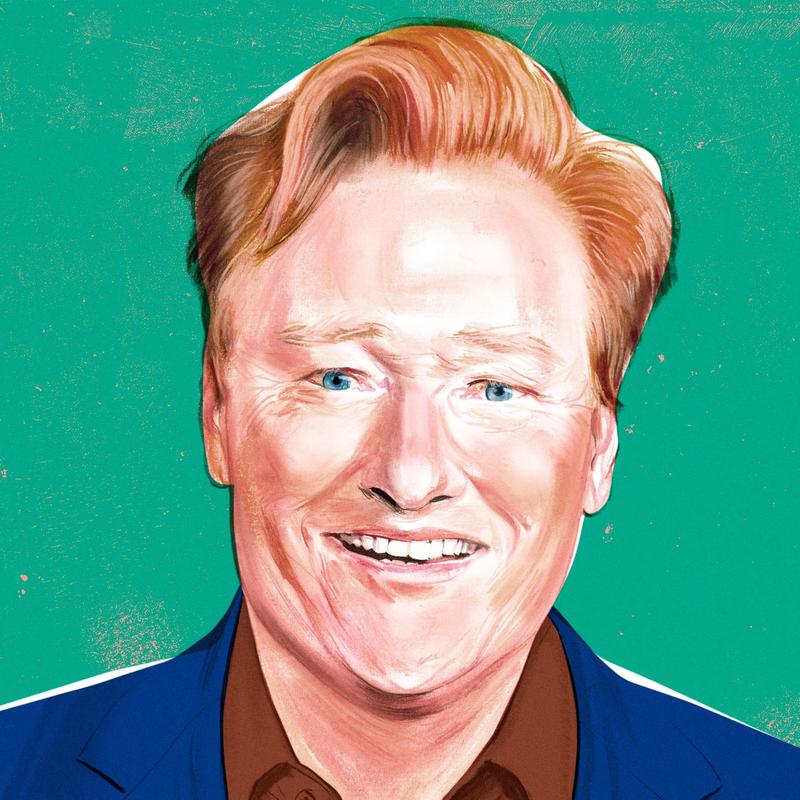
Speaker 1: Please welcome four-time Oscar viewer, Conan O'Brien.
David Remnick: Hosting the Academy Awards is not an easy gig. Everybody delights in panning it. It's always endlessly long, and it's often a parade of self-congratulation and sanctimony, and the musical numbers are Busby Berkeley on acid when they succeed. Yet, as host of the Oscars last year, Conan O'Brien really nailed it.
Conan O'Brien: It's Hollywood's biggest night that starts at 4:00 in the afternoon. Everyone here just had brunch.
David Remnick: O'Brien's resume starts out as president of The Harvard Lampoon and goes right through writing for Saturday Night Live and The Simpsons, and then, of course, he was host of The Tonight Show. The years have gone by, and now he's one of comedy's wise elders. Ironic, self-deprecating, zany. His sensibility translated perfectly to podcasting, too on his show, Conan O'Brien Needs a Friend. Yet you can still imagine Johnny Carson or Bob Hope delivering some of O'Brien's best lines at last year's Academy Awards. I remember him saying during a very long show, if you're still enjoying the show, you have something called Stockholm syndrome. I guess we all do. He's hosting the ceremony again in March.
David Remnick: Have you started writing and rehearsing for the Oscars?
Conan O'Brien: Yes, started writing a while ago. What happens is it's just ideas are like RAF pilots in 1940. You have to generate a lot of them. A lot of them fall by the wayside, and then some endure. We've been going for a while. We got a great writers' room. I've already started going to clubs to try out material, which is really fun, and it's good to keep you in shape or get you ready. Does it really help? I think it does, but I couldn't prove it to you. Have we started yet, by the way, or are we just--?
David Remnick: Yes, we're in.
Conan O'Brien: Oh, we started?
David Remnick: Yes.
Conan O'Brien: Oh, my God. None of what I just said was true.
David Remnick: It's a high-risk, maybe even low-reward gig, isn't it? I think back over the years--
Conan O'Brien: I choose not to see it that way.
David Remnick: But you killed.
Conan O'Brien: It was really fun. I grew up watching Bob Hope do it, Johnny Carson do it, and so it's a very cool thing to be connected to, as you know, very interested in history, and this thing has been around for almost 100 years.
David Remnick: That's amazing.
Conan O'Brien: Let's have fun with it.
David Remnick: Anybody give you some good tips, whether it's Billy Crystal or anybody else, on how to deal with an audience? I don't even know how big that audience is now.
Conan O'Brien: No one's pulled me aside and said, "Okay, here's the secret."
David Remnick: Smile.
Conan O'Brien: Yes. Exactly. What I've learned myself over time is that I can't fake enjoyment. I need to find ways to make sure that I'm having a lot of fun. I need to prepare. I'm a big preparation person. I work with this brilliant team of writers who are just downstairs from where I'm doing this podcast, and they're cranking away. It looks like they're working on the Glengarry leads. I go down there, and they're all around a long table.
David Remnick: Cold [crosstalk] in the middle.
Conan O'Brien: Yes. "These premises are no good. We've got to get the Glengarry premises." I yell at them. I'm the Alec Baldwin who comes in, gives that great speech up front. I'm talking about the movie now. I think we all know that, not the play.
David Remnick: Where does politics play a role in the way you're thinking about that kind of night?
Conan O'Brien: It's tricky. I've done political comedy over the years, certainly. I've done two White House Correspondents' dinners. On late night and we used to do lots of political comedy. Would do it on the TBS show as well. It's never been in the front of my comedy brain. I don't think it's what drives me. I, for better or worse, have a brain that scrambles things, loves cartoon imagery. I'm probably as influenced by old movies or literature as I am by, frankly, Warner Brothers cartoons. When I do political comedy or I make a political joke, it has to really resonate with me. I can't tell you what that is, but it has to feel true to my comedic voice, or it feels hollow.
David Remnick: Does Trump feel funny to you anymore?
Conan O'Brien: No. Years ago, when I was at Harvard and working on The Lampoon, we would try and think of magazines we could do a parody of. There was one magazine we always knew we couldn't parody, which was the National Enquirer. If a magazine has as its cover, Elvis still alive, marries Alien, and they have a baby that's a three-speed blender. That's what the real magazine's coming out with. You can't do a comedic take on that. It's very difficult, or I think, impossible to do.
I think, Trump, to me, if you were a magazine, it's the National Enquirer. There's a lot that's so bombastic and so outrageous and so unprecedented that how do you, oh, I've got a great Trump impression and I have him saying this. Well, that's not crazier than what really happened yesterday, so I don't know how this is funny. Does that make sense?
David Remnick: Yes. When you watch the Cold Opens for Saturday Night Live, or Jon Stewart on Monday night, or Trevor Noah at the Grammys, I think, inspired Trump to even threaten to sue him.
Conan O'Brien: Yes. Guess what, David? That's not a hard thing to do.
David Remnick: No, I know.
Conan O'Brien: We could do it right now if you want.
David Remnick: I'm involved in a lawsuit right now.
Conan O'Brien: I'm sure you are.
David Remnick: You wouldn't believe it.
Conan O'Brien: SNL, they're crazy talented. John Stewart, crazy talented. These are all really good people that do that extraordinarily well. When people talk to me about it, I say, "Well, all I can do is come out of my own personal experience, which is, this isn't inspiring a lot of chuckles for me." Now, there's a different thing. There are comedians who, when they talk about Trump, they quickly get very angry. I've said this before, but I think it's possible to surrender your best weapon. Your best weapon is to be funny.
If it just evolves into name-calling, I'm all for people trying. When there's a really good joke about the president or the administration, if there's a joke about the right or the left, and it's a good one, I'm elated. I just think that in the current climate, things have gotten so stretched out. Think about that Dali melted watch that it's hard to find purchased. You know what I mean? It's hard to get a grasp on what's the straight line here.
David Remnick: Where does the network get involved?
Conan O'Brien: There's always some issues. I've been dealing with networks for most of my life, so there'll be stuff, and then that's when you roll up your sleeve, and you start arguing back.
David Remnick: Do you win?
Conan O'Brien: Oh, yes, you can win. You can also lose.
David Remnick: On what basis? Are there rules, or is it just human persuasion?
Conan O'Brien: Certainly, there are rules about what can be said and what can't be said. The Academy has rules. The Academy has rules about what you can do with the image of an Oscar or can't. Everyone has rules. Once you've lived in New York for a period of time, you come to this awareness that, oh, everything ultimately is a New York co-op. They have their rules. You can say, "Hey, but on this other award show, I got to do this." Let's say I'm living at, I'm going to make it up. I'm living at 172 West 89th Street. It's a place called This is The Drake Building. "You live here at The Drake Building?" "Yes, yes, I do. You know what I'd like to do is put it in my kitchen window." "No, no, no, no, no. We don't let people alter the windows here at The Drake." You'll say, "Oh, okay. Well, it's funny. When I lived over at the Macklemore, over--" "Yes, we know. That's the Macklemore."
David Remnick: It's okay for Nikki Glaser and Ricky Gervais at the Golden Globes.
Conan O'Brien: Yes. Every award show probably is like, "Oh, that's fine for the People's." I'll say, "Well, I once did the People's Choice Awards." "Oh, yes, we know. That's the People's Choice Awards. They don't have standards. Their windows and their kitchens are horrid." It's not just the Oscars. Every show probably feels that way about the other shows.
David Remnick: Ever since the Will Smith incident, the slapping incident, and when we were kids, you had the streaker incident, do you worry about the kind of unplanned disaster happening?
Conan O'Brien: No.
David Remnick: Really?
Conan O'Brien: I'm someone who likes-- I don't want anyone to slap me.
David Remnick: You'd like a streaker.
Conan O'Brien: I'd like a streaker. You know what I'd really like? A streaker to slap me. That would satisfy.
David Remnick: That would [crosstalk].
Conan O'Brien: That would just satisfy so many of my dormant Catholic hangups. It's a weird duality here. It's a weird thing, but I like to plan, and I like to prepare, and then I love it when something goes off the rails.
David Remnick: Give me an example in performance.
Conan O'Brien: Oh, just for years and years doing my show, if accidentally a light falls, you can make a whole show about that. Do you know what I mean? I don't know what it is about human beings, but they instinctively know when something is real and of the moment, and then when they see you react in real time like a human being and make something funny out of it, that has 10 times the value of anything you could have written. You have to be open for things to slightly go wrong, and it's fun and electrifying. My whole life has been prepare, but then, like any good quarterback, be ready for the whole play to fall apart and then wing it.
David Remnick: Scramble.
Conan O'Brien: That's a beautiful thing. Scramble.
David Remnick: Do you do that, too, as a comedian? You're not like you are at home or at dinner. You're a heightened you, or there's a performance aspect to it.
Conan O'Brien: You know what? This is so funny, you say this. I'm always this guy. There is a heightened me, but it's really not that much different. I routinely will just talk to people on the street, complete strangers, and then that will lead to me doing a bit and trying to get them into it, trying to do improv with random people on the street. I've been maced.
David Remnick: I can imagine.
Conan O'Brien: It's unwanted improv. I think it's glandular. I'm joking, but I'm also not joking. I think my father, who was a very smart man and very analytical and a scientist, he was looking at me once, and he watched every Late Night Show, and he said, "Oh, I see, I see." He wasn't making a joke. He said, "I see you're making a living off of something that should probably be treated." He wasn't joking. He said you have these icy synapses and the rhythm of your circulatory system, and what you're doing is-- Yes, and then you found a way to be compensated icy." I thought, "Thanks, dad."
David Remnick: From what I understand, you also treated the death of your parents in some way comedically, therapeutically, humanly. I wonder if you could tell that story.
Conan O'Brien: I was shooting my travel show for HBO when I was in Austria, when I got the word that my father had passed. I took a van to another van to the airport, got on a flight, got on, then another connecting flight, made it back to Boston. You go through all the intensity of that. Then there was a moment where I was just outside my family house, the house I grew up in in Brookline, and I got this lovely text from Will Arnett. He said, "We're all thinking about you. It's in the news that your dad. We've all heard the news."
This is just how we all are with each other. He does the podcast with Jason and Sean, Jason Bateman. Whenever we're together, we always just joke about Bateman, because that's just what you do. It's like the showbiz thing. If I'm with Bateman, we joke about Will Arnett. I get this lovely thing from Will Arnett. He writes this lovely note, and I just wrote back, "I blame Bateman." Then he wrote, "Oh, I guess we all have our coping mechanisms for--" I cut him off and say, "Jason Bateman killed my father." Which is insane. Make of it what you will. That's what I said. I was texting.
David Remnick: I think your father had it right. I think he had it absolutely right.
Conan O'Brien: Exactly. My father had it right. Somewhere, a ghostly father was perched on my shoulder, saying, "Yes, yes, this is it. See? See, it is--" The story gets more remarkable because three days later, my mother passed in the same room that my father had passed in. They had beds in the same room. I've laid out now that I have space for comedy still. Will texts me right away and says-- Not right away, but he texted me after a little time had passed, and he said, "If you want, I could have Bateman take care of your sister." I immediately texted back, "3053 Beacon Street, Apartment 17F. Make it look like a robbery." Because I knew my sister Kate she would find it was funny. He read all that on the air, and people were just like, "Oh, my God." It went viral.
That is how I communicate. I'm a whale. He's a whale. We make these weird noises at each other. That's how we communicate. I know how much I love my parents, and I know what a lovely person Will Arnett is and Jason Bateman, but none of this is real. It's this way of doing business and connecting. When they all came out, that I had thrown Kate under the bus and said, "Go get her. This is where she lives and make it look like a robbery," she texted me and said, "You don't think I could take Bateman?" I was like, "Very good, Kate. Thank you." That was her immediate reaction.
David Remnick: The funerals hadn't even taken place yet.
Conan O'Brien: No, they hadn't. I don't know. What does it all mean? I definitely know I am 100% Irish, and there are different communities, maybe, or there's different genotypes, or I don't know what you want to call it.
David Remnick: When did you recognize this in yourself? How old were you when you started speaking whale speak or comedian speak, and recognize this inbuilt irony, whatever it is, as a way of being in the world?
Conan O'Brien: Well, when you're a kid, I think we all do this. You go through your checklist. You emerge into the world. It takes a bunch of years just to figure out what the hell is going on. Then very quickly, things start to get sorted out. Am I an athlete? No, I am not an athlete. Do the girls go crazy for me? No, they do not. Am I a math whiz? No, Conan, you are not. Am I a tough guy? Oh, God, no, Conan, you are not. It's a lot of no's.
Then I hit this thing where I would make people laugh in class. I wasn't the class clown. I was very quiet, but I would make friends laugh, and I started writing little plays and putting myself in them, and they were funny. Then, in creative writing classes or in English class, I would write funny stories. The teacher would have me read them, and everybody would be laughing because I'd put a lot of comedy in there. There's this one arrow in my quiver. There's not 35 arrows in my-- There's one. I think I started probably working this comedy thing, unconsciously, in 1972, 1973, in Brookline, Mass, in a playground. Then you're just working it and working it and working it.
Then I started seeing things on television or in the movie theater, and you're learning about rhythm. Just learning about rhythm and what's funny and why is that funny. I never got too analytical about it. That's the part of the map that disappears, and there's dragons there. Don't get into analyzing it. Just what's funny, what's not funny? Which leads to really paying attention to the rhythm of Warner Brothers cartoons, the classics. The rhythm is perfection. The comedy rhythm of those great Roadrunner Coyote cartoons, a really good Bugs Bunny. The timing and the expressions, it's all perfect. You are soaking it in. You're not even aware of it.
David Remnick: Let me ask you about late night. The big news about late night this past year was Jimmy Kimmel and Trump and all that. I think we can agree that what's happening over time certainly is that the whole late night scene, and especially being watched in real time, that's collapsed, or it's in the process of collapsing.
Conan O'Brien: Yes.
David Remnick: How much do you care that it's collapsing?
Conan O'Brien: Well, there's the sentimental side of me that grew up watching Carson, that liked that, but I have a very ingrained wariness of sentimentality. When I Google Earth out of the whole thing and try to look at the whole picture, I realized that there's things are constantly changing. Look at all the things that are changing all the time. People are saying, "This is tragic. You're like, "Well--" I've said this to Stephen. I'm close with Stephen, and I've told--
David Remnick: Is Stephen Colbert treating it as a tragedy or what?
Conan O'Brien: Well, I think Stephen very rightly is--
David Remnick: Pissed.
Conan O'Brien: Yes, he's pissed. I think rightly. I think he's got a big staff, and he cares about those people. I've been in that situation, and that is excruciating. What I've tried to tell him is that there's so much of this, really, that doesn't have anything to do with you. I think it largely these giant glacial plates are moving, and you are doing the best you can, and you've such a talented guy, and he's done an amazing job. Yes, there is definitely a thumb on the scale. We all saw that. With Jimmy Kimmel, with the FCC, that was just outrageous and wrong. In the larger picture, when you look worldwide and see voices being silenced, they really get silenced. I don't think that's going to happen with Jimmy Kimmel or Stephen Colbert, or anyone who's doing a late-night show.
David Remnick: You found a way [unintelligible 00:22:54].
Conan O'Brien: Yes, I left my late-night show four years ago. I've had a wonderful time. I think I reach more people now, either through the podcast or the travel show. I have all this freedom to be me in different ways in different formats. There's a lot of really beautiful opportunities, and I've been having a blast and getting to have types of interviews I never could have had in that old format.
David Remnick: Like Robert Caro.
Conan O'Brien: Yes, I can talk to Robert Caro for an hour and a half and then talk to Al Pacino, but then talk to Charlie XCX for an hour. This old format is going away, but they're being replaced by a multitude of other ways to connect with people and be funny and be satirical and be probing and let your talent run wild, that in some ways are more freeing, and you can be master of your own destiny. You're not working for, ultimately, a giant toothpaste company or whoever it is owns your studio. Again, I find myself trying to be optimistic in these situations.
David Remnick: Conan, we're about the same age, and we've reached the age where if one of our contemporaries dies, it's incredibly sad, but it's not an absolute shock. It's not a tragedy in the sense that when we were much younger, if somebody died in an accident or a disease or something. You had something happen this year to two friends who had been guests at your house the night before the Reiners. Can you talk a little bit about your experience of that horrific tragedy?
Conan O'Brien: I knew Rob and Michelle, and then increasingly got closer and closer to them. I was seeing them a lot. My wife and I, we're seeing them a lot. To have that experience of saying good night to somebody and having them leave and then find out the next day that they're gone, I think I was in shock for quite a while afterwards. There's no other word for it. It's so awful. It's just so awful. I think about how Rob felt about things that are happening in the country, how involved he was, how much he put himself out there. And to have that voice go quiet in an instant is still hard for me to comprehend.
David Remnick: I watched that Mel Brooks documentary that Judd Apatow did. It's terrific. There's Carl Reiner, and they have such a close relationship when they were both in their, I guess, 90, until Carl died. Then Rob Reiner pops up in this. He seems relatively young and so vibrant and alive. To have that in the back of your mind as you watch this film, for me, it's tragic. For you, it must be, I don't know. It's incomprehensible.
Conan O'Brien: These people are so larger than life, especially if you've grown up watching them or appreciating their work. I just keep mulling over the body of work. I think it's seven movies that Rob Reiner made in quick succession that are classics. Now, to be thought of as a great director, I think if you can make one great movie, that's impressive. It's an almost impossible feat. To make two means that you're one of the greats. To make seven in a nine-year, ten-year, eleven-year period is insanity. With Spinal Tap alone, if that had been the only thing he ever did, he influenced my generation enormously in comedy. Spinal Tap, when it came out, I was in college, and it was like splitting the atom moment. You have those moments where you see something truly remarkable.
Another person I'd put in that category is, which is incomprehensible, we just lost Catherine O'Hara, and that's someone who was perfection. There is a tendency sometimes when people eulogize or remember-- We've all had that feeling where someone's being eulogized, and we're thinking to ourselves, "No, they were good, but this person's laying it on thick." Catherine is just-- Who's a funnier performer than Catherine O'Hara? What people didn't get to experience personally was she is-- She was. I'm still saying is. She's possibly the nicest person I've ever met, just ever met. Just glowed and goodwill, but here I am on a podcast talking like, this is unusual.
This is what we're all contending with. We're always in the process. It is something you don't think about. If you're lucky, you don't think about it for the first couple of decades of your life. Then it's people saying, "Did you hear?" You walk around concussed for a week. That's what it is now, I guess. I was in a good mood when I got on this podcast.
David Remnick: How are you feeling now?
Conan O'Brien: This is the worst. This is a colonoscopy right now, and there's been no Propofol.
David Remnick: See you again in five years. That's the thing you can hear at the end.
Conan O'Brien: You didn't use the right camera.
David Remnick: Yes, sorry. We're going to have to do it again.
Conan O'Brien: You used a 1955 Hasselblad. You jammed it up there.
David Remnick: Slowly, slowly. Conan O'Brien. Thank you.
Conan O'Brien: Well, always nice to talk to you, sir.
David Remnick: Good to see you, man.
[music]
Conan O'Brien is the host of the podcast Conan O'Brien Needs a Friend, and he's hosting the Academy Awards ceremony on March 15.
[music]
Copyright © 2026 New York Public Radio. All rights reserved. Visit our website terms of use at www.wnyc.org for further information.
New York Public Radio transcripts are created on a rush deadline, often by contractors. This text may not be in its final form and may be updated or revised in the future. Accuracy and availability may vary. The authoritative record of New York Public Radio’s programming is the audio record.