
Does Every Marriage Need a Prenup?
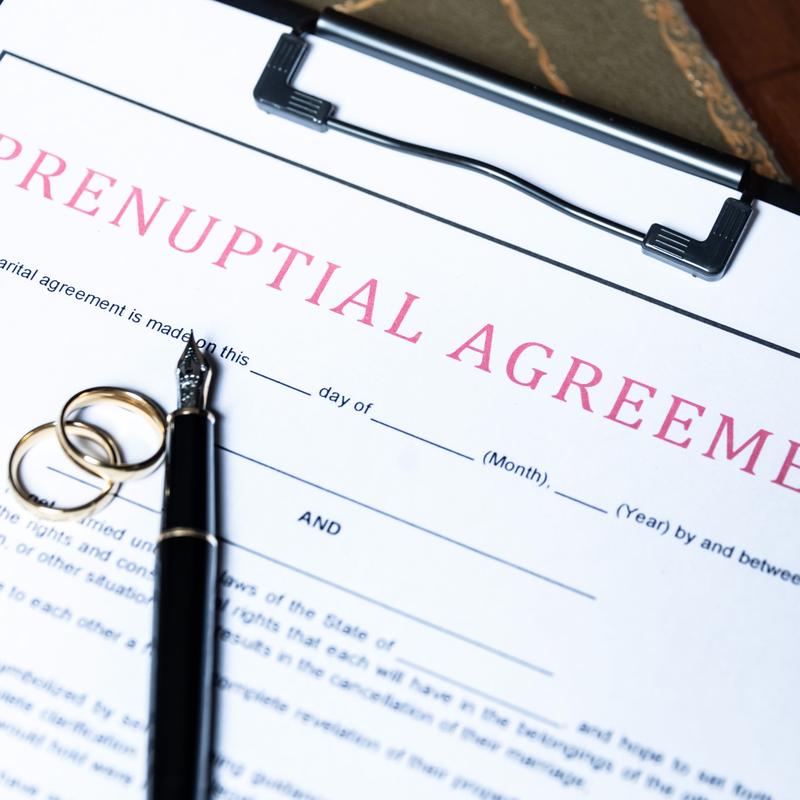
David Remnick: In olden times, meaning about a decade ago, asking your intended spouse to sign a financial agreement, a prenup, carried with it a whiff of scandal, I think. This was a plot line from Seinfeld. George Costanza asked his fiance Susan, to sign a prenup, hoping she'd get so mad that she'd be the one to call off their wedding.
Susan Ross: A prenup?
George Costanza: Yes. What's so funny?
Susan Ross: [laughs] You don't have any money. I make more money than you do. [laughs] Yes. Give me the papers. I'll sign them. [laughter]
David Remnick: Times have changed. Jennifer Wilson just reported a piece on prenups for The New Yorker. During her reporting, she found that younger couples now embrace prenups wholeheartedly for a whole complicated mix of reasons. Jen, what got you interested in writing about prenups in the first place?
Jennifer Wilson: I just noticed that suddenly they were everywhere. They were all over TikTok. There's this really prominent financial influencer named Your Rich BFF. Her actual name is Vivian Tu. She did this video, what's in my prenup and what's in my purse.
Vivian Tu: For a prenup, we went 50/50 on everything that we brought to the marriage. 50/50 on everything we'd earned during the marriage. The only exception was a 100% carve out of the equity in my business.
Jennifer Wilson: I thought all the comments would mocking her or calling her privileged, but everyone was very supportive. Everyone needs a prenup these days.
David Remnick: Wait a minute. When I was young, the only people that got prenups were Aristotle Onassis and Jackie Kennedy, or Movie Star X or some gazillionaire on Fifth Avenue. When did that change? When did that start to change?
Jennifer Wilson: What really changed things was no-fault divorce. By the 1980s, when millennials were being born, most states had adopted no-fault divorce. 25% of millennials grew up with parents who were divorced or separated. One of the people I interviewed was this woman who calls herself the prenup coach. Her name is Kaylin Dillon. She's a financial advisor in Kansas. She said this generation just doesn't believe in marriage in the same way. They don't trust it. They want everything in writing, and everything. I did not know all the things that could go into a prenup.
One person who's really made divorce law glamorous, if you can say that, is Laura Wasser. She's a celebrity divorce attorney. She represented Kim Kardashian in her divorces. She's also an advisor for HelloPrenup. She recommends that couples get a prenup or at least consider getting a prenup because the conversations about money and about what the existing laws already are can be really educational. Here's what she told me about that.
Laura Wasser: What I say is, everyone should have a conversation about a prenup, because so many people say, "Oh, God, you're getting a prenup. That's so unromantic. That's like pre-negotiating your divorce. Why do you want to enter into a contract that governs your marriage?" What they're not thinking about is they already are entering into a contract that governs their marriage. Even having those pre prenup discussions where you go, "Okay, we're getting married, and from the day that we get married, November 18th forward, every dollar that I make is 50 cents yours." My retirement account that I'm going to contribute to during the marriage, you're going to get half of what I contributed during the marriage if we split up.
They don't know that's the law. They're getting married. If they don't have a prenupt conversation, they're getting married, entering into a contract they may not like the terms of so much, even if they are young and just starting out.
Jennifer Wilson: What are you seeing in those prenups? What does a millennial prenup look like to you?
Laura Wasser: I think that they're probably better thought out. I think they're approached with less resentment. The millennials that I've done prenups for, it's more of a level playing field rather than just one super-rich old guy not getting his trophy wife to be able to take too much. I think we discuss in prenuptial agreements for millennials, support issues a lot, spousal support, or alimony maintenance, you may know it as. I think that, whereas before, that was a hot ticket in terms of how much this person will actually need if we end up divorcing.
This is much more, "Let's take a look at what we're living on now, what our lifestyle is now, and what that might look like if we split up and who's the breadwinner or who's making more in a dual income and who might have to kick a little bit over to the other one to keep that playing field level."
David Remnick: That's Laura Wasser, a divorce attorney you spoke with. Now, Jen, in your reporting, you cited a Harris poll from 2023 that has 21% of Americans saying they signed a prenup. That is up from just 3% who said that in 2010. This is a huge change. Who's signing prenups now, and who's not doing it?
Jennifer Wilson: Those numbers are really hard to verify because you only file a prenup in the event of divorce. We don't exactly know how many prenups there are. Some lawyers I talked to told me they thought those figures were a bit high, but everyone agreed that they're doing more prenups, that prenups are way more common. It's not just rich people. It's often people who are quite aspirational, people who want to be rich one day. Sometimes these are people with very little, and they don't have the money really to go to lawyers to get these prenups. They're actually using these new apps that have come out in the last three or four years.
David Remnick: They're prenup apps. What's the premier one?
Jennifer Wilson: HelloPrenup is one of the latest prenup apps, where you answer a series of questions. Some of it's basic financial stuff like, do you have any student loan debt? Did you have a house that you bought before? You and your partner both answer these questions. Once you both are aligned in an agreement, it auto-generates a prenup for you for 599. David Remnick: 600 bucks, not nothing.
Jennifer Wilson: And if you would like a lawyer to look over it, and it's a little bit more.
David Remnick: Jen, in your hands, you've got a little box, but I don't think it's a ring.
Jennifer Wilson: It's not, but you could decide that you want to take the ring back after we play this game. That's the kind of thing. This is a game for couples who are contemplating whether or not to get a prenup, if they should get a prenup. It's sort of. It's supposed to be fun. It's called Fight Night. This is still in beta. The founder solely of Neptune warned me. Neptune is an app that helps couples make prenups. They're very high-tech. This Fight Night is a new analog feature. Yes, Fight Night. Because the best relationships can handle the hard conversations. Okay.
David Remnick: You'd be surprised.
Jennifer Wilson: Go Ahead. All right, the first card, should we own more or less of crypto?
David Remnick: How about no crypto?
Jennifer Wilson: We're aligned.
David Remnick: Okay. Oh, so you put it in this stack of aligned.
Jennifer Wilson: Yes, we're aligned. We're aligned here. If we could pick the gender of our children, would we? I would say no.
David Remnick: No, we're aligned.
Jennifer Wilson: We're aligned. These are a little bit trickier. All right. What I'm going to do is I'm going to--
David Remnick: These darker cards are tricky.
Jennifer Wilson: These darker cards, these are called on three cards. I'm going to read the question. I'm going to read the question and then three possible answers. On the count of three, we're each going to put up a finger. If you answer one, put up one. If it's two, et cetera. Money earned during the relationship is, one, fully shared, two, fully separate, three, mixed. On the count of three, one, two, three, go. See, we're not aligned.
David Remnick: I said fully shared.
Jennifer Wilson: You said fully shared once. You were holding one finger up, and I have three fingers up, I think mixed. I played this game--
David Remnick: What's the difference between shared and mixed?
Jennifer Wilson: The idea, if everything's fully shared, all our money is in one pot, mixed might meet. In my mind, most of our money would be shared, but we might each have a checking where we just have discretionary funds.
David Remnick: As somebody who's been married for decades, that way lies madness, but okay. No judgment to any listener.
Jennifer Wilson: It's so funny. I was playing this game with the founder of Neptune, and she said like-- and I said three. I said to her, I was like, "I don't know why, but of all the things, what I'm thinking of is that I don't want to have to pay for someone's super expensive gym membership. That's a thing in New York. People are paying $500 a month for these gym memberships. I was like, "I just don't want that coming out of the marital pool." She said, "Well, some people would consider that a community benefit." I said, "Wait, because what--
David Remnick: People talk like this.
Jennifer Wilson: People talk like this because I get to appreciate how this person looks after they've been at the gym. I was making a joke.
David Remnick: It keeps the BMI down.
Jennifer Wilson: It keeps the BMI-- I was joking, and she was like, dead ass.
David Remnick: Wow. Wow. All right. You want to do one more? Let's do one more. Fight Night.
Jennifer Wilson: Oh, this one is kind of fun. This is like a money values type question. At a group dinner where others get drinks but you don't, you, one, ask to itemize the bill. Two, split evenly, but you're annoyed. Three, split evenly. It's fine. On the count of three. One, two, three. Go.
David Remnick: Three.
Jennifer Wilson: Three. We're aligned.
David Remnick: Yes.
Jennifer Wilson: You can see how the answer to this question, if it differs, would you marry someone who says, ask to itemize the bill? I don't think I would.
David Remnick: No. It's too tedious.
Jennifer Wilson: It's also just like you're going to sacrifice our friendships, our connections with this group of people, over how much money are you going to save?
David Remnick: Right. Who had the tuna fish salad? I'm not doing it. I don't know, maybe I'm wrong. Maybe it's a thing if you have very modest means and you didn't drink and you're trying to save, and fair enough.
Jennifer Wilson: I think when you're doing this with your partner, you have a sense of that's the issue, if that's what's motivating it. I think we also are-- I think in particular Gen Z, they send a lot of Venmo requests. You go on a group trip, and there's a split-wise itemization. This does come up more often between couples.
David Remnick: That was a fun game, by the way.
Jennifer Wilson: It was fun. I really like it.
David Remnick: If you're now getting one of these things, other than your financial arrangements, what else is in there?
Jennifer Wilson: Basically, anything can be in a prenup except for anything related to child custody or to child support. You can put anything in a prenup. They're not always going to be like some of the crazier clauses. I talked to one lawyer who said that she's had clients who want it in writing that they have to have sex twice a week, or there's a financial penalty if they get divorced.
David Remnick: Timeout. Sex frequency is penciled in?
Jennifer Wilson: Yes, most judges will not report this--
David Remnick: Is it calibrated over time?
Jennifer Wilson: I don't know what kind of accounting they're doing, but the lawyer--
David Remnick: They're in for a big shock.
Jennifer Wilson: I heard one story of a couple who wanted it in writing. If our BMI goes over 30, we have to pay a penalty of $50,000.
David Remnick: Their weight, as we gently say.
Laura Wasser: I have a famous story about my client saying to me, we've had all these discussions about how she's not going to work anymore after we have kids, and I'm okay with that, but I want something in there saying that she will lose the baby weight within a six-month period of time. I was like, "Bro, I'm not putting that in here because it is unenforceable." Yes, people can agree to anything. If people both believe that they're going to stand by their word, you want to put that in there, and it's motivational, fine.
If one person said, "I didn't do it, or I didn't lose the baby weight, or I didn't stay with this maintenance of weight that I agreed I would," and you took it to a judge, the judge would say, "I can't enforce that. That's unconscionable. That's against public policy. No."
Jennifer Wilson: Some of the other clauses that I've heard of, what's really popular right now is something called the social image clause. Millennials and Gen Z, you're talking about digital natives; they're aware of social media and how social media could ruin your reputation and career. They have clauses saying if you post negative content about your ex, you have penalty of -- and you can set the penalty. It can be anywhere from $5 to a million. You don't actually have to have that much money. There's also something called an embryo clause.
My generation, we're having children later, more people are using IVF. There are clauses about how are we going to divide the embryos if we get divorced? Who's going to pay for storage fees? Also, what's come up is what about relationships with AI Chatbots? Can you have an emotional affair with a chatbot? One of the divorce attorneys I interviewed for the piece-
David Remnick: Oh, man.
Jennifer Wilson: -said she's told her clients, "Listen, you can absolutely subpoena a chatbot. She said, "I tell all my clients, be careful what you start confiding, how much you start confiding. You start telling that chatbot more than you're telling your spouse, it can be considered micro cheating."
David Remnick: It's almost like an extended project you've been carrying on these past months, which have been combined the financial and the personal and so much now. On this story, when you came to the end of the reporting and the thinking and the writing of it, do you think in your own life you'd get a prenup?
Jennifer Wilson: One of the things that divorce attorneys will tell you is that, "Listen, even if you don't have a prenup, you do have a prenup, because there are the laws that exist wherever you are, the governing how assets are split in the event of a divorce." If you're in California, it's 50/50. If you're near New York, it's equitable distribution. There already is a kind of contract in place. I think that I'm okay with the laws that are already on the books, but I do think that this is a great thing to think about. I did find it really educational.
I didn't know that, for instance, if your partner takes out a car loan, let's say your partner has a midlife crisis and buys some convertible-
David Remnick: Without your consent.
Jennifer Wilson: -without my consent, but only their name is on the car. If I benefit from that debt, for instance, if maybe I take it for a spin every now and again, that means it's a marital debt.
David Remnick: Is there any way to know who's benefited most from this trend? Men or women or? What do we know about that?
Jennifer Wilson: We're talking about millennials and particularly Gen Z. These aren't people who've been married super long yet, so we don't exactly know what the effect is. I think the intended effect is that it will benefit women more than existing laws. For instance, HelloPrenup has something called an equalization clause. If you are a woman who's left the workforce to raise small children, you can assign, for instance, a dollar amount in the prenup that says for every year I stayed home with the children, I would be awarded this much money or a greater percentage of the assets.
New York law is already supposed to consider those things. That's what equitable distribution means. Even though I don't think I would get a prenup, I'm sympathetic to people who do because I do think it's an expression of anxiety, it's an expression of fear that the social contract is just frayed. That policy, that public policy, but also corporate policies, are just not where they need to be. They're like a privatized solution to this problem--
David Remnick: It's a symptom. However funny some of the details are, at times, it's a symptom of-- Not to get too grand about it, but larger politics and larger forces at play. No? Jennifer Wilson: Of course. Millennials, we tell these jokes about avocado toast, but we came of age in the Great Recession, and there's a lot of anxiety about the future. Who wouldn't want to try to have some modicum of control over what's going to happen?
David Remnick: Well, Jen Wilson, it's a funny piece, but it's also a really thought-provoking piece, and I'm delighted to talk to you today.
Jennifer Wilson: Thank you for having me.
David Remnick: You can read Jen Wilson's piece, Why Millennials Love Prenups at newyorker.com.
Copyright © 2026 New York Public Radio. All rights reserved. Visit our website terms of use at www.wnyc.org for further information.
New York Public Radio transcripts are created on a rush deadline, often by contractors. This text may not be in its final form and may be updated or revised in the future. Accuracy and availability may vary. The authoritative record of New York Public Radio’s programming is the audio record.