Leon Panetta on the Trump Administration’s Venezuelan Boat Strikes
David Remnick: Some of Donald Trump's most alarming ideas concern military force and the almost unlimited latitude he grants himself as commander-in-chief. Trump has talked about using the military against protesters. In the 2020 election, there was the idea that troops might seize ballot boxes for a recount. This year, he's deployed the National Guard into US cities to assist ICE or to reduce crime. He's rebranded the Department of Defense as the Department of War.
Now, Trump seems to be ramping up a conflict with Venezuela. He says of President Nicolás Maduro, "His days are numbered." This week, the US seized a sanctioned oil tanker said to be carrying Venezuelan oil. For months, the Navy has been striking and destroying alleged drug boats. In particular, there's the matter of a second missile strike on one boat for the purpose of killing the survivors of the first strike. Former military officials are saying that this is a war crime.
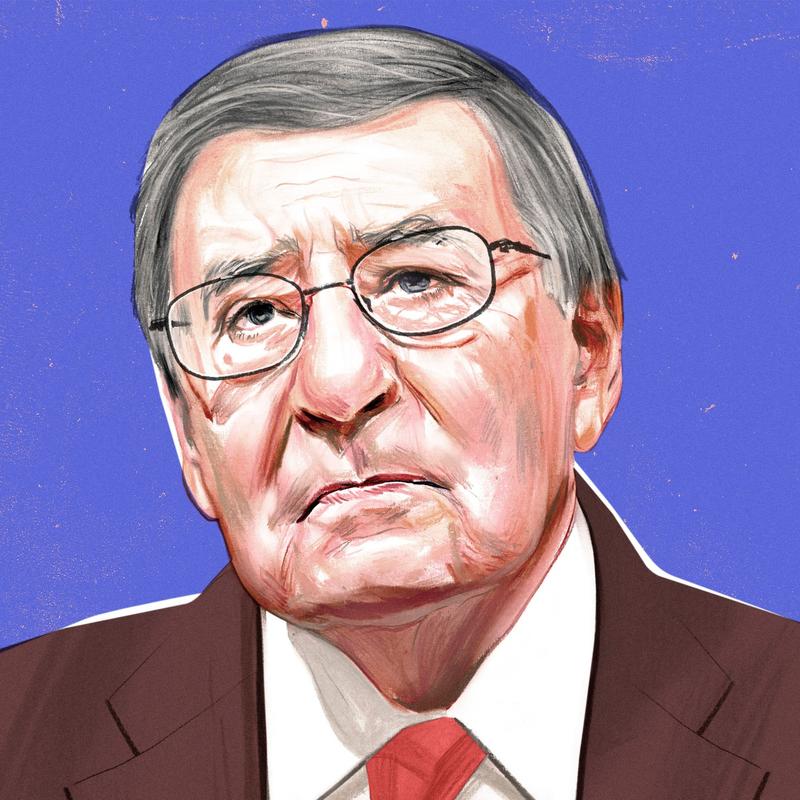
One of those sounding the warning is Leon Panetta. Over the course of a long career in government, Leon Panetta was a lieutenant in the Army, a congressman from California, and a White House chief of staff. He directed the Central Intelligence Agency under Barack Obama. When he was nominated for Secretary of Defense in 2011, the Senate confirmed Panetta by a unanimous vote, 100-0. I spoke with Leon Panetta last week.
[music]
David Remnick: Secretary Panetta, in September, the Navy struck a boat off the coast of Venezuela a second time. Secretary Hegseth has claimed that Admiral Frank Bradley was actually the one to make the call on that second strike, and Bradley has not denied that. There's a feeling that Bradley is being scapegoated by Hegseth. How much responsibility does Hegseth bear in this instance, and is he trying to pass the buck?
Leon Panetta: Yes, I've been very concerned that, frankly, both the President and the secretary have tried to avoid responsibility for what happened. The buck stops, frankly, with the President, but it also stops with the secretary. If you're going to be a strong Secretary of Defense, you got to take responsibility for the orders that are issued and what happens. To stand back and say, "Oh, no, it was the admiral that took that strike," baloney. The admiral was following orders. That's what they do. The orders came from the Secretary of Defense. I always hold the person at the top of the command responsible, not the person who's in the middle or the bottom of the chain of command.
David Remnick: Just to be clear, do you think that second strike is a war crime?
Leon Panetta: Well, obviously, the Congress is investigating that. You got two. The Armed Services Committees and both the House and the Senate are going to be looking at that issue. I find it very difficult. When you have two people in the water that are survivors from an initial attack, there's not much question in my mind that you don't blow them up. You have to rescue them. Frankly, that's what they did in later strikes is they actually rescued some of the wounded and returned them back to their country of origin.
That's the way you got to handle that. Just because you're in the military doesn't mean that you've lost respect for life. I remember Bill McRaven, who was head of Special Forces, when we did the bin Laden raid. We went 150 miles into another country to conduct that raid with two teams of SEALs. They were going through the compound where Bin Laden was. When they ran into the children, his children in the family, they put them aside and kept them out of harm's way while the SEALs went ahead to look for bin Laden.
I remember when we briefed Congress. There was a member of Congress, a Senator, who said, "What kind of training did you do to allow them to do that?" McRaven gave an answer I'll never forget, which is he said, "Look, we're mothers, fathers, brothers, sisters. We know what life is about, and we respect life. Yes, we do our missions. Yes, we do what has to be done, but we also respect life."
David Remnick: Secretary Panetta, I want to play a clip here. This is Pete Hegseth discussing the boat strike in September off the coast of Venezuela.
Pete Hegseth: I did not personally see survivors, but I stand because the thing was on fire. It was exploded in fire and smoke. You can't see anything. You got digital. This is called the fog of war. This is what you and the press don't understand. You sit in your air-conditioned offices or up on Capitol Hill. You nitpick, and you plant fake stories in The Washington Post about "kill everybody" phrases on anonymous sources not based in anything, not based in any truth at all.
David Remnick: The key phrase there for Hegseth is "the fog of war," and that somehow, unless you are a combat soldier, that you have no idea what you're talking about, and that the fog of war is this embracing phrase that permits a whole hell of a lot. Is it appropriate for him to use that phrase?
Leon Panetta: I remember when I was a lieutenant in the Army, sometimes it is confusing in war. Sometimes it is tough. You have to bear responsibility for what happens under any circumstances. The problem I have with him talking about the fog of war is that we have a very clear video that shows very clearly what happened here. This is not the fog of war. This is a video that shows two individuals who were in the water, who were survivors of the first attack. There's not much question about the facts involved here. The real question is whether the actions that were then taken were responsible in accordance with the law.
David Remnick: Do you ever recall, as either Secretary of Defense or as head of CIA, such tactics being used against drug traffickers in any other administration? Why is it coming up now?
Leon Panetta: Because somehow, they made the decision to strike at these boats that may very well be trafficking drugs, and that they're going to just simply blow them out of the water. Then the question became, "Well, how do you legally justify that?" Now, they've come up with the rationale that somehow, these are the equivalent of military combatants, which I just think if you begin to go down that slippery slope, I'm not sure where it leads you in terms of our ability to conduct military strikes.
We're a country that doesn't deploy our military without legal justification and without abiding by the law. We're putting our men and women in uniform in harm's way. We have to assure them that the orders we give them are not going to violate the law, but are going to, in fact, defend our national security in a way that is not legally questionable.
David Remnick: Why would it be thought that the DEA or the Coast Guard or even an international group like Interpol is insufficient in this effort to stop drug trafficking?
Leon Panetta: Well, that really should be the question, which is we're not dealing with a military threat. We're dealing with a law enforcement problem. These are individuals who are violating law. They're criminals. That's why we basically had the Coast Guard intercept these people, determine what kind of narcotics were on board, arrest them, try them, put them in jail. That's called law enforcement.
More importantly, I think what's missing is that if you really want to control drug trafficking coming out of Latin or Central America, you really do have to build strong alliances with the countries there. When I was at the CIA, we had a very good relationship with Colombia. We provided weapons. We provided support. We helped them go after the drug dealers and the cartels in Colombia. It was a successful program because we were working together to go after a common problem.
I think what's missing now is if you really want to deal with the amount of drugs coming into this country, if you really want to deal with the fentanyl crisis, which is the major concern that we have because it kills Americans, then we really do need a much closer and working relationship with Mexico and with other countries so that we are not only going after the cartels together, not only going after drug traffickers together, but we are unified in our effort. We're not doing this by ourselves. We're not saying, "To hell with the law." We're not saying, "To hell with other countries." We're doing it together. That's the only way we're ultimately going to control drug trafficking coming into America.
David Remnick: Secretary Panetta, if you look at what's happening in Venezuela and go beyond the strikes on these boats off the coast, what do you think is taking shape in the Trump administration? Do you see a land invasion of Venezuela coming? Do you think there might be a war with Venezuela? If so, to what end?
Leon Panetta: I'm not sure what the actual objective is here. Is it regime change? Is it getting rid of Maduro? Is it stopping drug traffickers? Is it getting oil resources? Is it trying to stop the influence of Russia or China in that part of the world? Just exactly what is the objective? I don't think the President, frankly, has been very clear with the American people about what that objective is.
We've got a lot of people there. We've got a huge armada. 25% of our Navy is located off of Venezuela. We've got thousands of marines there. We've got F-35 squadrons there. We've got a lot of firepower there, but I don't know that there has been a clear statement about just exactly what is our objective. I think the President owes that to the American people, particularly if he's willing to take military action.
David Remnick: We've also got a long record of interference in South America, Central America, Cuba, Guatemala, Chile. The list is extremely long. It's a very dark past. How would an invasion like this into Venezuela compare with those other US-backed coups in the region? Have we not learned anything from our extremely checkered experience?
Leon Panetta: I think the problem is we have always taken Latin and Central America and the other countries in our hemisphere for granted. We've always focused on threats in other parts of the world. We've always focused on adversaries like Russia and China, Iran, North Korea, et cetera. We built NATO in Europe. It's a strong alliance, and it was aimed at trying to stop the Soviet Union from expanding into Europe.
We need to build that same kind of alliance with Latin and Central American countries so that we have a common objective. You've got to sit down with them. I spent a lot of time as director of the CIA and Secretary of Defense, going to countries in Latin and Central America, helping them with their security, conducting exercises with their armed forces. It's really important to understand that if we use our capabilities in the right way, we can build friendships in that part of the world rather than operating like a bully.
David Remnick: I assume you're in touch with a lot of people from your days as Secretary of Defense in all branches of the military. What is your sense of morale there now? What is your sense of the way people in the building react to Pete Hegseth and the support he's getting from President Trump, as well?
Leon Panetta: I'm concerned that I think that there are growing questions within the department about whether they are, in fact, following law and whether or not the military is being used pursuant to what the military should be used for. The role of the military is to protect us from foreign adversaries. It's not about law enforcement. It's not about sending them to cities in the country. I think there's a growing concern about the confusion that the administration is raising when it uses the military as the President's personal toy. Yes, I think there are a lot of people concerned about that. Their first responsibility is to protecting our national security. That's what they ought to be used for.
[music]
David Remnick: I'm talking with Leon Panetta, former Secretary of Defense. This is The New Yorker Radio Hour. We'll continue in just a moment.
[music]
David Remnick: This is The New Yorker Radio Hour, and I'm David Remnick. I'm speaking today with Leon Panetta. Panetta is a former CIA director and former Secretary of Defense in the Obama administration. Donald Trump came to power opposing American involvement in foreign wars. Some Republicans in Congress were concerned about the bombing of nuclear facilities in Iran this past summer. Now, Trump is taking military actions against Venezuela. Then there are the wars the President claims he would end but hasn't so far, like the war, of course, between Russia and Ukraine. I'll return to my conversation now with former Secretary Leon Panetta.
[music]
David Remnick: What would be the proper US stance on Ukraine at this point in the war? It's without question that Russia has been making some gains on the battlefield. It seized much of Eastern Ukraine to say nothing of Crimea. What should the United States be doing now that Donald Trump refuses to do?
Leon Panetta: In one word, he needs to stand up to Putin. He needs to be tough on Putin. He can't be catering to Putin. He can't be using his talking points. The plan that was presented for peace, it had clearly represented the Russian viewpoint as to what should happen there. The problem is that what we're dealing with is whether or not we're going to stand up and protect a sovereign democracy that was attacked by Putin. World War II was about standing up to Hitler for doing exactly the same thing.
He marched into Poland. He marched into Czechoslovakia. There was an effort to appease Hitler with Czechoslovakia, hoping that that would answer the problem, and it failed. I think the appeasement that I see taking place with Putin is as dangerous as the appeasement of Hitler at Munich. You have to stand tough when you're dealing with a tyrant like Putin. You cannot trust Putin. Putin's first interest is to undermine the United States of America, for goodness' sakes.
He reads weakness in the United States right now, and that's why he's taking advantage of it. What the President ought to be doing, if the Russians aren't willing to accept a ceasefire and to negotiate for peace, the President of the United States ought to be providing weapons to the Ukrainians that they can use not only to defend themselves, but to go after Russia. He also ought to be increasing economic sanctions. He's got to be tough because that's the only language Putin understands. Pretty please does not work with Putin.
David Remnick: Pretty please doesn't work with Putin, but what would be an acceptable peace in the proper US view?
Leon Panetta: Well, look, the courage of the Ukrainians, the amount of blood that they've spilt, has been incredible. Innocent men, women, and children getting killed every day. They've really stood up to Putin. The one thing I know is that you do not achieve peace by surrender. That's something we've learned in history. It's important to me that Zelenskyy be able to make decisions that protect the sovereignty of Ukraine, that allow for its security in the future, so that he knows that the United States and NATO will be there in case Russia decides to do this again in the future. He is the one to determine what territories he wants to protect and which ones are willing to go to the Russians. He's the one that's got to make that decision.
David Remnick: Does our national security include the protection of Taiwan? There was an interesting piece in The New York Times, indicating that Chinese strategy is starting to outstrip us and that there is a plan in place, certainly on the books in China, to potentially take Taiwan within the next few years. If that were to come into play, do you favor the United States stepping in militarily?
Leon Panetta: I believe the United States has to deal with our adversaries from a position of strength. What do I mean by that? I think when it comes to Putin, you have to make clear that there are lines he cannot cross. My argument is, how can you be tough on China if you're weak on Russia? She senses weakness on the part of the United States right now that Trump is not going to stand up. He's not going to be tough. We've got to draw lines. We've got to say, "We are going to defend Taiwan. It's a democracy." They have a right to be able to determine how they govern themselves, not China, but the Taiwanese.
Yes, I think we have to be clear on that. We have to be clear that we are a Pacific power, and we're going to remain in the Pacific as a Pacific power. We've got to be clear about that. Yes, then you can talk to China about a number of areas where we need to decide, "What are we going to do on AI? What are we going to do on technology? What are we going to do on space? What are we going to do on cyber?" There's a lot of areas we need to discuss with China, but you cannot do it from a position of weakness.
David Remnick: You were on the inside, to say the least. You led the CIA and the Pentagon. You know things that we don't. You read intelligence reports that we never see. What worries you more than it worries me, and why?
Leon Panetta: Well, [chuckles] this may not be the answer you want, but I frankly worry right now that our democracy is dysfunctional, and that because Democrats and Republicans are not willing to work together because the President is not willing to provide leadership that brings the country together, and is not willing to govern the country really in a way that would have both parties working together.
I think that represents a real security threat to the United States because, look, we just went through a shutdown. I tell the students here at the Panetta Institute that in a democracy, we govern either by leadership or crisis. If leadership is there and willing to make tough decisions, we can avoid crisis. If leadership's not there, we will govern by crisis. That's what we've been doing for the last 20 years.
In order to deal with the budget, for God's sakes, we have to have the threat of a shutdown. We just came out of a shutdown. Let me tell you, a shutdown hurts our national defense. It hurts our security. It hurts our image in the world. Right now, I'm concerned that the greatest weakness we're displaying to the world is our dysfunction in Washington and the inability to work to deal with the threats that we face.
David Remnick: Just to clarify, what you're saying is more than North Korea, more than China, more than the Middle East, what worries you most, to borrow a phrase from the President of the United States, is the enemy within, what plagues us here, which is the battle against democracy from within the White House.
Leon Panetta: That's right.
David Remnick: That is ominous indeed.
Leon Panetta: I think it's the inability of our democracy to function the way it should to have a Congress that is working with the executive branch in order to deal with the challenges, to deal with health care. We got a debt of, what, $35 trillion right now. Neither party wants to deal with that issue. Neither party, and yet it's important to our economy. It's important to our security.
On immigration, yes, we need to protect the border, but what about comprehensive immigration reform? What are we going to do about those that want to come into this country, that want to seek asylum? I'm the son of Italian immigrants. You still have to be able to be a country of immigrants in this country, but we're not dealing with comprehensive immigration reform. We haven't worked on that. They're area after area.
National defense is an important area, but to do that, we're going to have to develop new technologies. We're going to have to be on the cutting edge of AI. We're going to have to be on the cutting edge of the future. I'm not sure we're there right now. Those are the issues I want our country and our president and both parties to work on, because building a strong America for the future is building a strong democracy in the 21st century that is needed.
David Remnick: Leon Panetta, thank you so much.
Leon Panetta: Good to be with you.
[music]
David Remnick: Leon Panetta has served as Secretary of Defense, director of the CIA, White House Chief of Staff, and a lieutenant in the US Army.
[music]
Copyright © 2025 New York Public Radio. All rights reserved. Visit our website terms of use at www.wnyc.org for further information.
New York Public Radio transcripts are created on a rush deadline, often by contractors. This text may not be in its final form and may be updated or revised in the future. Accuracy and availability may vary. The authoritative record of New York Public Radio’s programming is the audio record.