
A Win For Mr. Nobody!
Title: A Win For Mr. Nobody.
Micah Loewinger: Hey, you're listening to the On The Media midweek podcast. I'm Micah Loewinger. Apparently, the Russian state news agency RIA Novosti left out the documentary film category from its Oscars roundup this week. Maybe to avoid having to mention that the Academy Award went to a film that painted an unflattering portrait of the state of propaganda in Russian schools.
Director David Borenstein: Mr. Nobody Against Putin is about how you lose your country.
Micah Loewinger: Director David Borenstein accepting the award on Sunday.
Director David Borenstein: What we saw when working with this footage it's that you lose it through countless small little acts of complicity. When we act complicit, when a government murders people on the streets of our major cities, when we don't say anything, when oligarchs take over the media and control how we could produce it and consume it.
[applause]
Micah Loewinger: In honor of the win, we thought we'd rerun Brooks interview with the star of the documentary. I'll let her take it from here.
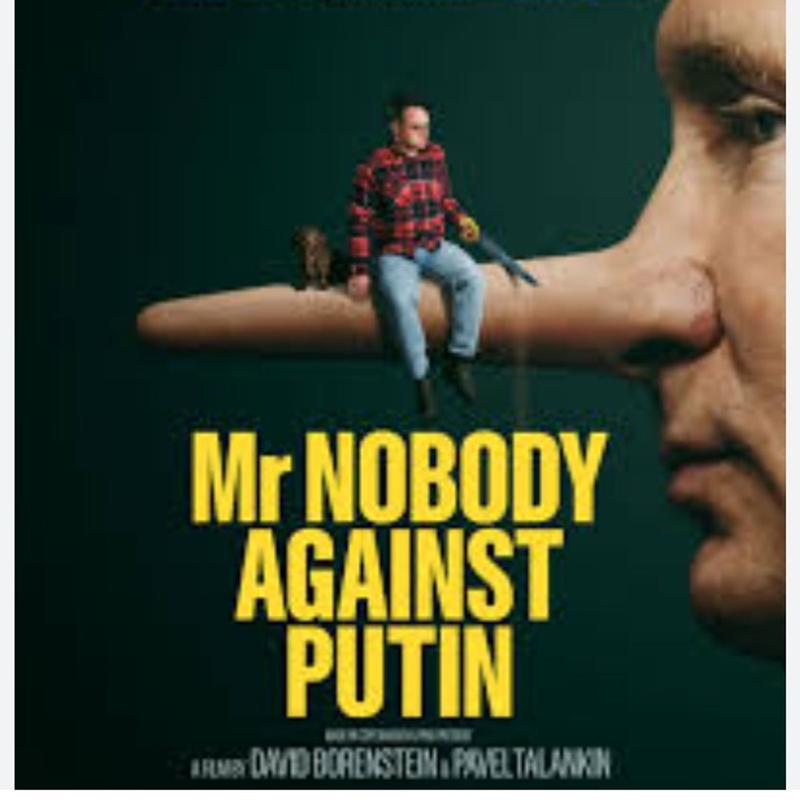
Brooke Gladstone: What follows is a detailed account of the effort to indoctrinate school children by revising history, authorizing new texts, and monitoring teachers to ensure they follow the new rules. No, it's not happening that way here yet, though it could. It's happening in Russia, and we can watch it happen in a new documentary called Mr. Nobody Against Putin.
The titular nobody is Pavel, nicknamed Pasha Talankin. The social director, AV guy, and all-around sounding board for students at the biggest primary school in Karabash, a small town in the Ural Mountains where Stalin once sent undesirables to work in the copper smelting plant. Pasha was happy there until February of 2022, when the war in Ukraine came to town in the form of government directives to radically change the curriculum in an increasingly stomach-churning effort to prepare the young for the battlefield.
As Putin once said, "Commanders don't win wars, teachers win wars." Since Pasha was videotaping school activities anyway, he decided to tape everything, and in an unimaginably risky leap of faith, sent it to documentary filmmaker David Borenstein, a man essentially unknown to him, based in Copenhagen. The result is this gripping chronicle and cautionary tale. Pasha. Hello.
Pasha Talankin: Hello.
Brooke Gladstone: The film starts in early 2022. You're a videographer and events coordinator at a primary school in Karabash, an industrial town in the Ural Mountains. Describe your job.
Translator Robin Hessman: My job consisted of organizing all kinds of events, from concerts to holidays to cultural and intellectual events, and even sometimes sports competitions. I really loved it. It was amazing. I had a great director of the school, and she would always call me into her office and say, "Okay, Pasha, what's the next surprise? What's your next new script?"
When COVID happened, we started filming a lot and doing a lot online. After COVID, everyone thought, "Hey, we have all this experience of filming everything, so we can just keep filming." Yes, I would film everything that I would organize. I also had a circle of some of the older kids, like an extracurricular where I would teach them and they would film something, and they would learn to edit. Some of my students would then go off and get part-time jobs at the local television station and earn a little bit of money. I'm really, really proud of them.
Brooke Gladstone: You weren't just the professor of fun. In addition to the technical skills of editing and filming, what did you want to give them?
Translator Robin Hessman: When I was in school, I never had any place where I could just go anytime, sit with people and have tea, and talk about big problems, small problems, just to share what was going on in life. I never had a space like that.
Brooke Gladstone: That is safe.
Pasha Talankin: Damn. Damn.
Brooke Gladstone: Then, in February of 22, Putin announces the full-scale invasion of Ukraine. Things start changing dramatically.
Translator Robin Hessman: The 14th of March, literally just a few weeks after it happened, all of the directives started arriving at school with literally scripts for every class and what the teacher should say and how they should say it, and also video material and everything that they were supposed to include in their classes.
Brooke Gladstone: What was the nature of that material?
Translator Robin Hessman: At first, the assistant director of the school told me that it was just going to be, we were going to photograph it, but then called me and said, "Now it turns out we have to film it all." It had to be very carefully filmed so you could see the teacher and that they were reading from the script and that there were children in the room and it was full, and that they were reacting to what they were told and that all of the video that was being sent to be included in the lesson was being projected and all of that needed to be proven.
For example, I remember one of the very first ones, the teacher was reading from the script about how Russia, Ukraine, and Belarus were all united countries. We all share language, we have the same fairy tales, and the same past. Unfortunately, now Ukraine has gone onto a path of Nazification, and we must free them. When I saw that first lesson, my glasses even fogged up. It was so powerful. I understood that I didn't even morally have the right to delete this footage because I was capturing a very specific era in our country.
It occurred to me, I thought, "Oh, my God, we have so many schools all over Russia, and we're all filming this, uploading this. Can it really be that there's some guy who's just sitting there and is going to watch all of this footage from all of the schools all over this country?" I did an experiment. I filmed a whole lesson, 45 minutes, an academic hour, but then I only included the first few minutes and the last few minutes, and everything else in between was black.
There was no reaction. Nobody said there's something wrong with your lesson. Maybe there was a camera technical problem, but we can't watch it. There was absolutely no response to it.
Brooke Gladstone: Many of the teachers resented, hated what they were being asked to do, but I think you took it harder than anyone else.
Translator Robin Hessman: I realized that I was there to be the signal for the teachers, watch out, we're here watching you. It wasn't to give the government this information. It was to be there for the teachers, to let them know that they were being watched.
Brooke Gladstone: You took a risk when you sent that lesson that was blacked out in the middle, and I want to know why. The film suggests this might have something to do with what your mother taught you.
Translator Robin Hessman: In Russia, there is a holiday on the 9th day after Easter. Everybody goes to the cemetery. There, my mom would tell me different stories about who was who and who came from where and our relatives. For some reason, she would only tell me those stories of our family there at the cemetery. As I got older, she started telling me about this family member was repressed under Stalin, and this one, and this one was repressed, and this one was repressed.
I was just sitting there, incredulous and thinking, "What was everybody in our family repressed under Stalin?" The next year, when we went to the cemetery, I hung a microphone on her and took a camera because I needed to hear these stories. Someday she's not going to be here, and then who's going to tell these stories? Who's going to know that all of our family were persecuted by Stalin and sent into exile out into Karabash.
Before I left Russia, I gave that material on a flash drive to my sister. I said, "Put this in the photo album. This is not for you. This is for your kids and for their kids." I just actually can't say why I did it. I just felt this compulsion to just do something. All those things I did, Lady Gaga and the anthem and the flag and putting the Xs on the windows, there are all these kids around me, and they're also thinking, people, but they don't have anyone to talk about all of this with.
When they saw all of that, it was like a signal to them that the school is not completely lost, that there are people that you can talk to. You're not alone. You're not alone. There are people for you.
Brooke Gladstone: Those events, playing the national anthem sung by Lady Gaga, not just in your office, but over the entire school audio system, and to black out the windows with Xs in solidarity with Ukraine wasn't just for the students. That was for the whole community. That was risky.
Translator Robin Hessman: Yes, it was risky, but it was all right after Putin announced that the US was now our enemy. Right after that announcement, I went and I grabbed the American flag and put it in my office.
Brooke Gladstone: Naturally, then, some weeks later, you were scrolling on Instagram, and you came across a post from a Russian web content company asking for people to submit stories about how their job had been changed by what Putin called "the special military operation," and you responded with a long email describing your frustrations. You said, "I am a teacher forced to do the exact opposite of what a teacher should do."
Translator Robin Hessman: That was because I was just so filled with fury. When there's that much fury inside you, you just act, and you don't really think about what the consequences are going to be. I was just so furious. At that moment, all of these lessons had been increasing and increasing and increasing, and I've been filming more and more and more material, and nobody was talking about it. Everybody was just silent. When that missive came out, I just was like, "Take it. Take it all. You have to see what's happening. You have to just take all of this so people know what's going on."
Brooke Gladstone: That is why, even after Putin instituted a law that made it illegal for Russian nationals to collaborate with foreign workers, you were all in.
Translator Robin Hessman: Of course, after I sent all of my angry words off to that media content company, they were like, "Oh, no, thank you. No, thank you. We don't need this." They did send what I wrote around to each other, all of the creative team there, and that was how I wound up hearing from David. On the one hand, I knew that working with an American director, I could get in a lot of trouble, but on the other hand, I thought it was great. It was cool that he was interested. I felt like I had an obligation to work with him and share this material.
Brooke Gladstone: You film an interaction with another teacher, Pavel Abdulmanov. He's the one leading the new mandatory anthem ceremony at the school. He's a representative of the ruling party. You asked him in an interview format why he chose to be a history teacher and which historical figures he'd love to meet. They were basically the worst monsters of the Stalin era.
Translator Robin Hessman: I'm going to tell you a little secret. When I interviewed him, I was utterly floored, completely speechless, when I heard all of the heroes that he was describing that he would like to meet. I texted one of my students that was in the next room and said, "You have to come here and relieve me. My student came in and switched places with me, and he finished the interview.
We showed the film in Czechia, and at one of our screenings, a director came. I'm sorry, I don't remember his name. He said, "You know, if anybody had ever come to me with a script that had a character who dressed like him and who spoke like him, and who gave those answers questions, I would have sent them back to film school and said, learn how to write characters better because that was too much on the nose. There's no way that that could ever be realistic and could ever happen.
Brooke Gladstone: The Wagner mercenaries came to your school with weapons, as props, and you filmed scenes of children holding landmines, big, heavy guns, and heard stories of death and glory. The footage of this is truly incredible.
Translator Robin Hessman: The arrival of the Wagner mercenary had a huge impression on me, because there were welcoming words spoken by the teachers, like, "Guys, we have visitors. They're here. They want to talk to you all." If they had really said everything to the kids, they would have said, "Okay, guys, we have visitors here today. The Wagner Group they're mercenaries. In many countries, they're terrorists, swear for hire, they kill people, and they rape people, and they steal. Many of them have been in prison for killing and raping, and stealing. Here they're going to come now and talk to you all about what they do."
If you see the film, you'll see that there's this one teacher who's constantly putting her back to the camera and trying to stand in between the camera and the Wagner things. I just felt like ugh, if that's what she's doing, then maybe everything isn't all lost, and maybe we still have a chance. That if you can feel the shame for what's happening. It was just really, really unpleasant that they were in the school.
Brooke Gladstone: Now, the film features a few students who are always in your office, especially Masha and Vanya, who'd recently graduated. Masha wanted to go to medical school. She was also very stressed out by her brother's deployment to Ukraine. Vanya was working in a liquor store. He's pondering his next steps. Over a two-year period, we track exactly how their lives were altered by this war. These students knew they were getting filmed by you, a teacher they trusted, they loved, but they didn't know it might be seen by the world. Was that tough for you to negotiate
Translator Robin Hessman: With Vanya, it wasn't difficult. He just called me up and said, "Okay, I'm being shipped away. Come and film my goodbye celebration." He and I had talked before that and had a plan. If he had been called up, we were going to figure something out, but instead, he was called up, and he just told me to come film his goodbye. With Masha, it was more complicated, but I think it was really important to show that story.
A lot of people don't understand it, but let me give an analogy. Let's imagine that Masha's brother is dying from cancer, but it's not a secret, and everybody knows that he's going to die. Imagine that in school, Masha is asked to write poems in praise of cancer and draw pictures all about how wonderful cancer is. It is forced to celebrate all the time this wonderful thing, cancer.
Imagine what that would have been like for her and what that was like for her. We, of course, never talked about this openly, but I knew that she would be supportive of this. That's what happened in the end. In the end, when she finally saw it, she said, "Why is there so little of me in this film?"
Brooke Gladstone: In 2024, one day, you looked outside your apartment window, and you noticed a police car parked just below. That's when you knew you had to leave.
Translator Robin Hessman: That police car was under my window three days in a row, observing from 8:00 in the morning it arrived to 8:00 PM when it left. I didn't understand why it was there. Nothing had happened to provoke it. It's not like the police are going to call you up and say, "Hey, we've been hearing things. What's this about you working with some American?" What's going to happen is they're going to show up in the middle of the night and yank you out of your bed in your underwear. Then they're going to say, "Look, here is all of the correspondence that we have of you and this other person. Let's talk about it."
Brooke Gladstone: You said goodbye to the town with a list of all the horrible things that you love about it. The poisonous air, the ugly buildings, the mountains stained black with particulates from the copper mining, the life expectancy of the town is what, 38? Yet it was clear you sincerely regretted having to leave. How could you love that place?
Translator Robin Hessman: A turtle can't help but love its shell. For example, you talked about those black mountains, it's completely poisoned land, those black mountains. All around those black mountains is such an incredibly green forest. There are so many birds that sing so beautifully. I've never heard birds sing like they do in that forest.
Also, those concrete houses, those panel houses, all identical with the big gray slabs. The houses are all the same. The windows and the balconies, and everything in them, are so different. One will have skis there, and one will have plants. "I think how different all of the life inside those apartment buildings is." I can give a lot of examples for each of those things that I love about the town. I have to say, the people there, they love me, too.
Brooke Gladstone: Have you heard from them?
Translator Robin Hessman: When we finished it, I was like, "Okay, we're done, David, what are people going to think about the film?" He said, "Pasha, prepare yourself. There are going to be very, very different reactions to the film." For example, some of the parents of the kids in the school wrote to me and said, "Yes, we knew they were doing lessons, but we had no idea about what the content of those lessons were."
My old teacher came to my mom and said, "I watched it, and I wept, and I wept, and I wept." A few weeks ago, a journalist came to Karabash, Russia today. They wanted to film how all of the parents are filing complaints against me because I filmed their kids. They left with absolutely no material because everybody refused to go with them and be filmed filing complaints.
Brooke Gladstone: Isn't that cool? You said that the film is a textbook, a lesson. Look what awaits you if you are apolitical, if you are weak, if you give in to self-censorship.
Translator Robin Hessman: I'm really, really sorry that everything has come to this. Of course, it now touches your country as well. After we've had screenings of the film here in the States, teachers have come up to me, clutching their hearts and saying, "We're just a little bit away from that here ourselves." This film is about what little steps we have from your school desk to your grave is only one step. There's another step, and that's from the teacher's desk to the Oscar shortlist.
[background music]
Brooke Gladstone: [laughs] Pasha, this was a blast. Thanks so much.
Pasha Talankin: Thank you. Thank you, too.
Brooke Gladstone: Pasha Talankin is the star and co-creator of Mr. Nobody Against Putin. Great. Thanks to filmmaker and Mr. Nobody executive producer Robin Hessman for translating so brilliantly on the fly.
[music]
Micah Loewinger: Thanks for listening to the midweek podcast. Join us on Friday. We're talking oil shocks and so much more. By the way, some of you know this, but I feel like a lot of you don't. Brooke and I have been making videos on Instagram and TikTok. It's kind of a new thing for us. I feel like we're getting better at it. I don't know. You tell us. Go over there. Drop us a follow. Let us know in the comments. We'd love to hear from you. I'm Micah Loewinger.
[music]
Copyright © 2026 New York Public Radio. All rights reserved. Visit our website terms of use at www.wnyc.org for further information.
New York Public Radio transcripts are created on a rush deadline, often by contractors. This text may not be in its final form and may be updated or revised in the future. Accuracy and availability may vary. The authoritative record of New York Public Radio’s programming is the audio record.