
A Former Federal Prosecutor on Why He Quit Donald Trump’s Department of Justice
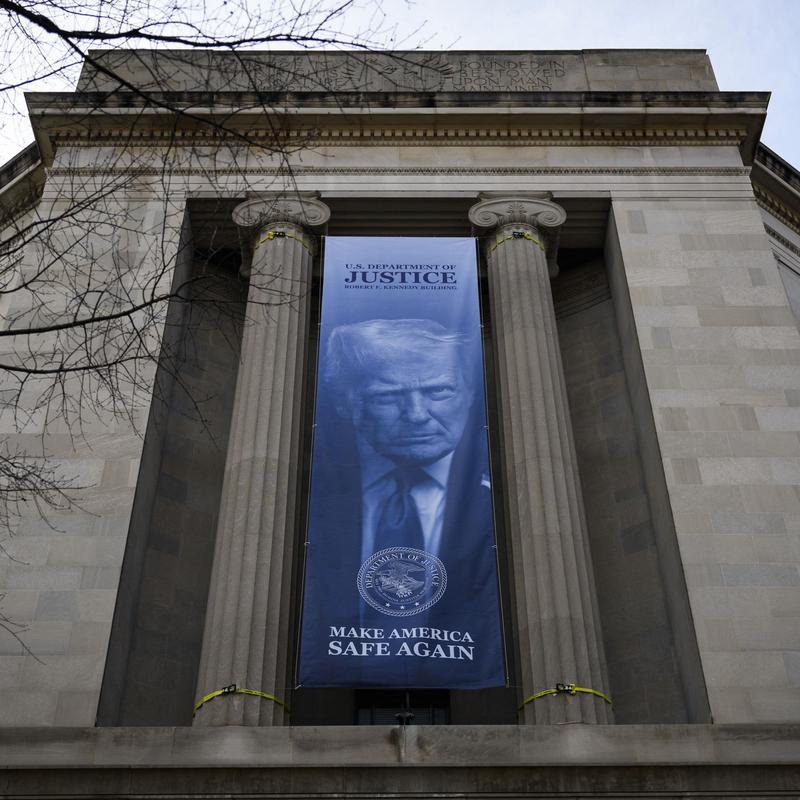
David Remnick: Since the start of Donald Trump's second term, it's estimated that over 300,000 federal workers have been forced out of their jobs or have left voluntarily. Notable among them were thousands of federal prosecutors in the Justice Department. These are generally ambitious, driven lawyers who could have been making much more money in the private sector. The Attorney General, Pam Bondi, has made no bones about putting the Justice Department on political missions, and quite a few career prosecutors just could not abide that, including a man by the name of Troy Edwards.
Troy Edwards: I remember I had still seared into my memory my dad would wake up in the morning at about 4-something in the morning, every morning, and iron his uniform. That hiss of that iron is still seared into my memory because I remember thinking, "Man, I want a job where I get to go serve, and I care so much about it that I'd wake up at 4:00 in the morning and iron my uniform." The National Security Division gave me the chance to do that.
David Remnick: As an assistant US attorney, Edwards prosecuted major January six cases, helping to win convictions against members of the Oath Keepers. He later served as Deputy Chief of the National Security Section in the Eastern District of Virginia. When he resigned last year, that made headlines, partly because Troy Edwards happens to be the son-in-law of James Comey, the controversial former FBI director who holds a top spot on Donald Trump's enemies list. Edwards spoke with the New Yorker's legal correspondent, Ruth Marcus.
Ruth Marcus: Pam Bondi comes in as Attorney General. She sends out a memo advising you and your fellow prosecutors that your job is to execute the views of the President of the United States. The President comes to the Great Hall of Justice and gives a speech denouncing many things, including the scum prosecutors who had vindictively gone after him in the previous administration. What's your response to all of this? What are you thinking?
Troy Edwards: That we had a job to do. All of that can play out and be wrong. Yet the National Security Section in EDVA, which I believe is one of the most important in the country, had a job to do. I had a unit to help supervise that had victims and had dangers to our community, that if we left, then more damage would be done.
Ruth Marcus: Yes. EDVA is the Eastern District of Virginia. Why is EDVA such a central part in the national security universe?
Troy Edwards: Because it has a history of being at the forefront of some of the top national security cases and has continued to build on that history. That history originates from its location being near the Pentagon, near the intelligence community, near the national security apparatus, such that it is prime location to investigate these kinds of cases.
Ruth Marcus: You're watching what's going on at justice, both in US attorneys' offices around the country and at the FBI and main justice, where people are being, I think, fired willy-nilly, is the technical term. Is this what you had been braced for, or worse than you had expected?
Troy Edwards: What I braced for. On day one, hundreds of people were pardoned, including people who violently attacked police officers. You have to know that something worse is going to happen if that's day one. I think what I felt was pride at all the instances in which the institution was holding. I think that educates a little bit on how I look back on it.
Ruth Marcus: What are you thinking of in that regard?
Troy Edwards: There are whole US Attorney's offices that are not contributing to certain cases. There are factions that are walking out instead of engaging in certain conduct that is signs of life that the institution is holding, that the careers know what matters in the department.
Ruth Marcus: They were finding their red lines, and you were sticking it out until your red line kind of slapped you in the face.
Troy Edwards: Right. It was like watching a wildfire when you're in a neighborhood, and you see the flames engulf certain homes around you, and you know an ember may land on your house, and at some point, it landed on ours.
Ruth Marcus: Well, I want to get to that. Before the ember landed on your house, it landed on your sister-in-law's house in the Southern District of New York. Maurene Comey was an extremely well-regarded federal prosecutor in the US Attorney's office in Manhattan. She was fired in, I believe it was July of 2025, with no explanation. The explanation that I got and the reporting that I did on this was that her last name was Comey. That must have been a pretty shattering moment for your family.
Troy Edwards: It was for a family that can handle it. She was and is, frankly, one of the best prosecutors in the country. Although I tease her that the Southern District of New York has a rival in the Eastern District of Virginia. I am very proud that she is engaged in the litigation she is engaged in by suing the administration for doing what was unlawful and terminating her.
Ruth Marcus: She is one of the relatively few people, I think, who has filed suit over her improper dismissal.
Troy Edwards: That's right. It's so important that she's doing that because it allows the process to work out where we will establish precedent that this is not okay. It will pave the road for others to travel to show that this is not okay.
Ruth Marcus: Are you worried, by the way, when your sister-in-law is fired, that maybe these people are smart enough to figure out that there is another Comey in the building?
Troy Edwards: Yes, of course, that crossed my mind. In large part, it was because if it happened unexpectedly, it may damage our cases that I'm on or damage national security, not because I'm special, but because I may be involved in a case that it'd be hard to pass on if I lose my clearance immediately. Of course, that was a concern.
Ruth Marcus: As that is going on, the president is inveighing against James Comey. He's issuing edicts on Truth Social that I guess are supposed to be private to Pam Bondi, but he publishes them for the world to see, to say that he wants to see Comey indicted, that he wants to see Letitia James, the New York Attorney General, indicted for mortgage fraud. Erik Siebert, the US attorney with experience as a career prosecutor, it's been reported, says, "I cannot find the case here." He either leaves or is fired by the president, depending on which rendition of the facts that you believe. It doesn't really matter because he's gone. He is replaced by insurance lawyer Lindsey Halligan, not a career prosecutor. You actually, I think, went to court to see the indictment returned.
Troy Edwards: That's right.
Ruth Marcus: Just describe that moment.
Troy Edwards: There was a bit of an out-of-body experience for me. I remember wondering what was going to happen. I had no role in it. I was in the public part of the courtroom to wait and see if the grand jury would return an indictment. When they did, and they announced changes--
Ruth Marcus: This is kind of late in the evening.
Troy Edwards: Yes, that's right. It's 6:00 or 7:00 in the evening. I remember the leadership walks in and the grand jury walks in, the foreperson and the magistrate judge holds the hearing. When they announced James Comey's name, it was my line. There was no calculating, no thinking how to do it. It was, get back to my office, pack up, and leave.
Ruth Marcus: You literally went back to your office that night-
Troy Edwards: That's right.
Ruth Marcus: -and packed your things.
Troy Edwards: That's right.
Ruth Marcus: You wrote a very brief resignation letter. What did it say?
Troy Edwards: That I resigned, effective immediately, to uphold my oath to the Constitution and country.
Ruth Marcus: It was upholding your oath because it just-- Now that you're able to elaborate, elaborate on that.
Troy Edwards: I find it incumbent upon all of us who take that oath to use it as a touchstone for everything we do, every case, every investigation. Is it upholding this oath? If I stayed, in my view, it would not be upholding my oath because I would not be standing up for fact and law, which is what I did for almost 10 years in the courtroom. To uphold it, I needed to leave. I'm doing it through the lens of trying to stand up for my oath and call out what's happening to our institution and our Constitution. I felt like the first step in doing that was leaving when that happened.
Ruth Marcus: Why is that? Because, honestly, I'm just going to give you a little bit of a hard time here. You've looked at other situations where the Department of Justice has interfered in cases, ordered cases dropped, for example, in terms of the prosecution of Mayor Eric Adams in New York over the objections of serious, experienced prosecutors, is this one a red line because of your personal connection and you know the charges not to be fair, or is it a red line because it's simply your professional judgment that this indictment does not pass muster?
Troy Edwards: Both. It's hard to disentangle the deep love I have for my family and the deep love that I have for this institution. Engaging in a hypothetical where I find which strand was worse or animating my decision more is difficult. It was a combination of knowing close up what was happening here was wrong because of my relationship to my family, but also knowing that the president had just called for the prosecution of his perceived enemies, and now it's my office that's involved in doing it. The role that I had as a supervisor played a big role, a big part of why I left. Because I started realizing that if I come back the next day, then it is somehow some silent ascent to my unit, that this was okay.
Ruth Marcus: Even though you are in the national security space, this was in a different space. I suppose you could have sliced the salami in a different way, though. It's getting pretty thin-
Troy Edwards: Too thin.
Ruth Marcus: -at that point.
Troy Edwards: Everyone has, again, their own red lines. We need good people in there to do the work they do. I could not look at my unit in the face and say that this was okay and that we continue to put our heads down, but I wanted them to stay. I thought by leaving, in part, shows them that this is not okay and gives them a voice that they can't have as the line and allows them to continue doing the good work they're doing.
Ruth Marcus: I'm a little bit confused by that. You decide that it's incumbent on you to leave. The indictment of James Comey for allegedly making false statements is one of the flimsiest and most legally deficient documents that I've ever seen. I could not figure out, looking at this, what his alleged false statement was. In fact, it was completely incoherent. You're saying that you can't tolerate that as a manager, but that the foot soldiers should just keep on going. Why?
Troy Edwards: Because the country relies on them. It's incumbent upon people in the managerial space or in the supervisory roles to take those hits and leave. If everyone left, it would be much worse. In any way, if I could play a role in making sure the line was able to do its work, that was part of my decision-making. I don't mean to sit here and say that it was not in some way my connection to my family. I think it just means that relationship hit me harder because I knew the department was after an innocent man. I can't stand for that.
Ruth Marcus: When you walked into the courtroom that evening and heard James Comey being the subject of an indictment, had you known in your gut that that was the end for you? Had you already made that decision?
Troy Edwards: I knew. It's so complicated to disentangle, but the department had just indicted an innocent man, and I was very close to that innocent man. I had met him when I was 17 years old. Since then, I had grown up going to him for help on everything. Life, leadership, the department. Not knowing anything about the facts. I wasn't involved in the investigation, any of that. Just knowing who he was and knowing what the department had just done, both professionally and personally, was not something I could stand for.
Ruth Marcus: Did you ask his guidance on your decision to leave?
Troy Edwards: I did not want to talk to him in the lead-up to this decision for a lot of reasons. By that point, having known him for so long, I knew what he would say, that I needed to make sure that I was brave enough to stand up on principle, regardless of the consequences.
Ruth Marcus: What was it like for you, walking out of there at what I guess you knew would be the last time?
Troy Edwards: It was like losing a segment of your heart. That sounds so corny to say it out loud, but that's just how it felt. I really drank the Kool-Aid. I care about the Department of Justice. I care about its role in American life. I was so happy to be a part of that. Every day, we got to just stand up and do the right thing. That was awesome. Stepping away from that, it had ingrained itself in part of my DNA. I think it does for everyone who's there. Every single person who has left, whether forced or not, has felt that pain. It was hard.
Ruth Marcus: How did you explain this to your sons?
Troy Edwards: That was hard. I just feel a little emotional because, as part of doing this, I was trying to represent what I would want them to do. It's the most important job I have. It's going to sound so corny, but it means a lot to me, is making sure my three boys become men in this world who are good contributors to society.
Ruth Marcus: They are how old now?
Troy Edwards: Six, four, and two. I've tried to talk to them about that in age-appropriate ways. My six-year-old clicked pretty quickly when I needed to explain to them what it means to resign because I didn't want to use the word quit. We've instilled in them that we don't quit, that we try hard things till their completion. I tried to explain to them what it means to step away from something if it's wrong. My oldest looked at me and said, "I think I get it." He said, "President Trump fired Pop." I said, "Yes." He said, "President Trump fired Aunt Maurene." I said, "Yes." He said, "You fired yourself." I said, "Yes, you get it."
Ruth Marcus: When you look at the outcome here, which, at least so far, justice has been done. The indictment was dismissed not for the reason that it was so factually and legally inadequate, though that might have happened also, but for the reason that Lindsey Halligan, the replacement US attorney, was not appropriately appointed. Is there any time that you think in the middle of the night, "Gee, maybe I could have stuck it out?"
Troy Edwards: One time, and it was in the starting weekend of Operation Epic Fury. When that started, I sat for about an hour or two and asked my wife, who I go to on everything, "Do I set all of this aside and try and go back to help?" Because I was deeply worried about the lack of preparedness of our national security apparatus, given what has happened, about what could happen if Iran attempted to retaliate. Again, not because I'm some special expert in the field, but because I'm hands and feet and can run and investigate and prosecute cases and keep our community safe. I wondered if I should try. Not that they'd ever have me back, but that's the one time I've thought about it.
Ruth Marcus: How worried are you?
Troy Edwards: I'm concerned, and I qualify it because there are amazing men and women who are still in doing this work every day, which is what I mean earlier when I said, I hope they stay and do this work because we need them. I'm worried because they shoulder additional responsibility at preserving American security with fewer people around them, fewer resources, and an administration that's distracting them, and that's not setting them up for success. I'm worried for them and for our national security.
I'm going to say something you're going to make fun of. My friends certainly do. Every 4th of July, my family reads the Declaration of Independence. It is in part, I'm convinced my in-laws attempt to haze the newbies by giving them sections that have really hard words to pronounce, which I think I failed at a number of times. It's in part to instill in us a memory of where we've come from and where we need to go.
It touches on this concept, the rebuild of the Justice Department, because if you look back on the long train of abuses and usurpations that Jefferson and others wrote about, included in that was the king's constant abuse of the judiciary and the abuse of taking the British soldiers who had been accused of crimes, and returning them to Britain for punishment, which meant leniency. That's embedded in our founding, that there was abuse of the criminal justice system, and we stood up to it.
Ruth Marcus: Has anybody turned around and returned that you know of?
Troy Edwards: No. I know plenty of folks who plan to.
Ruth Marcus: When things change.
Troy Edwards: God willing. There are a number of folks who are at the ready to go back and do the mission and do it as a career.
Ruth Marcus: Would you be among them?
Troy Edwards: I'd try to be first in line.
Ruth Marcus: Troy, it's really been a pleasure to talk to you.
Troy Edwards: Thank you so much for having me.
David Remnick: Troy Edwards was a federal prosecutor, and he resigned from the Department of Justice last fall. Ruth Marcus writes for the New Yorker on the Supreme Court in the Justice Department, and you can find her work at newyorker.com.
Copyright © 2026 New York Public Radio. All rights reserved. Visit our website terms of use at www.wnyc.org for further information.
New York Public Radio transcripts are created on a rush deadline, often by contractors. This text may not be in its final form and may be updated or revised in the future. Accuracy and availability may vary. The authoritative record of New York Public Radio’s programming is the audio record.