How Donald Trump’s War on Iran Helps Vladimir Putin’s War on Ukraine
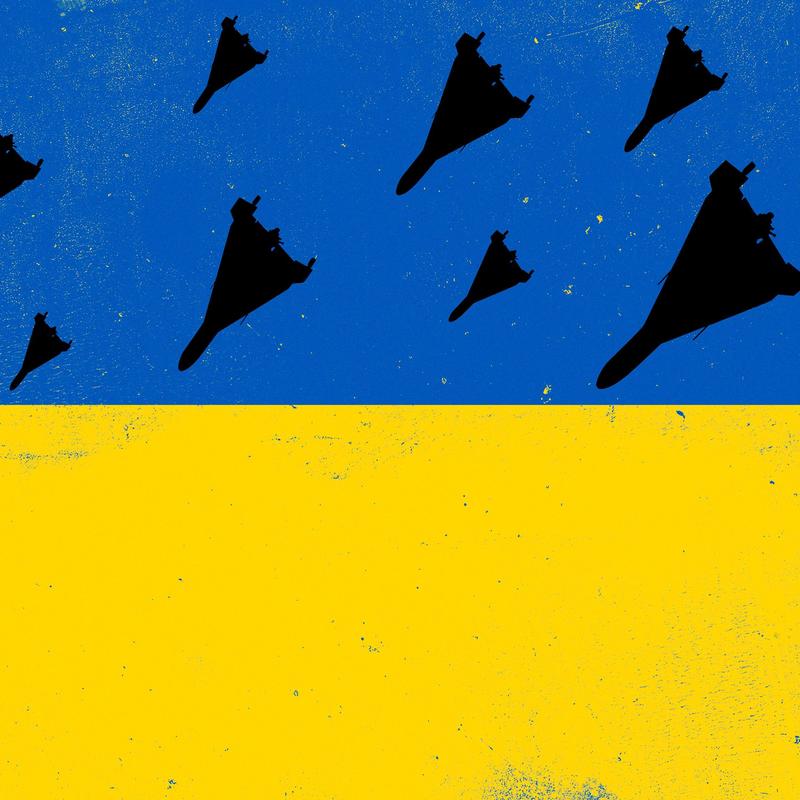
David Remnick: Ukraine has been fighting off the Russian army and the brutal calculations of Vladimir Putin for more than four years now, longer than the United States fought in the Second World War. Donald Trump has been reluctant at best about defending Ukraine since the start, and he said that he'll withdraw American support unless Ukraine makes enormous concessions of territory. Over the last month, America's war in Iran has only strengthened Putin's hand. The oil crisis in the Middle east has raised the value of Russian oil exports.
Again and again, Donald Trump threatens to pull the United States out of NATO, which also must really please Vladimir Putin, even if Trump can't actually do it on his own. Russia is now sending drones to Iran and has provided intelligence to be used against American forces. All of this was reported recently in the Kyiv Independent, an English language news site. The editor is Olga Rudenko, who founded the Independent with fellow journalists in Ukraine. I met Rudenko with some of her colleagues in New York late last year, and we spoke again recently. She was in her office in Kyiv. Olga, it's very good to see you. How has life been for you?
Olga Rudenko: It's gotten pretty tough in January. January and February were the toughest winter that we've had ever.
David Remnick: Tough because it's the most bombing you've seen in Kyiv since the beginning of the war.
Olga Rudenko: It is by far the most bombing. It's been this way since early 2025. Since early 2025, things changed dramatically for people in Kyiv. It's since a few months ago when Russians really succeeded in targeting the energy facilities and we were facing blackouts. For many weeks, we were on maybe one, two hours of electricity supply a day, which is suboptimal, especially when combined with what was, I think, the coldest winter in 16 years, something on that.
David Remnick: Do you feel forgotten by the west, particularly now that the war in Iran has taken up all the headlines?
Olga Rudenko: I wouldn't say forgotten because we've been through this, obviously, with the October 7th attack, because that was the first time when we've experienced this attention shift. I wouldn't say forgotten. I think everything that's been happening since Donald Trump took office and started his peace talk process. Has been quite surreal for us. Forgotten is not the word, but sometimes I do see, I wouldn't say that necessarily I feel like that, but Ukrainians increasingly feel betrayed by the West, particularly by the US.
David Remnick: Why more so now than before?
Olga Rudenko: I want to be very, very Frank. I think that a lot of things that the current US Administration is doing is effectively siding with Russia. I think in the beginning of 2025, maybe spring 2025, we became independent. We wrote an editorial saying that the US has switched sides in this war, effectively. When you read what's happening lately, and especially-- I think yesterday was the first time, even though we had wind of this for a while, but yesterday was the first time when President Zelenskyy said publicly that the US Is only ready to provide security guarantees to Ukraine if Ukraine surrenders more ground to Russia.
David Remnick: Even more ground than it has?
Olga Rudenko: Yes. It is such an insane thing because it means surrendering to Russia the most fortified part of Ukraine. This part of Ukraine that Russia wants, that it hasn't been able to take in 12 years, this is now our security guarantee, this fortified belt of the Donbas of eastern Ukraine that is standing between where the fighting is now and the rest of the country. This is what Russia demands to get in order to sign any sort of peace agreement. To hear now that the US, supposedly our ally, is making this a condition, it is insane if you think about it, because it is so not in the interests of the US as well.
David Remnick: When I would talk to Ukrainians two years ago, three years ago, they would insist that the only way this war ends, in their view, is with the return of all land that has been taken and an ability to join the EU and security guarantees from the West. There was still talk of NATO or some path toward NATO. Even when I speak to the most ardent Ukrainians now, the spirit of the conversation is very different. There's at least some sense of resignation.
Olga Rudenko: Disillusionment.
David Remnick: Disillusioned, but also some sense that whatever resolution happens, there will be land that Russia will hold onto, at the very minimum, Crimea, but probably parts of the East. NATO probably is not in the conversation, although the EU may well be in security guarantees. How have you changed in your assessment of the way the war will end and what Ukraine will look like at that point?
Olga Rudenko: I think we have come a long way since 2022 when the idea of victory was associated very firmly with the return to the 1991 borders. This is how it would usually be called, which means the return of all the territories of Ukraine, including those that Russia took in 2014, which is some parts of western Ukraine and Crimea. Now, you will often hear, although usually not from somebody like President Zelenskyy, but you would often hear some voices saying that the most important thing is to preserve Ukraine's sovereignty and to preserve Ukraine as a country that can rebuild itself.
At the same time, nobody is comfortable with the idea. Nobody is ready to be comfortable with the idea of Russia holding on to the Ukrainian land indefinitely. I think the thinking is that we need to stop this now, but eventually those lands need to be returned to Ukraine, including Crimea.
David Remnick: When you talk about the future of Ukraine the way you do, do you see it in a timeline that's analogous to a place like South Korea, where South Korea is under the protection in the sense of the West? There's always a yearning for reunification, but it's obvious that the timeline for this has nothing to do with next week or next year.
Olga Rudenko: I think I learned in these four years that any comparisons are very imperfect. Although we tend to instinctively reach out to for comparisons like this, to South Korea and North Korea situation and comparisons to other wars as well, it's a very treacherous thing. I don't think of it in those terms. No, not really. I know what the outcome has to be, but I'm not sure how we're going to get there. I do firmly believe that there will be a point when, for example, those lands will again be part of Ukraine, but I don't know when or how we'll get there.
I have this instinctive sense, and it's not me as a traumatized Ukrainian. It's not me just not wanting to deal with an injustice or something like this. As somebody who grew up at this intersection of Russian and Ukrainian culture and who knows a bit of history and who knows Ukraine and Russia so well, I have this instinctive feeling that we're going to arrive at the point where Russia is not going to be a threat that it is now, it's not going to be a power that it is now, and that injustice of 2014 and 2022 will be fixed. I may sound very naive speaking about this, but I do have a pretty strong feeling that we'll arrive there. I hope I will live to see that.
David Remnick: When you were in my office last December with your colleagues, I just, as a matter of fellow feeling, asked how everybody was and how were your family and friends, and there was a really long pause. It was very clear that people didn't want to go into very much detail. What affects you?
Olga Rudenko: For a very long time, I just couldn't make my peace with the fact that we have curfew. We have curfew now for four years. Means that you can't be outside from midnight till I think it's 5:00 AM now. They have shortened it. Maybe it's 4:00. You have this midnight as a cut off time. By midnight you have to get home and you plan accordingly. If I'm in the office, I'm working late, I know that the latest time when I can call a taxi is like 11:15 or I can be detained if I'm outside.
I'm not somebody who goes out at night. I think I've been to a nightclub once on assignment. Turns out that you want to have this opportunity. You want to be able to go on a nighttime walk around the city or you want to be able to stay late at work and to take a 2:00 AM taxi home. I used to really feel the constraint of this on my freedom. Then I guess I got used to it.
David Remnick: The war with Iran benefits more than anybody I can think of Russia. Oil prices have gone way back up. The restrictions have been lifted. I think even in your paper, the Kyivan Dependent, there have been reports that Russia has provided intelligence to Iran. The United States is struggling. Iran itself, of course, is struggling. Russia seems to be ironically, at least for the moment, a winner in this.
Olga Rudenko: Yes. Absolutely. Russia is providing more than just intelligence. There were reports in the past couple of days that Russia is actually sending drones to Iran, which is, Iran has played such a huge role in enabling Russia's war against Ukraine because it is the country that initially has provided a strong technology to Russia. Russia was first buying these drones from Iran and then they set up production in Russia.
Now it is sending those same drones to Iran to help them out. Yes, Russia is a winner at the moment in this. I don't know how long this wind will last, but they are. What is also ironic in the dark sense of the word, is that this solution for Russia arrived just when everything indicated that Russia's economy was really beginning to feel the strain of the war.
We were looking forward to seeing what's going to happen further on in 2026 with, will Russia economy finally be under enough strain for, of course, not for the people to rise because I don't think that's ever going to happen, but at least maybe to feel some consequences and maybe this insane pressure that it is putting on Ukraine would subside? Then the solution arrives with the oil prices and with the sanctions on Russian oil being lifted. It couldn't have been better for them.
David Remnick: Tell us a little bit more about the military connection between those two countries, Russia and Iran, and what the Kyiv Independent has been able to find out.
Olga Rudenko: Iran played a huge role in enabling Russia's war against Ukraine ever since 2022. In October 2022, I think was the first time when Iranian drones were used against Ukraine. In the beginning, those drones were something that Russia was buying from Iran, but very quickly they just set up production in Russia using the Iranian technology. That allowed Russia to scale up the production so much that in 2025 alone, Russia sent 55,000 drones like that at Ukrainian cities.
We're talking cities. We're not talking frontline fighting. We're talking cities often far from the frontline, where those drones were targeting everything, mostly civilian infrastructure. 55,000 in 2025. Those are drones that are made with Iranian technology, but in Russia. Now when Iran is under attack, Russia is sending not just intelligence, as was reported, but reportedly it's also sending drones to Iran because now it has this very large scale production of those drones. It is this exchange that now enables Iranian defense.
A couple of weeks ago, we interviewed Iranian envoy in Kyiv. It was an interesting interview because he was claiming that Iran is completely neutral in the war, that it is not a military ally of Russia, that it has not contributed to the war at all. The whole interview is just his answer and then a big chunk of texts from us just fact checking why it's a lie. It is a military alliance. Iran has done a lot to enable Russia in its war against Ukraine. Russia would not be able to terrorize Ukrainian cities as it has been without Iranian help.
David Remnick: Has the sense of Ukrainian abandonment by the US increased with the war in Iran? In other words, there are reports that the Pentagon is considering diverting military aid intended for Ukraine and diverting it to the Middle East.
Olga Rudenko: From day 1 of this, we have been very conscious that this is a major risk for us because we are dependent on Western Air Defense systems. Ukraine shoots down most of the drones that are targeting Ukraine on its own, but it needs Air Defense aid from the west to take down Russian missiles that do a lot of damage.
This is, from what we understand, from what we know from our reporting, part of this bargaining that is happening now with President Zelenskyy offering Ukrainian drone technology to Middle East and to the US actually, offering Ukrainian technology in intercepting drones that Ukraine has developed from scratch in these four years in exchange for getting air defense systems that can help Ukraine deal with Russian ballistic missiles, which sounds like a reasonable deal. Unfortunately, as you probably know, President Trump snapped at this offer a couple of times publicly and saying that we definitely don't need help from Ukraine and we definitely don't need help from Zelenskyy.
David Remnick: Is Ukraine, in essence, waiting for another US president, or does it feel that it's stuck with Donald Trump and that it has to find a way to accommodate his very particular character and ego? We all remember that session in the Oval Office where Trump and Vance exploded at Zelenskyy in a way that I've never seen, and I've been doing this longer than you have. I've never seen anything like it.
Speaker 3: Say thank.
Speaker 4: I said a lot of [unintelligible 00:17:55] to Amercan people.
Speaker 3: Except that there are disagreements. Let's go litigate those disagreements rather than trying to fight it out in the American media when you're wrong. We know that you're wrong.
President Donald Trump: You see, I think it's good for the American people to see what's going on.
Speaker 4: I understand, sir. I understand.
President Donald Trump: I think it's very important. That's why I kept this going so long. You have to be thankful. You don't have the cards.
Speaker 4: I understand [unintelligible 00:18:16]
President Donald Trump: You're buried there. Your people ardying. [crosstalk] You're running low on soldiers. Listen. You're running low on soldiers.
David Remnick: Ever since Zelenskyy, when he comes to Washington or he meets with Trump or there's some phone call, he bends over backwards in an almost embarrassing way to accommodate the possibility of another explosion or to avoid that. That must be talked about quite a lot in Ukraine, how to deal with Donald Trump.
Olga Rudenko: Indeed. Every time when they meet again after that insane Oval Office meeting, every time they meet, you're watching like, "Is it going to happen again? Is it going to happen again?" I can't imagine what it must be like for him and for the Ukrainian team to be coming to Washington for any meetings with Trump after that. I think Ukraine has been trying to be accommodating and trying to be very sensible and trying to play, to use rational arguments, but also play to Trump's ego and emotions a bit.
The thing is, even though an explosion like that has never happened again yet, thankfully, I think the sentiment that caused it is still very much there. Here's something that it always amazes me that I think a lot of people in the US Administration don't understand that it's not Zelenskyy who is an obstacle to signing an unfavorable peace deal for Ukraine. It's not Zelenskyy being stubborn and saying, "I won't sign this, I won't sign this. I won't go for this." No, he does not have a choice.
If he signs a peace deal that gives Donbas to Russia, he will probably be out of office the next day because people are not going to accept it. Even with how exhausted everybody is, and everybody is so exhausted with the war, the majority of Ukrainians still don't want a peace deal at any cost. Still don't want an unfair peace deal. Zelenskyy doesn't have a choice that Trump, I think, thinks that he has.
[music]
David Remnick: I'm speaking with Olga Rudenko, the editor in chief of the Kyiv Independent. We'll continue in a moment. This is the New Yorker Radio Hour.
[music]
David Remnick: This is the New Yorker Radio Hour. I'm David Remnick, and I've been speaking with Ukrainian journalist Olga Rudenko, editor in chief of the Kyiv Independent. We spoke earlier about what it's like to report on Russia's war on their country while living through it themselves. Now, that's an experience that most American journalists have never had, and yet other aspects of her story are very familiar.
The journalism business is under political and financial threat in this country and many others. The Kyiv Independent is called "Independent" because there's no media baron and no oligarch controlling it. It was founded by Olga Rudenko and a group of her young colleagues who broke away from another paper, the Kyiv Post. You were at a newspaper in Kyiv and decided, around 2021, that you needed more independence. Tell us that story, how the Kyiv Independent came to be in breaking with the Kyiv Post.
Olga Rudenko: By the end of 2021, I had been working in this newspaper in Kyiv called Kyiv Post for 10 years at the time. I was, at the time, deputy chief editor. It was a place that was pretty different from many other Ukrainian media outlets in the sense that it had enjoyed editorial independence against the odds, because it was not profitable. It was getting some money from its owner every month.
At the same time, the chief editor at the time managed to maintain the editorial independence of the newsroom. That's not something that you take for granted when you work in Ukrainian media, because if you are in a paper that is being subsidized by the owner, then usually it means that the owner dictates what to write. By dictates, I mean pretty directly. It was not the case with the Kyiv Post. We were really enjoying this privileged position of being independent. Then at the end of 2021, near the end of 2021, that started changing.
David Remnick: Why did it change? What happened?
Olga Rudenko: A few years before that, the paper changed owners, and the new owner went along with the rules for a few years and maintained the independence of the newspaper. Then I think his patience ran out because he kept getting phone calls from people very high up. The calls would be about the critical coverage of the paper. I don't think he was, in his core, a big fan of independent journalism. I don't think he bought into it because he believed in Independent Press.
His patience ran out and he started putting pressure on the newsroom to tone down the critical coverage and to make some changes that the newsroom was opposed to. Not just the chief editor, who was the main defender of the [unintelligible 00:24:17] independence, but actually the whole newsroom was opposed to it. Then the owner, I think his patients ran out completely. On one day in November 2028, he just fired everybody, the entire paper. 50 people were fired effective immediately. He initially planned to shut it down, but then he restarted it with a more loyal stuff and is still active now.
David Remnick: How does Volodymyr Zelenskyy feel about a free press? We think of him in absolute contradiction to Vladimir Putin in so many ways, and that's true, but when it comes to the press, is he an advocate of and a supporter of a free press?
Olga Rudenko: That is a very interesting question. Of course, if you compare Ukraine to Russia and Zelenskyy to Putin, with that unfettering backdrop, Zelenskyy can seem like supportive of Independent Press. First of all, all the things that I'm describing, the pressure that was being put on the newspaper, that happened under Zelenskyy, that happened under his administration. What you need to understand about Zelenskyy is that, first and foremost, he does not love criticism. Nobody does. He comes from a background where he is used to hearing a pause, not criticism.
David Remnick: As a comedian, he's used to hearing applause.
Olga Rudenko: As a comedian, as an actor, yes, he's used to that. One sympathizes with that. As a president, as a politician, you don't get applause very often. You get criticism, you get short questions. It is part of the job to be able to answer that. Even before the war, you could see at press conferences and his reactions two questions that were asked of him that he, to put it very simply, had a very thin skin for that.
David Remnick: Would you say that he's more or less comfortable with the free press than Donald Trump?
Olga Rudenko: I think there's a lot of similarities.
David Remnick: Really?
Olga Rudenko: There's a lot of similarities there. Yes.
David Remnick: Donald Trump calls the press vrag naroda, enemy of the people. He uses that Stalin era phrase. He insults people directly and personally. He issues lawsuits against all kinds of press outlets. He manipulates ownership situations with CBS and other outlets. It's a fairly grim situation where press freedom is concerned on a comparative level in the United States. I wonder, when we think of Zelenskyy, we think of him very often in heroic terms, certainly in comparison to Vladimir Putin. What's his attitude toward you?
Olga Rudenko: I think, David, if you ask President Zelenskyy what he thinks about Independent Press, whether he believes that it deserves to be a central part of a democracy, I think he would say yes, and I think he wouldn't be lying. I think he actually believes that.
When it comes to executing that, I think for him, it's more like, "I believe in free press in theory, but I don't want it to touch me. I should be untouchable for that. I should be untouchable to Independent Press because I'm doing an important job here. You guys are running around asking your questions and interfering with me." It's been nasty a few times. That was even before the war.
Then when you add to it everything that happened after 2022 and the heroic, as you said, treatment that he has been getting from the whole world, for him being the leader of the resilient Ukraine, when you add that component, it makes a person naturally even less welcoming of any criticism. If you would have to guess how many interviews Zelenskyy has given to Independent Press In Ukraine since 2022, it's zero. Zero interviews to independent Ukrainian journals since the start of the war, four years.
There has been a handful of press conferences where journalists were allowed to ask questions, but some independent outlets were banned from press conferences or from briefings with his administration. With us, there were situations when, for example, our journalist a couple years ago asked him a question at a press conference, a question that was very important at the time about the quality of certifications that were being built near the front lines.
David Remnick: Fortifications on the front line, the defenses.
Olga Rudenko: Yes, the defenses, yes. In the areas where Russia was expected to advance next, there were very costly and highly advertised defensive structures being built and there were allegations of they're not being very effective. There's maybe some money is being stolen somewhere-
David Remnick: Sure.
Olga Rudenko: -as it goes. Our journalist asked him a question about the quality of fortifications in this certain area, and he got angry. He asked something back, he talked back. He, in the end, didn't give a very good answer. He was clearly just so annoyed at the question. You can say that it's similar to how President Trump reacts, but he didn't go as far as calling out the journalists and calling him something.
David Remnick: No. President Trump has threatened to cut off licenses for television stations through the FCC. Has that happened in Ukraine?
Olga Rudenko: Actually, it's not something that I think Zelenskyy would order himself, but Ukrainian authorities have been known to revoke accreditations from journalists for, I guess, punishment for their coverage. Essentially, to work as a journalist in Ukraine now during the martial law, you need a specific accreditation that is issued by Defense Ministry. Even we have seen cases with a couple of our journalists before where those accreditations were revoked or threatened to be revoked directly in response for critical coverage. We were able to fight it back.
David Remnick: Is anybody ever prosecuted or put in jail?
Olga Rudenko: No, I don't think so. No. There were other things, though. Law enforcement has been going after journalists sometimes, and some cases are provoked pretty loud scandals with surveillance, with things like drafting somebody for the military if it's a male journalist, or just forcibly drafting them for the military as punishment for their reporting. There have been cases like that where it was proved that this comes as a retribution.
David Remnick: We see in this country and all over the world that in wartime, it is a dilemma, consciously or not consciously, for the Independent Press, whether they should be loyal, whether they should be critical. I have no doubt that your newsroom, they obviously are all united in wanting to see Ukraine prevail and the war end. The sentiment about Russia, I'm sure, is fairly united. In a time of war especially, what does it mean to be fair, objective, if that's a word that you think about, or activist? How do you think of the paper in that sense?
Olga Rudenko: I think being named the Kyiv Independent and being based in Kyiv and the team being a mix of Ukrainians and foreigners who care about Ukraine, it would be ridiculous if we were to claim that we are unbiased. At the same time, this war being, in some senses, so black and white, it having an aggressor and the side that is on the defense, I think it is not insane for anybody to be firmly on the side of Ukraine here.
What that means is, how I think about it, we can't and we will never become a PR agency for Ukraine, a propaganda outlet. It can be tempting to go in that direction because that would go well short term with the audience. Short term, if we start writing just about Ukraine's wins, if we start writing only good things about Ukraine, if we drop any stories about any ineffectiveness, corruption, mismanagement, all the things we're writing about, if we drop all that and focus on the positives and focus on the resilience, the hated world, we are going to probably see-- no, most surely we will see a boost in attention.
In a way, it can be tempting to go that path, but it's just not what we want to do. To put it very simply, I think it is so cool that Ukraine, the country that I love so much, that I want my future to be here, it is so cool that during this insane war for survival, it has an independent English language newsroom that is operating in the heart of Kyiv that only started three months before the war. It has grown into this thing that challenges the president. I just think it is so much cooler than being even the best propaganda outlet that we could be.
David Remnick: Olga Rudenko, thank you so much.
Olga Rudenko: Thank you, David.
[music]
David Remnick: Olga Rudenko is editor in chief of the Kyiv Independent, which publishes online in English.
[music]
Copyright © 2026 New York Public Radio. All rights reserved. Visit our website terms of use at www.wnyc.org for further information.
New York Public Radio transcripts are created on a rush deadline, often by contractors. This text may not be in its final form and may be updated or revised in the future. Accuracy and availability may vary. The authoritative record of New York Public Radio’s programming is the audio record.