
‘Hedda’ Director Nia DaCosta and Star Tessa Thompson
Alison Stewart: This is All Of It. I'm Alison Stewart live from the WNYC studios in Soho. Thank you for sharing part of your day with us. I'm really grateful that you're here. I'm also grateful that we have the opportunity to make a huge difference in someone's life. WNYC is teaming up with the New York Blood Center for a one day blood drive. It's happening on Tuesday, December 9th from 9:30 to 2:00 PM. Sign up to donate by going to nybc.org/wnyc. I've already signed up. I'll meet you downstairs in the green space at 44 Charlton street in Lower Manhattan. Again, that's Tuesday, December 9th. Sign up at nybc.org/wnyc. You can save someone's life this holiday season. Thank you. That is in the future. Now let's get this hour started with Hedda.
[music]
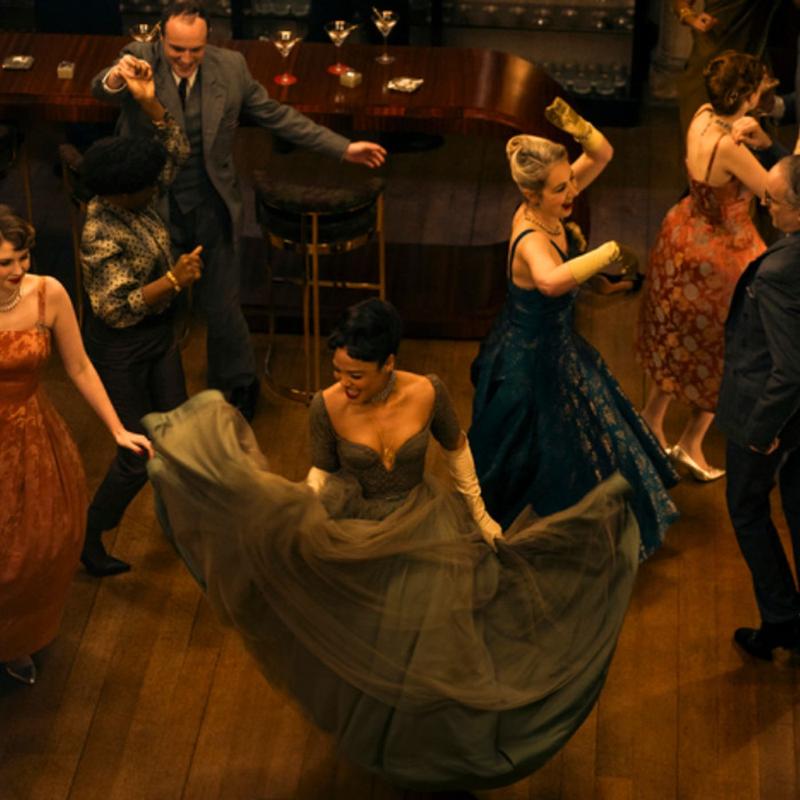
A striking new imagination of Henrik Gibson's classic play transforms Hedda Gabler into a one of charm, sexual fluidity and mischievousness. In director Nia Costa's film, we meet Hedda, played by Tessa Thompson, as she's being questioned by police after reports of shots being fired at a party at her estate the night before. It was some party, it was an open bar, a live band, dancing, illicit drugs, even fireworks.
Hedda's husband is hep for a promotion and his boss is invited, but her husband is not the only candidate. Hedda's former lover, the celebrated Eileen Lovborg, is competing for the same job and she is coming to the party as well. As the night spirals, Hedda will do whatever it takes to secure the future she wants with her husband while confronting the life she might have had but her choices come with devastating consequences.
A review in the Hollywood Reporter calls the film, "delightful, sexy ride that reminds us that Thompson is a star and DaCosta has many more tricks up her sleeve." Hedda is now streaming on Amazon Prime. Joining me now is the film's director, Nia DaCosta. Hi, Nia.
Nia DaCosta: Hi.
Alison Stewart: Tessa Thompson is joining us as well. Hi, Tessa.
Tessa Thompson: Hi, Alison.
Alison Stewart: Nia, you've described this play, Hedda, as a revelation. When you think of what is at the core of Hedda, what is the central theme?
Nia DaCosta: For me, when I, when I first read it and then I watched it, I was so struck by the enigma of this person. For me, when I think about it thematically, I'm really thinking about these questions around personhood and self knowing, and power, bravery, cowardice, and how all those things are wrapped up in one's individual search for who you are. This who Hedda is slightly terrifying, but I think because she's so confrontational and challenging, it makes those themes even more resonant.
Alison Stewart: What did you think when you heard about Nia DaCosta's version of Hedda?
Tessa Thompson: Oh, goodness. I'm of the mind, I love the classics. I grew up reading them just as a fan, and then later I had the great privilege of getting to perform Shakespeare and the Greeks and I came to Ibsen when I was 16 and really fell in love with them. I think if you're going to take one of these classics, you have to have skin in the game. You have to have a real reason that makes sense to you to put them on stage and certainly on screen, because they become immortalized.
When Nia called me to say that she was wrestling with an adaptation, I was so interested because I'd follow her anywhere. I made her first film with her little woods, and I would really do anything with and for her, but I didn't know why. It was really when she sent me this script and I understood what she wanted to do with the piece, to take it apart, to put it back together and to make the piece sing. Hedda is a fantastic, as Nia says, enigmatic character. She was never my Ibsen diva until Nia took her apart and put her back together, then I thought, "Wow, now this is a woman I'm really fascinated by."
Alison Stewart: What were you wrestling with? Nia said you were wrestling with the script.
Nia DaCosta: I was wrestling with Hedda, in the mud, rain falling lightning. I'm like, "Who are you?" The thing about that wrestling is that everyone does that with her. I've spoken to three or four women who've played Hedda, and they all see her differently. That's what I love about her. She's like a real person. The wrestling was really like, "What version of her do I want to speak of and through? What version of her do I want to see Tessa take on?" Because I knew when I was writing it that Tessa, in an ideal world, which is the world we're in, she'd be playing her.
Alison Stewart: Are we in an ideal world?
Nia DaCosta: Whoa. For that one position.
Alison Stewart: In this room, we have an idea of
Nia DaCosta: Absolutely the darkest timeline, but ideally the world of my movie, Hedda. [crosstalk]
Alison Stewart: Did you watch past Heddas, because I found myself I watched the film and then I went down and I watched one from 1950s. It's so interesting to watch the different actresses take on Hedda.
Tessa Thompson: It's amazing. I think that's the cool thing about doing any of this canonical work, is you're a part of a tradition. I did. I watched many. I couldn't help myself because I hadn't had the chance, like Nia to see Hedda on stage. I was really fascinated. Also because I think we were breaking some of the rules of the piece, I wanted to understand the rules we were breaking. I watched as many as I could get my hands on. It was such a pleasure.
Alison Stewart: Nia, you originally thought you might do this for the stage, is that right?
Nia DaCosta: Yes. Just because it's a play, I thought I'd do it as a play, and then filmic images kept coming to me. When I was thinking about it, especially in the gap between what I'd read and what I'd seen on stage, I was like, "Oh, no, that's not-- I thought I saw this, I saw that." I also just wanted to, like Tessa was saying, break it apart a bit more.
Alison Stewart: What kind of filmic images came to your mind? That's interesting.
Nia DaCosta: The first one centered around Hedda and the judge, and that relationship, and having it be more text than subtext, and this image I had of them secreted away somewhere, and from a distance, all you see is Hedda's hand bracing herself on the corner of a wall, but you don't see them. You just see her hand as if you're around the corner. That image, to me, really said a lot about that relationship, about Hedda, about the public versus private spheres that I really felt in the play. You can do that on stage, absolutely. I've seen it done beautifully, but it just became a movie in that moment.
Alison Stewart: Tessa, you are producing this through your production company, Viva Maude. First of all, what does Viva Maude stand for?
Tessa Thompson: I'm a big fan of the film Harold and Maude, and most especially that character Maude, that I think started a filmic trope. I think she's one of the first occurrences of the Manic Pixie Dream Girl, except she destroys the trope because she also happens to be in her '80s and has a death wish. I've just always been in love with her, and it's just Viva the spirit of challenging and interesting protagonists and things that are both of their time and ahead of them all right.
Alison Stewart: Through Viva Maude, your production company, you're a producer on this film as well. What was interesting to you about being a producer?
Tessa Thompson: I've had the chance to produce on other things. I made a film called Passing and technically I also produced Nia's first film, Little Woods. It's very different I think when you-- The producing that I'm doing now, which is really in earnest, and I feel really grateful that Nia let me into that process. There wasn't a lot of work to get the film set.
I think we got really lucky in some ways. She wrote this incredible screenplay and Orion MGM, our partners wanted to make it and wanted to make it exactly in the way that she imagined it so we didn't have to develop it like I've had to do with so many other projects. You're pushing something up a mountain.
Alison Stewart: Oh, that's an amazing thing.
Tessa Thompson: It's an incredible gift, but I would say something that I really had to sharpen my skills set is seeing a film through the post production and wrestling with seeing yourself in all the frames many, many, many times because you make a movie again in the edit, for sure. That's something that I'm learning how to do.
Alison Stewart: What have you learned about being a producer that you wouldn't know about being a producer until you're a producer?
Tessa Thompson: I think I have been making movies for almost two decades, which is crazy to admit, and that I can't believe, time flies when you're having fun. I've learned so much more about all of the departments and what people do. Movies are incredibly collaborative and actors typically come in right at the end, in some ways we're like the least essential, even though we get immortalized.
I think it's just been a process of really leaning in and learning so much about the process of making a movie and really what it takes to prettisorily see a filmmaker's vision through all of the fights and mini concessions and things that you do to make a thing.
Alison Stewart: Nia, you took the script from 1890s Norway to 1950s England in this giant manner. Tell us why this time period and place felt interesting for this adaptation.
Nia DaCosta: Because I was changing certain aspects of the relationships in the play and I was changing Ejlert Løvborg to Eileen Lovborg, and then Hedda would be queer. I was making these changes. I wanted to situate it in a place that was familiar to us as a repressive, conformist time and place. I think the 1950s, when we think about that from a cultural and a pop cultural point of view, if I said, "Oh, 1950s repression," everyone's like, "Yes, for sure. That makes sense."
England and repression go hand in hand with love, I say that. I just thought 1950s England would be perfect, but also it's a time of manners, it's a time of pretending, and so much of Hedda is about pretending. I think the reason why the 1950s were a time of pretending and conformity was post World War II trauma and trying to figure out how do we put society back together the way it was?
You can never go back to the way something was, which I think a lot of people, as a trauma response, just think, "I need to go back to how I was before," but you can't. I think Hedda's learning that as well. You can only go forward. The time period, I think it spoke a lot to what I wanted to talk about with Hedda as well.
Alison Stewart: A new adaptation of Henrik Ibsen's play, Hedda follows newlywed Hedda, as she's played by Tessa Thompson, as she schemes her way to get her husband's promotion at work. Its director, Nia DaCosta is here with me to discuss the film. It is streaming now on Prime Video. We see Hedda, she's doing her Virginia Woolf thing.
Nia DaCosta: I love that everyone picked up on that.
Alison Stewart: Right away, but she changes her mind, she turns around. At that moment, what does Hedda want?
Tessa Thompson: In the original piece, spoiler alert, if people haven't read the play, Hedda Gabler shoots herself at the end of the play. I think our portrait of Hedda is a woman who is dying to live. She hears Eileen's name, and that's as good a reason as any. I think what she wants in that moment is to see if a choice that she wasn't brave enough to make in the past might be possible in some way now. I think it animates and energizes her.
Alison Stewart: That scene when she comes out of the water and she's walking up to take the phone call from her lover, and we see her feet and her imprints on the floor, and there's a behind a screen, we see her profile. Tell me a little bit about the decision to take that call. We don't see her take it initially, but we just see her profile behind a old fashioned glass.
Nia DaCosta: I didn't want the audience to immediately be inside of Hedda's experience. I wanted the context of her world to take the forefront, because the first time we get a close up of Hedda, it's at the end of this long, you seeing her house, you see her prepare for this party, you seeing all the trappings of her life, you see her out of focus in the background. I wanted it to be a journey to get to the woman.
By the time you get to the woman, by the time you're like, "Oh, here she is," you've experienced her world in a way. One, that she's very unhappy with it, two, what that world is and then, and then herself. I wanted to do that way.
Alison Stewart: It's interesting to see Hedda because she looks gorgeous in all these outfits. I'm curious though, what is it like for you to put on the suit to go to work? That's what actors are doing, they're putting on their costumes, but it's a suit of sorts.
Tessa Thompson: It completely is a suit. In this case, I think also Hedda is a woman herself who's putting on a suit, who has armor and has a construction of self. I also think it's very emblematic of women during that time. I look at photographs of my grandmothers and one of them who's still alive is in her 80s and every single day, she struggles with dementia and Alzheimer's, but she never forgets to put on her red lipstick, remarkably. It's so incredibly linked to her identity, is that her beauty was a part of her power.
I think Hedda is a woman who is really trapped inside of that way of thinking as well, which is both a blessing and a curse, I think, to feel like you have that at your veil as a woman, but to feel like you don't have much else is its own prison. I always think that what you wear inside of a character also always informs work. I think in this case, this green dress that allows her to be mercurial, to blend in with her background and also that really hems her in the boning of the time. It's not the most comfortable thing to wear. It informed a lot, certainly.
Alison Stewart: It's weird, you said she's in a prison, but she's the head of her own prison at the same time.
Tessa Thompson: She's the warden, yes.
Alison Stewart: Tell me where this was filmed, Nia.
Nia DaCosta: It was filmed in the Midlands at a place called Flintam hall, owned by Sir Robert Hildeard, who so wonderfully let us just do whatever we wanted in there, except for eat or drink water, but we definitely were given freedom.
Alison Stewart: Wait a minute. You had to shoot a party, first of all?
Nia DaCosta: Yes. Basically we had to find a place that would let us shoot a gun off the roof, shoot fireworks at night and annoy all the neighbors, smash a chandelier inside [crosstalk]
Tessa Thompson: A very big chandelier inside of a glass room.
Nia DaCosta: We had to find someone who would let us do that. He did, but I think he also was like, "These books are hundreds of years old. This fireplace is like original, antique. The floor is like, do not eat or drink in.
Tessa Thompson: Which, by the way, at the time I was challenging, I'm actually very glad because I am really prone to spilling things.
Nia DaCosta: I would have too.
Tessa Thompson: I'm glad it was a rule. It was very smart.
Nia DaCosta: Because it's so easy when you film-- I would never let anyone film in my house. We we always restore it back to the way it should be, but it's just so many people, so much can happen. I'm really proud of us because, honestly we did protect that house, and also anything that we didn't protect, it went back the way it was.
For example, the chandelier scene, when the chandelier has to smash, we had to protect the floor so we built a floor in that room. Everyone steps up into the conservatory in that movie, but actually you don't normally do that. We had to build up a floor, protect the glass. We took a lot of precautions to make sure that this beautiful home wasn't damaged.
Alison Stewart: Did you have non negotiables things that had to happen. Obviously the chandelier had to fall, but things that had to happen for this to be the location.
Tessa Thompson: The lake.
Nia DaCosta: The lake.
Tessa Thompson: It's extraordinary that we found this house. It just had everything that we needed and wanted. Also, it's very, very rare, especially these days, to shoot a movie all in one location like that. People often say this, but I think it really is true in our film, which is that this location, this house, becomes a character in the movie. It plays a profound role in Hedda and the choices that she's made, and the fact that we had access to it in that way is really an extraordinary gift, but rare to find a location that just is everything you need and want.
Alison Stewart: Was it challenging to shoot in a house?
Nia DaCosta: I like shooting inside real places just because I think what most people would see as challenges are actually-
Alison Stewart: Opportunities?
Nia DaCosta: Opportunities, but also it makes the audience feel like we're in a real place as opposed to if you're shooting through a wall. I always want people to feel like they're in the place with the characters. There were definitely restrictions, for sure, but I think you just figure them out with the team. That's what prop's for, really. Then you figure them out with the team. We didn't have to lose anything, I don't think, because of the house.
Tessa Thompson: No.
Alison Stewart: I'm speaking with director Nia DaCosta and actor Tessa Thompson. We're talking about Hedda. It's now streaming on Prime Video. Her old flame, Eileen Lovberg, comes to this party. Describe Eileen for me.
Nia DaCosta: Oh, Eileen. I love Eileen so much. Eileen Lovborg is an academic. She's brilliant. She's troubled, she's an addict, she's an alcoholic. She really struggles. She really struggles. When we meet her, she's been on the straight and narrow for a few months. She's met someone new who makes her feel like she can get through this life and be good in the way that she thinks she should be good.
She's incredibly ambitious and she believes that her intellectual is her power and that will save her from everything else. She's also not so openly, but openly, but like, wink, wink, nudge, nudge, queer in the way that some women were able to do it in that time. All that together creates this really compelling, empathetic, but also troubled woman.
Alison Stewart: Tessa, Hedda chooses George to marry rather than continue her relationship with Eileen. Why does she choose George?
Tessa Thompson: I think she chooses George because he is really the only viable option in her estimation. Never mind that she is a woman who wants a certain amount of access to privilege and resource in society during that time. She's also a woman of color who is really, I think, limited in terms of choices that she can make during that time in a real way.
In the 50s, during that time, there were a lot of arrests that were happening for people that were suspected of homosexuality. There was real danger at that time for being out funnily, or I don't know if it's funny, but women were actually not being arrested in the same way as men because there was this idea that our sexual sexuality didn't even really matter and it wasn't important enough to litigate.
Even still, I think it was something that was still hugely stigmatized. Also when Eileen and Hedda, I always imagine, had their time together, which they talk about in some of their scenes, they were not-- It was a troublesome match. I don't know that either of them would have gotten out alive. Certainly I don't know that they would have been able to pay their bills. You know what I mean?
I think she makes a choice that makes sense to her. I think she frankly makes a choice that a lot of people make, which is they get into marriages or relationships out of some pragmatic desire, and then they find themselves in lives that don't fit too squarely on them.
Alison Stewart: We're discussing Hedda with Nia DaCosta and Tessa Thompson. We'll have more after a quick break. This is All Of It.
[music]
You're listening to All Of It on WNYC. I'm Alison Stewart. My guests are director Nia Costa and actor Tessa Thompson. We're talking about Hedda, their new film, now streaming on Prime Video. It's interesting because a central part of Ibsen's play is agency. That's a big part of it. How does the story change when you consider that Hedda is a mixed race bisexual in the 1950s?
Nia DaCosta: Knowing that I was writing with Tessa in mind, at the time I was writing it, I wanted all my leads to be Black. That was just really important to me. I was just like Black women in particular. Then thinking about Tessa, I was like, "Tessa, someone in this body is now going to be Hedda." I just thought about what that meant at the time, what opportunities that offered for the story especially with General Gobbler, who in the original is such an intense presence.
Then you think about him being her white parent, and that we never hear about her mother or Black mother. I found that really dynamic and interesting. I think that says a lot if did listen. Her being a queer woman, I also found really interesting because something I felt a lot growing up actually was I think when I realized, "Oh, people can be gay. There's so many. Why don't we ever talk about it? I don't understand."
Because I'm like, that's not a big deal. No one in my family thought it was a big deal. I just imagine, especially in period pieces, they're so heteronormative. I want to speak to that experience in that way. For me, it just ended up making Hedda even more compelling, frankly.
Alison Stewart: Tessa, how about for you? How does race and sexuality show up in Hedda's ability to be fully autonomous in the society?
Tessa Thompson: I would say it's always a choice. There were certainly instances, I'm sure, of women that were like Hedda, who had constraints of the time in the bodies that they existed in and still decided to make brave choices and to live with real autonomy. I certainly think it stands to challenge her ability to really find a real pathway to personhood. I think the thing that's really interesting that you see played out a little bit in some of these conversations between Eileen and Hedda, they're both women of their time, understand the constraints of their time, but they are not the same.
Eileen doesn't have the same struggles that Hedda has and can't. She's not really capable of seeing that and having real empathy and understanding for that. I certainly have been in situations where I'm talking to another woman and we're talking about our shared experiences, but also there's nuance. There's intersectional nuance to mine, and that takes real listening and humility. It always felt sad to me that they can't completely find that in each other.
Alison Stewart: How did you decide on Hedda's voice?
Nia DaCosta: Oh, this is so fun.
Tessa Thompson: When I was doing digging and listening to actual samples of voices during that time, particularly people in the aristocracy, I couldn't believe, with all due respect, how silly some of these voices were. Just this idea that the more wealth that you had and more power that you had, the less you have to even open your mouth to speak. I just thought there were such interesting ways that people use their voices and just a fascinating thing about how mannered some of this speech felt and was.
I just thought it was really interesting if there was a part of Hedda that felt like she's reaching for something that isn't entirely authentic to her. I think we see that for all of us, to varying degrees, this idea of code switching, but I found it interesting, someone that has switched completely, they have one mode of existing, and that gets expressed in the voice.
Alison Stewart: Let's listen to a clip so people can hear what we're talking about. This is Hedda telling her husband, George, that Eileen, her former lover, is also applying for the same position. This is from Hedda.
[movie play: Hedda]
That's from Hedda. In so many descriptions of Hedda Gabler, she's described as manipulative. Do you think she's manipulative?
Nia DaCosta: Oh, absolutely. For sure. I think that she's learned what tools work for her, and I think she's brilliant and she's chosen to use her brilliance in ways that she feels she has access to. I think that does result in manipulations with no judgment about whether or not that's a good or bad thing.
Alison Stewart: Do you consider Hedda to be a bit manipulative?
Tessa Thompson: No.
Alison Stewart: We've got a yes. We've got a no.
Tessa Thompson: Not personally. In the same way, like, children are manipulative.
Alison Stewart: Yes, they are.
Tessa Thompson: Hugely, but they're also innocent. Oh, there's this presumption of innocence, but children can be incredibly manipulative and maniacal, and violent, and act out on all sorts of unsavory impulses. That's the way that I understood Hedda. I think children are capable of all sorts of things before they've been socialized, before they understand.
I think that socialization is necessary. It's necessary for us to say to children, "You need to share with your friend. It's not okay to hit. It's not okay to act out or pretend to cry to get something that you want. I think that in some ways, the way that we socialize, people also inhibit the best of us and that's how I see her. If she's manipulative, she is in the same way that a child might be.
Alison Stewart: My last question is because of streaming, which is great often, because you can go back again, you can rewatch a scene several times, what's a scene in the film that you would like people to pay special attention to or maybe to watch again?
Nia DaCosta: Oh, that's a great question. I think the scene in the bedroom between Eileen and Hedda. There's a lot going on in that scene. Just in terms of interesting. You talk about this question of manipulative or not. I think a lot about when Hedda's being truthful. I think there's so much truth in that scene for Hedda and for Eileen, but there's also lies in that scene for both of them. I think some of them are conscious and some of them are unconscious. I think the work that Tessa and Nina do, Nina Haas, who plays Eileen doing that scene, is remarkable. That would be a really fun scene for people to rewatch.
Alison Stewart: How about for you, Tessa?
Tessa Thompson: Oh, I like that scene too. I think that's a good one because I think something that you see happen in that scene and something that I think happens to a lot of us oftentimes as humans is the way that we miss each other and we miss opportunities for real connection when we're afraid to be really vulnerable. We get just right there, and it's such a terrifying thing, but it really is the only way that we find real connection, not just to other people, but to ourselves.
They were right, they were almost right there. I think that's such a tender thing to watch and to unpack the moments that we've maybe been guilty of that ourselves. We almost could have had that real moment of honesty with ourselves and with someone else to really be seen.
Alison Stewart: I love it in the water, the way your face changes at the end. It's so good.
Tessa Thompson: Nia DaCosta wrote the most beautiful piece of stage direction that I have ever read in my entire life that almost got tattooed on my brain. The way that she writes the end of the movie is Hedda, caught between dark finality and dark possibility, can do nothing, nothing but break out into a wild wanting and wicked smile. I just thought, "This is how will I ever do it," but, God, I'm so lucky I get to.
Nia DaCosta: She did it.
Alison Stewart: The name of the film is Hedda. It's streaming now on Prime Video. My guests have been director Nia DaCosta and Tessa Thompson, actor. Thanks for coming in.
Tessa Thompson: Thank you so much for having us.
Nia DaCosta: Thank you for having us, Alison.